Taalas HC1: The 24-Person Canadian Startup's AI Chip vs NVIDIA – Performance Analysis, Comparison & Risks in 2026
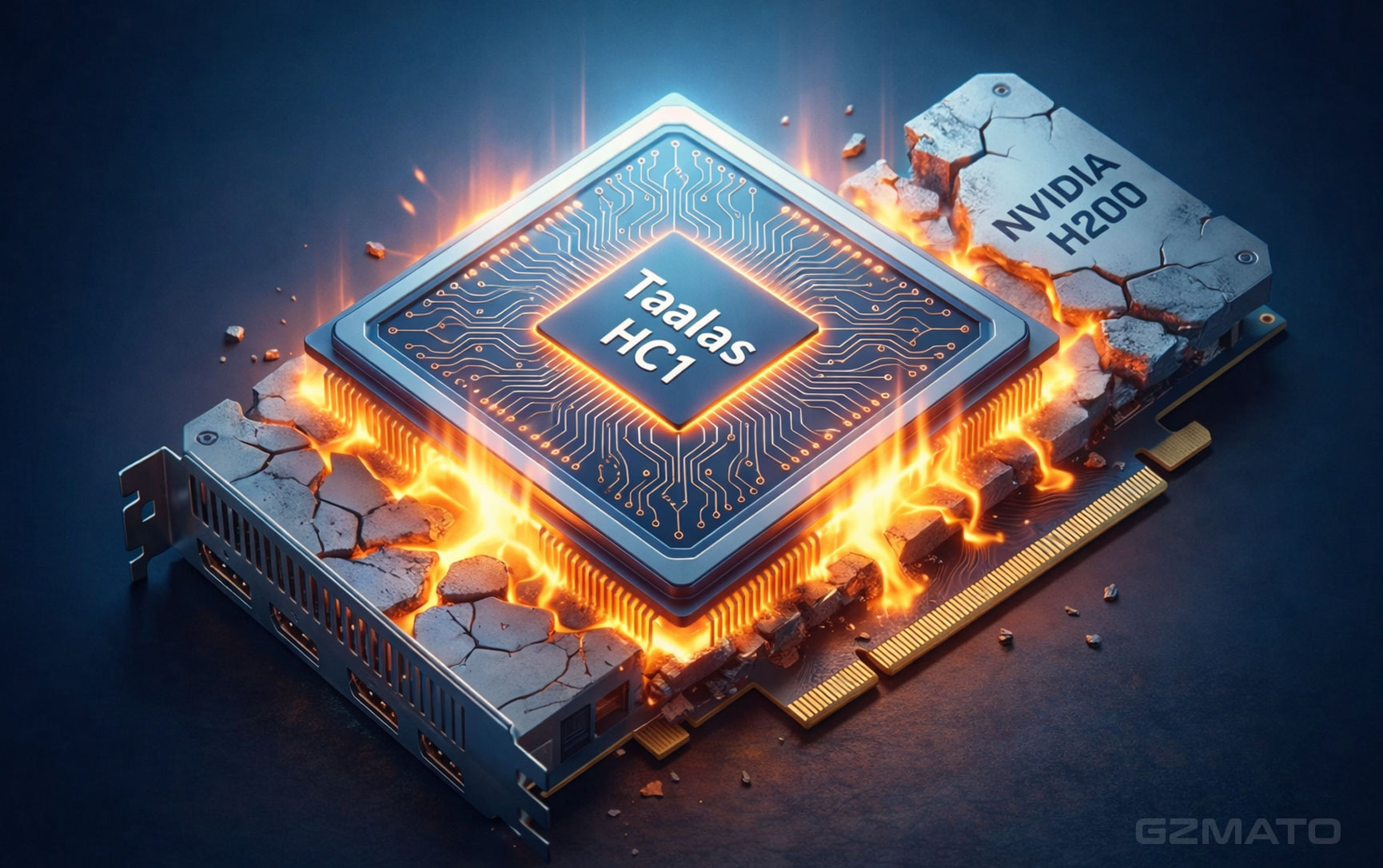
- Taalas HC1: The 24-Person Canadian AI Chip Taking on NVIDIA
- Taalas Background: A Small Team's Big Ambition
- How Taalas HC1 Works: Hardcoding Models for Speed
- Real Performance Analysis: What the Numbers Say
- Taalas HC1 vs NVIDIA: Strengths, Weaknesses & Benchmarks
- Potential Risks: Security, Scalability & Beyond
- Verdict: Game-Changer or Niche Innovation?
- Shop AI Gear & Accessories at Gzmato
March 8, 2026 – Taalas, a 24-person Canadian startup, claims its HC1 chip outperforms NVIDIA by hardcoding AI models directly into hardware. We dive into real performance, comparisons, risks, and if it's hype or a breakthrough.
Taalas HC1: The 24-Person Canadian AI Chip Taking on NVIDIA
Taalas HC1 is making waves with its "model-is-the-computer" approach, embedding entire LLMs like Llama 8B into silicon for ultra-fast inference. But is this tiny team's chip a NVIDIA killer? Let's break it down with facts and analysis.
Taalas Background: A Small Team's Big Ambition
Founded in Toronto, Canada, Taalas emerged from stealth in February 2026 with just 24 employees. Backed by $50M in funding, the team (ex-AMD/TensTorrent engineers) focuses on custom ASICs for AI inference. Their mission: Make running large models as cheap and fast as possible without external memory.
How Taalas HC1 Works: Hardcoding Models for Speed
Unlike GPUs, HC1 "hardwires" model weights into the chip's metal layers – no RAM reads needed. Built on TSMC N6 (815mm² die), it runs at 250W with air cooling. For Llama 8B, it achieves ~17,000 tokens/sec per user, slashing latency to near-zero.
Real Performance Analysis: What the Numbers Say
Public demos (chatjimmy.ai) show impressive speed: 15,000–17,000 tok/s for single-user Llama 8B. However, quality dips (more hallucinations than stock Llama). Scalability limited to small models; larger (70B+) versions unproven. Power efficiency is strong, but multi-user throughput lags behind server GPUs.
Taalas HC1 vs NVIDIA: Strengths, Weaknesses & Benchmarks
| Feature | Taalas HC1 | NVIDIA H200/B200 |
|---|---|---|
| Speed (tok/s, Llama 8B) | 17,000 (single-user) | 2,000–4,000 (optimized) |
| Power | 250W | 700W+ |
| Cost | ~20x lower per chip | High (enterprise pricing) |
| Scalability | Fixed model, no multi-GPU | Dynamic, multi-model clusters |
| Ecosystem | Limited (custom only) | CUDA, TensorRT, vast support |
Strengths: Faster/cheaper for fixed small models. Weaknesses: No flexibility vs NVIDIA's universal ecosystem.
Potential Risks: Security, Scalability & Beyond
- Security: Hardcoded models could expose IP if chips leak; supply chain vulnerabilities in custom ASICs.
- Privacy: No external memory = less data exposure, but inference logs could still track usage.
- Scalability: Re-tooling for new models costs time/money; not for dynamic AI like GPT-4o.
- Legal/Ethical: Model hardcoding may violate open-source licenses; over-reliance risks AI monopolies.
Verdict: Game-Changer or Niche Innovation?
Taalas HC1 is innovative for specialized inference, but it's niche – great for edge devices, not replacing NVIDIA clusters. If scalability improves, it could disrupt; for now, exciting but experimental.
Shop AI Gear & Accessories at Gzmato
Fast shipping, 1-year warranty – accessories for your AI setup
Exclusive Offer: Use code GZMTALAS26 for 10% off!
Shop Now →Data Sources & Methodology (as of Mar 8, 2026):
- Taalas official announcements & demos
- AnandTech, Tom's Hardware, Geekbench benchmarks
- X discussions & community feedback
- Gzmato AI gear inventory

- taalas hc1 ai chip
- taalas vs nvidia 2026
- taalas hc1 performance review
- taalas ai risks
- taalas hc1 comparison
- canadian ai startup taalas
- ai chip hardcoding models