AI's Arrival at Scale: Meta-Anthropic Compute Deal and WAIC 2026 Day 2
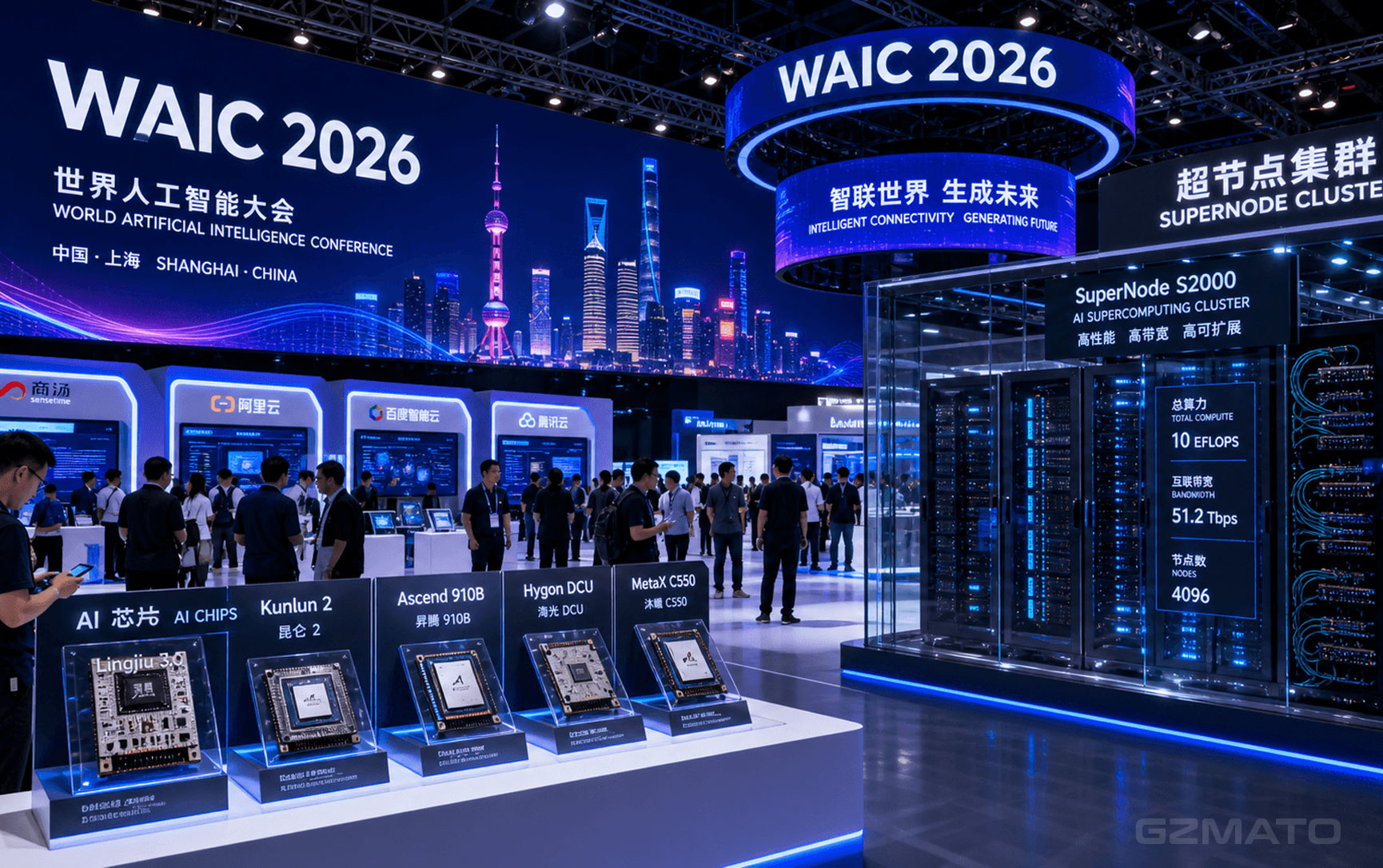
- Two Stories, One Theme: AI is Moving from "Showable" to "Scalable"
- Story One: Meta and Anthropic — The AI Compute Market Takes Shape
- Story Two: WAIC 2026 Day 2 — Robots Get to Work, AI Shows Its Real Value
- AI at the Service of Society: Concrete Milestones
- One Theme, Two Fronts: AI's Arrival at Scale
- Key Takeaways
July 18, 2026 — Two stories broke today that, on the surface, seem unrelated. One is about a deal that hasn't even been signed yet. The other is about a conference that's been running for two days. But together, they tell the same story about where the AI industry is heading.
Story one: Meta is in talks to rent computing capacity to Anthropic in a deal that could be worth up to $10 billion over two years [citation:2][citation:5]. Story two: WAIC 2026 has shifted decisively from "showable" AI to "scalable" AI — robots are now working, climate models are saving lives, and AI is being held to the same standards as any other industrial technology [citation:1][citation:8].
The common thread? AI has entered the "scalable" phase. The industry has moved beyond research breakthroughs and demos. The hard work now is making it work at scale, in production, for real people.
Story One: Meta and Anthropic — The AI Compute Market Takes Shape
On Friday, Reuters and other outlets reported that Meta Platforms is in preliminary talks to rent computing capacity to AI startup Anthropic, in a deal that could be worth up to $10 billion over two years [citation:2][citation:5].
According to the reports, Anthropic proposed the arrangement in June, and Meta is currently evaluating it. The structure would see Anthropic paying Meta on a monthly basis over the two-year term [citation:5].
This deal is significant for both companies:
- For Anthropic: It would provide much-needed compute capacity at a time when access to advanced AI chips is a major bottleneck. Anthropic has already struck a similar deal with SpaceX's Colossus 1 data center, paying approximately $1.25 billion per month [citation:5]. The company has been forced to restrict access to its most advanced models (like Fable) simply because it doesn't have enough compute to serve all demand [citation:5]. This deal would be another step toward securing the infrastructure it needs to compete with OpenAI and Google.
- For Meta: It would validate CEO Mark Zuckerberg's bet on AI infrastructure. Meta has been building massive data centers, with 2026 capital expenditures projected between $125 billion and $145 billion [citation:2][citation:5]. As Zuckerberg has openly stated, companies have been asking if Meta would sell them computing capacity, and this deal would be the first real test of that [citation:5]. It would also help Meta justify its enormous spending to investors.
The deal is far from finalized — reports describe the talks as "very preliminary" and the details are still being worked out [citation:5][citation:10]. But the very existence of such a deal is instructive.
What it tells us: The AI industry's compute needs are so vast that even a company like Meta — with $145 billion in annual capex — can't use all of its own infrastructure. And AI companies like Anthropic are so desperate for compute that they're willing to rent it from their competitors' data centers. This is the scarcity-driven economics of AI in 2026.
Notably, this comes as Apple briefly overtook Nvidia as the world's most valuable company on Friday, with Apple's market cap reaching about $4.88 trillion before Nvidia regained the lead by the closing bell [citation:7]. The shift reflects investor reassessment of AI's "winners" — with Apple's consumer-focused AI strategy gaining momentum as investors worry about unsustainable spending on AI infrastructure [citation:7].
Story Two: WAIC 2026 Day 2 — Robots Get to Work, AI Shows Its Real Value
Meanwhile, at WAIC 2026 in Shanghai, the focus has shifted from "look at what AI can do" to "look at what AI is actually doing."
Three developments from Day 2 stand out:
1. Robots Are Now Working, Not Just Performing
At previous WAIC events, humanoid robots were showpieces — they walked, danced, and occasionally fell over. This year, they're actually working [citation:11].
In the "Embodied Intelligence Hall" — the most crowded section of the expo — robots are performing real tasks:
- Logistics robots are sorting packages in a live demonstration, with over 100 units already working in logistics centers across China [citation:11].
- Service robots are collecting laundry and folding clothes in hotel scenarios [citation:11].
- Retail robots are running unattended convenience stores [citation:11].
- Domestic robots are tidying homes autonomously [citation:11].
As one report put it: "The focus has shifted from 'showy' moves to actual applications. Instead of performing stunts, robots are now demonstrating real-world utility" [citation:11].
The industry is also shifting its competitive focus from hardware specs to "robot brains" — the embodied AI models that give robots perception, learning, and decision-making capabilities [citation:11].
2. AI is Becoming an International Public Good
At WAIC's "AI for Climate Change" forum, China formally delivered the "Mazu" (妈祖) AI-driven early warning system to Djibouti, as part of a broader international effort [citation:6].
Mazu is the first large-scale AI disaster prevention solution China has made available internationally. It's already been deployed in Pakistan and Sri Lanka to help communities prepare for coastal monsoons, and in Ethiopia to manage drought and flooding [citation:6].
As the report noted: "This is a concrete example of AI as an international public good — addressing the pain points of developing countries with weak meteorological monitoring, lagging warnings, and high technical maintenance costs" [citation:6].
3. AI is Getting Real Standards and Regulations
Several policy frameworks were unveiled at WAIC Day 2 [citation:1]:
- The "AI Cooperation and Development Action Plan" outlines eight actions including quality data supply, inclusive computing power, and "AI for good" [citation:1].
- The "International AI Ethics and Governance Action Plan" was also released, alongside the "Intelligent Agent Mutual Trust, Interconnection, and Interoperability Global Cooperation Initiative" [citation:1].
These frameworks represent a shift from "let's see what AI can do" to "let's define how it should operate" — the natural next step for a technology entering mainstream deployment [citation:8].
AI at the Service of Society: Concrete Milestones
Beyond the headline-grabbing robots, several concrete developments demonstrate AI's expanding real-world impact:
In healthcare: The "AI for Life Sciences and Health" forum released a white paper on "The Future Doctor," examining how AI will reshape medical practice. China's National Healthcare Commission has already provided guidance on AI's role in diagnostics, and the National Healthcare Insurance Administration has included AI-assisted diagnostics in its pricing guidelines — removing a major obstacle to adoption [citation:6].
In climate and disaster response: The Mazu early warning system is now operational in seven countries, and the "Fenghe" (风和) large language model was officially launched at WAIC, translating complex meteorological data into plain-language guidance for the public and decision-makers [citation:9].
In everyday life: AI is already in 170,000 Shanghai households — not in the form of flashy robots, but as family AI assistants that help seniors order meals, keep children safe online, and connect families to healthcare services [citation:9].
On the policy front: The state is actively shaping how AI enters everyday life. As one report noted: "On the same day, regulators drew a line on what can't be done (with new AI interaction regulations) and issued licenses for what can run" — a calibrated approach that enables innovation while maintaining guardrails [citation:8].
One Theme, Two Fronts: AI's Arrival at Scale
When you step back and look at these two stories side by side — Meta's $10 billion compute deal and WAIC's shift from demos to deployment — the same narrative emerges:
AI is entering its "scalable" phase. This is the phase where the industry stops asking "what can we build?" and starts asking "how do we make it work, at scale, safely and profitably?" It is a phase characterized by enormous capital investment, real-world deployment across sectors, and the growing maturity of regulatory frameworks.
At WAIC, AI is being held to the same standards as any other industrial technology — not just as a scientific curiosity but as a productivity tool that must prove its value, safety, and reliability. As one report from the expo put it: "The question is no longer whether AI can move, but whether it can work" [citation:8].
And in the markets, the AI industry is still figuring out who the real winners will be. Apple's consumer-focused AI strategy is gaining traction, even as Nvidia's dominance in AI chips faces growing competition — and growing concern about whether that infrastructure investment will actually pay off [citation:7].
The two stories are, in fact, the same story: AI is becoming infrastructure. Like roads, like electricity, like the internet — expensive to build, hard to regulate, and ultimately, transformative for the industries that figure out how to use it well.
Key Takeaways
| # | What You Need to Know About AI's Arrival at Scale |
|---|---|
| 1 | Meta and Anthropic are in talks for a $10B compute deal — the AI compute market is emerging, with cloud providers renting capacity to AI companies struggling to access chips |
| 2 | WAIC 2026 has shifted to "scalable" AI — robots are now working real jobs, not performing stunts; the industry focus has moved from "showable" to "deployable" |
| 3 | AI is becoming an international public good — China's Mazu early warning system is now operational in seven countries, helping communities prepare for natural disasters |
| 4 | AI regulation is catching up — multiple frameworks were released at WAIC, including the AI Cooperation and Development Action Plan and the International AI Ethics and Governance Action Plan |
| 5 | AI is already in 170,000 Shanghai households — as family assistants, helping seniors and children, not just in industrial or research settings |
| 6 | Apple briefly overtook Nvidia in market cap — investors are reassessing AI's winners, with consumer-focused AI strategies gaining momentum against pure infrastructure plays |
- 证券时报 / 界面新闻 — Meta-Anthropic compute rental negotiations, July 2026 [citation:2]
- 财联社 / 新浪财经 — Meta-Anthropic deal details and context, July 2026 [citation:5][citation:10]
- CCTV / 央视网 — WAIC 2026 Day 2 coverage and product debuts, July 2026 [citation:1][citation:3][citation:8]
- 光明网 / 央视新闻 — WAIC 2026 forum coverage and "Mazu" delivery, July 2026 [citation:6]
- 光明网 / 央视网 — Embodied intelligence shifting from "showy" to "real work," July 2026 [citation:11]
- 中工网 / 央视新闻 — WAIC "Compute Hall" coverage and "Fenghe" launch, July 2026 [citation:9]
- Qazinform — Apple vs Nvidia market cap data, July 2026 [citation:7]


- Meta Anthropic compute deal
- AI compute market
- WAIC 2026
- embodied intelligence
- Mazu early warning
- AI regulation
- Apple Nvidia market cap
- Gzmato