6G Technology 2026: What You Need to Know About the Next Generation of Connectivity
- 6G Technology 2026: The Next Generation of Connectivity
- 6G Timeline: When Is It Coming?
- What Is 6G? Beyond Faster Speeds
- Key Features: The Three Pillars of 6G
- Killer Applications: How 6G Will Change Your Life
- 6G vs 5G: What's Actually Different?
- China's 6G Leadership: Patents, Trials, and Timeline
- Challenges and Costs
- Final Verdict: Should You Wait for 6G?
- Stay Connected with Gzmato
April 21, 2026 – The 2026 Global 6G Technology and Industry Ecosystem Conference officially opens today in Nanjing, China. With 6G now written into China's "15th Five-Year Plan" and government work report, the next-generation mobile technology has moved from "forward-looking布局" to "industrial cultivation" as a national strategic priority [citation:5][citation:9].
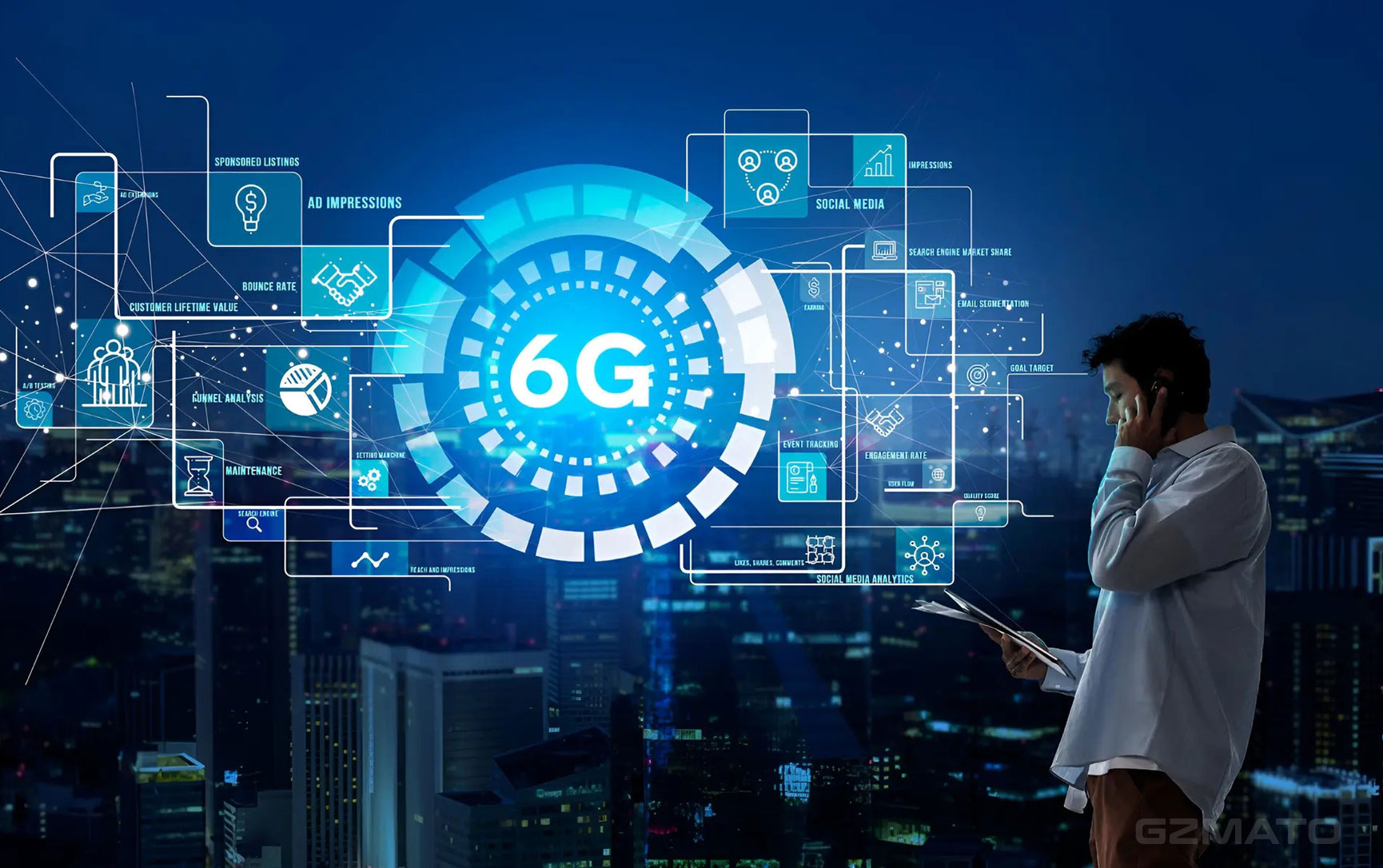
6G Technology 2026: The Next Generation of Connectivity
At the 2026 Zhongguancun Forum Annual Conference in March, Chinese experts projected trial commercial deployment of 6G technology around 2030, with widespread consumer adoption anticipated by 2035 [citation:3][citation:7]. But 6G is not just 5G with more speed — it represents a fundamental shift in how networks are designed and what they can do.
As Zhang Ping, a professor at Beijing University of Posts and Telecommunications, put it: "If the first phase was about 'drawing blueprints and gathering materials,' this second phase (2026-2028) is about 'building the framework and creating the prototype.'" [citation:3]
6G Timeline: When Is It Coming?
Here's the official roadmap based on announcements from Chinese government and industry leaders:
| Phase | Timeline | Key Activities |
|---|---|---|
| Phase 1 (Completed) | ~2025 | Technology validation, 300+ technologies tested [citation:3] |
| Phase 2 (Current) | 2026-2028 | Integrate technologies into real devices, build prototypes [citation:3] |
| 3GPP Standards | Q1 2029 | First official 6G specifications targeted [citation:2] |
| Trial Commercial | ~2030 | Limited deployment, early applications [citation:3][citation:7] |
| Mass Adoption | ~2035 | 6G smartphones in everyday use [citation:3] |
Qualcomm has announced an even more aggressive target: commercial 6G devices launching from late 2029 onwards, backed by 58 ecosystem partners including operators, infrastructure providers, and device makers [citation:2].
What Is 6G? Beyond Faster Speeds
"6G is not simply 5G+1G, but a comprehensive super-evolution," said Zhang Zhilong, Associate Professor at Beijing University of Posts and Telecommunications. "Its speed is 10 to 100 times that of 5G, latency is only one-tenth, and it can connect massive numbers of devices simultaneously." [citation:4]
• AI-Native by Design – Unlike 5G, which added AI capabilities after deployment, 6G is being built with AI at every layer — from base stations to terminals to core networks [citation:2][citation:3].
• Integrated Space-Air-Ground-Sea Coverage – 6G will connect satellites directly, eliminating global signal blind spots — something 5G cannot achieve [citation:4][citation:7].
• Communication + Sensing + Computing – 6G networks won't just transmit data; they'll "see" their environment like radar and process information at the edge [citation:2][citation:6].
"If 5G is compared to a wide information highway, 6G is a super intelligent network covering space, air, and earth," Zhang Zhilong explained [citation:4].
Key Features: The Three Pillars of 6G
According to Qualcomm's vision and Chinese research institutions, 6G is built on three foundational pillars [citation:2][citation:6]:
1. Next-Generation Connectivity
Moving beyond smartphones to new form factors like AR glasses, drones, and robots. 6G will support uplink-heavy use cases where devices stream "see what I see" video in real-time. Voice-first interactions and seamless collaboration between devices for edge-cloud processing will become standard [citation:2].
2. Wide Area Sensing (通感一体)
6G networks will evolve from passive data pipes to intelligent sensing platforms. They can offer a "bird's eye view" for managing traffic, detecting drones, and monitoring industrial environments. Even in fog or heavy rain, autonomous vehicles could "see" road conditions hundreds of meters ahead through 6G sensing [citation:2][citation:4].
3. Distributed Compute (通算一体)
Creating a continuum of AI processing: from 10-billion parameter models on devices to 10-trillion parameter models in data centers, with localized "AI accelerator cards" in the middle of the network. This opens doors for mobile operators to evolve into token providers, not just data providers [citation:2].
Killer Applications: How 6G Will Change Your Life
For Consumers (To C)
- Holographic Communication – Have "face-to-face" meetings with colleagues thousands of miles away, with realistic 3D holograms [citation:4].
- Immersive AR/VR – Ultra-high speed and ultra-low latency will make virtual worlds feel completely real, enabling seamless blending of digital and physical reality [citation:4].
- Smart Home That Knows You – Your home will learn your routines and adjust temperature, lighting, and entertainment before you even think about it [citation:4].
For Industries (To B)
- Autonomous Driving – Vehicles will communicate with each other and road infrastructure in real-time, making traffic safer, smoother, and greener [citation:4].
- Remote Surgery – Doctors wearing haptic gloves could perform precision surgeries from thousands of miles away [citation:4].
- Drone Delivery – Drones will navigate precisely to drop hot meals on your balcony, guided by 6G's sensing capabilities [citation:4].
- Embodied AI / Humanoid Robots – Considered the "killer application" for 6G. With cloud-brain and edge-small-brain coordination, robots can overcome computing power, battery life, and weight constraints [citation:6].
6G vs 5G: What's Actually Different?
| Feature | 5G | 6G |
|---|---|---|
| Peak Speed | ~10 Gbps | ~1 Tbps (100x faster) |
| Latency | ~1 ms | ~0.1 ms (10x lower) |
| AI Integration | Added after deployment | AI-native from ground up [citation:2] |
| Coverage | Primarily terrestrial | Space-air-ground-sea integrated [citation:4] |
| Sensing Capability | Basic | Radar-like environment sensing [citation:6] |
| Connected Devices | ~1M per km² | ~10M per km² |
| Target Commercial | 2019 | 2029-2030 [citation:2][citation:3] |
China's 6G Leadership: Patents, Trials, and Timeline
Patent Leadership
China holds approximately 40% of global 6G patent applications, giving the country a strong position in setting international standards [citation:3]. Chinese experts have already led the completion of 3GPP's first 6G standard report on "6G Scenarios, Use Cases, and Business Requirements" [citation:6].
Technology Trials
The first phase of 6G technology trials has been completed, validating over 300 technologies in labs and test networks. The next phase, from 2026 to 2028, focuses on integrating these technologies into real devices and building prototypes [citation:3][citation:7].
Key Research Breakthroughs
- Peking University's "fiber-wireless integrated communication system" set new data transmission speed records [citation:4]
- Peking University's electronic engineering team used integrated microcavity comb-driven microwave photonic antenna arrays to increase 6G channel rates by 30 times [citation:4]
- ZTE launched GigaMIMO at MWC 2026, achieving 10x capacity improvement over 5G-Advanced [citation:10]
Government Support
"Cultivating and developing future industries including 6G" was formally written into the government work report for the second consecutive year in 2026, providing strong policy backing [citation:4][citation:6].
Challenges and Costs
• Global Standards Competition – India aims for 10% of 6G patents, and South Korea is pursuing technology leadership [citation:3].
• Supply Chain Gaps – Core components and foundational software still face vulnerabilities [citation:3].
• Higher Infrastructure Costs – Building a 6G network is projected to be more costly than 5G [citation:3].
• Ecosystem Development – The market concentration of telecom equipment makers means open collaboration is essential for innovation [citation:6].
• Power Consumption – 6G base stations and terminals will need significant energy efficiency improvements.
Will 6G Be More Expensive for Consumers?
According to Zhang Ping, a Chinese Academy of Engineering academician, "Price is not an absolute factor, but a relative one." 6G will provide new services that 5G cannot offer (such as robot-assisted elderly care), and users will be paying for new value. Meanwhile, 4G, 5G, and 6G will coexist for a long time, giving consumers choice [citation:6].
Final Verdict: Should You Wait for 6G?
Should you wait for 6G before buying new devices? No. 6G is still 4-5 years away from commercial deployment. Your next smartphone, laptop, or tablet will be perfectly capable for years to come.
Should you care about 6G development? Yes. 6G will enable applications that aren't possible today — from holographic calls to truly autonomous vehicles to robot-assisted living. Understanding the roadmap helps you make informed decisions about future tech investments.
What about 5G devices today? 5G networks will continue to improve with 5G-Advanced (5.5G) features. The 5G ecosystem will remain the primary mobile network for the majority of this decade. Buying a 5G device in 2026 is a safe, future-proof investment.
Stay Connected with Gzmato
While 6G is still years away, we've got the best 5G devices and networking gear for today:
5G Smartphones | Wi-Fi 7 Routers | Fiber Optic Cables | Networking Accessories | AI-Ready Devices
Ready to upgrade your network? Use code GZMOTO6G for 10% off your next purchase
Shop Networking Gear Now →Sources (as of April 21, 2026):
- 2026 Global 6G Technology and Industry Ecosystem Conference announcements [citation:1][citation:5][citation:9]
- 2026 Zhongguancun Forum Annual Conference expert statements [citation:3][citation:7]
- Qualcomm 6G roadmap and Counterpoint Research interview [citation:2]
- Chinese media reports: Science and Technology Daily, Securities Times, Communication World [citation:4][citation:6]
- ZTE GigaMIMO announcement at MWC Barcelona 2026 [citation:10]
- 6G technology
- 6G vs 5G
- 6G timeline 2030
- 6G applications
- China 6G patents
- AI-native 6G
- 6G conference 2026
- future of connectivity
- gzmato