ASML CEO Warns Musk's Terafab Chip Project May Face Supply Chain Bottlenecks
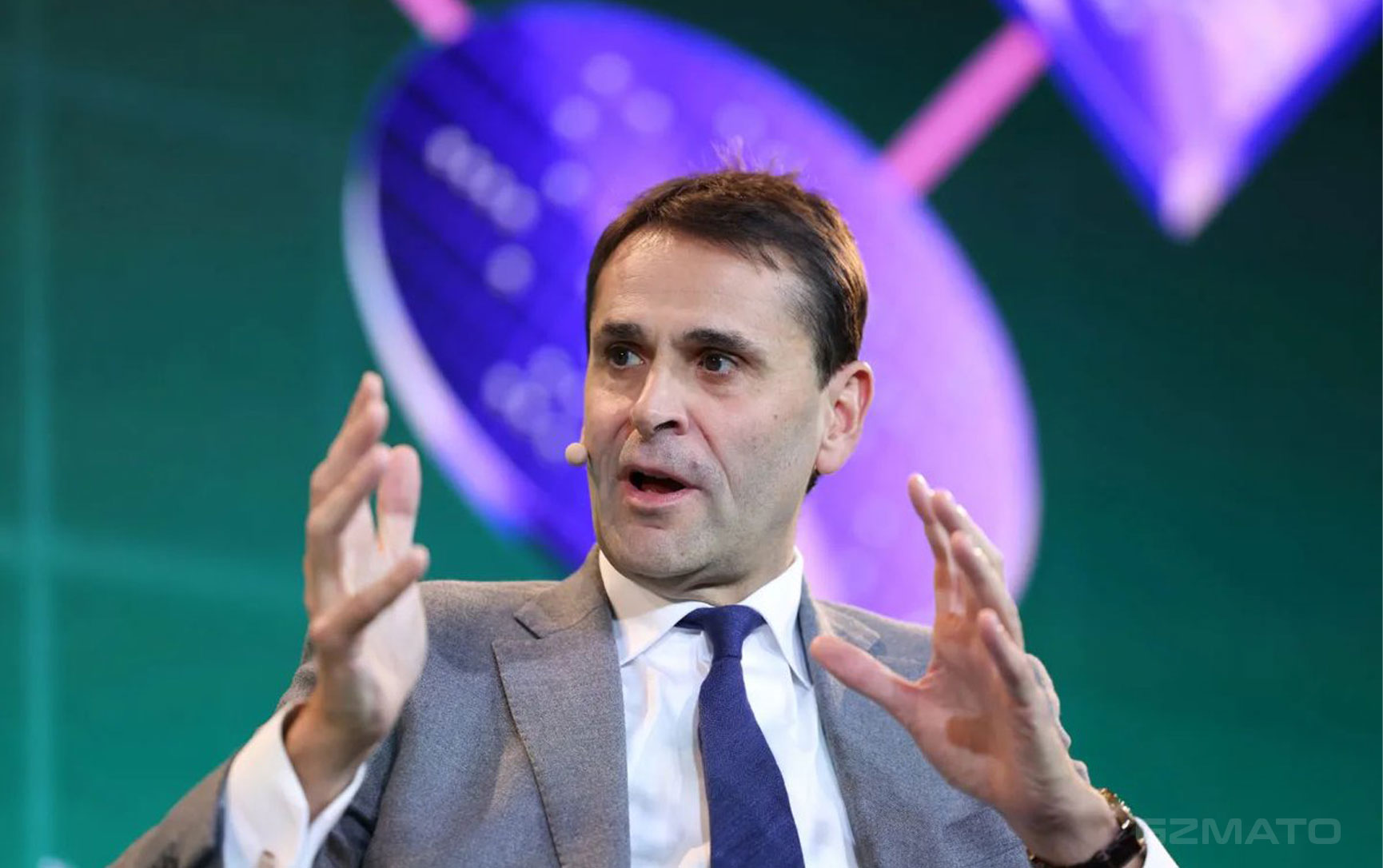
ASML CEO Warns Musk's Terafab Project May Face Supply Chain Bottlenecks
At the VivaTech technology conference in Paris, ASML CEO Christophe Fouquet delivered a striking message about Elon Musk's ambitious Terafab chip factory project: the world's only supplier of advanced lithography machines must ensure its own supply chain does not become a bottleneck [citation:1].
"As long as supply capacity is not a bottleneck, new projects represent opportunities. Therefore, we must ensure this issue is properly addressed. Terafab is a typical example of a large-scale wafer fab project," Fouquet said when asked about new business from Terafab [citation:1][citation:2].
This is not a rejection of Musk's project. It is a reality check: the semiconductor supply chain is already stretched to its limit, and Terafab's massive scale could push it past breaking point [citation:5][citation:7].
What Is Terafab? Musk's $119 Billion Chip Empire
Terafab is Elon Musk's vision for a massive semiconductor manufacturing facility in Texas, designed to produce enough chips to meet the needs of all his companies — Tesla, xAI, SpaceX, and Neuralink [citation:5][citation:8].
The scope of the project is staggering:
| # | Key Fact |
|---|---|
| 1 | Estimated investment: Up to $119 billion — potentially the most expensive industrial project in history [citation:5] |
| 2 | Primary customers: Tesla (autonomous vehicles, robotics), xAI (AI models), SpaceX (satellites, spacecraft), Neuralink (brain-computer interfaces) [citation:5][citation:8] |
| 3 | Key technology: High-NA EUV lithography — ASML is the sole global supplier [citation:5] |
| 4 | Each machine cost: Approximately $400 million [citation:5] |
Fouquet revealed that he has personally discussed the project with Musk and described the Tesla CEO's commitment as "serious" [citation:5]. This is not a casual proposal — it is a project that is actively being planned with the world's most important semiconductor equipment supplier.
ASML's Warning: "Supply Capacity Is the Key Constraint"
ASML's warning cuts to the heart of the global semiconductor supply problem. The company is the world's only manufacturer of the extreme ultraviolet (EUV) lithography machines needed to produce chips at 5nm and below — the nodes that power AI training, autonomous vehicles, and advanced robotics [citation:1][citation:5].
ASML's production capacity is already under immense pressure:
- 2026 production plan: 60 low-NA EUV machines, up 25% from 2025 [citation:7]
- 2027 production plan: 80 low-NA EUV machines [citation:7]
- High-NA EUV machines: Even more complex, with even more limited production capacity [citation:5]
At roughly $400 million per high-NA EUV machine, a Terafab-scale project would require dozens of them — consuming a significant portion of ASML's entire annual output [citation:5]. This is the bottleneck Fouquet is highlighting.
Fouquet's language was precise and measured. He did not reject the project. He stated that new projects are "opportunities" as long as "supply capacity is not a bottleneck" [citation:2]. The implication is clear: the current supply situation is tight enough that any major new project could strain the system.
The High-NA EUV Bottleneck: $400 Million Per Machine
ASML's extreme ultraviolet lithography machines are the most advanced manufacturing tools ever created. Each high-NA EUV machine costs approximately $400 million [citation:5]. For context, that is more than the cost of a Boeing 787 Dreamliner.
These machines are not mass-produced. They are built one at a time, with lead times measured in years, not months. The supply chain for their components is itself constrained — the mirrors, lasers, and precision positioning systems that go into each machine are manufactured by a limited number of specialized suppliers [citation:7].
ASML is already working to expand capacity. The company has launched an expansion plan that includes [citation:7]:
- Increasing productivity of existing equipment
- Developing more advanced Hyper-NA technology
- Creating a second advanced packaging tool to meet demand for large AI chips
But even with these efforts, the company's CFO noted that 2026 production remains tightly constrained. The company plans to ship 60 low-NA EUV machines in 2026, increasing to 80 in 2027 [citation:7].
If Terafab requires even 20 high-NA EUV machines — not an unreasonable number for a project described as "massive" — that would consume an enormous portion of ASML's production capacity for that technology for a year or more [citation:1][citation:5].
AI Infrastructure Demand "Extremely Massive"
Fouquet did not limit his warning to Terafab. He also emphasized that AI infrastructure demand is "extremely massive" [citation:1].
This echoes a warning he delivered on May 20, 2026, when he predicted that the semiconductor market would face a "long-term supply-constrained" environment due to AI-driven demand [citation:7].
Key data points from that earlier warning:
- He forecasts the global chip market could reach $1.5 trillion by 2030 [citation:7]
- Tech giants (Google, Microsoft, Meta, Amazon) are spending nearly $700 billion on data center construction this year [citation:7]
- This is forcing TSMC, Samsung, and SK Hynix to accelerate capacity expansion [citation:7]
- ASML has raised its 2026 revenue guidance to €36-40 billion [citation:7]
Fouquet also raised a more speculative but fascinating point: he discussed the possibility of building data centers in space, as connectivity remains a fundamental constraint for AI systems — "all these products must be connected to data," he noted, pointing to Starlink as the potential connector [citation:1][citation:7].
Key Takeaways
| # | Key Takeaway |
|---|---|
| 1 | ASML CEO warns Terafab may face supply bottlenecks — The world's only advanced lithography supplier must ensure its own capacity can support Musk's massive project [citation:1]. |
| 2 | Terafab could cost $119 billion — Potentially the most expensive industrial project in history, serving Tesla, xAI, SpaceX, and Neuralink [citation:5]. |
| 3 | High-NA EUV machines cost $400 million each — ASML is the sole supplier; production is limited to tens of machines per year [citation:5]. |
| 4 | ASML plans 60 EUV machines in 2026, 80 in 2027 — Even with production increases, supply remains tight [citation:7]. |
| 5 | AI infrastructure demand is "extremely massive" — Fouquet confirmed that AI data center construction is driving unprecedented demand [citation:1]. |
| 6 | Space data centers are being discussed — Fouquet raised the possibility of building data centers in space, with Starlink as the connector [citation:1]. |
| 7 | Chip market could reach $1.5 trillion by 2030 — The scale of demand is reshaping the entire semiconductor supply chain [citation:7]. |
- Bloomberg — ASML CEO Christophe Fouquet interview at VivaTech Paris [citation:1][citation:2]
- Phoenix Tech / 凤凰网科技 — Terafab project and ASML supply chain warning [citation:1]
- BingX Flash News — Terafab investment and high-NA EUV details [citation:5]
- NetEase / 网易手机 — ASML CEO May 20 warning on long-term supply constraints [citation:7]
- Huannan Securities / 華南永昌證券 — Terafab project overview [citation:8]
AI-Ready Laptops | Fast Chargers | USB-C Cables | Power Banks | Tech Accessories | Development Kits
Special Offer: Use code TECH2026 for discount on your first order!
- ASML Terafab
- Musk chip factory
- high-NA EUV
- ASML supply chain
- Terafab project
- Christophe Fouquet
- semiconductor bottlenecks