China's TPU "Xuyu" Chip Arrives: 896 TFLOPS, 50% Less Power, No Foreign Dependencies
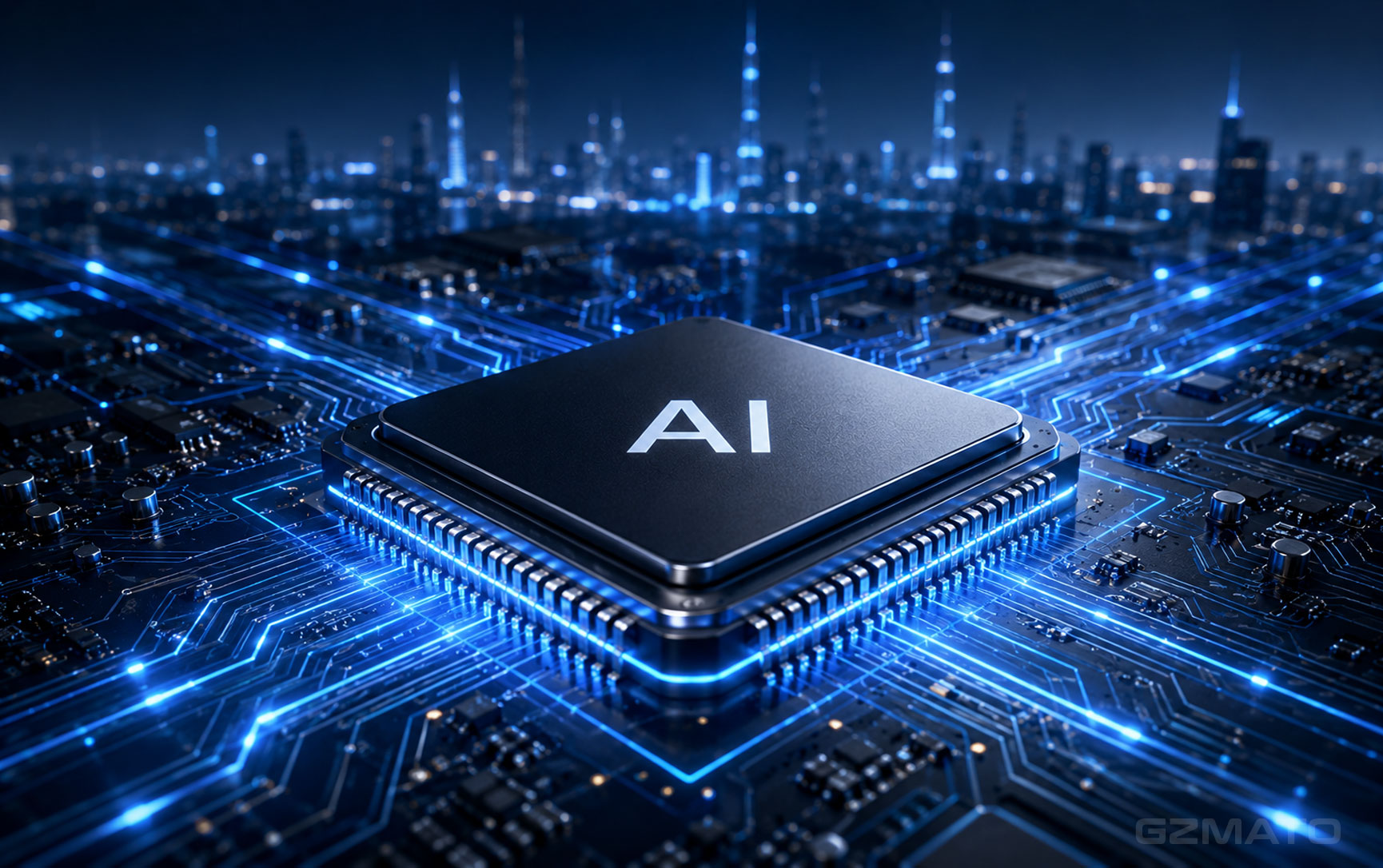
China's TPU "Xuyu" Arrives
On June 30, 2026, Zhonghao Xinying — a Chinese AI chip company founded by former Google TPU engineers — unveiled its second-generation fully self-developed TPU AI chip, codenamed "Xuyu" (须臾). Alongside it, the company launched the Taize 2.0 AI high-performance computing platform .
The numbers are striking: 896 TFLOPS of mixed-precision floating-point performance — three times the power of the company's first-generation "Chana" chip. 1,792 TOPS for 8-bit inference. Power consumption held to 600W, which is 50% less than comparable chips .
This is not a prototype. Xuyu has already entered mass production, with批量 products delivered to customers. It is already deployed in multiple large-scale AI data centers across China .
Key Specifications
| Specification | Xuyu Performance |
|---|---|
| Mixed-Precision FP | 896 TFLOPS (3x previous generation) |
| 8-bit Inference | 1,792 TOPS |
| Power Consumption | 600W (50% less than comparable chips) |
| Single Node Performance | 7.168 PFLOPS (8 chips) |
| Cluster Scale | Up to 2,048 chips direct interconnect per supernode |
| Architecture | Fully self-developed IP, instruction set, operator library, and system software |
| Power Efficiency vs GPU | 80% of traditional GPU server power consumption for same workload |
| Cost Advantage | 60% of overseas high-end compute infrastructure cost |
Xuyu is built on a fully self-developed TPU architecture. Zhonghao Xinying owns the complete stack: chip IP cores, proprietary instruction sets, operator acceleration libraries, and system software — with no dependencies on foreign technology . This is a critical differentiator for industries with strict security and compliance requirements, such as government, finance, and power grid sectors .
The TPU Difference
Why TPU instead of GPU? Zhonghao Xinying's CEO Yang Gongyifan, a former Google TPU engineer, explains the strategic choice: "General-purpose GPUs have their value in the domestic market, but from a global industry perspective, it is difficult for new players to overtake on that path" .
NVIDIA and AMD have spent decades refining their GPU architectures and CUDA software ecosystems. "Later entrants cannot easily overtake them," Yang argues . TPU, by contrast, is a newer architecture — Google only began developing TPU in 2015 — and still has significant room for micro-architecture innovation .
TPU is purpose-built for AI workloads. It is not a general-purpose compute engine — it is optimized specifically for the tensor math that drives large language models . This yields several advantages:
- Higher data reuse: TPU architectures keep data closer to the compute units, reducing the memory bandwidth bottleneck that plagues GPUs
- Lower overhead: By focusing on AI-specific operations, TPUs eliminate the circuitry needed for general-purpose computing
- Better scaling: The architecture is designed for high-performance, low-latency interconnect across thousands of chips
Yang notes that TPU architectures have "more uncharted territory to explore" compared to mature GPUs, making them a more fertile ground for innovation .
- PD separation support: Xuyu natively supports Prefill-Decode separation architecture, allowing different chips to specialize in prompt processing vs. token generation
- KV cache optimization: Re-architected data flow scheduling dramatically improves cache hit rates for long-context scenarios
- 2048-chip direct interconnect: Single supernode supports massive distributed training and inference
The Token Cost Advantage
Perhaps the most compelling metric is cost. In large model inference scenarios, Zhonghao Xinying's platform delivers per-million-token costs at just 35-50% of leading overseas GPU solutions .
This is not a theoretical advantage — it is the primary reason customers are choosing the platform. According to Yang, the main drivers are: "The huge cost difference is the primary reason customers choose us, followed by long-term cluster stability, chip interconnect reliability, and supply chain independence" .
Yang confirmed that Xuyu is already in mass production and has shipped批量 products to customers . The company uses a proactive inventory strategy: "We lock in orders and stock based on business forecasts, not waiting for customer orders before starting production. Our supply chain is stable and we can meet customer demand" .
Real-World Deployment
The company's first-generation "Chana" chip has already been deployed in multiple large-scale AI data centers, including projects operated by China Unicom Shenzhen, China Mobile Tianjin, Taiji Computer, and Jiangxi Shangrao . These deployments span finance, media, education, and healthcare sectors .
Xuyu has been optimized for major Chinese AI models, including the Qwen series, DeepSeek, GLM, and MiniMax . The software stack supports PyTorch, vLLM, SGLang, and distributed training frameworks DeepSpeed and Megatron-LM .
For AI agent workloads, Xuyu is compatible with the OpenClaw open-source framework, providing on-premise deployment options for enterprise automation use cases .
Key Takeaways
| # | Key Takeaway |
|---|---|
| 1 | 896 TFLOPS, 3x previous generation — Xuyu delivers massive performance gains over its predecessor, with 1,792 TOPS for 8-bit inference |
| 2 | 50% power reduction — 600W power consumption vs. comparable chips, crucial for green data center strategies |
| 3 | Fully self-developed — No foreign IP dependency across chip, instruction set, software stack. Meets security and compliance requirements for government and finance sectors |
| 4 | 35-50% token cost savings — Per-million-token cost is significantly lower than leading GPU alternatives in real-world inference scenarios |
| 5 | Already in mass production — Not a prototype. Xuyu is shipping to customers with stable supply chain |
| 6 | Deployed in major data centers — China Unicom Shenzhen, China Mobile Tianjin, Taiji Computer, and others |
| 7 | Optimized for Chinese AI models — Qwen, DeepSeek, GLM, MiniMax, and more |
| 8 | OpenClaw compatible — Supports on-premise AI agent deployment for enterprise privacy and security |
| 9 | 2048-chip cluster scale — Single supernode can support trillion-parameter model training |
Sources & Methodology (as of July 7, 2026):
- Economic Information Daily / 经济参考报 — Xuyu chip announcement
- Science and Technology Daily / 科技日报 — Xuyu release coverage
- Securities Times / 证券时报 — CEO Yang Gongyifan interview
- Electronics Engineering Times / 电子工程专辑 — Technical architecture analysis
- IT Home / IT之家 — Product specifications
- China AET / 电子技术应用 — Taize 2.0 platform details
AI-Ready Laptops | Fast Chargers | USB-C Cables | Power Banks | Tech Accessories
Special Offer: Use code TECH2026 for a discount on your first order!
Shop Now at Gzmato →- TPU chip
- Xuyu
- Zhonghao Xinying
- Chinese AI chip
- AI inference
- domestic chip
- ChatGPT chip
- AI token cost