John Ternus' First Triumph: How the MacBook Neo Made Apple the Only PC Brand Growing
- John Ternus' First Triumph: How the MacBook Neo Made Apple the Only PC Brand Growing
- The CEO Who Saw It Coming
- By the Numbers: MacBook Neo's Market Impact
- The Strategy Behind the Price: A Series of Trade-Offs
- The Education Market: Apple's Beachhead
- The Challenge Ahead: Supply Constraints and Price Increases
- Key Takeaways
August 3, 2026 — In just four months, the MacBook Neo has transformed Apple's position in the PC market. It has become Apple's best-selling laptop, turned the company into the only major PC brand growing in a declining market, and made significant inroads into classrooms dominated by Windows and Chromebooks.
The product was championed by John Ternus — the incoming Apple CEO who will officially take the helm on September 1, 2026. Analysts had warned that a "cheap Mac" would be a compromise-ridden product. Instead, the MacBook Neo has become one of the most consequential product launches in Apple's recent history.
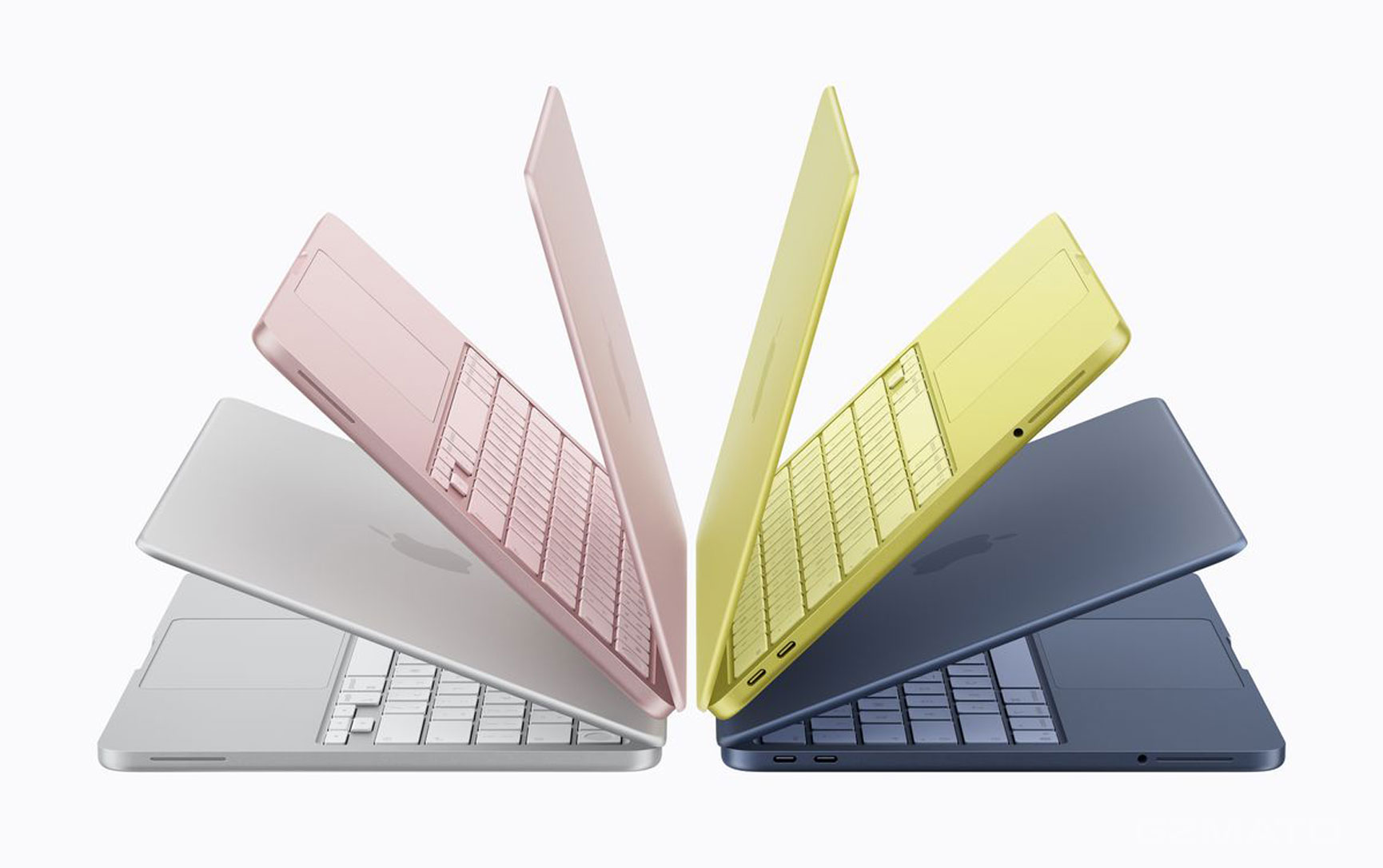
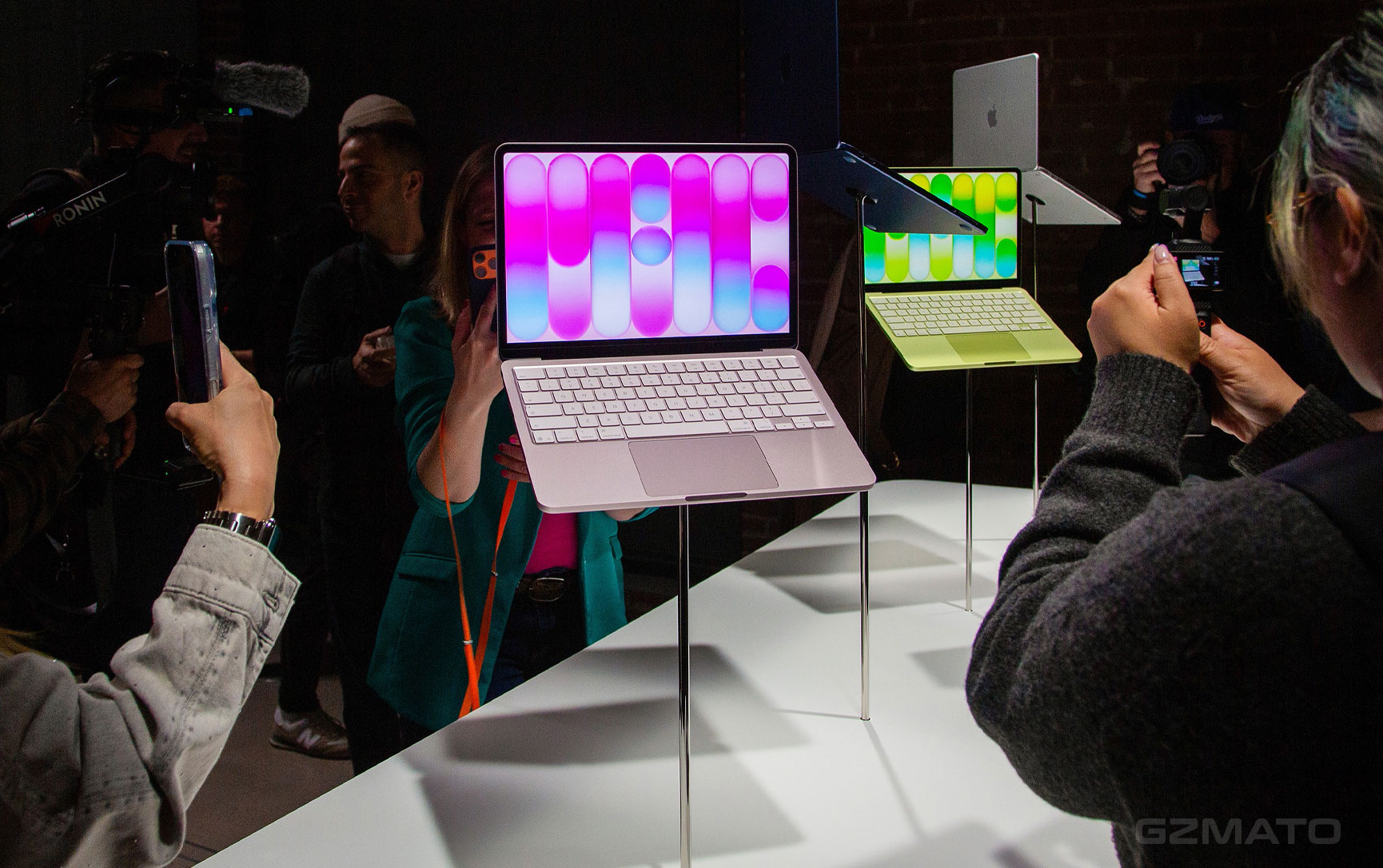
On March 11, 2026, Apple launched a laptop that broke the company's own pricing mold. The MacBook Neo started at $599, or $499 for students — roughly half the price of the entry-level MacBook Air. It used an A18 Pro chip, the same processor powering the iPhone 16 Pro, rather than an M-series chip. It came in four colors, in a 13-inch aluminum body. It had 8GB of memory, which could not be upgraded[citation:6][citation:15].
Critics questioned the compromises. Analysts wondered if a cheap Mac would tarnish the brand. But the product had a powerful advocate: John Ternus, Apple's senior vice president of Hardware Engineering, who was then known to be Tim Cook's successor.
In an interview with ABC News at the launch, Ternus explained the product's purpose: "We saw an opportunity here to really just reach a lot more people than we ever have before," he said. "[The MacBook Neo is] solid, it's reliable, it's durable, it's all the things you want a Mac to be. And yeah, that's an amazing price point."[citation:15]
Ternus also explained why Apple hadn't tried this earlier. "We didn't want to do it until we could do it really, really well and build a Mac that we were proud of," he told ABC News. "That's why the bar is high."[citation:15]
On September 1, 2026, Ternus will officially take over as Apple's CEO[citation:4][citation:13]. By that time, the MacBook Neo will have already established itself as the single most important product introduction of his tenure — and one of the clearest signals of how he intends to lead Apple.
The CEO Who Saw It Coming
John Ternus joined Apple's product design team in 2001, and rose to senior vice president of Hardware Engineering in 2021, overseeing the entire hardware portfolio[citation:4]. In his 25 years at Apple, he has led the development of the iPhone, iPad, Mac, Apple Watch, AirPods, and Apple Vision Pro[citation:4][citation:10].
According to reports, Ternus "had long recognized the vast market potential of the affordable consumer notebook segment" and actively pushed the MacBook Neo project forward, even as analysts questioned whether a low-cost Mac would represent too many compromises[citation:1].
Tim Cook, who will transition to Executive Chairman on September 1, offered a direct endorsement: "He is a visionary whose contributions to Apple over 25 years are already too numerous to count, and he is without question the right person to lead Apple into the future."[citation:10]
The MacBook Neo is, in many ways, a reflection of Ternus' engineering philosophy. It is a series of deliberate trade-offs — using a repurposed phone chip to keep costs low, retaining an aluminum body where other budget laptops use plastic, and prioritizing the macOS experience over raw specs.
By the Numbers: MacBook Neo's Market Impact
The sales data tells a clear story about the product's success.
| Metric | Value |
|---|---|
| Mac quarterly revenue (Q3 2026) | $103.5 billion, up 28.7% year-over-year[citation:1] |
| Mac shipment growth (Q2 2026) | +10.1% year-over-year, vs. market decline of -4.9%[citation:2][citation:7][citation:11] |
| Apple's Q2 PC market share | 9.9%, up from 8.6%[citation:2][citation:7] |
| MacBook Neo shipments (first 3 weeks) | 1.1 million units — Apple's best-selling Mac in that period[citation:12] |
| MacBook Air shipments (same period) | 900,000 units (M5 model)[citation:12] |
| MacBook Pro shipments (same period) | 550,000 units (M5 model)[citation:12] |
In its first three weeks on the market, the MacBook Neo shipped 1.1 million units, outpacing both the M5 MacBook Air (900,000 units) and the M5 MacBook Pro (550,000 units) in that same period[citation:12].
The impact extended beyond raw numbers. According to IDC, Apple was the only major PC brand to grow in Q2 2026 while the broader market shrank by 4.9%[citation:2][citation:7]. Dell, HP, and Lenovo all posted declines; Apple grew by 10.1%[citation:11].
Counterpoint Research projects that the MacBook Neo will help Apple increase its share of the $400-$699 laptop segment from about 2% in 2025 to roughly 15% in 2026[citation:9][citation:12].
The Strategy Behind the Price: A Series of Trade-Offs
The MacBook Neo's low price was achieved through deliberate engineering choices, not cost-cutting that sacrificed quality.
The A18 Pro chip. Rather than developing a new low-end M-series processor, Apple used the A18 Pro chip that powers the iPhone 16 Pro[citation:6]. This allowed the company to leverage existing silicon at scale, reducing cost while still delivering performance that Apple claims is up to 50% faster than "the bestselling PC with the latest shipping Intel Core Ultra 5."[citation:6]
8GB of memory, fixed. The Neo ships with 8GB of RAM in a fixed configuration, which is not upgradeable. This simplifies manufacturing and reduces cost, but has been a point of criticism[citation:6].
Aluminum body, but no ProMotion. The Neo features a 13-inch Liquid Retina display with 500 nits brightness, but lacks the ProMotion and P3 wide color of higher-end models[citation:6]. The casing remains aluminum, avoiding the plastic construction common at this price point.
Four colors. The Neo ships in Silver, Blush, Citrus, and Indigo — an intentional design choice aimed at younger users and students[citation:6]. Ternus described the color options to ABC News as "an opportunity for our design team to do something really expressive with this product."[citation:15]
No fan. The fanless design keeps weight down to 1.22kg and contributes to Apple's claim of up to 16 hours of battery life[citation:6].
This is not a premium laptop, but it is also not a cheap product in the conventional sense. It is a product designed for a specific user: a student, a teacher, or a first-time Mac buyer who cannot afford a MacBook Air but still wants the macOS experience.
The Education Market: Apple's Beachhead
Education is where the MacBook Neo has had its most visible impact. According to Apple's Q3 2026 earnings call, half of all MacBook Neo units purchased by U.S. educational institutions replaced Windows PCs or Chromebooks[citation:1][citation:5].
One example: Pinellas County Schools in Florida, one of the state's largest school districts, deployed 25,000 MacBook Neo units across 18 high schools, replacing the district's Windows PC fleet[citation:1][citation:5].
In Washington state, Peninsula School District has moved 8,000 students from Chromebooks to MacBook Neo. In Oklahoma, Meade-Dell School District has purchased over 6,000 units, transitioning the entire student body to an Apple-only environment[citation:5].
The education market has historically been dominated by Chromebooks, which typically sell for $200-$400 and are managed through Google's cloud-based administration tools[citation:9]. Apple's $499 education price for the MacBook Neo brings it within reach of that market, while offering the macOS experience that students and teachers have long preferred for creative and productivity work.
According to Counterpoint Research, the Neo's launch represents "one of the company's most aggressive pushes into the education computing market in more than a decade," timed to counter Google's "overwhelming dominance" in K-12 education[citation:9]. The strategy is to capture students early and retain them through college and careers[citation:9].
"We're incredibly excited to introduce MacBook Neo, which delivers the magic of the Mac at a breakthrough price," Ternus said at the launch. "There is simply no other laptop like it."[citation:6]
The Challenge Ahead: Supply Constraints and Price Increases
No product success story in 2026 is complete without a supply chain constraint, and the MacBook Neo is no exception.
In its first quarter, the Neo sold for $599 consumer / $499 education, with a Chinese market price of 4,599 yuan[citation:12]. Within weeks, Apple raised the price by $100 in most markets — $699 consumer / $599 education, and 5,499 yuan in China — citing memory cost increases[citation:2][citation:7].
Tim Cook, on his final earnings call as CEO, described the situation as a "100-year flood on memory pricing with exponential increases in memory prices," explaining that the price increase was a reluctant necessity[citation:8].
The larger constraint is supply. According to DigiTimes, the MacBook Neo is limited by A18 Pro chip availability. The original 2026 shipment forecast of 10 million units has been cut by 40%, with the revised estimate now at 6-7 million units. The 3nm production capacity at TSMC, the chip's manufacturer, is unable to keep up with demand, and Apple is paying a premium to secure additional capacity[citation:3].
DRAM cost increases and shortages have further constrained production, creating a situation where the most successful Mac launch in years is being limited by its own component supply chain[citation:3].
Despite these constraints, Apple's Mac business delivered $103.5 billion in Q3 2026 revenue, up 28.7% from the same quarter in 2025[citation:1].
Key Takeaways
| # | What You Need to Know About MacBook Neo and John Ternus |
|---|---|
| 1 | John Ternus championed the MacBook Neo — the incoming CEO (starting Sept 1, 2026) pushed for an affordable Mac despite analyst skepticism[citation:1][citation:4] |
| 2 | 1.1 million units in first three weeks — became Apple's best-selling laptop, outpacing MacBook Air and MacBook Pro[citation:12] |
| 3 | Apple was the only PC brand to grow in Q2 2026 — Mac shipments up 10.1% vs. market decline of 4.9%[citation:2][citation:7] |
| 4 | Half of education Neo purchases replaced Windows/Chromebooks — including 25,000 units in Florida's Pinellas County Schools[citation:1][citation:5] |
| 5 | Supply constraints limit the Neo — A18 Pro chip shortages cut 2026 shipment forecast from 10M to 6-7M units[citation:3] |
| 6 | Mac revenue hit $103.5B — up 28.7% year-over-year in Q3 2026, driven largely by MacBook Neo[citation:1] |
- PacificTech / 快科技 — MacBook Neo sales and education market penetration data[citation:1]
- IDC / MoneyDJ — Q2 2026 PC market share and Apple's 10.1% growth[citation:2][citation:7]
- IT之家 / DigiTimes — A18 Pro chip supply constraints and 40% shipment cut[citation:3]
- Britannica — John Ternus biographical and career background[citation:4]
- 9to5Mac / 凤凰网 — Education market adoption and school district case studies[citation:5]
- Hindustan Times — MacBook Neo launch pricing and specifications[citation:6]
- Yahoo Finance / TheStreet — Tim Cook's "100-year flood" memory pricing commentary[citation:8]
- Fortune India / Counterpoint — Market share projections and education strategy[citation:9]
- The Financial Express — John Ternus CEO transition and leadership background[citation:10]
- CNMO — First-three-week shipment data (1.1M units)[citation:12]
- JSE / CNN — CEO transition details and Ternus appointment[citation:13]
- ABC News / Good Morning America — John Ternus exclusive interview on MacBook Neo[citation:15]


- John Ternus
- MacBook Neo
- Apple CEO
- Apple Mac sales
- MacBook Neo shipments
- Apple education market
- A18 Pro chip
- Tim Cook successor
- Apple PC market share
- Gzmato