NVIDIA China Share Hits Zero as Apple Readies iOS 27 AI Overhaul
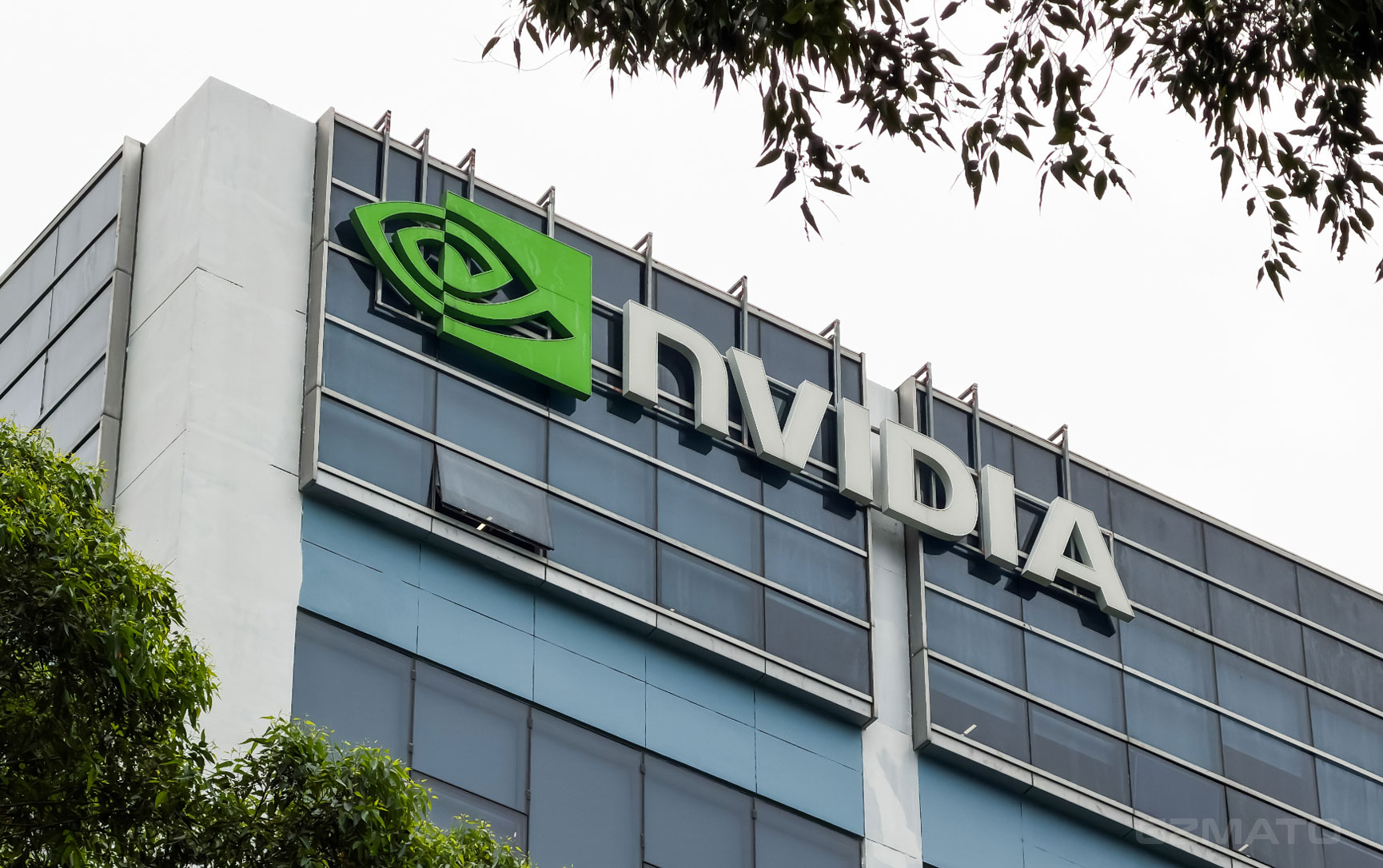
May 4, 2026 – Two major stories emerged in the tech world over the past days, each revealing a different facet of AI's evolution. On one side, NVIDIA CEO Jensen Huang confirmed that the company's share of China's AI accelerator market has dropped to zero [citation:1][citation:4][citation:7]. On the other, Apple is reportedly preparing its most ambitious AI push yet with iOS 27 [citation:2][citation:3][citation:5]. One story is about market disruption; the other is about product transformation. Together, they paint a picture of an industry in flux.
Two AI Milestones on Opposite Ends
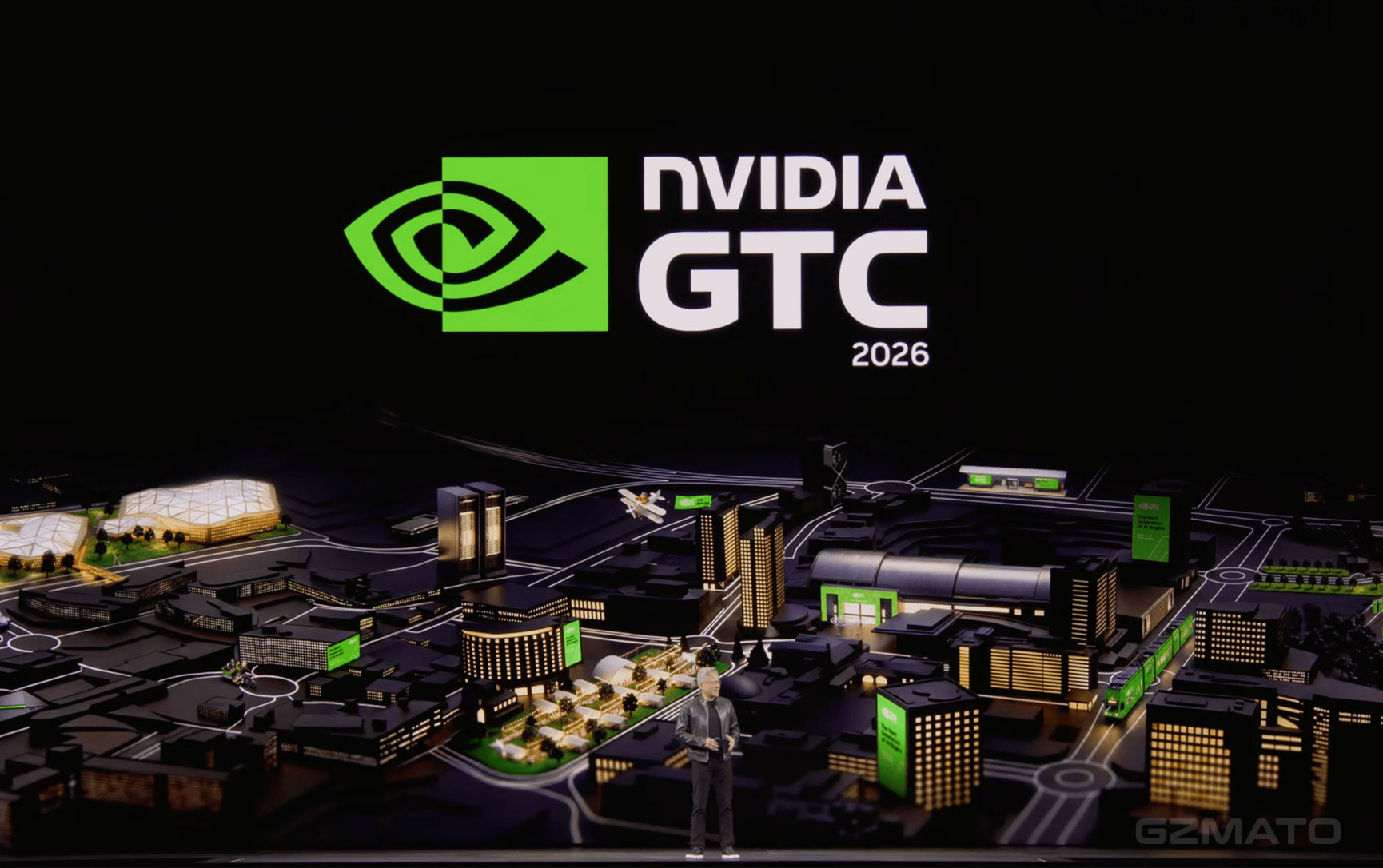
In an interview with the Special Competitive Studies Project (SCSP), Huang stated that NVIDIA's once-dominant position in China's AI accelerator market has effectively evaporated [citation:1][citation:4][citation:7]. "In China, we have now dropped to zero," he said [citation:7]. Just two years ago, NVIDIA held an estimated 66% of that market [citation:4].
Meanwhile, Apple is preparing to unveil iOS 27 at WWDC 2026, reportedly featuring a standalone Siri app, a "Visual Intelligence" camera mode, and expanded satellite communication capabilities [citation:2][citation:3][citation:5]. The timing is significant: Apple has been viewed as a latecomer to the conversational AI race, and iOS 27 represents a direct response to ChatGPT and Gemini [citation:8].
NVIDIA's China Market: From Dominance to Zero
"Conceding an entire market the size of China probably does not make a lot of strategic sense," Huang told SCSP [citation:4][citation:7]. He argued that the policy "has already largely backfired" and called for dynamic policy adjustments [citation:1][citation:4].
Earlier this year, investment firm Bernstein estimated that NVIDIA's share of China's AI GPU market could fall from 66% in 2024 to roughly 8% in the coming years [citation:4][citation:7]. According to Huang, the drop has been even more dramatic than those projections [citation:1].
What Huang did not say is perhaps as important as what he said. He made no mention of workarounds or alternative paths. His description of the situation as a zero-sum outcome—either NVIDIA is present or it isn't—suggests that no immediate solution is on the horizon [citation:7].
What This Means for the Industry
1. NVIDIA's Global Strategy Changes Shape
Huang's argument is straightforward: long-term leadership depends on ecosystem dominance, not market restrictions [citation:1][citation:4]. "Long-term leadership will depend less on restricting global rivals and more on ensuring that the American AI ecosystem dominates globally," he stated [citation:7].
2. Local Alternatives Accelerate
Chinese developers are increasingly turning to domestic hardware [citation:4][citation:7]. Companies like Huawei (Ascend), Cambricon, Moore Threads, and MetaX are advancing both silicon and software [citation:7]. The so-called "CUDA moat" in software remains the primary challenge for local competitors, but Huang acknowledged that China remains a formidable force in frontier AI model development [citation:4][citation:7]. "They have cheaper energy. They have incredible talent. The number of AI researchers in China is quite extraordinary — it's one of their national treasures," he said [citation:4][citation:7].
iOS 27: Apple's AI Awakening
iOS 27 is expected to debut at WWDC 2026 and release to the public in September. The focus: performance and AI [citation:2][citation:5].
The standalone Siri app is reportedly codenamed "Campos" (or "Campo"), signaling it's a deliberate new direction rather than a minor update [citation:8].
The Siri Reboot: Independent App
For years, Siri has been viewed as the laggard in the AI assistant race. iOS 27 aims to change that perception [citation:5][citation:8].
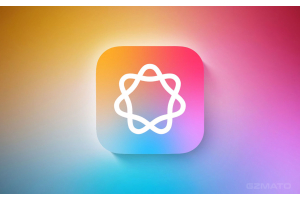
- Standalone App: Siri will reportedly become an independent application with a chat-style interface, similar to ChatGPT or Gemini. It will allow both voice and text input, with conversation history that can be saved and reviewed [citation:2][citation:5][citation:8].
- Dynamic Island Integration: When activated, Siri will display a glowing icon and "Searching" label within the Dynamic Island, expanding into a translucent panel for results [citation:2][citation:5][citation:8].
- Screen Awareness: The new Siri will be able to analyze the content currently displayed on the screen and take action based on it — summarizing articles, recognizing images, or pulling relevant information [citation:5].
- Third-Party Extensions: Users may be able to route requests to ChatGPT, Gemini, or Claude through an Extensions menu, acknowledging that Apple cannot dominate every AI domain alone [citation:5][citation:8].
- Personalization: Siri will reportedly access emails, messages, and files to provide more personalized responses — a feature originally planned for iOS 18 but pushed back [citation:2][citation:5].
Camera Intelligence: See What AI Sees
The iOS 27 camera app is expected to integrate a "Visual Intelligence" mode that enables real-time object recognition and information lookup [citation:3][citation:6].
- Real-Time Recognition: Point your camera at anything — landmarks, plants, products — and iOS will identify it and provide contextual information
- Integrated with Siri: Ask Siri about what you're seeing, and the assistant can pull from both the camera feed and your personal data to answer
- Photo Editing: Apple Intelligence is expected to bring enhanced AI-powered photo editing capabilities
Satellite Communication Expands
iOS 27 is expected to introduce new satellite connectivity features, likely exclusive to iPhone 18 Pro, Pro Max, and the rumored iPhone Ultra, all of which will feature Apple's next-generation C2 modem [citation:2].
- Apple Maps via Satellite: Navigation support without cellular coverage
- iMessage Photos via Satellite: Sending images over satellite connections
- Third-Party Satellite API: Developers will be able to integrate satellite functions into their apps
- No Orientation Requirement: Future iPhones may connect to satellites without needing to be pointed skyward
These features build on the existing satellite SOS, roadside assistance, and messaging introduced in recent years. The expansion suggests Apple sees satellite connectivity as a mainstream feature, not just an emergency backup [citation:2].
Final Verdict
The NVIDIA story is about market dynamics. When a company that once dominated a market falls to zero percent share, it forces a full strategic recalibration. For NVIDIA, the loss of China represents a significant economic gap — but also a potential test case for the argument that market access matters more than trade barriers [citation:1][citation:4][citation:7].
The iOS 27 story is about product evolution. Apple is not losing a market — it is trying to re-enter one it largely sat out. The standalone Siri app acknowledges that voice assistants are no longer just about setting timers and checking weather. They are about conversation, context, and action [citation:5][citation:8].
What connects both is AI's centrality. NVIDIA's chips remain the dominant engine for training models, even as their availability shifts. Apple's belated AI push confirms that no major platform can afford to treat AI as an accessory — it must be fundamental to the operating system [citation:6].
For industry observers, the lesson is straightforward: AI markets shift quickly. Companies that wait to adapt can find themselves on the wrong side of a trend. Huang's acknowledgment of a zero percent share — and Apple's aggressive revamp of Siri — both reflect the urgency of staying current in a fast-moving space [citation:1][citation:3].
AI-Ready Devices at Gzmato
Smartphones | AI-Ready Laptops | Premium Audio | Charging & Accessories
AILANDSCAPE15
Data Sources & Methodology (as of May 4, 2026):
- 太平洋科技 – NVIDIA's China market share reporting (May 3, 2026) [citation:1]
- IT之家 – iOS 27 AI focus and NVIDIA update (May 3-4, 2026) [citation:3][citation:4][citation:6]
- Tom's Hardware – Jensen Huang's interview with SCSP (May 3, 2026) [citation:7]
- 凤凰网科技 – iOS 27 Siri preview and features (March 28, 2026) [citation:5]
- 搜狐 / IT之家 – iOS 27 satellite and Siri details (May 2-3, 2026) [citation:2]
- eWEEK – Standalone Siri app analysis (April 14, 2026) [citation:8]
- NVIDIA China market share zero
- Jensen Huang
- iOS 27 AI
- Siri standalone app
- Apple visual intelligence
- satellite communication iPhone