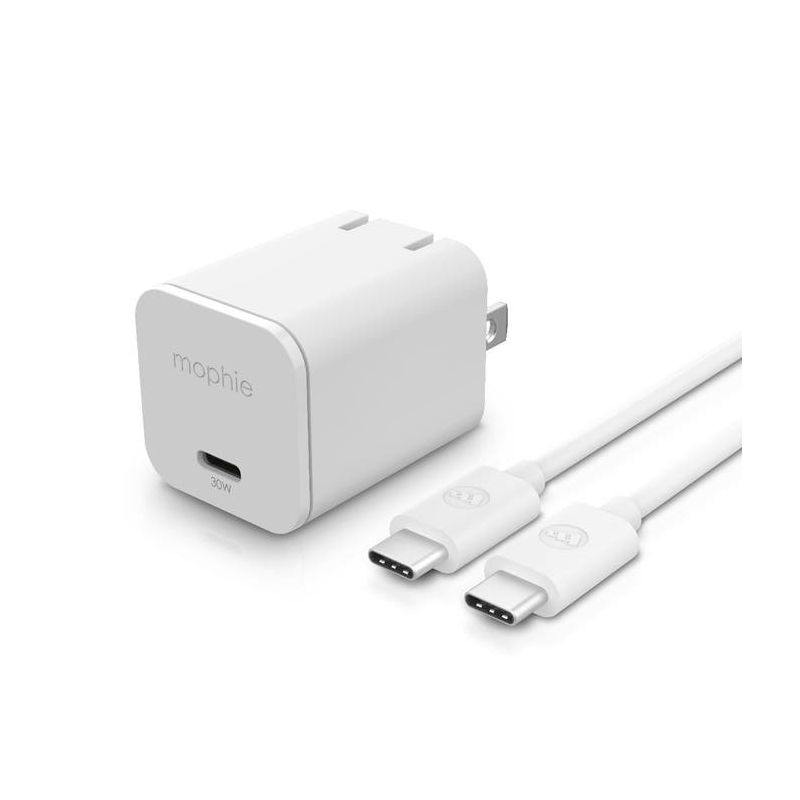
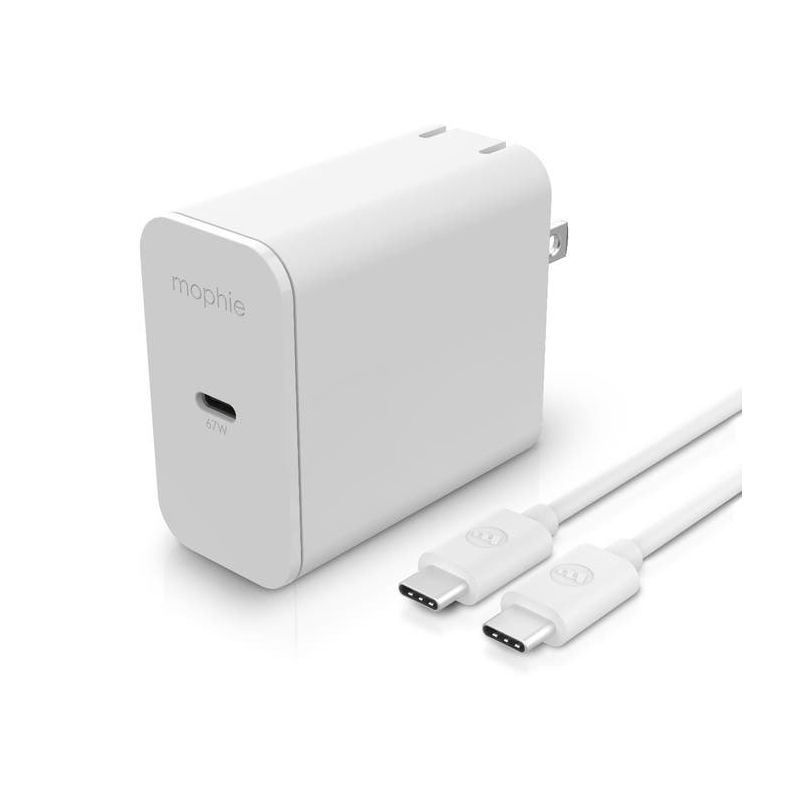
The mophie 20W has evolved, and the new charger has been reviewed

The 20W charger market, with the release of the iPhone 12 so far, has been hot for a year or two, during which a variety of products emerge in an endless stream, small size, outstanding shape, multi-mouth... Among them, mophie also launched an upgraded 20W charger on the basis of the original 18W PD charger.
Fixed pins + decent volume control + suitable design for all ages, can not fault is not a stunning product. Mophie has recently gone further in terms of portability, bringing a new 20W charger, let's take a look at how it performs.
Product introduction
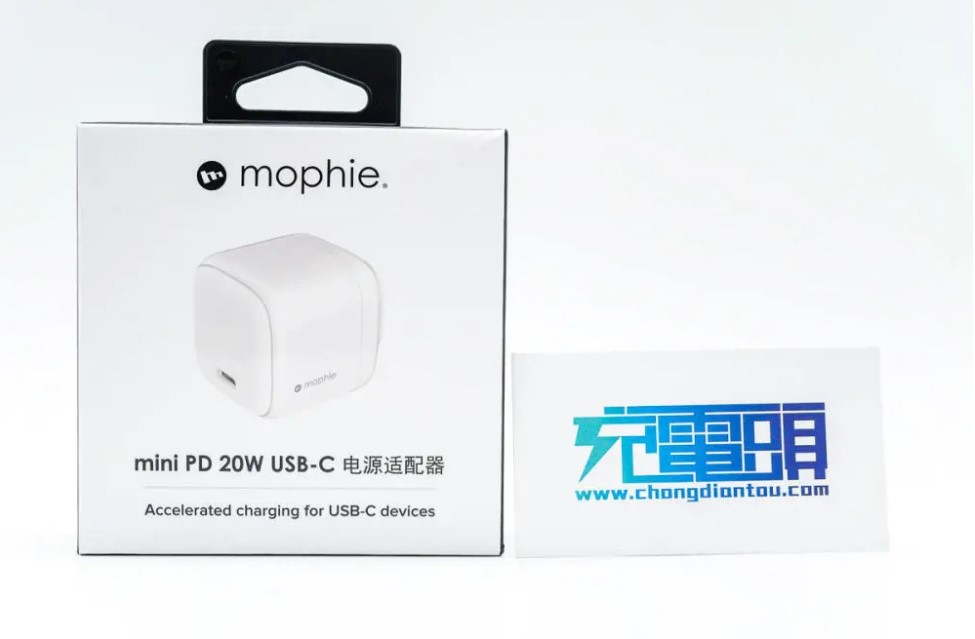
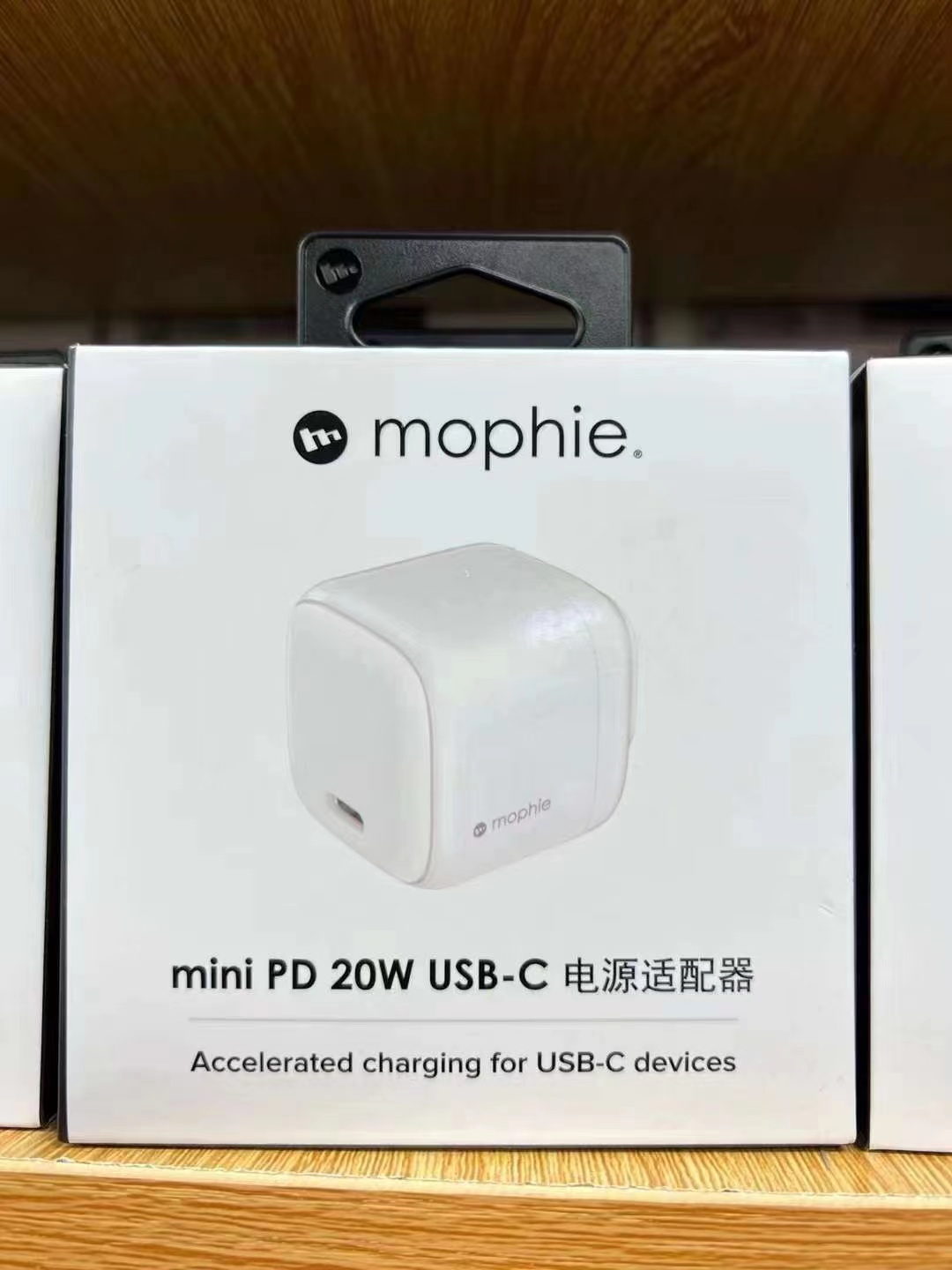
On the front of the package there is a simple product description, 20W PD USB-C charger.
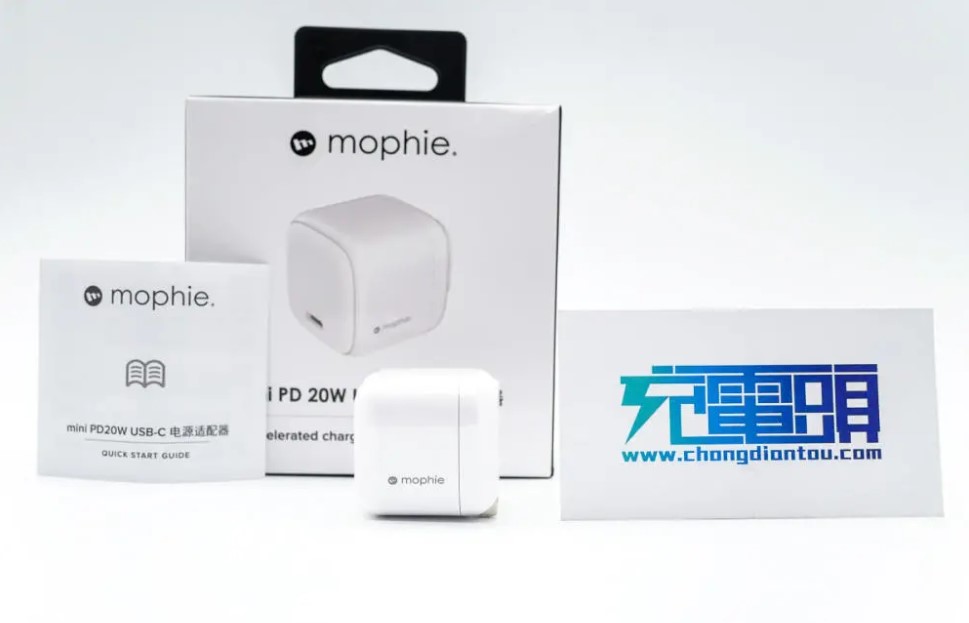
Charger and instruction manual are included in the package.
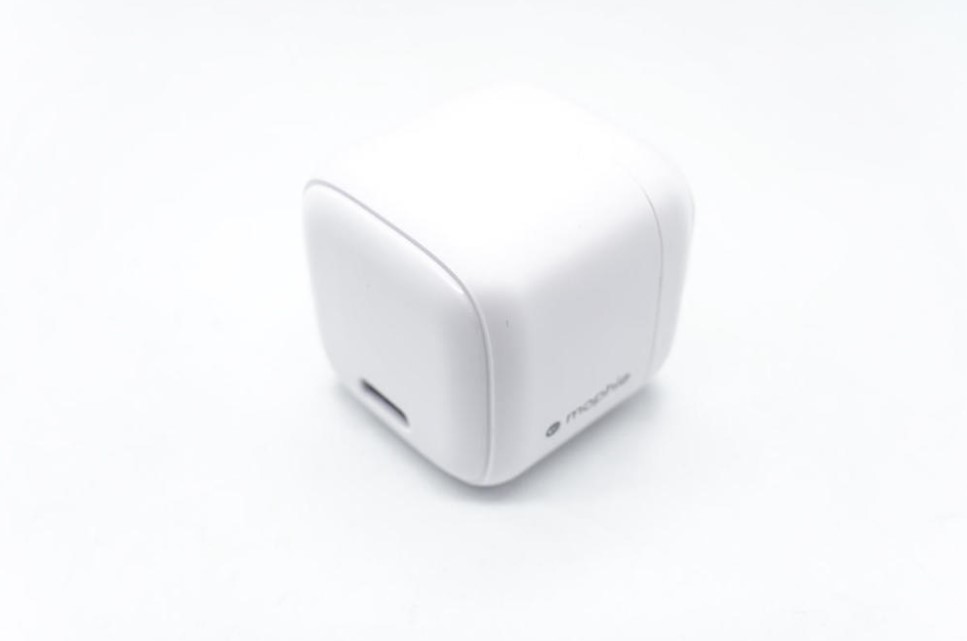
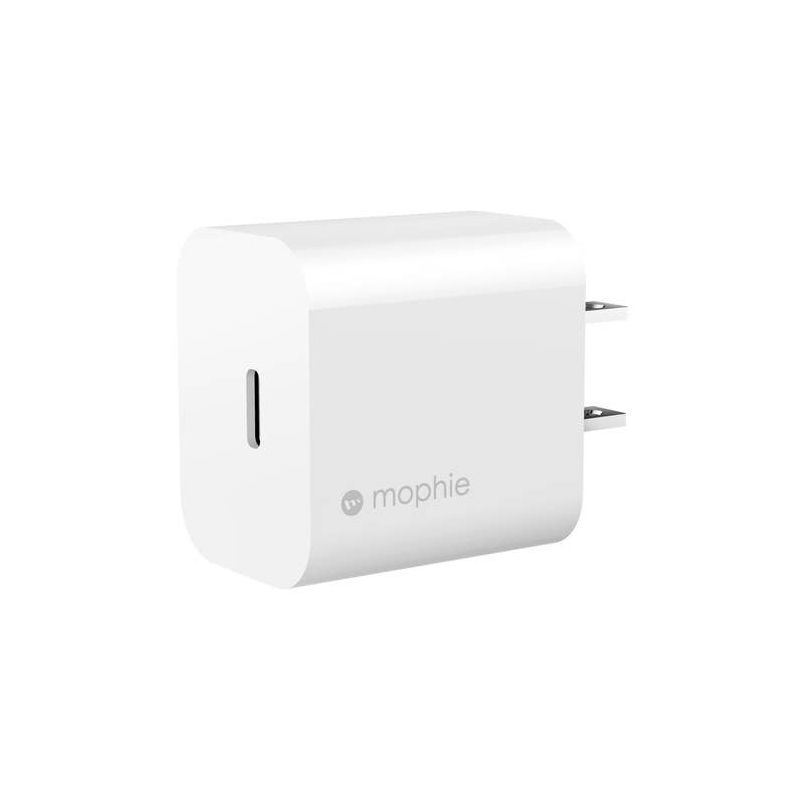
The overall shape of the mophie 20W charger looks like an old-fashioned refrigerator, with a large arc transition in the corners, carrying to avoid bumping other equipment, and the visual effect of fine frosted sand is elegant and warm, saying goodbye to fingerprint staining.
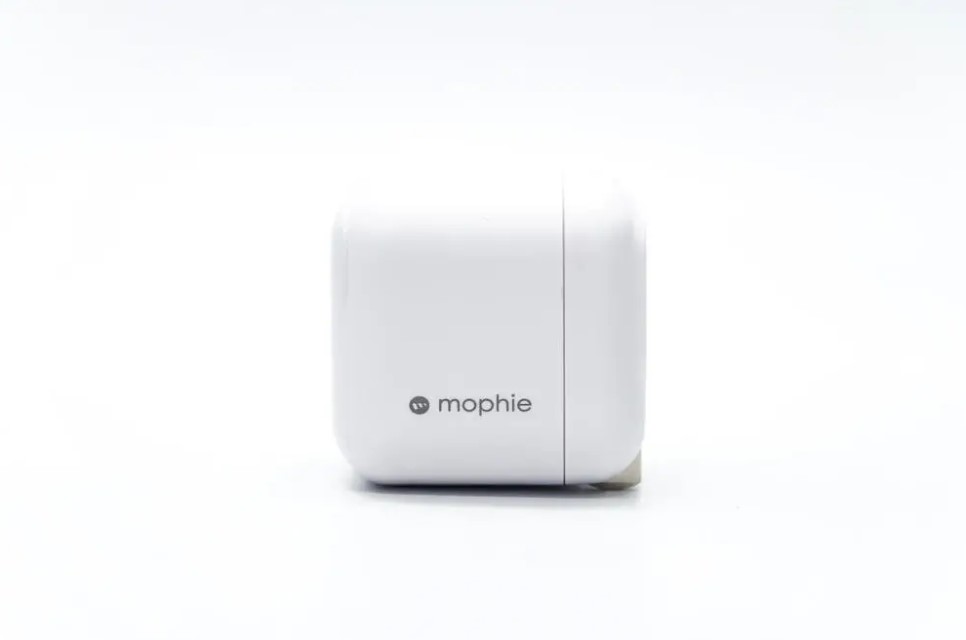
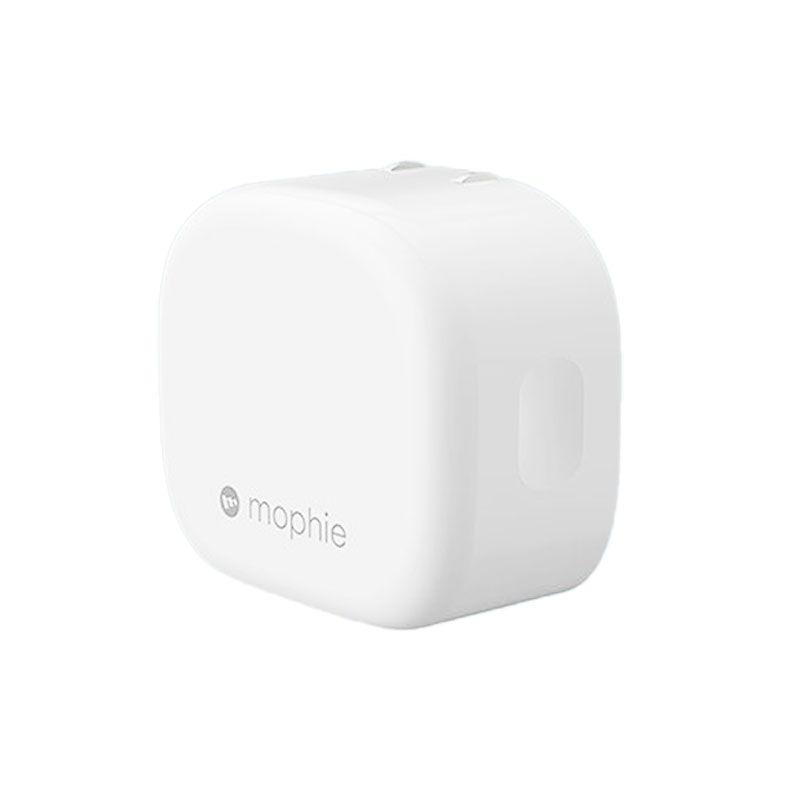
The side of the charger is printed with the mophie logo.
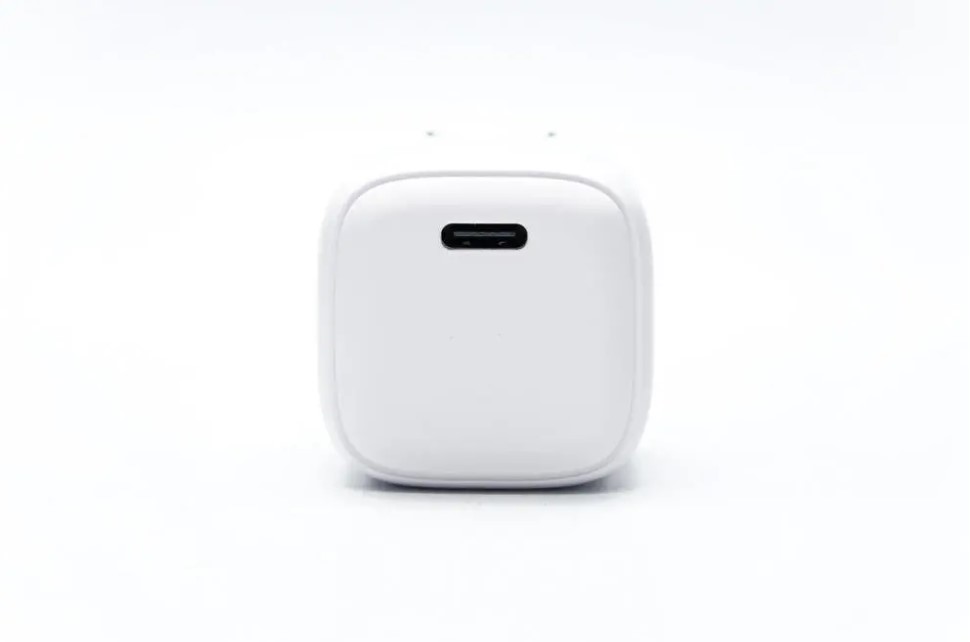
The interface surface is slightly raised, and the single USB-C output interface is configured.
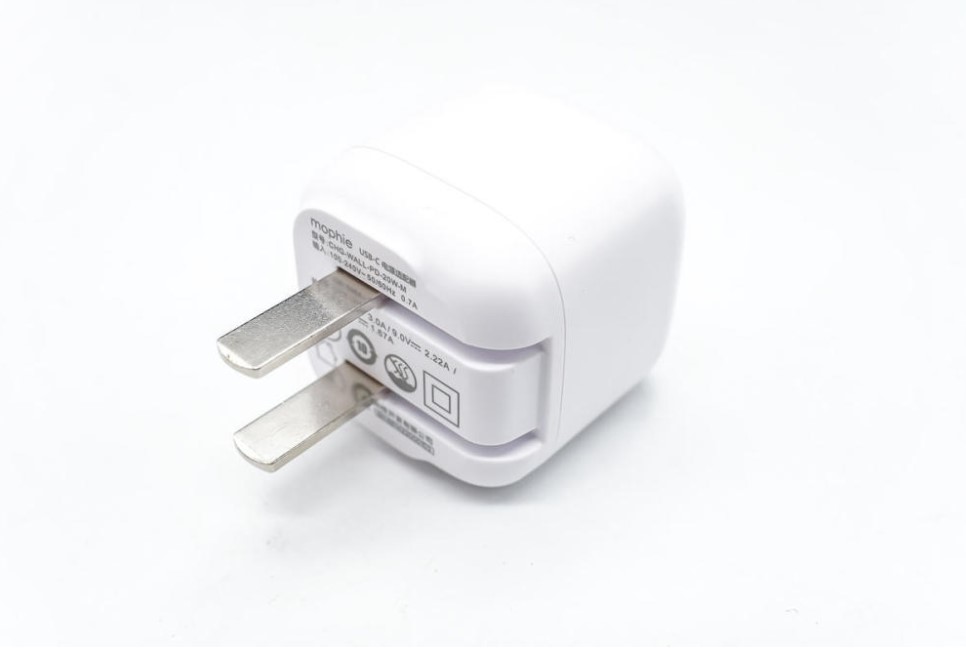
This new 20W features a folding pin design, which is not easy to cram into the pins at such a small size.
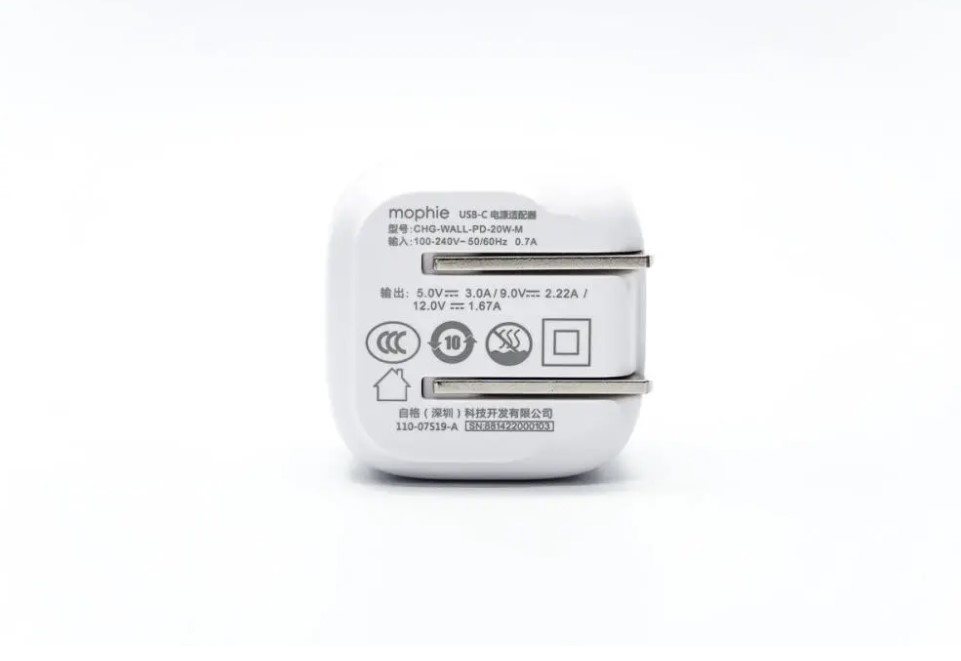
The bottom of the charger is printed with the inscription of the product, the model of the charger is CHG-WALL-PD-20W-M, which supports a maximum output of 20W, Zige Technology Development Co., Ltd.
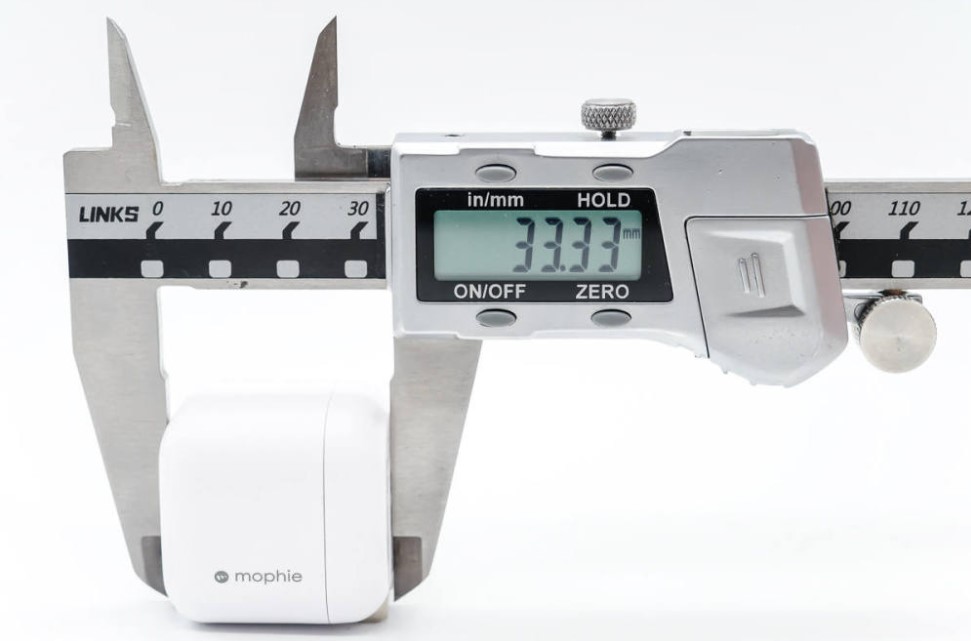
The height of the charger is about 33.33mm.
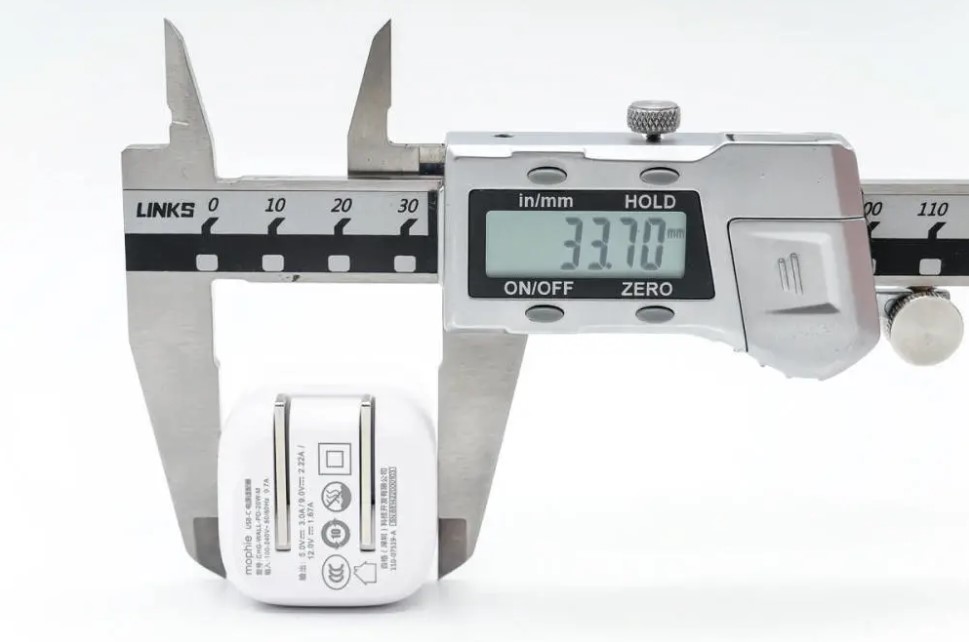
The width of the charger is about 33.7mm.
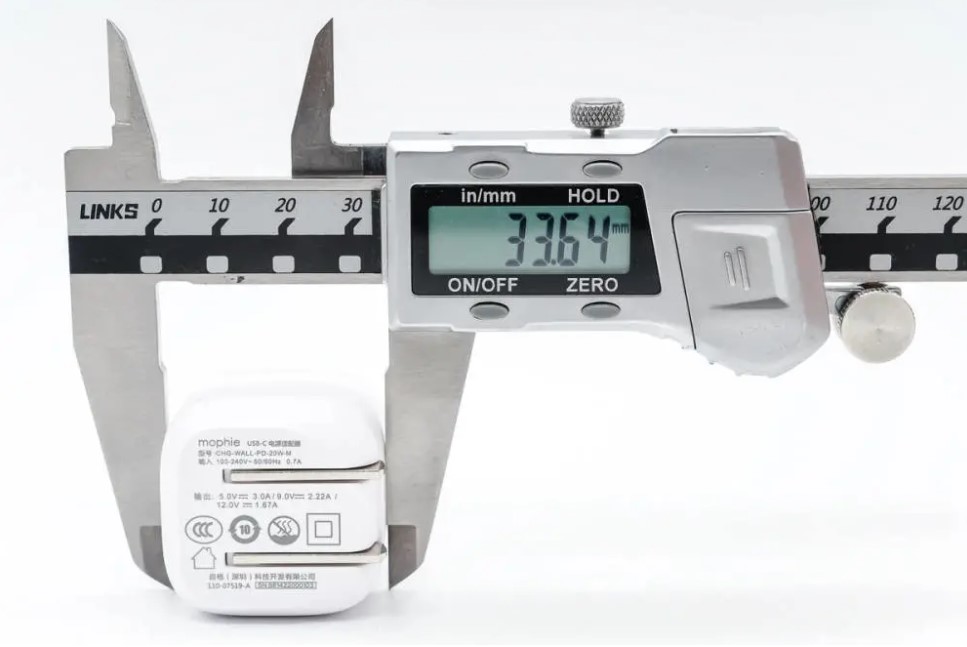
The length of the charger is about 33.64mm, the size of the charger is about 33.33×33.7×33.64mm, a fairly regular cube, the volume is about 37.78cm, and the power density is about 0.52W/cm.
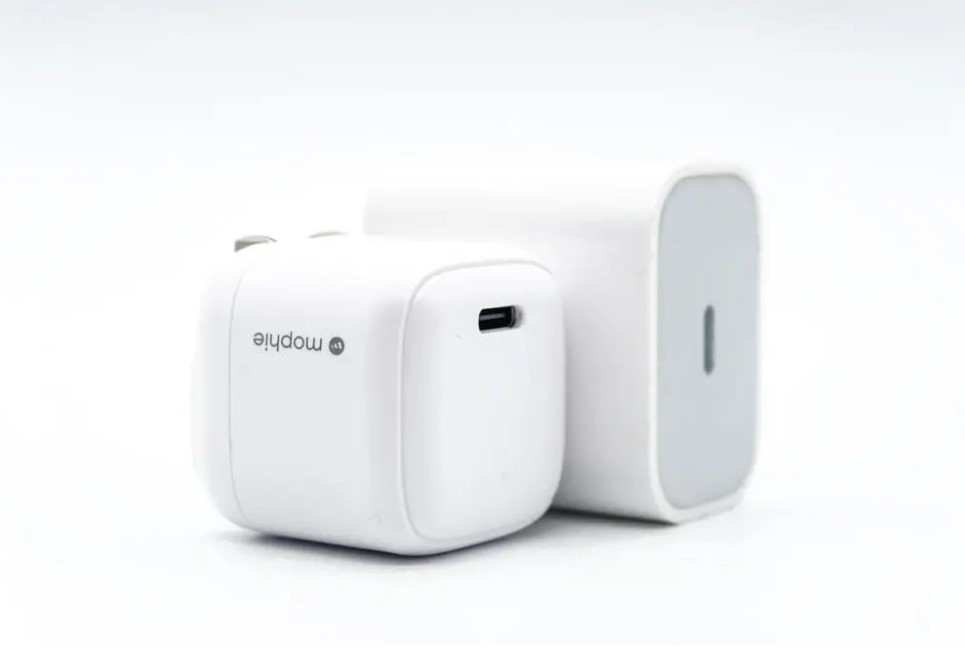
Compared with apple 20W charger, the volume occupation is similar, but the mophie 20W adopts a folding pin, and portability is still more advantageous.
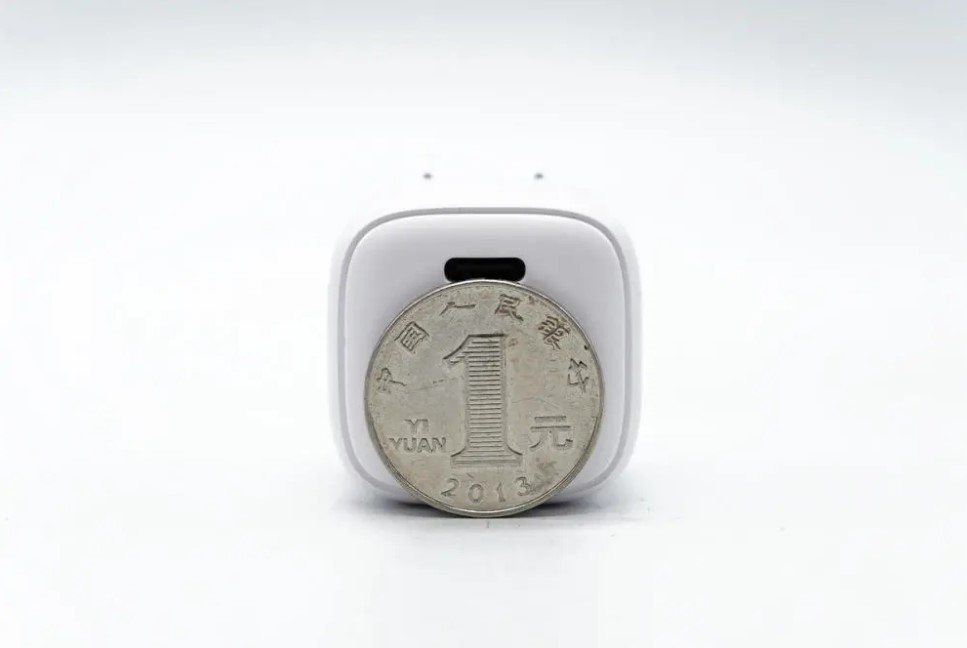
The front of the charger is compared with the one dollar coin.
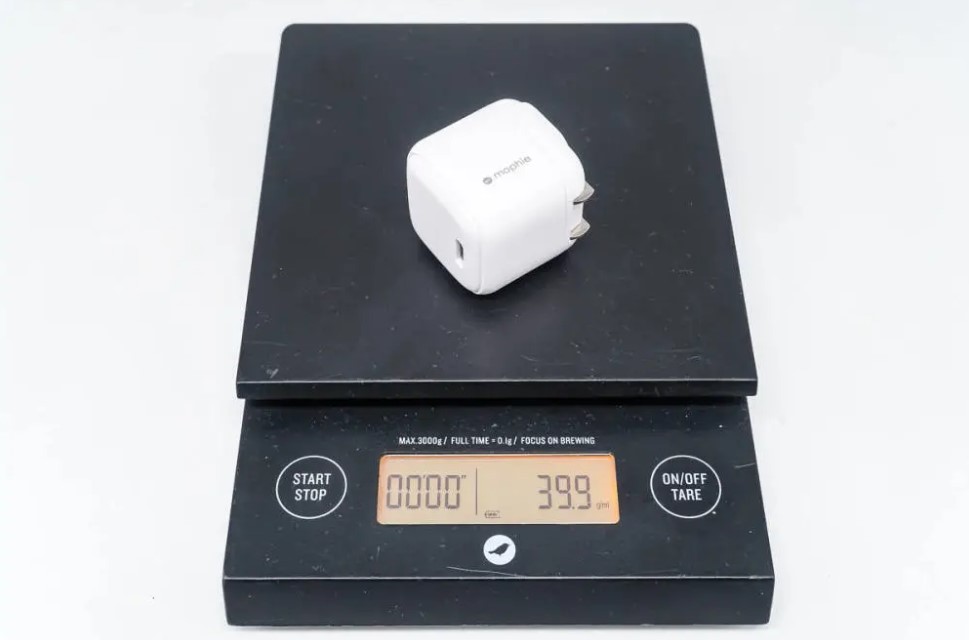
The unit weight of the charger is about 39.9g.
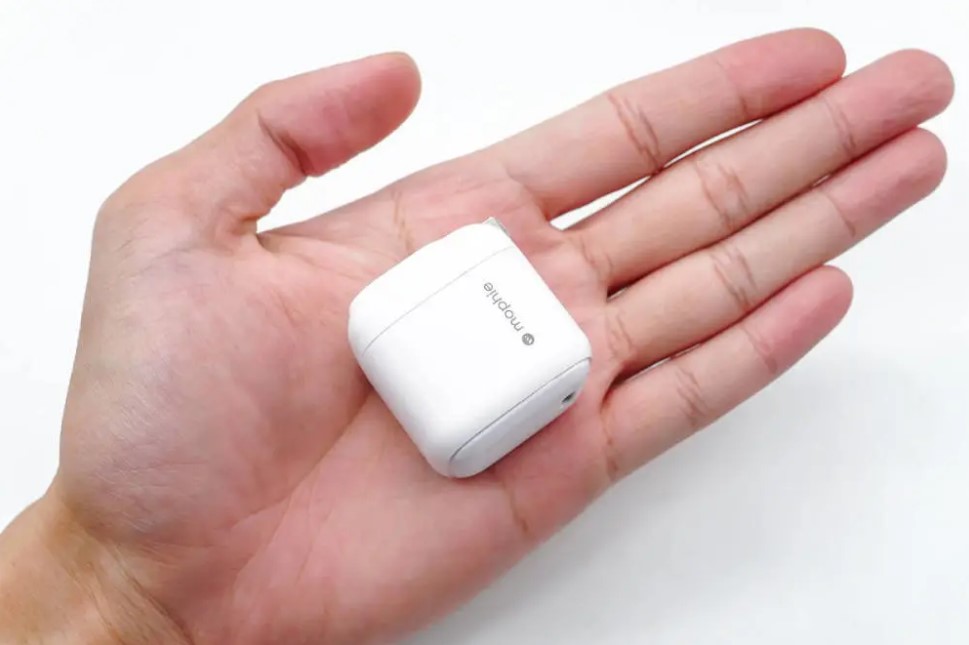
This size is cute in your hand.
Protocol testing
This test module mainly tests the charger's fast charging protocol, and the user can match the output device according to the specific protocol, so as to obtain a better fast charging experience.
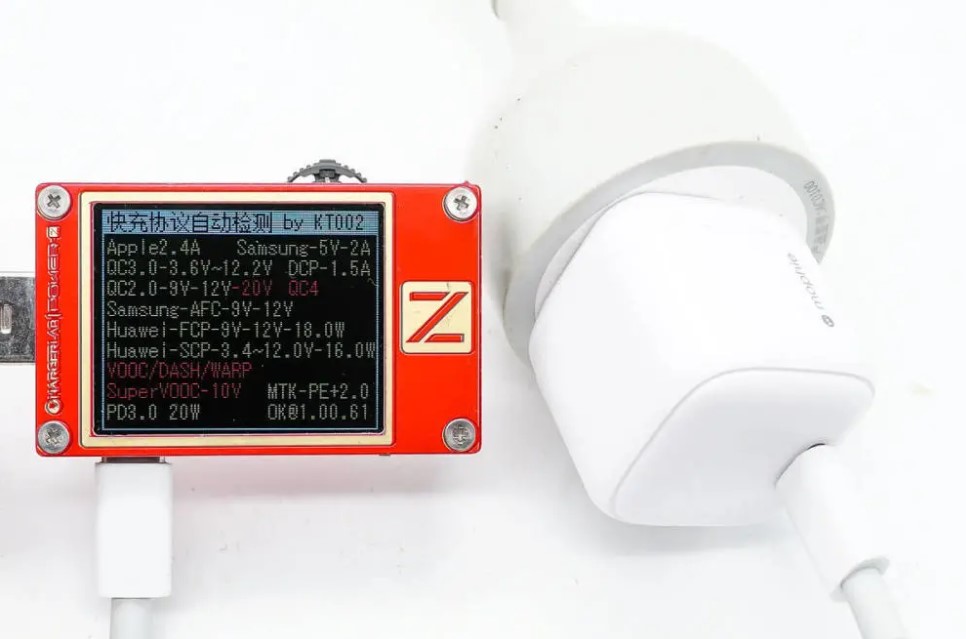
In terms of protocols, ChargerLAB's POWER-Z KT002 reads the charger's fast charging protocol, and the actual test supports Apple2.4A, QC2.0, QC3.0, AFC, FCP, SCP, PE, PD3.0 and other charging protocols.
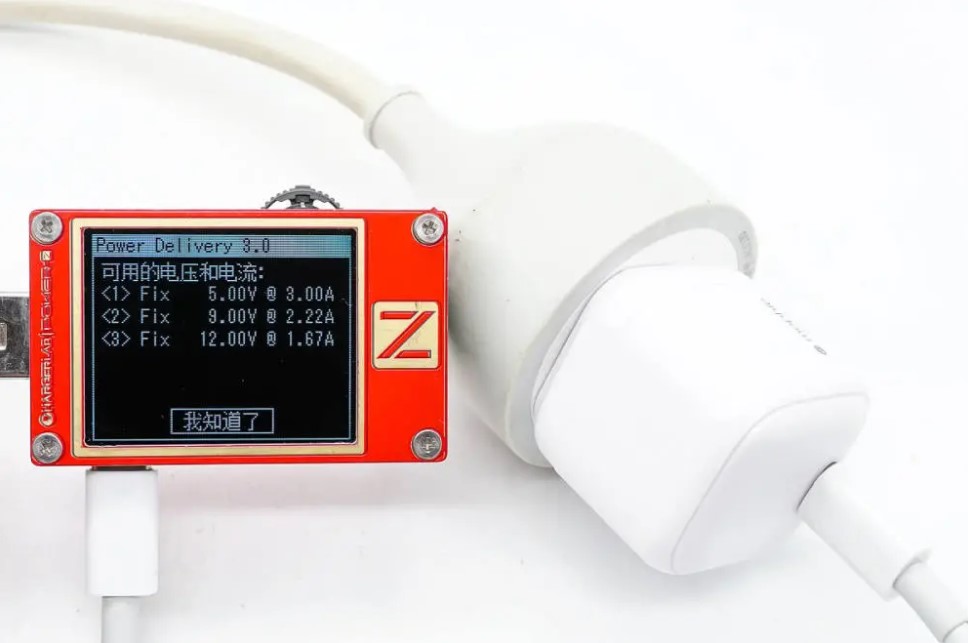
In terms of PDO messages, it supports three fixed voltages of 5V3A, 9V2.22A, and 12V1.67A.
Product reviews
Next, I will take you to see the specific experience of this charger. The charging head network will take everyone to understand this charger from the aspects of compatibility test, charging test, standby power consumption test, etc.
Charging compatibility testing
The compatibility test link can clearly know the charging situation of the charger for each device, and the charging head network will use dozens of devices with the charger for testing, presenting the reader with real test data.
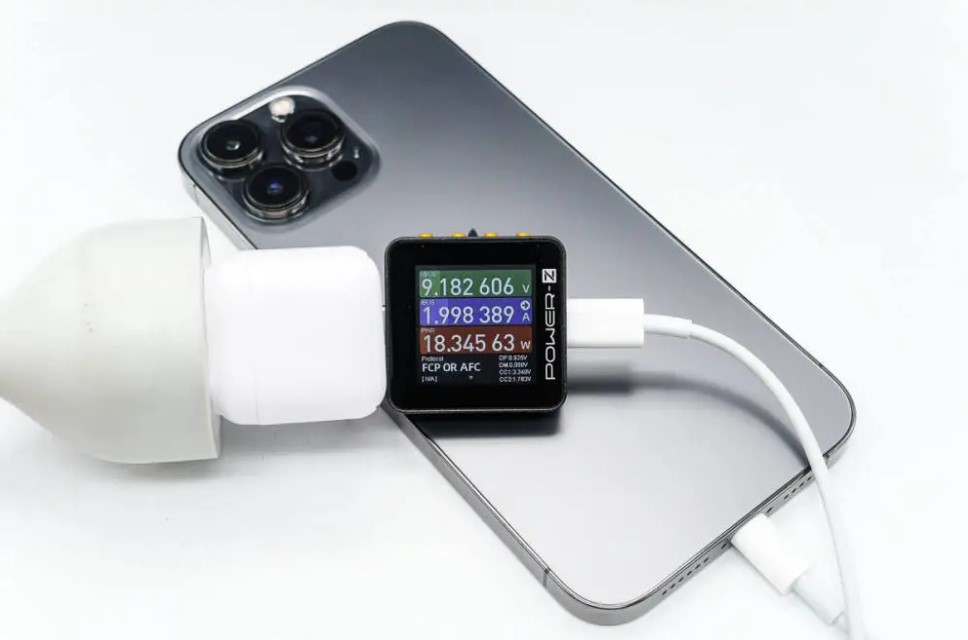
Charge the iPhone 13 Pro Max with a mophie 20W PD charger with 9.18V 1.99A 18.34W.
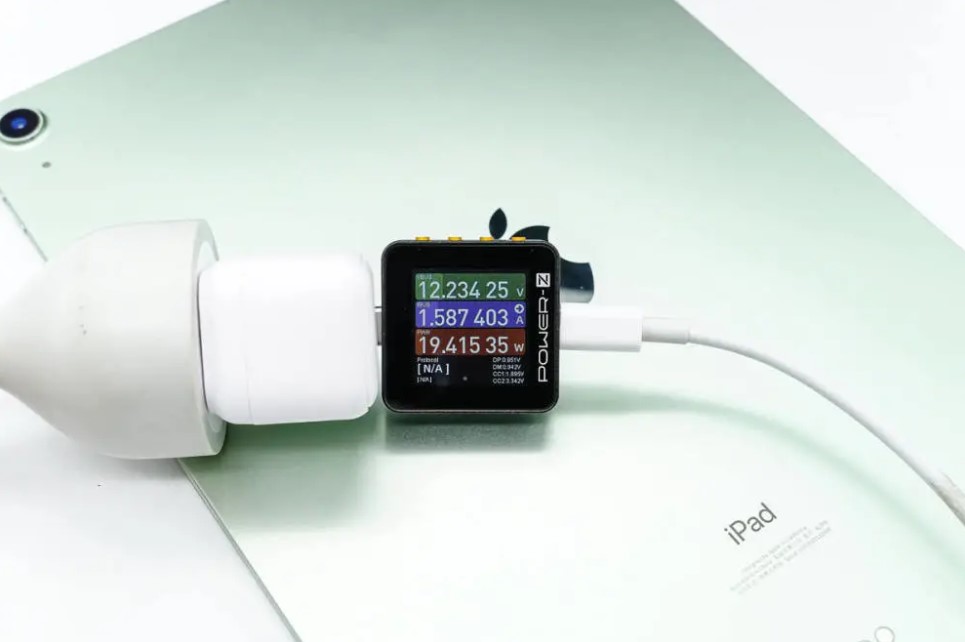
Charge the iPad Air 4 with 12.23V 1.58A 19.41W.
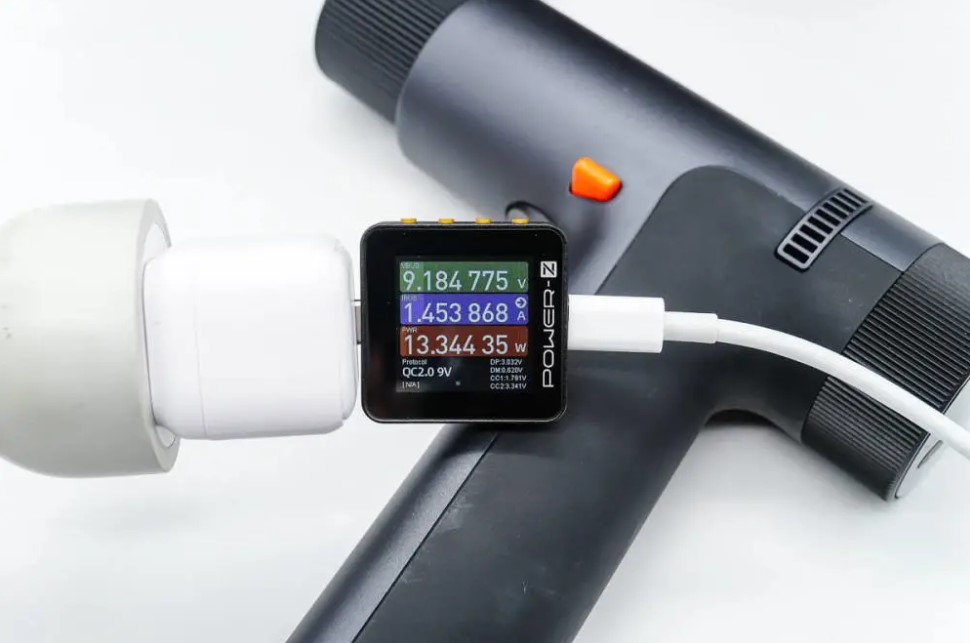
Thanks to the widespread popularization of USB PD fast charging and USB-C physical interface, this wind also blows to the power tool, the charging head network of this Mijia pistol drill is equipped with a USB-C charging interface, and supports USB PD fast charging protocol, using USB-C to charge the Mijia pistol drill, the power is 9.18V 1.45A 13.34W.
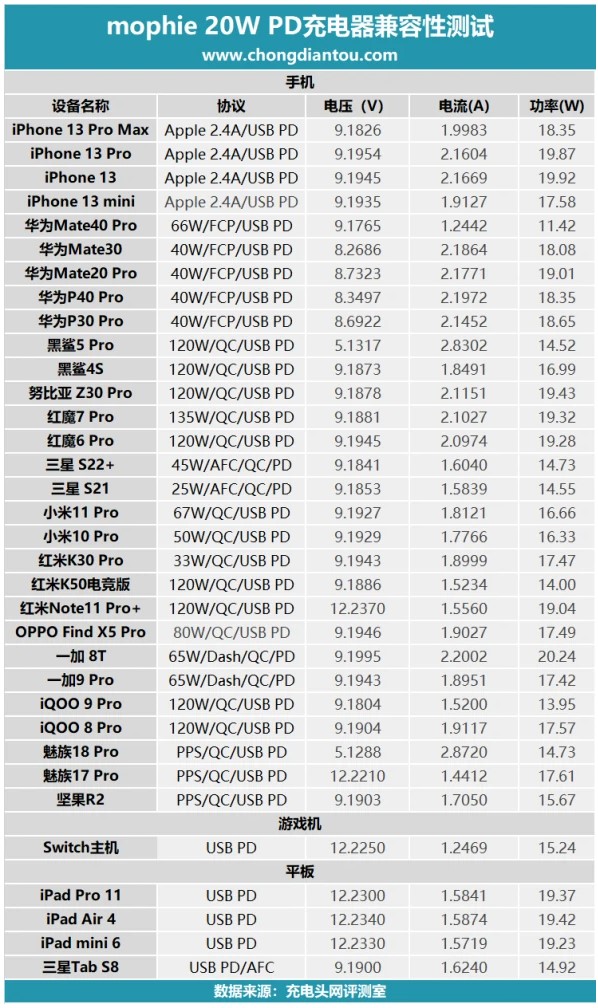
Summarize the USB-C compatibility tests for easy reference. Overall, USB-C supports fast charging of devices very well.
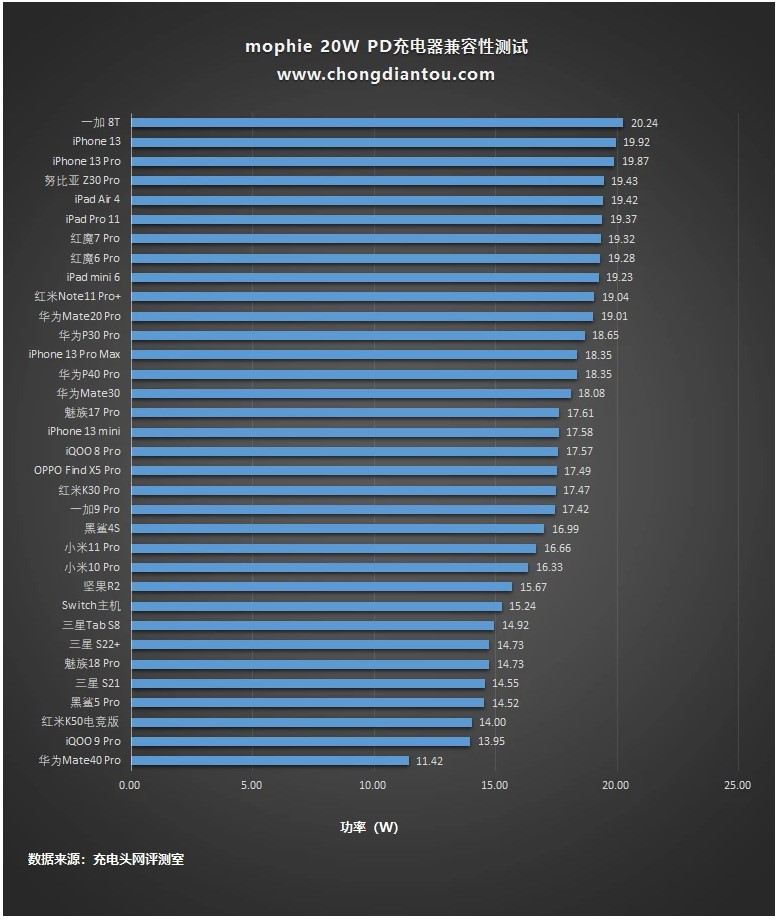
From the histogram part, it can be clearly seen that the charging power of each device is high or low.
Full test of charging
This charger of mophie supports 20W fast charge output, which can be fast charged for the iPhone 13, so the whole test of charging chose to charge the iPhone 13, and the following is the actual test of the whole process.
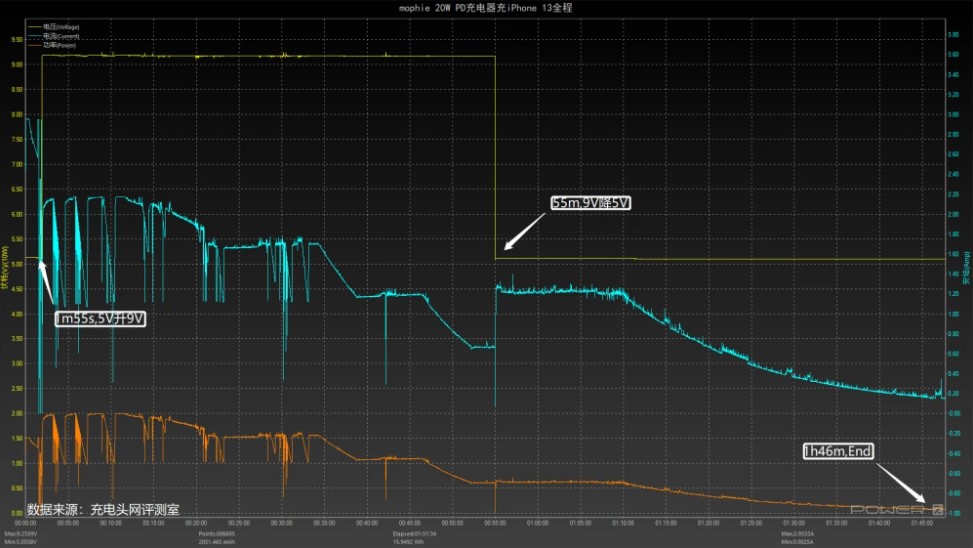
This is a graph of the whole process of charging the iPhone 13 using the mophie 20W PD charger, the voltage rises from 5V to 9V into the fast charging state at 1 minute and 55 seconds, drops from 9V to 5V input at 55 minutes, and finally ends at 1 hour and 46 minutes, with a maximum power of 9.18V 2.16A 19.86W.
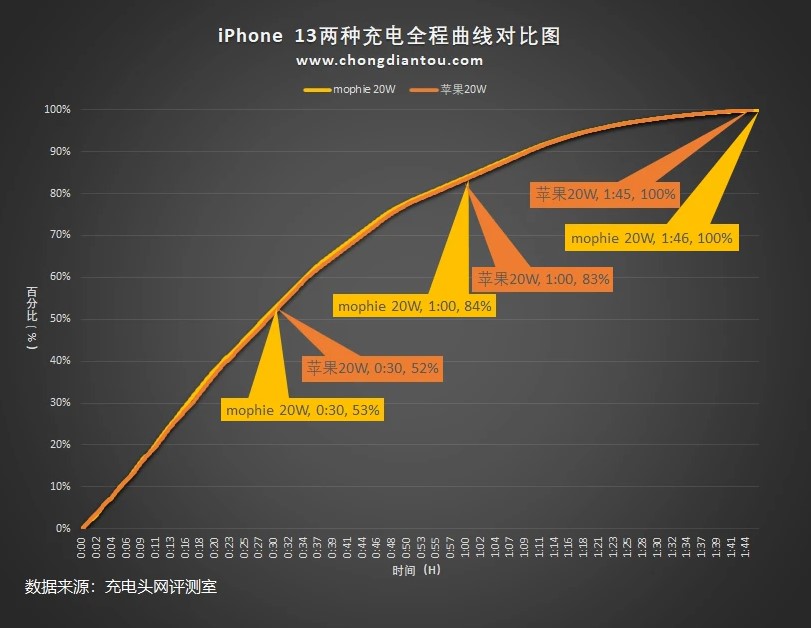
The mophie 20W PD charger charger charged iPhone 13 data is plotted into a curve, and the apple 20W PD charger charger charged iPhone 13 curve is added, it can be seen that the two curves almost coincide, using mophie's 20W PD fast charger to charge the iPhone 13 can get the same fast charging experience as the original 20W. The mophie 20W PD charger charges 53% for the iPhone for 13 half hours, 84% for 1 hour, and takes about 1 hour and 46 minutes to fully charge.
Standby power consumption test
Nowadays, it is the norm for users to use the charger to charge their devices and no longer unplug them from the outlet. Many readers want to know whether the charger is wasted if it is always plugged into the socket, and the standby power consumption test session is to answer this question.
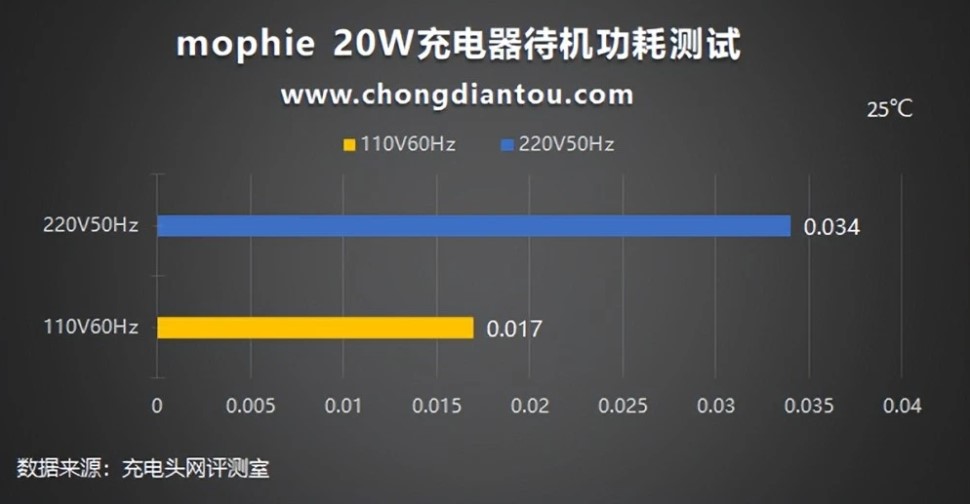
After the power meter test, the charger in 220V 50Hz no-load power consumption of 0.034W, converted to a year of loss of power energy is about 0.29KW · h, if the market price of electricity is 0.6 yuan / KW · h, the charger's annual electricity cost is about 0.17 yuan.
110V 60Hz no-load power consumption of 0.017W, converted down, a year of loss of electrical energy is about 0.14KW·h, if the market price is 0.6 yuan / KW·h, the charger's annual electricity cost is about 0.084 yuan.
Conversion efficiency testing
A charger is essentially a conversion device that is lost during the process and dissipated in the form of heat. We usually look at the charger above the parameter output 100W or 65W is the maximum output power that the charger can provide for the device, but the charger draws more power from the socket, the following is the charger in the case of 220V 50Hz and 110V 60Hz AC input respectively carried out conversion efficiency test, the test results are as follows.
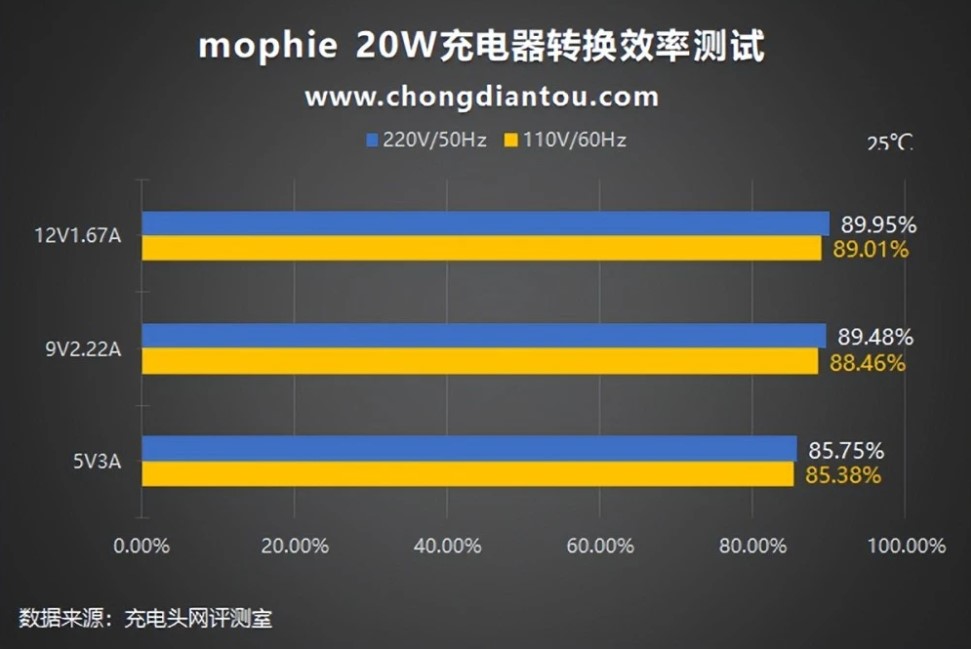
The table summarizes the conversion efficiency of the charger in different output gears at two input voltages. At 220V 50Hz, the output power of the charger in each voltage gear is fully tested: the input power of the AC terminal of the power strip and the output power of the USB terminal are measured in three gears, and the conversion efficiency of the available charger varies from 85.75% to 89.95%.
At 110V 60Hz, the conversion efficiency of the charger varies from 85.38% to 89.01%.
Ripple test
Due to the switching power supply in the charger, the secondary output of the transformer is not direct current, and it needs to be rectified and capacitor filtered, that is, there will be ripple in the charger output. The charging head network uses an oscilloscope to test the ripple value of the charger output, compare with the national standard, and detect the output quality of the charger. The lower the ripple, the higher the output quality of the charger.
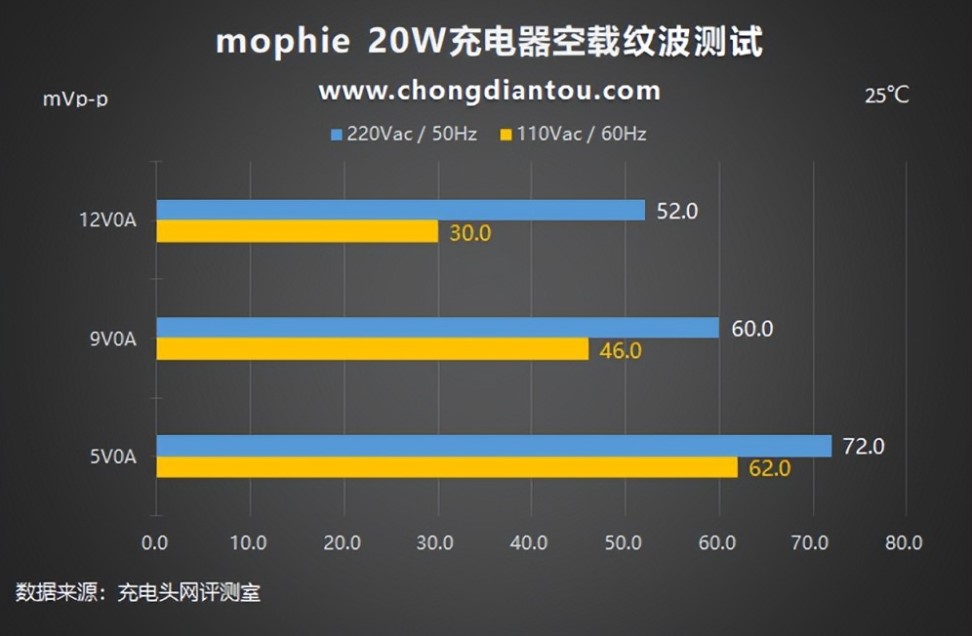
The ripple test is divided into two types: no load (0A current on the Y axis in the histogram) and heavy load (the current on the Y axis in the histogram is not 0A). In the no-load part, the charger has the highest ripple of 72mVp-p when it is in the 5V0A no-load state at 220V 50Hz AC input, and the lowest ripple at 52mVp-p when it is in the 12V0A no-load state.
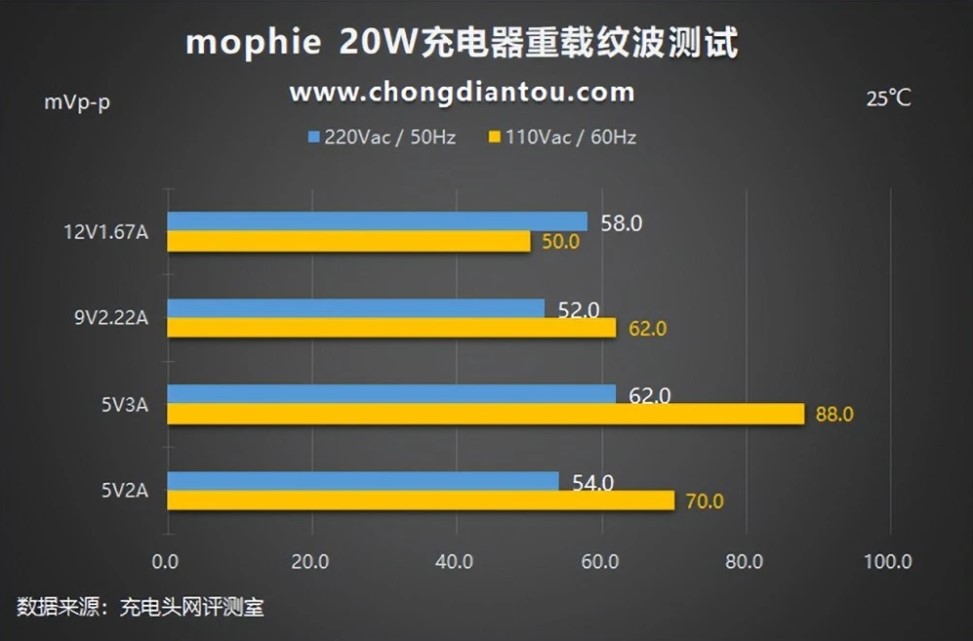
In the heavy-duty section, the charger has the highest ripple at 62mVp-p when it is in the 5V3A output state at 220V 50Hz AC input, and the lowest ripple at 52mVp-p when it is in the 9V2.22A output state.
Temperature testing
As mentioned earlier, the charger will involve the problem of efficiency conversion, and the vast majority of the lost power is dissipated by heat, so the heat of the charger working for a long time is also an important part of the test. Let the charger output at 12V1.67A 20W power for one hour continuously, collect the surface temperature of the charger, and place the charger in a 25°C incubator throughout the experiment.
First, let's take a look at the temperature performance of the charger in the mains environment of 220V50Hz.
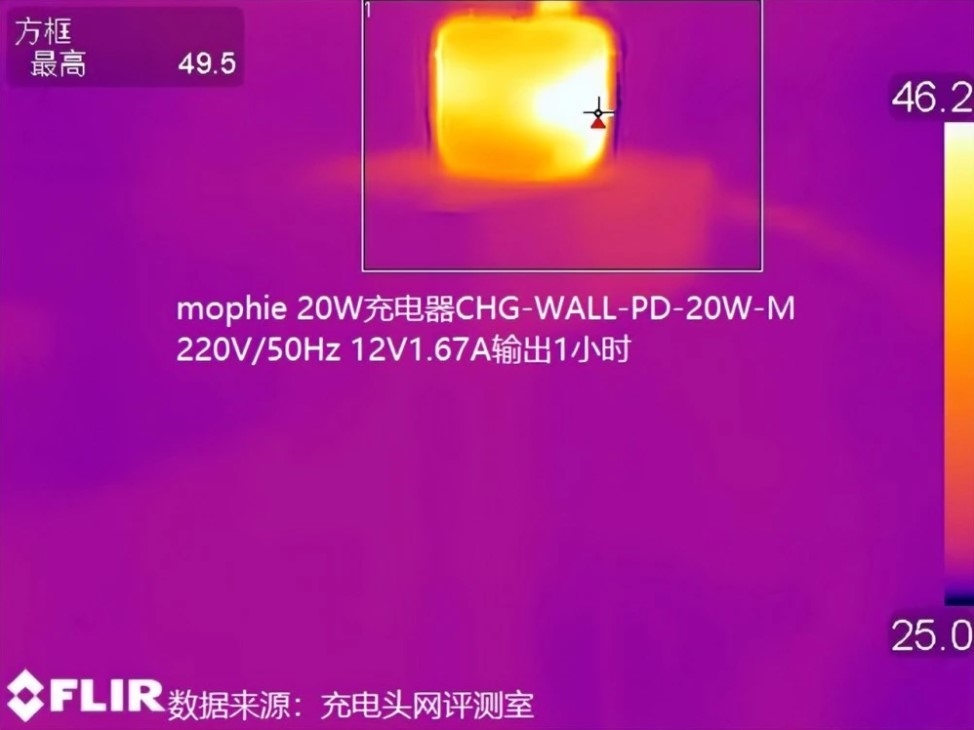
After 1 hour, the maximum temperature of the two side surfaces of the charger was 49.5 °C when photographed using a thermal imager.
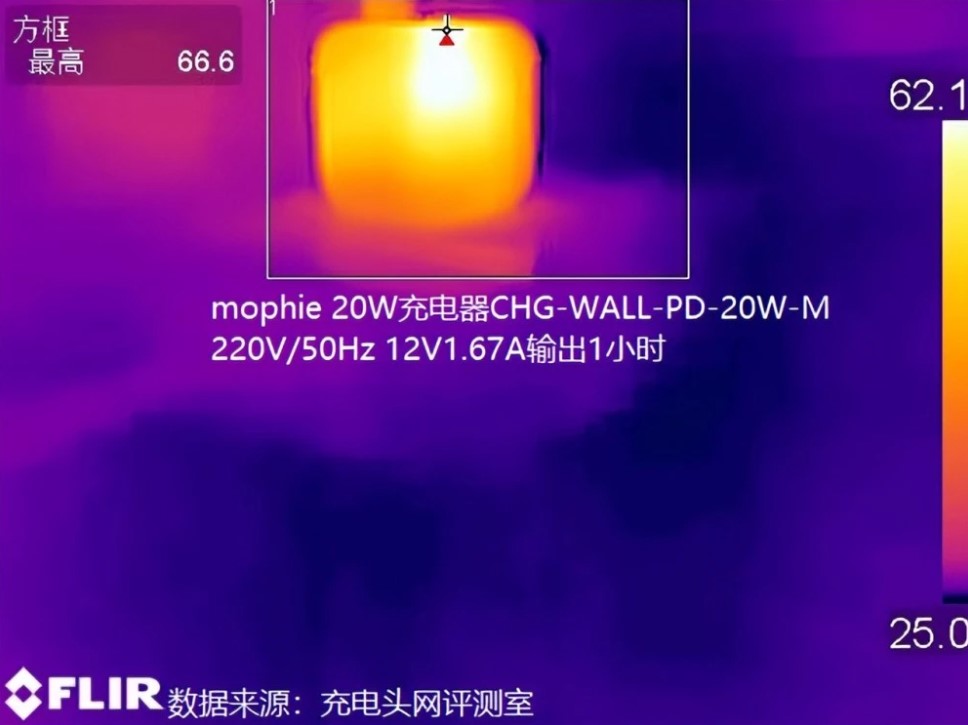
The maximum temperature on the other two sides is 66.6 °C.
Look at the temperature performance of the charger in the mains environment of 110V 60Hz.
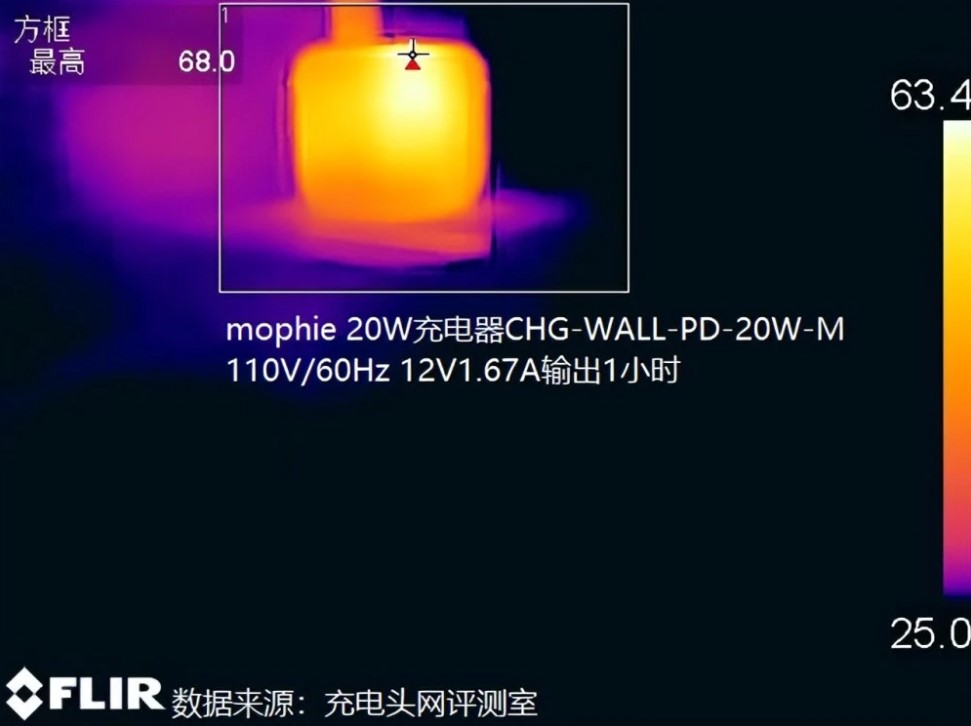
After 1 hour, the maximum temperature of the surfaces on both sides of the charger is 68 ° C when photographed using a thermal imager.
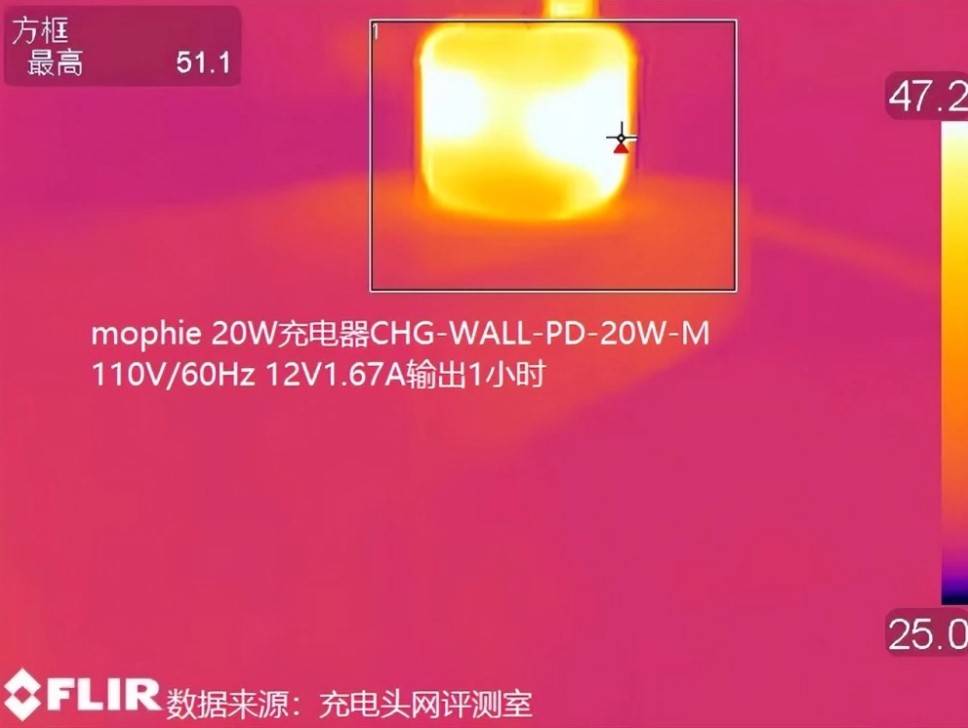
The maximum temperature on the other two sides is 51.1 °C.
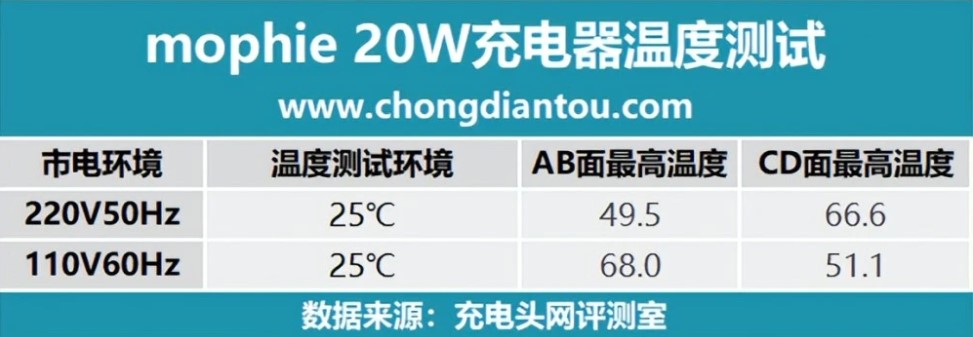
Summarize the data of the temperature test for easy viewing.
Charging head net summary
After some testing, this mophie 20W charger still maintains excellent compatibility, changes the previous business style style, the design is more inclined to the home style, and for the first time uses a folding plug, which is further in portability.
In terms of performance, the measured support Apple2.4A, QC2.0, QC3.0, AFC, FCP, SCP, PE, PD3.0 and other charging protocols, a wide range of protocols to ensure the compatibility of most devices, for iPhone, iPad charging are stable, but a little compatibility problem for Huawei models; small size means that the charger components are highly dense, mophie 20W charger for an hour continuous test output is stable, the temperature is relatively calm.


-
 -17%
mophie USB-C PD 20W wall Quick chargerAs low as $24.99 Regular Price $29.99
-17%
mophie USB-C PD 20W wall Quick chargerAs low as $24.99 Regular Price $29.99 -
-33%
mophie PD65W GaN Fast Wall Charger (Apple Exclusive) for MacBook Air, iPhone, iPad 100-240V 50/60Hz 1.5A (Max)As low as $39.96 Regular Price $59.35
-
-50%
mophie mini PD 20W USB-C Wall Cable, Fast Wall Charger (Apple Exclusive) for iPhone, iPad 100V - 240V 50/60HzSpecial Price $19.99 Regular Price $39.99
-
-6%
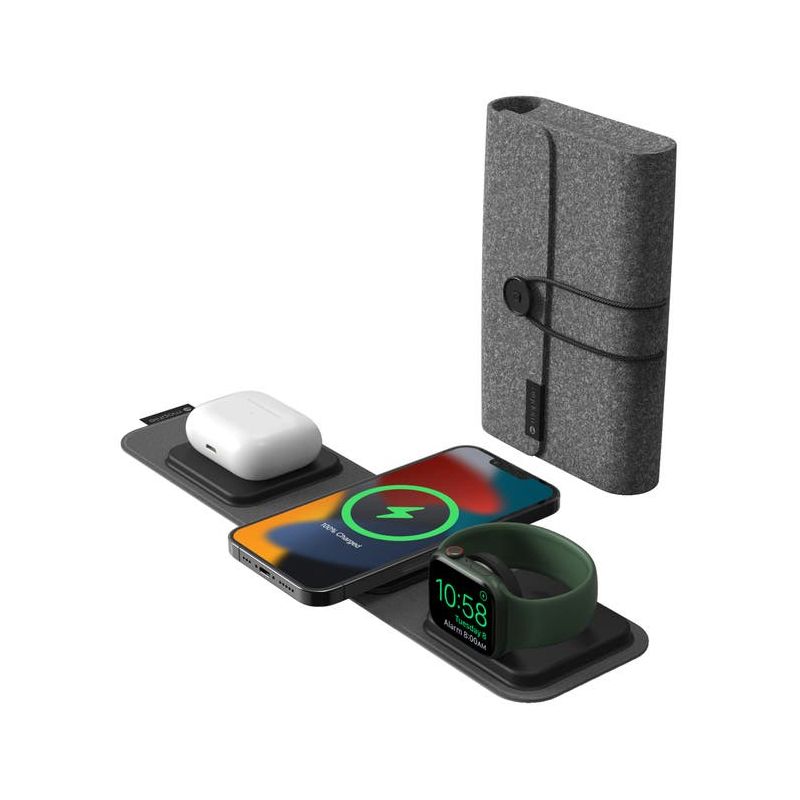
mophie 3-in-1 travel charger with MagSafeSpecial Price $140.24 Regular Price $149.95
-
-23%
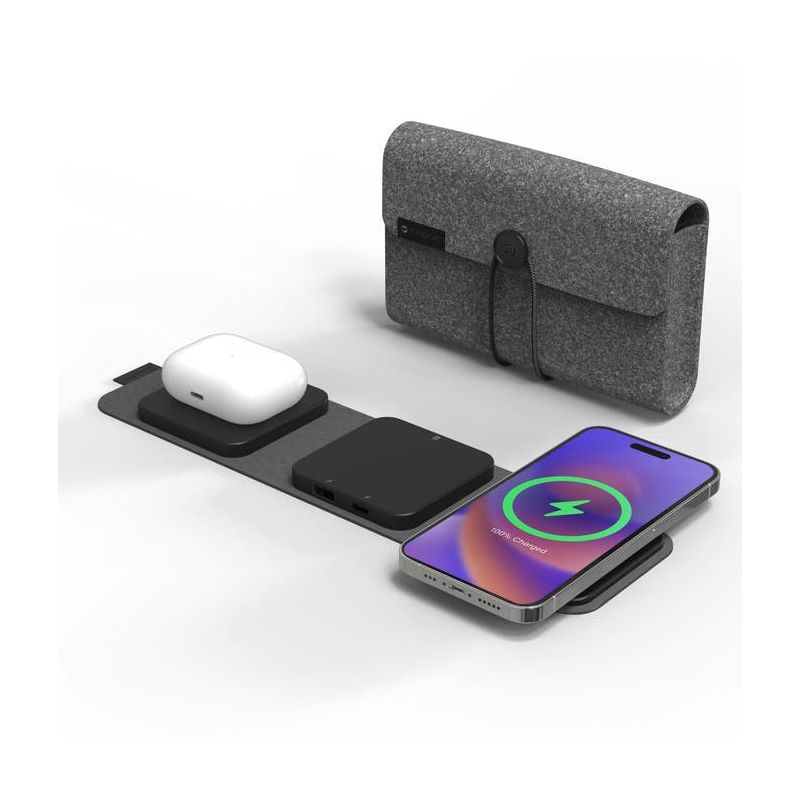
mophie snap+ multi-device travel chargerSpecial Price $99.99 Regular Price $129.99
-
-29%
mophie 3 in 1 Wireless Charge Pad - Qi Wireless 7.5W Charging Pad for Apple iPhone, Airpods, and Apple Watch - BlackSpecial Price $119.00 Regular Price $168.00