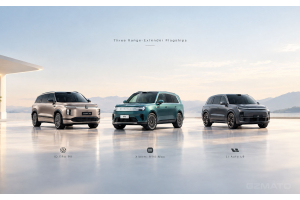
VW ID.ERA 9X vs Xiaomi N90 Max vs Li Auto L9: Three Range-Extender Flagships Compared
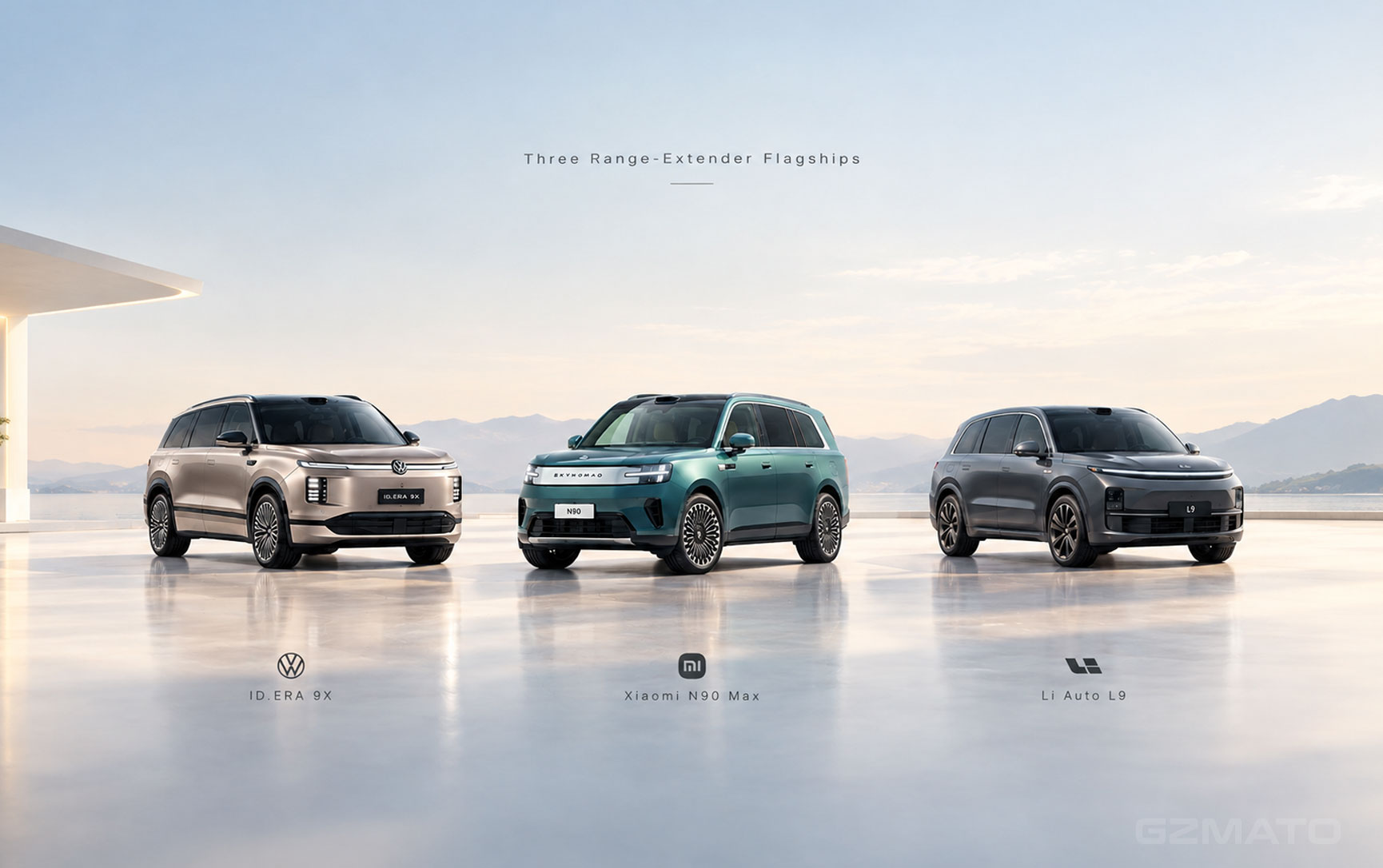
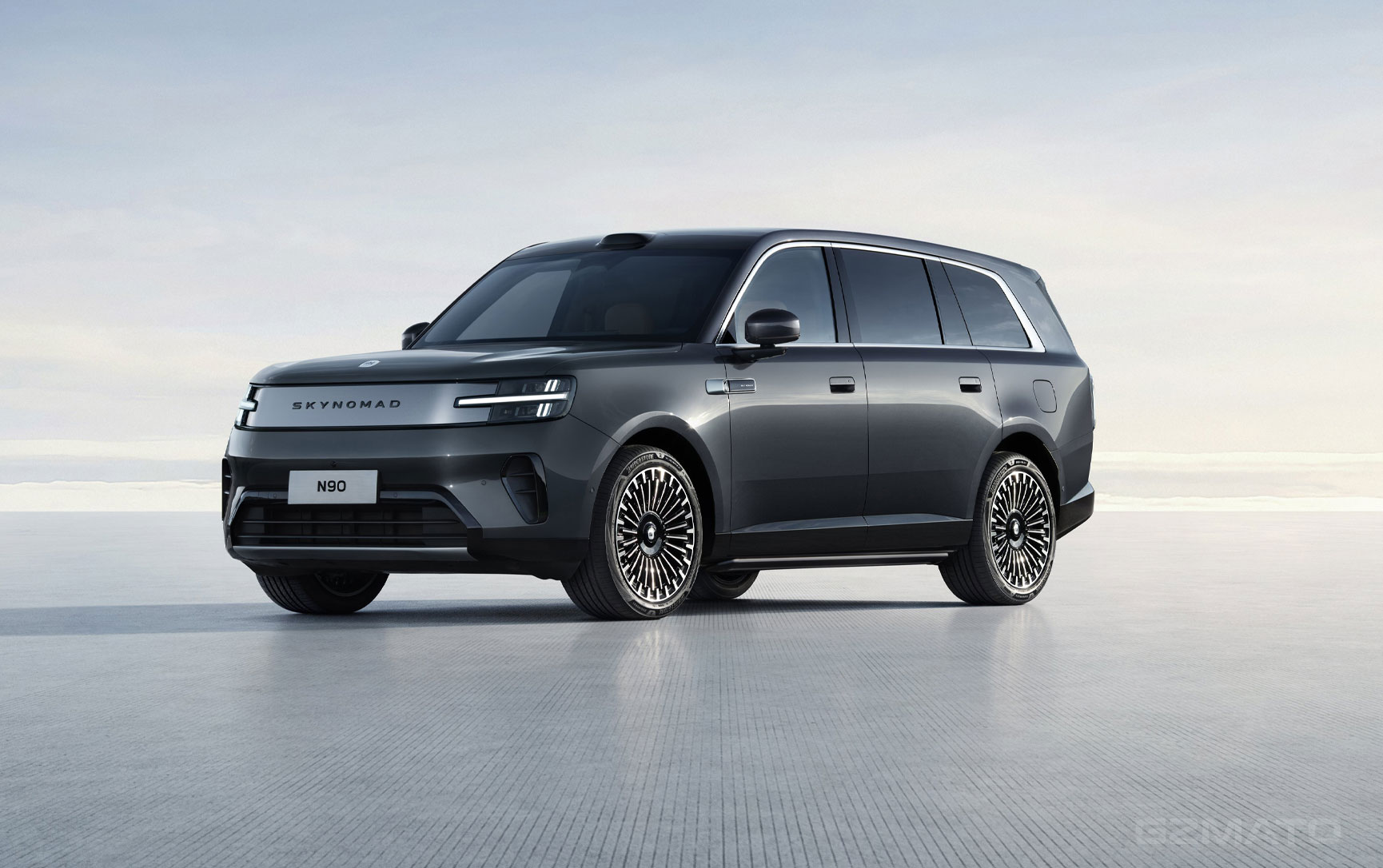
October 8, 2026 — Three range-extender SUVs, three completely different philosophies. The Volkswagen ID.ERA 9X starts at RMB 299,800. The Xiaomi Pengcheng N90 Max starts at RMB 269,900. The Li Auto L9 starts at RMB 459,800. The price gap between the cheapest and most expensive is nearly RMB 200,000.
That gap buys more than size. It buys different answers to the same question: what does a family flagship SUV actually need to be good at?
Price Gap: Up to RMB 240,000 Apart
These three cars are often grouped together because they are all large range-extender SUVs. But their prices tell a different story.
| Model | Price Range | Seating | Core Bet |
|---|---|---|---|
| Xiaomi N90 Max | RMB 269,900–299,900 | 7-seat / 5-seat (Explorer) | Value + outdoor scenarios |
| VW ID.ERA 9X | RMB 299,800–359,800 | 6-seat | Chassis + handling |
| Li Auto L9 | RMB 459,800–509,800 | 6-seat | Mature system + self-developed tech |
The Li Auto L9 is roughly RMB 160,000–190,000 more expensive than the Xiaomi N90 Max, and RMB 150,000–160,000 more than the Volkswagen. That is not a small premium. It buys a self-developed chip, a more refined range extender, and a charging network that none of the other two can match today.
Is the Li Auto L9 worth nearly RMB 200,000 more than the Xiaomi N90 Max? The answer depends entirely on whether you value the things the L9 does better — and whether the N90 Max's compromises affect how you actually use a car.
Range: Numbers Are Close, Real-World Variance Matters
All three claim similar CLTC ranges. But the gap between claimed and real-world performance is where the differences emerge.
| Spec | VW ID.ERA 9X | Xiaomi N90 Max | Li Auto L9 |
|---|---|---|---|
| Battery | 65.2kWh | 76kWh | 72.7kWh |
| CLTC EV Range | 406km | 464km | 420km |
| CLTC Total Range | 1651km | 1705km | 1650km |
| Fuel | 95-octane | 92-octane | 92-octane |
| Architecture | 800V | 400V | 800V |
The Volkswagen ID.ERA 9X is rated at 1651km total range. In a real-world test by Autohome, the Max version achieved 407.4km of pure electric range — slightly exceeding the 406km CLTC claim, with a measured energy consumption of 15.6kWh/100km. The feeder fuel consumption was measured at 5.66L/100km, and after accounting for battery recharge, the effective figure was 5.39L/100km [citation:18]. That is genuinely impressive for a 5.2-meter SUV.
The Xiaomi N90 Max is rated at 1705km. Xiaomi ran a Shanghai-to-Beijing no-refuel challenge and achieved 1230km real-world highway range at an average speed of 104km/h. The pure electric portion before the range extender kicked in was 323.6km, with feeder fuel consumption of 6.7L/100km [citation:3][citation:15]. That is a real-world validation that matters more than a CLTC number.
The Li Auto L9 completed a Beijing-to-Shanghai run with 1422.8km real-world range, starting with a full charge and ending with the range extender having consumed 65 liters of fuel. The pure electric segment was 327.4km, and feeder fuel consumption was 6.0L/100km [citation:5][citation:17]. Li Auto claims the Ultra version performs even better under identical test conditions [citation:11].
Chassis: The Volkswagen Advantage Nobody Talks About
If you drive all three back-to-back, the Volkswagen feels different. Not better in every way — different in a way that matters for a specific kind of driver.
| Feature | VW ID.ERA 9X | Xiaomi N90 Max | Li Auto L9 |
|---|---|---|---|
| Suspension | Front double-wishbone + rear multi-link, dual-chamber air + DCC | Air suspension + CDC | 800V active suspension + fully steer-by-wire chassis |
| Rear-Wheel Steering | Standard, ±10° | Not available | Available |
| Turning Radius | 4.85m | 5.95m | 5.30m |
| 0–100km/h | 5.6s | 5.9s | Not published |
The Volkswagen’s 4.85-meter turning radius is the headline here. For context, that is tighter than many compact sedans. A 5.2-meter SUV that can U-turn in the same space as a Golf is a genuine engineering achievement, and real owners consistently highlight it as a day-to-day quality-of-life feature [citation:7][citation:13].
Li Auto’s “fully steer-by-wire chassis” is technically more advanced on paper — it includes steer-by-wire, rear-wheel steering, and EMB brake-by-wire. But its turning radius of 5.30m is larger than the Volkswagen’s. The L9’s advantage is in the integration of these systems for stability and comfort at speed, not in low-speed maneuverability.
Xiaomi’s N90 Max does not offer rear-wheel steering, and its 5.95m turning radius is the largest of the three [citation:14]. For a car this size, that is a real limitation in tight urban environments.
Smart Driving: Li Auto Leads, Xiaomi Follows, VW Partners
This is where the price gap becomes most visible.
| Model | Solution | Compute |
|---|---|---|
| Li Auto L9 | Self-developed Mach M100 + Mach VLA model | 2× M100, 2560 TOPS total |
| Xiaomi N90 Max | Xiaomi HAD (NVIDIA Thor) | 700 TOPS |
| VW ID.ERA 9X | Momenta R7 reinforcement learning world model | Not disclosed |
The Li Auto L9’s 2560 TOPS is more than 3.5 times the Xiaomi’s compute. More importantly, it is self-developed silicon paired with a self-developed model (Mach VLA) and operating system (Star Ring OS). That vertical integration is Li Auto’s long-term moat — it can iterate faster and optimize deeper than anyone relying on third-party chips [citation:4][citation:10].
Xiaomi’s 700 TOPS is competitive for 2026, and its HyperOS ecosystem integration is a unique advantage if you already use Xiaomi devices. But the company is still catching up in autonomous driving depth compared to Li Auto’s multi-year head start.
The Volkswagen’s Momenta R7 is the most interesting wildcard. It is a “reinforcement learning world model” that Momenta claims allows the system to understand physical causality — predicting how objects will move, not just detecting where they are. The AEB system is rated for stops up to 140km/h [citation:1]. That is a strong claim. But it is a partnered solution, not self-developed, and real-world validation at scale is still limited.
Which One Fits Your Life
| Your Priority | Best Fit | Why |
|---|---|---|
| Best driving feel under RMB 350k | VW ID.ERA 9X | 4.85m turning radius, dual-chamber air suspension, German chassis tuning. Nothing else in this price range drives like it. |
| Lowest cost, most range per yuan | Xiaomi N90 Max | RMB 269,900 gets you a 5.28m SUV with 76kWh battery and 1705km claimed range. Real-world 1230km highway test validates the claim. |
| Outdoor / camping scenarios | Xiaomi N90 Max Explorer | Electric pop-top, 2.29m interior height, 5-seat layout with massive cargo space. Unique in this segment. |
| Best overall system maturity | Li Auto L9 | Third-generation range extender, self-developed 2560 TOPS chip, 4000+ charging stations, 1422.8km verified range. The most complete package. |
| Best smart driving long-term | Li Auto L9 | Vertical integration of chip, model, and OS means faster iteration. Xiaomi and VW rely on partners for key components. |
| Lowest fuel cost per km | Xiaomi or Li Auto | Both run on 92-octane. The VW requires 95-octane, which adds up over years of ownership. |
Key Takeaways
| # | What You Need to Know |
|---|---|
| 1 | The price gap is the story — Xiaomi starts at RMB 269,900, VW at RMB 299,800, Li Auto at RMB 459,800. Nearly RMB 200,000 separates the cheapest from the most expensive. |
| 2 | All three claim 1650km+ range, but real-world data differs — Li Auto verified 1422.8km, Xiaomi verified 1230km. VW’s real-world test was at lower speeds. |
| 3 | Volkswagen’s 4.85m turning radius is a genuine differentiator — tighter than a Golf, thanks to standard rear-wheel steering. |
| 4 | Li Auto’s 2560 TOPS is more than 3.5× Xiaomi’s compute — and it is self-developed, which matters for long-term software iteration. |
| 5 | Xiaomi’s N90 Max is the value play — 76kWh battery, 1705km claimed range, and an Explorer Edition with a pop-top that no competitor offers. |
| 6 | The VW runs on 95-octane fuel; the other two run on 92 — a real long-term cost difference that favors Xiaomi and Li Auto. |
| 7 | Li Auto’s maturity comes at a premium — three generations of range-extender refinement and a 4000+ charging network justify the price for some, not all. |
Our team can help you compare based on your daily commute, road-trip habits, budget, and whether you prioritize driving feel, space, or smart features. Chat with us or open a request.
- Xinhua Net — VW ID.ERA 9X official launch, pricing, Momenta R7, 4.85m turning radius [citation:1]
- Shanghai Securities News — Xiaomi Pengcheng series launch, N90 Max pricing, 76kWh battery, 1705km range [citation:2]
- 12365auto / Xiaomi Q&A — N90 Max Shanghai-Beijing real-world 1230km test data [citation:3]
- Li Auto Official — New L9 launch, 2560 TOPS, 1650km range [citation:4]
- ZOL / TechWeb — Li Auto L9 Beijing-Shanghai 1422.8km real-world test [citation:5][citation:17]
- Autohome — VW ID.ERA 9X real-world range test (407.4km EV, 5.66L/100km feeder) [citation:18]
- Autohome Owner Reviews — VW ID.ERA 9X real-world fuel consumption data [citation:6]
- CNMO — Xiaomi N90 Max 1230km test breakdown [citation:15]
- Kuaikeji / Dongchedi — Xiaomi N90 Max pure EV range test (338.2km, 72.89% achievement) [citation:9]
- ZOL / Xiaomi Config — N90 Max Explorer specs, 5.95m turning radius [citation:14]
- VW ID.ERA 9X
- Xiaomi Pengcheng N90 Max
- Li Auto L9
- range extender SUV comparison
- 30万级增程SUV
- ID.ERA 9X vs Li Auto L9
- Xiaomi N90 range test
- Gzmato