AI Agent Industry Chain Explodes: NVIDIA, Qualcomm, Intel Reach 2026 Consensus
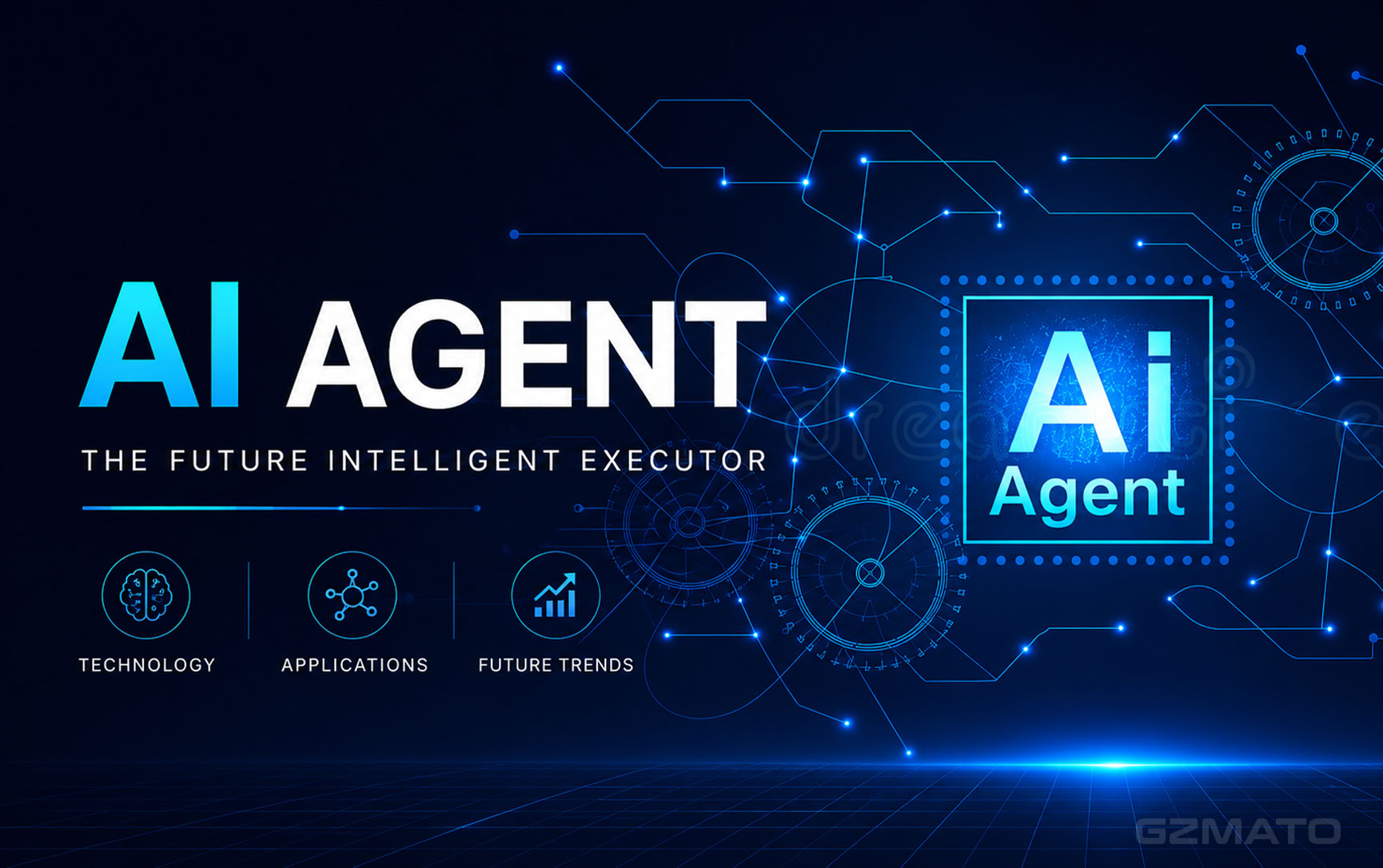
- Chip Giants Unite: 2026 Declared the Year of AI Agent
- NVIDIA: From Chip Factory to Agent Factory
- Qualcomm: The Computing Continuum Defines Distributed AI
- Intel: The CPU Returns to Center Stage
- Arm: CPU Core Demand Is Exploding 4x to 10x
- CPU Becomes the Next Bottleneck: Supply Crunch Ahead
- Key Takeaways and Industry Opportunities
Chip Giants Unite: 2026 Declared the Year of AI Agent
As COMPUTEX 2026 passes its halfway point, a rare industry consensus is emerging around AI Agents. From NVIDIA CEO Jensen Huang to Qualcomm President Cristiano Amon, from Intel to Arm, the chip industry's biggest players have aligned on one message: the era of AI Agents has fully arrived.
Huang declared during his keynote that "Agentic AI and practical AI have arrived," adding that "tokens are now profit units, and AI is a GDP generator." Qualcomm's Amon opened the show by proclaiming "2026 is the year of AI Agent," describing AI's evolution from a simple command-response tool to a system capable of autonomous action.
What makes this moment different is the collective industry action. Foxconn, Quanta, Wistron, and Pegatron — four major contract manufacturers — appeared together on stage to discuss AI Agents. Microsoft, MediaTek, Arm, and Oracle separately announced related products. This is not a single company's product launch — it's a paradigm shift across the entire supply chain.
NVIDIA: From Chip Factory to Agent Factory
At GTC Taipei 2026 during COMPUTEX, Jensen Huang delivered a keynote that shifted focus from chips themselves to what those chips will serve — Agents.
Huang articulated a key insight: an Agent task typically involves more than a single model inference. It encompasses reasoning, search, tool calling, code execution, and result verification — potentially thousands of steps. Future data centers won't just handle individual model requests; they'll manage large numbers of continuously running, collaborating Agent tasks.
Vera Rubin: A Computing Platform Built for Agents
NVIDIA announced that the Vera Rubin platform has entered full production. Unlike previous generations primarily designed for LLM training and inference, Vera Rubin was designed from the ground up with Agents as a primary workload. Huang revealed that when running autonomous AI Agent tasks in similarly scaled hyperscale data centers, the Vera Rubin platform delivers 10x the processing efficiency of the previous Grace Blackwell generation.
Vera is NVIDIA's new processor designed specifically for the Agent era. Huang emphasized: "Every CPU until today was designed for humans. Vera is designed for the AI era, built for Agents." In Agent-related workload tests, Vera achieved 1.8x the task execution speed of comparable x86 server CPUs.
Vera Rubin also represents NVIDIA's first large-scale introduction of co-packaged optics (CPO) technology into AI data center networking, alongside expanded confidential computing capabilities. Huang noted that deploying a large Blackwell rack takes two hours; with Vera Rubin, that time is compressed to the five-minute range.
Nemotron 3 Ultra: The Brain for Agents
NVIDIA also released Nemotron 3 Ultra, a 550-billion-parameter Mixture of Experts model designed to provide state-of-the-art intelligence for long-running Agents in code development, scientific research, and enterprise business processes. Compared to comparable mainstream open-source models, inference speed is up to 5x faster, with operating costs reduced by up to 30%.
Around Nemotron, NVIDIA released software components including NemoClaw (organizing models into Agents), OpenShell (runtime security), and Agent Toolkit (turning CUDA-X and other libraries into tools Agents can directly invoke). The goal is to enable enterprises to build "digital colleagues" that assist employees across engineering design, healthcare, software development, and other scenarios.
NVIDIA also released Cosmos 3 — a world foundation model for physical AI. Cosmos 3 unifies visual reasoning, world generation, and action prediction into a single system for the first time, natively understanding and generating text, images, video, environmental audio, and actions. It promises to compress physical AI training and evaluation cycles from months to days, accelerating the deployment of physical agents like humanoid robots and autonomous vehicles.
Qualcomm: The Computing Continuum Defines Distributed AI
As the opening keynote speaker for COMPUTEX 2026, Qualcomm CEO Cristiano Amon set the industry tone for the entire show. In his view, 2026 is not defined by corporate product cycles but by a fundamental transformation in how humans interact with technology.
Amon's core argument: AI is evolving from a simple command-response tool into an Agent capable of autonomous planning, multi-step reasoning, contextual adaptation, and proactive action. Behind this lies a fundamental computing architecture shift — from "phone-centric" to "Agent-centric."
From Phone-Centric to Agent-Centric
Amon presented a key insight: in the past, the phone was the center of users' digital lives, with all devices revolving around it. But now, Agents are becoming the center of digital experiences. Including phones themselves, various devices now revolve around Agents. This is no longer an extension of phones — the core of the digital ecosystem is no longer the phone itself, but the Agent.
Agents will be able to proactively run computations on behalf of users, with tasks automatically distributed across devices to fully utilize all available compute. They are not limited to any single device or ecosystem, seamlessly flowing across phones, PCs, wearables, smart glasses, and other endpoints.
The Computing Continuum: From Milliwatts to Kilowatts
Qualcomm's "Computing Continuum" vision encompasses a full range of compute capabilities from milliwatt-level to kilowatt-level. Amon argued that future AI competition will not be about brute-forcing compute scale, but about intelligently scheduling compute resources to achieve optimal balance between per-token cost, power consumption, latency, privacy, and security.
Amon illustrated the scale with data: there are nearly 6 billion smartphones globally, 2 billion personal AI devices, over 2 billion PCs, and 500 million connected cars. However, existing device architectures were designed around human operation and cannot support the sustained background workloads of Agents — triggering a massive global upgrade cycle for intelligent endpoints.
Amon also previewed Qualcomm's new data center brand, Dragonfly, marking Qualcomm's completion of the full Computing Continuum from miniature wearables to massive data centers.
Intel: The CPU Returns to Center Stage
At COMPUTEX 2026, Intel played its strongest card — the Xeon 6+ processor. This 288-core CPU, built on Intel 18A process technology, is designed specifically for high-density AI workloads. Intel dropped a stunning figure: A single Xeon 6+ rack can run 150,000 AI agents simultaneously.
Intel's CEO articulated a key shift: Agentic AI is fundamentally different from traditional LLMs. Traditional LLMs require GPU compute and then finish, but AI Agents demand continuous CPU orchestration, low-latency response, and multi-step reasoning. As AI moves toward inference and Agentic workloads, the compute bottleneck is shifting from GPUs to CPU scheduling and execution.
Intel also revealed that multiple company CEOs are personally calling to expedite Xeon 6+ shipments — a clear indication of unprecedented demand. This underscores the current supply tightness in the CPU market.
On the process front, Intel 18A has entered volume production. Xeon 6+ is Intel's first data center CPU built on 18A, marking not only a milestone for Intel's own process technology but also a structural shift in the AI infrastructure supply chain.
Arm: CPU Core Demand Is Exploding 4x to 10x
Arm delivered the most aggressive signal of COMPUTEX 2026. In a conversation with Jensen Huang, Arm CEO Rene Haas revealed that when he predicted earlier this year that CPU core requirements within the same power envelope would quadruple, many questioned his forecast. Within months, however, industry discussions moved to higher numbers — 8x, even 10x.
Haas stated bluntly: "If you look at unit shipments, CPU demand is growing faster than we originally thought. Every company with a CPU business sees this. I don't know if the multiple is 4, 6, or 8, but I know the number is getting bigger."
AGI CPU Enters Mass Production
Arm announced that its AGI CPU has entered mass production, available in both air-cooled and liquid-cooled configurations. Air-cooled racks consume approximately 36 kilowatts and house 8,000 cores; liquid-cooled racks consume approximately 200 kilowatts and house over 45,000 cores. At equivalent rack power, Arm's AGI CPU delivers roughly twice the performance of competing architectures.
Haas explained the underlying logic driving CPU demand: GPUs and XPUs excel at training and inference — they are Token generators. But AI Agents run continuously and spawn new Agents autonomously, generating massive amounts of Token allocation, management, coordination, and transmission tasks in the backend. These system-level workloads must still be handled by CPUs.
Arm had previously estimated a five-year total addressable market of over $120 billion for CPUs, considered aggressive by many analysts and investors. Now, people are discussing numbers two or even three times that figure.
On the ecosystem front, major AI and cloud players including Meta, OpenAI, and Oracle Cloud Infrastructure have joined Arm's AGI CPU ecosystem. Arm's stock surged over 15% following the announcement, closing at $408.85 — an all-time high — bringing year-to-date gains to 274%.
CPU Becomes the Next Bottleneck: Supply Crunch Ahead
A recent research report from Guotai Haitong Securities argues that as AI shifts toward inference and Agentic workloads, the compute bottleneck is shifting from GPUs to CPU scheduling and execution. CPUs are gaining prominence in task planning, data processing, KV Cache management, tool calling, and multi-agent collaboration — setting the stage for valuation repricing and supply-demand mismatch. CPUs may become the next scarce component after memory, with supply tightness and pricing pressure likely to persist for the next two to three years.
This assessment is supported by multiple signals across the supply chain:
- Intel's CEO revealed multiple companies are calling to expedite Xeon 6+ shipments, with demand far exceeding supply
- Arm's CEO stated CPU demand is growing faster than originally expected, and every company with a CPU business sees this trend
- Qualcomm's Amon noted existing device architectures cannot support the sustained background workloads of Agents
- Jensen Huang emphasized that Vera CPU was "designed for the AI era" — all previous CPUs were designed for humans
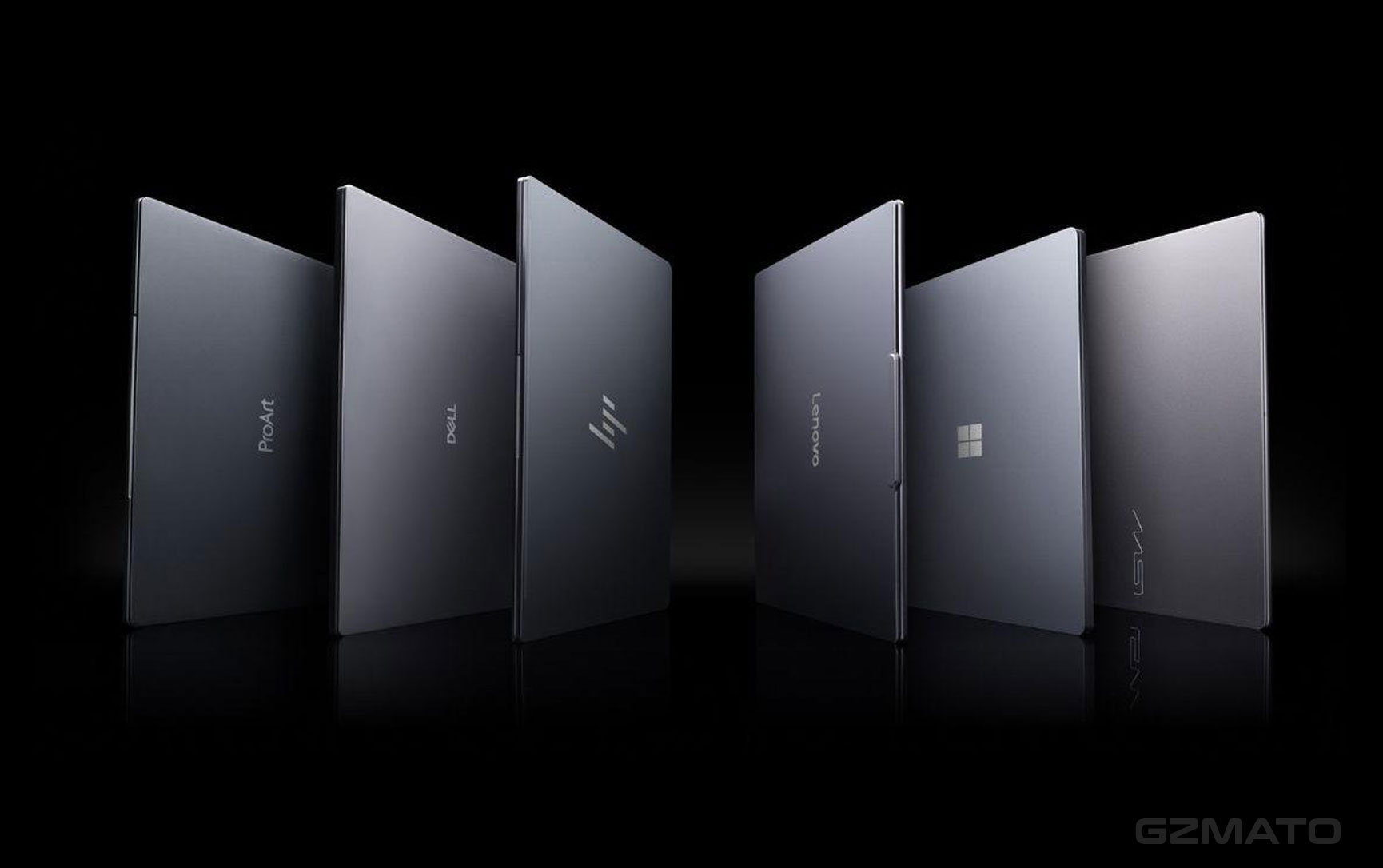
From a supply chain perspective, the CPU demand pull from AI Agents will likely follow a "PC first, then server" rhythm. NVIDIA and MediaTek's co-developed RTX Spark SoC (integrating a 20-core Arm CPU) will debut this fall in over 30 laptop models from Microsoft, Dell, HP, Asus, Lenovo, and others — marking the PC-side CPU upgrade wave. On the data center side, Intel's Xeon 6+, Arm's AGI CPU, and NVIDIA's Vera CPU will collectively shape the new compute supply landscape.
Key Takeaways and Industry Opportunities
- 2026 is collectively defined as the "Year of AI Agent" by three chip giants — NVIDIA, Qualcomm, and Intel reached rare consensus at COMPUTEX 2026.
- CPUs are returning from the edge to center stage — Agent tasks demand continuous CPU orchestration, low-latency response, multi-step reasoning, and Token distribution. The compute bottleneck is shifting from GPU to CPU.
- A single Xeon 6+ rack can run 150,000 AI agents — Intel demonstrated CPU potential in high-density Agent scenarios.
- Arm projects 4x to 10x CPU core demand growth — Core requirements within equivalent power envelopes are exploding, with industry discussions moving from 4x to 8x or even 10x.
- Qualcomm's "Computing Continuum" vision — AI tasks will dynamically migrate across endpoints, edge, and cloud, covering everything from milliwatt devices to kilowatt data centers.
- Vera Rubin platform delivers 10x Agent task efficiency — NVIDIA's Agent-designed compute platform is in full production, with Vera CPU achieving 1.8x task execution speed over x86 competitors.
- CPU supply tightness and pricing pressure likely to persist for 2-3 years — Securities research suggests CPUs could become the next scarce premium component after memory chips.
- RTX Spark drives AI PC upgrade cycle — NVIDIA and MediaTek's co-developed PC chip will debut this fall in over 30 laptop models, kicking off the hardware upgrade cycle for on-device AI Agents.
Sources & Methodology (as of June 4, 2026):
- Caixin / Jiemian News — Chip giant AI Agent consensus and CPU supply analysis
- Tencent News / Wall Street CN — Jensen Huang GTC Taipei 2026 keynote
- Global Times / IT之家 — Qualcomm Cristiano Amon COMPUTEX 2026 opening keynote
- OFweek Electronics — Intel Xeon 6+ launch coverage
- Sohu Tech — Arm CEO Rene Haas keynote
- CRN Magazine — NVIDIA GTC Taipei 2026 English coverage
- ZDNET France — Intel data center strategy French coverage
Gear Up for the AI Agent Era with Gzmato
Fast Chargers | USB-C Cables | Screen Protectors | Wireless Chargers | Power Banks | Travel Adapters
Special Offer: Use code TECH2026 for discount on your first order!


- AI Agent
- Agentic AI
- COMPUTEX 2026
- Jensen Huang
- Cristiano Amon
- Intel Xeon 6+
- CPU supply crunch
- AI infrastructure