Apple Intelligence Cleared for China: What It Means for iPhone Users
- Apple Intelligence Cleared for China: What It Means
- Two Years Later: Apple Intelligence Finally Gets the Green Light
- Alibaba and Baidu: The Local Partners Powering Apple's AI
- The Full List: 7 Phone-Side AI Models Now Approved
- What to Expect from Apple Intelligence in China
- Why This Matters for Apple and the Chinese Market
- Key Takeaways
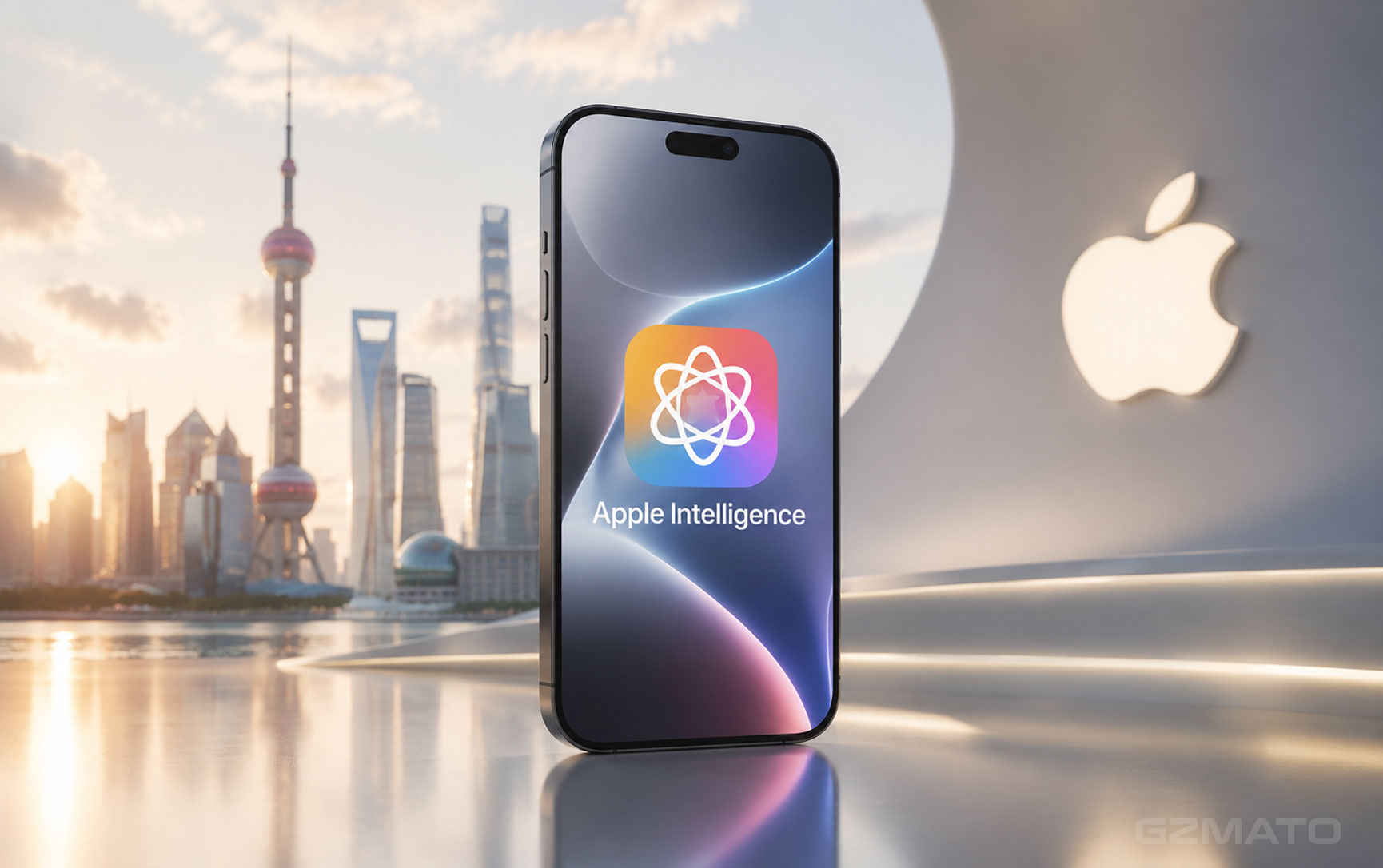
Updated July 17, 2026 — After more than two years of regulatory review, Apple has finally received approval to bring its Apple Intelligence AI platform to Chinese iPhone users. The clearance was officially published by the Cyberspace Administration of China on July 15, with the filing dated July 8, 2026 .
The approval comes with a major twist: the backbone of Apple Intelligence in China will not be Apple's own models. Instead, it will be powered by local tech giants Alibaba and Baidu — a significant pivot for a company long known for its vertical integration .
This is the story of how Apple's AI finally made it across China's regulatory finish line, and what it means for the world's most competitive smartphone market.
Two Years Later: Apple Intelligence Finally Gets the Green Light
Apple first unveiled Apple Intelligence at WWDC 2024, showcasing a suite of generative AI features designed to reinvent how users interact with their devices. But for the Chinese market, the launch hit a regulatory wall.
China requires generative AI services to undergo a security and content review before they can be offered to the public. Foreign AI models like OpenAI's ChatGPT and Google's Gemini are not available in China, forcing Apple to develop a localized solution .
Over the past two years, Apple has been working with local partners to create a compliant version of its AI platform. The wait is finally over. On July 15, 2026, "网信中国" (China's cyberspace regulator) officially announced that Apple Intelligence was among seven phone-side generative AI services approved for use in China .
The approval is dated July 8, 2026, and the filing entity is Apple Technology Development (Shanghai) Co., Ltd. .
This approval is not just a regulatory checkbox. It represents the first time Apple's generative AI features will be available to the nearly 250 million iPhone users in China .
But the way Apple got there tells a story about the company's AI strategy — and its limitations.
Alibaba and Baidu: The Local Partners Powering Apple's AI
To comply with Chinese regulations and deliver a functional product, Apple has partnered with two of China's largest tech companies: Alibaba and Baidu.
- Alibaba (Qwen AI): Responsible for providing the core generative AI capabilities, including text understanding, image generation, and content creation. Qwen will be integrated directly into iOS, iPadOS, macOS, and visionOS .
- Baidu: Focused on AI-powered search functions and upgrading Siri for the Chinese market, including visual search capabilities .
The deal with Alibaba was publicly confirmed by Alibaba Group chairman Joe Tsai in February 2025, during the World Governments Summit in Dubai. Tsai described Apple as "very picky" in selecting its Chinese partner, adding: "We are very lucky and honored to do business with a great company like Apple" .
Alibaba confirmed to multiple media outlets that Qwen will be integrated into Apple Intelligence "as an AI capability," allowing users to access its features directly within Apple's ecosystem without needing to switch between apps .
Baidu's role is slightly more complex. The company will handle the search and voice assistant capabilities, including visual search features. According to reports, the collaboration will be "focused on developing AI-based search capabilities," which will be used to upgrade China's Siri voice assistant .
An industry insider told Jiemian News that Apple also explored partnerships with DeepSeek, ByteDance, and others before ultimately settling on the Alibaba-Baidu combination. DeepSeek was ultimately not chosen due to concerns about its ability to handle the massive scale of Apple's user base .
According to one analysis, the division of work is approximately 65% for Alibaba's Qwen and 35% for Baidu's Ernie .
The Full List: 7 Phone-Side AI Models Now Approved
Apple Intelligence was not alone in the July 15 approval announcement. The list included six other Chinese smartphone brands, showing that domestic manufacturers have been moving ahead with local AI integration .
| No. | Brand | AI Model Name |
|---|---|---|
| 1 | Apple | Apple Intelligence |
| 2 | Huawei | Xiaoyi AI Large Model |
| 3 | OPPO | AndesGPT |
| 4 | vivo | BlueOS On-Device Large Model |
| 5 | Xiaomi | Pengpai AI |
| 6 | Samsung | Galaxy AI |
| 7 | ZTE (Nubia) | Doubao Phone Large Model |
The approval of these models is part of a broader shift in China's AI regulation. According to analysis, the government is transitioning from a "wild growth" phase to a "licensed operation" model for on-device AI. As one commentator noted: "On the same day, regulators drew a line on what can't be done (with new AI interaction regulations) and issued licenses for what can run" .
This means Apple is now on a level playing field with domestic competitors, who have already been deploying AI features across their product lines for more than a year .
What to Expect from Apple Intelligence in China
With approval now in place, Apple Intelligence features will roll out to Chinese users, likely starting with the iPhone 18 series and iOS 27 . Here's what users can expect:
- Writing Assistance: Text summarization, proofreading, and tone adjustment across native apps like Mail and Notes .
- Image Generation: A version of the Image Playground feature that creates images from text descriptions .
- Genmoji: Creating custom emojis from text descriptions .
- Photos Search: Natural language search across photos — e.g., "photos from the beach last summer" .
- Upgraded Siri: A more context-aware assistant that can perform cross-app tasks, though this has been delayed repeatedly and may not be ready at launch .
While the underlying AI models may be different from the US version (which uses a combination of Apple's Foundation Models, OpenAI's ChatGPT, and Google's Gemini), the user experience and interaction framework are expected to be consistent .
However, it's worth noting that the most advanced Siri features — particularly those requiring deep personal context and cross-app orchestration — have been delayed and may not appear until later in 2026 or 2027 .
Why This Matters for Apple and the Chinese Market
Apple's delay in bringing AI to China has not gone unnoticed. When Apple Intelligence debuted in 2024, local brands like Huawei, Xiaomi, and OPPO were already integrating AI across their smartphone lines .
Apple has faced significant challenges in AI development. The company has experienced a brain drain of AI talent, with key figures leaving for competitors like Meta — reportedly for compensation packages exceeding $200 million. This has made it difficult for Apple to field its own competitive foundation models .
Apple reportedly filed a lawsuit against OpenAI in July 2026, alleging the theft of hardware trade secrets related to its AI chip technology .
The immediate effect is clear: Apple is now playing catch-up in the world's largest smartphone market. The good news is that Apple has now cleared the regulatory hurdle that has kept its AI out of China for two years .
However, the clearance comes with a significant caveat. Apple's AI for China will be delivered through partnerships with Alibaba and Baidu. This means the "brain" of Apple Intelligence in China will not be Apple's own, but built on Chinese technology. For a company that has always prided itself on controlling the full stack, this is a notable concession .
Analysts note that the total addressable market for AI services is enormous. Chinese smartphone users are experimenting with AI at a rate that outpaces most other markets, and the AI capabilities of local competitors have become a key differentiator .
Key Takeaways
| # | What You Need to Know About Apple Intelligence in China |
|---|---|
| 1 | Approval confirmed July 15, 2026 — after two years of regulatory review, Apple Intelligence has been cleared for use in China |
| 2 | Alibaba and Baidu are the local partners — Alibaba's Qwen provides generative AI capabilities, while Baidu handles search and Siri features |
| 3 | One of seven approved models — Huawei, OPPO, vivo, Xiaomi, Samsung, and ZTE models were approved alongside Apple |
| 4 | Features include writing assistance, image generation, and upgraded Siri — though the most advanced features may arrive in phases |
| 5 | Apple's AI delay has been a competitive disadvantage — local brands have had AI capabilities for over a year, putting Apple in a catch-up position |
| 6 | Apple is yielding control to local partners — this marks a departure from the company's traditional vertical integration strategy |
| 7 | Full rollout likely with iPhone 18 series and iOS 27 — the approval is the first step, but features will be phased in |
- Cyberspace Administration of China — Official filing announcement, July 15, 2026
- TechCrunch — Approval reporting and partner confirmation, July 16, 2026
- 搜狐科技 / 搜狐 — Apple Intelligence clearance and partner breakdown, July 16, 2026
- 36氪 — Analysis of Apple's approval and AI strategy, July 16, 2026
- 联合早报 — Apple approval reporting, July 15, 2026
- 东方财富 / 每日经济新闻 — Approval details and partner information, July 15, 2026
- 证券时报 — Partner confirmation and analysis, July 17, 2026
- 中時新聞網 — Approval and regulatory analysis, July 16, 2026
- Interfax — Approval confirmation, July 15, 2026
- The Edge Malaysia — Approval and market impact analysis, July 16, 2026
- Apple Intelligence
- Apple Intelligence China
- Apple AI approval
- Alibaba Qwen
- Baidu Siri
- Apple China AI
- iPhone 18 AI
- iOS 27
- Gzmato