Apple's Six New AI Hardware Products 2026: Smart Glasses, HomePad, Robot & More
April 26, 2026 – Apple is quietly building its next empire. According to Bloomberg's Mark Gurman, the company is developing six major new product categories beyond its existing lineup, marking one of the most ambitious hardware expansions in Apple's history.
Apple's Six New AI Hardware Products: What We Know
In a recent appearance on the TBPN show, Gurman revealed that Apple is developing six new product categories that will define the company's next era. These products span wearables and smart home devices, all powered by advanced AI and the next-generation Siri expected at WWDC 2026.
This is Apple's most comprehensive new product push since the Apple Watch launched in 2015. The goal is clear: reduce reliance on iPhone and build a full-scenario intelligent ecosystem.
Launch Timeline: 2026-2028 Roadmap
| Product | Expected Launch | Status |
|---|---|---|
| AI AirPods | 2026 | Evolution of existing line |
| Smart Display (HomePad) | Fall 2026 | Ready for launch |
| Security Camera | 2026 | In development |
| Smart Glasses | Late 2026 - Early 2027 | Internal testing phase |
| AI Pendant (AI Pin) | 2027 | Early stage, dependent on iPhone |
| Tabletop Robot | 2027 - 2028 | Potentially delayed |
Wearables: AI AirPods, Smart Glasses & Pendant
AI AirPods represent the natural evolution of Apple's most successful accessory. Unlike current models, these will integrate localized speech understanding, contextual awareness, and multi-scenario adaptive interaction. The new AirPods will rely heavily on the next-generation Siri, expected to debut at WWDC 2026 and roll out in September. This is the only product on the list that extends an existing category rather than creating a new one.
Why it matters: Voice control will become dramatically more intuitive, allowing AirPods to anticipate user needs based on context and environment.
Apple's smart glasses are reportedly the most significant strategic priority among the six products, viewed as the next major wearable after Apple Watch. The company has invested years in optical modules, micro-display systems, and spatial computing algorithms. Engineering prototypes have entered internal testing phases.
The smart glasses are expected to feature a dual-camera system supporting high-resolution imaging and real-time computer vision processing. They'll work seamlessly with iPhone, enabling functions like text recognition and instant conversion to editable digital content, as well as contextual reminders based on what the user is seeing.
Launch window: Late 2026 announcement, early 2027 availability. Commercial availability may not come until late 2027. This will create a three-device synergy with Apple Watch and AirPods, forming a complete wearable ecosystem.
Perhaps the most mysterious product on the list, the AI pendant is described as an iPhone companion device that acts as its "eyes and ears." The device is said to be roughly the size of an AirTag, featuring an aluminum and glass body with physical buttons, attachable via clip or lanyard.
Like the other wearables, the pendant will rely on an iPhone for core computing, with a low-power chip handling basic sensing and wake-word detection. Powered by the new Siri, it promises hands-free AI assistance throughout the day. There are conflicting reports about whether it will include a camera.
Function: Voice-based AI assistance and environmental awareness. Most reports suggest the pendant is more of a "sensor hub" than a screen-based device, potentially replacing or complementing AirPods in certain use cases.
Launch: Currently in early development stages, with a possible 2027 release if the project moves forward.
Smart Home: HomePad, Desktop Robot & Security Camera
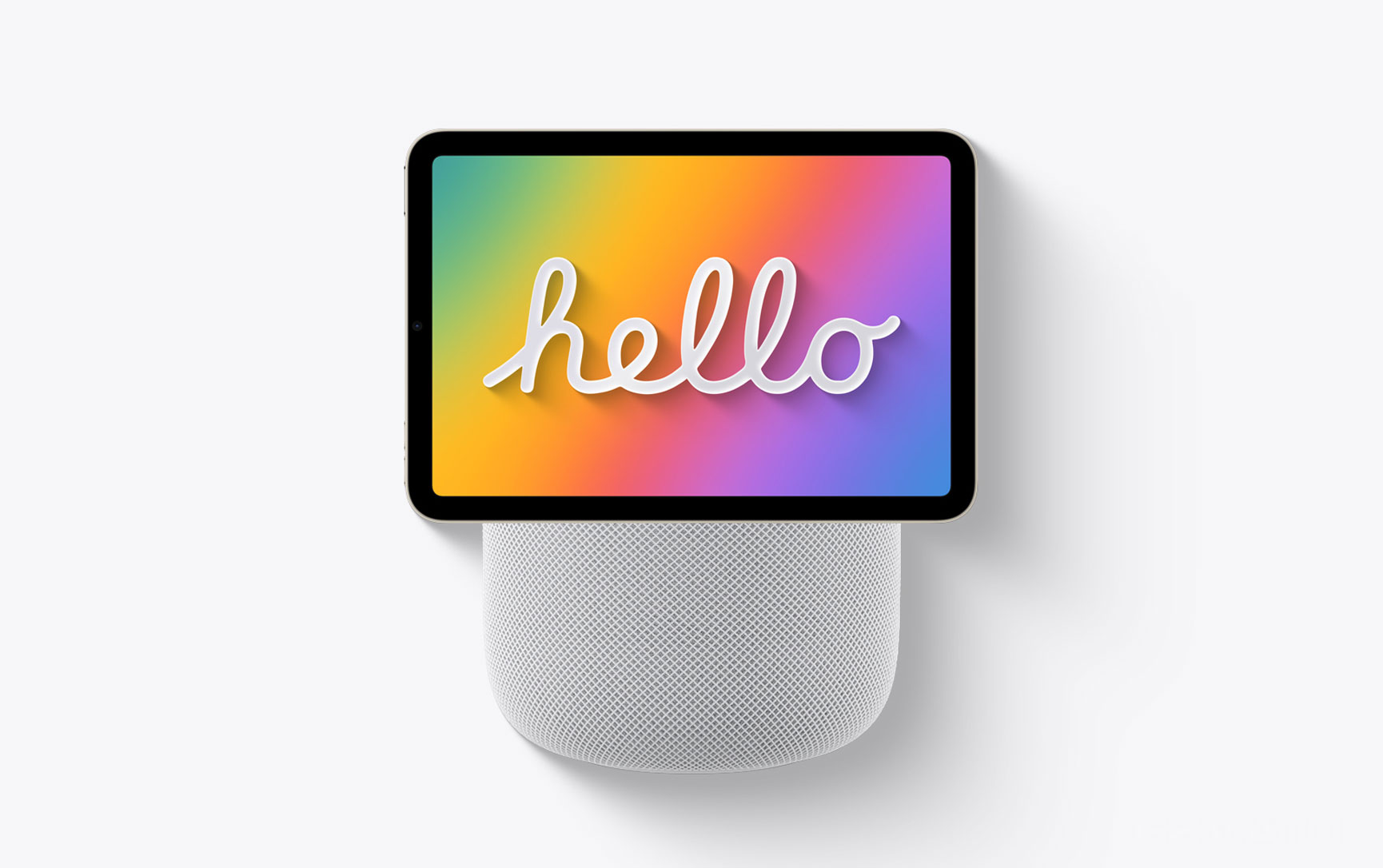
The HomePad is Apple's answer to the Amazon Echo Show and Google Nest Hub. This device is reportedly ready to launch and already sitting in warehouses. The smart display takes the form of an iPad-like screen attached to a HomePod-style speaker, designed as a centralized hub for smart home control.
Key capabilities include natural language command response, multi-device status visualization, and cross-brand protocol compatibility. It integrates deeply with HomeKit, enabling end-to-end encrypted video streaming, AI-driven behavior recognition, and active alert pushing for anomalies.
Launch: Fall 2026, likely alongside the iPhone 18 unveiling. Available in multiple sizes.
Apple's security camera will integrate deeply with the existing HomeKit ecosystem, offering end-to-end encrypted video streams and AI-powered activity recognition. It can coordinate with lights, locks, and sensors to create automated security routines.
Launch: 2026.
Privacy advantage: Apple's focus on data security could be a major differentiator in the home security market, where privacy concerns are significant.
The most ambitious product on the list is a tabletop robot with a robotic arm that can move a display to any angle. This device is designed to serve as an advanced personal assistant, combining AI comprehension with physical movement.
It represents Apple's entry into the robotics category, a space where few consumer products have found mainstream success. The company is tackling significant technical hurdles including motion control precision, environmental understanding, and battery life optimization.
Launch: Originally planned for 2027, but insiders suggest a delay to 2028 is likely due to development complexity.
The Big Picture: Apple's Post-iPhone Strategy
This six-product push represents a strategic pivot for Apple. As iPhone sales mature, the company is aggressively diversifying into AI wearables and smart home devices to build a "full-scenario intelligent ecosystem".
What's particularly notable is the interconnected nature of these products. The wearables (smart glasses, pendant, AI AirPods) will all work as iPhone companions, with Siri serving as the central intelligence layer. The smart home devices (HomePad, camera, robot) will form a cohesive ecosystem around the Apple Home platform.
• Wearables: Extend iPhone's reach into every moment of the day through glasses, earbuds, and a pendant
• Smart Home: Finally gives Apple a complete lineup to compete with Amazon and Google in the home
• Key differentiator: Unlike competitors, Apple ties everything to its existing ecosystem of 1B+ iPhones
• Risks: The pendant and robot are unproven categories; delays are possible, especially for robotics
Final Verdict
Apple is betting big on a future beyond the iPhone. These six products — AI AirPods, Smart Glasses, AI Pendant, HomePad, Security Camera, and Tabletop Robot — represent Apple's attempt to build an intelligent ecosystem that surrounds the user at all times, from their face (glasses) to their ear (AirPods) to their home (HomePad, robot, camera).
What's launching soon: The HomePad (Fall 2026) and AI AirPods are closest to market. These will be the first indicators of whether Apple's new strategy gains traction.
What to watch for: The smart glasses - if Apple can nail this category where others have failed, it could become the next Apple Watch. The pendant is a wild card - it could either be the next big thing or quietly cancelled.
What's most ambitious: The tabletop robot is genuinely new territory for Apple and for consumer tech. If it works, it could define a new category. But delays are almost certain.
Get Ready for Apple's AI Future at Gzmato
While you wait for Apple's next-gen products, upgrade your current setup with our selection:
MacBooks | iPhone Cases | AirPods Accessories | HomeKit Devices | Charging Stations
Special Offer: Use code APPLEREADY15 for 15% off your next purchase
Shop Mac & Apple Accessories Now →Data Sources & Methodology (as of April 26, 2026):
- Mark Gurman (Bloomberg) via TBPN podcast (April 2026)
- Pacific Technology coverage of Apple's product roadmap
- ZOL Apple product leak analysis
- Aastocks supply chain reporting
- TecnoAndroid Apple hardware tracking

- Apple new products 2026
- Apple AI hardware
- Apple smart glasses
- HomePad Apple
- Apple tabletop robot
- AI pendant Apple
- Mark Gurman Apple