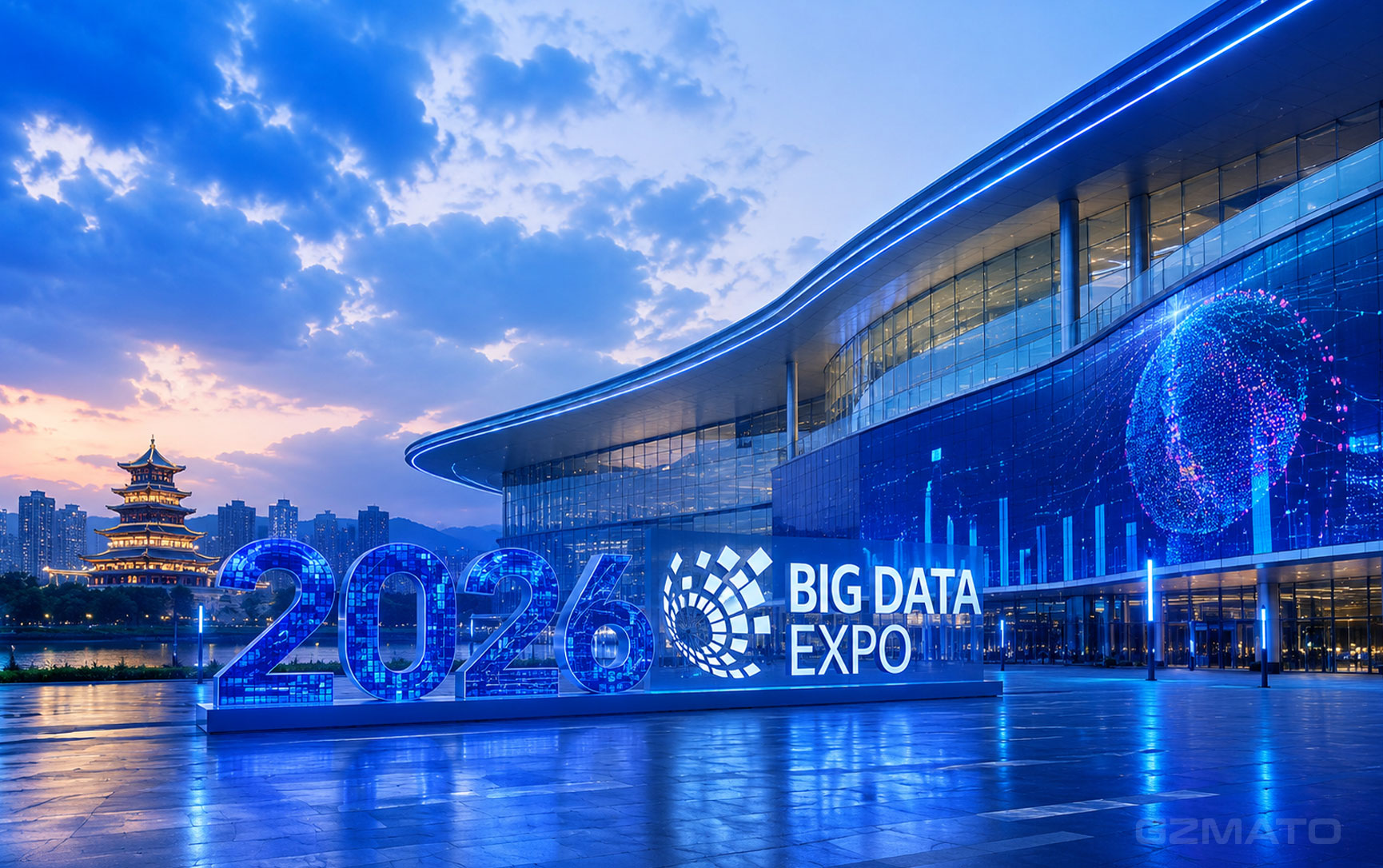
Token Economy: Big Data Expo 2026 Opens in Guiyang
- Token Economy: Big Data Expo 2026 Opens in Guiyang
- By the Numbers: A $6.78 Trillion Data Industry
- Five Exhibition Halls: The Complete Token Economy Value Chain
- Beyond the Expo: Industry Dialogues, Matchmaking, and Competitions
- Why This Matters: Tokens as the New Value Anchor
- Shop Tech & Electronics at Gzmato
- Key Takeaways
August 28, 2026 — The China International Big Data Industry Expo 2026 (Big Data Expo 2026) officially opened today in Guiyang, Guizhou province, with a theme that signals a fundamental shift in how the data economy is understood: "Tokens — A New Path for Unlocking the Value of Data Elements" [citation:1][citation:2][citation:5].
Now in its 12th year, the expo has grown from a regional showcase into a national-level platform hosted by the National Data Administration and organized by the Guizhou Provincial People's Government [citation:1][citation:5]. This year, 372 Chinese and international enterprises are exhibiting across 60,000 square meters of exhibition space, with over 1.6 million registered visitors expected [citation:1][citation:11][citation:12].
The concept of "tokens" (词元) sits at the heart of this year's expo — a term that refers to the discrete units of data that fuel AI models. In plain terms: just as currency underpins traditional economic activity, tokens are becoming the fundamental unit of value in the AI economy [citation:5][citation:7][citation:10].
By the Numbers: A $6.78 Trillion Data Industry
The scale of China's data economy provides context for the expo's ambitions. According to official figures released at the expo:
| Metric | Value |
|---|---|
| China data industry size (2025) | 6.78 trillion RMB, up 15.7% year-over-year [citation:2][citation:6] |
| High-quality datasets (as of August 2026) | 126,000+, total volume 1,815+ PB [citation:2][citation:6] |
| Exhibiting companies | 372 [citation:1][citation:3] |
| Registered visitors | 16,000+ [citation:1] |
| Exhibition area | 60,000 sqm [citation:11][citation:12] |
| New achievements released | 73 (22 from National Data Administration) [citation:1][citation:5] |
| Industry exchange events | 26 [citation:5][citation:9] |
China's data industry growth of 15.7% in 2025 substantially outpaced overall GDP growth, underscoring the sector's role as a key driver of economic expansion [citation:2][citation:6]. The 1815 PB of high-quality datasets — the raw material for China's AI development — represents a national infrastructure asset built through coordinated public and private investment [citation:2][citation:6].
Five Exhibition Halls: The Complete Token Economy Value Chain
This year's expo is organized around five thematic exhibition halls, each representing a stage in the token economy value chain [citation:2][citation:3][citation:5]. The "token economy" refers to a model in which AI tokens (the discrete units processed by large language models) are measured, traded, and monetized as the fundamental unit of value [citation:3].
1. Computing Infrastructure Hall (E1) — The Token Factory
Tokens are generated by computing power. This hall showcases the infrastructure that powers the AI economy: the data centers, supercomputing clusters, and energy systems that produce tokens at scale. Exhibitors include China Telecom, China Mobile, China Unicom, Sugon, Inspur, Kingsoft Office, and iSoftStone [citation:3].
Among the highlights: the Sugon 8000 AI supercluster, integrated computing networks, and a stratospheric wind power system (SAWES) that aims to power data centers with renewable energy [citation:3].
2. Data Supply Hall (W2) — The Token Raw Material
Before data can become tokens, it must be collected, governed, verified, and made available for circulation. This hall features companies specializing in data operations, data governance, token datasets, and trusted data spaces, including LinkZero, Anxin Data, DataBao, Benyuan Zhishu, and DataTang [citation:3].
Exhibits include AI-trusted data space platforms, industrial models, and data asset management solutions — the practical tools that turn raw data into AI-ready tokens [citation:3].
3. Model-Driven Applications Hall (W1) — The Token Refinery
This hall showcases the AI models that consume tokens and turn them into intelligence. Exhibitors include leading foundation model companies, vertical AI solution providers, and generative AI startups such as Zhipingfang, Jiangxing Intelligence, and Kuawai Intelligence [citation:3].
Key demonstrations include Jiangxing Intelligence's JX-Phi Physical AI Brain and Zhipingfang's AlphaBot2, a general-purpose intelligent robot. Visitors can also interact with the X30 quadruped robot and the Shanmao M20, China's first all-terrain wheeled-legged robot [citation:3].
4. Application Empowerment Hall (E2) — Tokens in Action
This hall focuses on real-world applications: how token-powered intelligence is transforming retail, logistics, manufacturing, and daily life. Exhibitors include BYD, Hengxiangfei, and Jingyao Technology [citation:3].
A robot interactive zone features hands-on experiences with AI-powered ice cream robots, beverage service robots, barista robots, and chess-playing robots from智元 (Zhiyuan) — a concrete demonstration of the token economy reaching everyday consumers [citation:3].
5. Security & Intelligent Experience Hall
This hall addresses the challenges of securing data and tokens throughout the value chain, with a focus on data protection, privacy-preserving computation, and infrastructure security [citation:2][citation:5].
A notable addition to this year's expo is China's first AI large language model marketplace specifically designed to serve tech innovators operating as one-person companies [citation:4][citation:5]. This marketplace lowers the barrier to entry for independent developers and small teams, enabling them to access and monetize AI models without building their own infrastructure. It represents a bet on the democratization of AI development — a recognition that the token economy will be built not just by large corporations, but by individual creators.
Beyond the Expo: Industry Dialogues, Matchmaking, and Competitions
The expo is more than an exhibition: it is a platform for policy signaling, industry collaboration, and commercial deal-making [citation:5][citation:12].
73 Achievements Released
The National Data Administration will release 22 institutional regulations, industry standards, and practical case studies, while other organizations will release 50 additional innovations [citation:1][citation:5]. These include frameworks on token economics, data annotation standards, and data infrastructure [citation:2][citation:5].
26 Industry Dialogues
Industry dialogues are organized around five tracks: data industry development, high-quality datasets and data annotation, data infrastructure and standardization, international digital economy cooperation, and scenario-driven value realization. Highlights include sessions on "Data Industry and AI Collaborative Development" and "China-Thailand Digital Economy Cooperation" [citation:5][citation:12].
On August 29, a dedicated token economy symposium will bring together senior National Data Administration officials, industry experts, think tank representatives, major LLM companies, and data providers to discuss token theory, token factory scale-up, token distribution models, and cross-industry applications [citation:7][citation:10].
Cross-Border Matchmaking
The expo features dedicated international data exchange zones and cross-border matchmaking sessions, connecting domestic companies with more than 30 overseas enterprises [citation:1][citation:12]. An "Industry Ecosystem Corridor" links 100+ high-growth companies with four specialized industrial parks [citation:12].
Racing Robots and Cultural Fusion
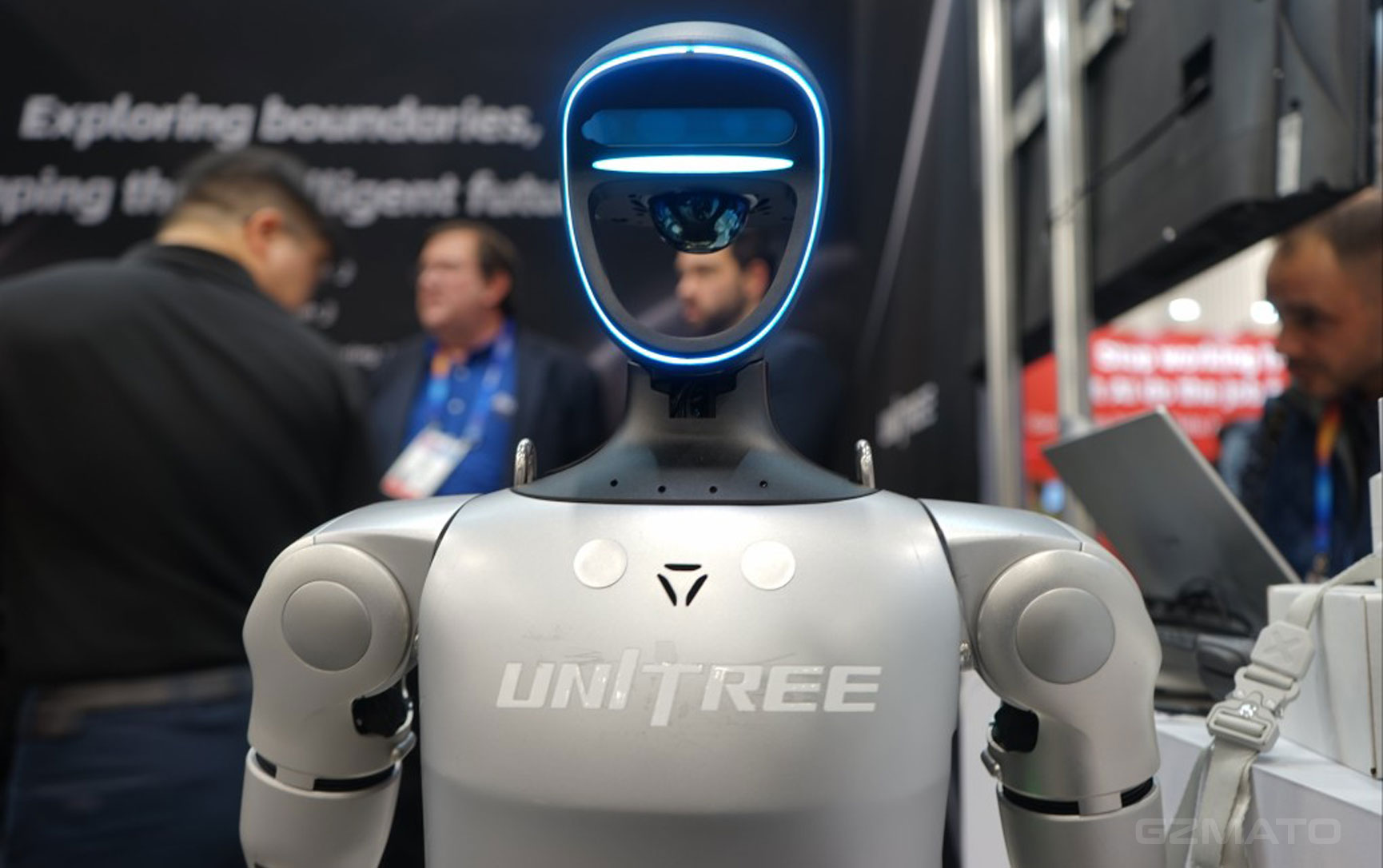
The opening ceremony featured a humanoid robot co-host named "Xiaoshu," alongside the "Zhiyuan Lingxi X2" — fresh off its 100m championship at the World Humanoid Robot Games — which performed Miao dance and martial arts using motion capture technology [citation:5]. The expo also integrates with Guizhou's famous "Village Super League" and "Village BA" basketball events, with autonomous shuttle buses creating a "Wonder Loop" experience [citation:5].
Why This Matters: Tokens as the New Value Anchor
The choice of "tokens" as this year's expo theme reflects a substantive shift in how the digital economy is being understood. According to the expo organizers, "tokens are the core value anchor of the intelligent era, serving as the critical quantifiable bridge between frontier technology supply and market demand" [citation:7][citation:10].
This is not just theoretical language. The token economy addresses a practical problem that has hindered data commercialization: how to measure and monetize data in a way that is standardized, scalable, and auditable. Tokens provide a unit of account for AI consumption — a way to price the "thinking" that AI models do [citation:3][citation:7].
The shift matters for businesses because it signals that data is moving from an unmeasured resource to a metered economic input. Just as electricity consumption is measured in kilowatt-hours and cloud computing in compute hours, AI consumption will increasingly be measured in tokens. The companies that understand this shift early will be better positioned to allocate resources, price their services, and compete in the emerging token economy [citation:3][citation:5].
For consumers, the token economy means AI services will become more accessible and more granularly priced — the emergence of a marketplace for one-person companies is a direct bet on this democratization [citation:4][citation:5].
Shop Tech & Electronics at Gzmato
AI-powered Devices | Smart Home | Laptops & Accessories | In Stock Now
Special Offer: Use code TECH2026 for a discount on your first order!
Shop Now at GzmatoWe're actively expanding our catalog and can often source specific models on request. Chat with our team or open a request.
Key Takeaways
| # | What You Need to Know About Big Data Expo 2026 and the Token Economy |
|---|---|
| 1 | China's data industry reached 6.78 trillion RMB in 2025 — up 15.7% year-over-year, with 1815 PB of high-quality datasets now available [citation:2][citation:6] |
| 2 | 372 exhibitors across 60,000 sqm — with 73 new achievements released, including 22 from the National Data Administration [citation:1][citation:5][citation:11] |
| 3 | "Token" is the central theme — tokens are positioned as the fundamental unit of value in the AI economy [citation:7][citation:10] |
| 4 | Five exhibition halls cover the complete token economy chain — from computing infrastructure to data supply, model-driven applications, application empowerment, and security [citation:2][citation:3][citation:5] |
| 5 | New AI marketplace for "one-person companies" — lowering barriers for independent developers to monetize AI models [citation:4][citation:5] |
| 6 | International matchmaking and cross-border cooperation — with dedicated international data exchange zones and 30+ overseas enterprises participating [citation:1][citation:12] |
- National Data Administration (国家数据局) — Official expo briefing, 87 achievements, 1.6M visitors, 372 exhibitors, 89 events [citation:1]
- CCTV News / 央视网 — Data industry size 6.78 trillion RMB, 1815 PB datasets, 126,000+ datasets, 15.7% growth [citation:2][citation:6]
- 中国经济网 / 贵阳发布 — Five exhibition halls, 372 exhibitors, Guangdong as guest province, "token economy" industry chain [citation:3]
- China Services Info / 中国服务信息 — AI marketplace for one-person companies, 40+ new results, 20+ industry events [citation:4]
- 央广网 / Sohu — Opening ceremony, "Xiaoshu" robot co-host, 73 achievements, 26 dialogues, 4 competitions, 30+ overseas enterprises [citation:5]
- 新浪 / 贵阳网 — Token economy symposium details (August 29), National Data Administration attendance, key industry participants [citation:7][citation:10]
- Global Times — 60,000 sqm exhibition, 300+ enterprises, professional matchmaking focus [citation:11]
- 光明网 — 5 thematic halls, 6,000 sqm, 300+ enterprises, 20+ industry events, cross-border matchmaking details [citation:12]


- Big Data Expo 2026
- Guiyang
- data industry
- token economy
- 词元
- China data industry
- National Data Administration
- AI marketplace
- humanoid robot
- data economy
- Gzmato
- 2026 tech