Xiaomi Xuanjie O3: The 5.22M AnTuTu Score That Changes Everything
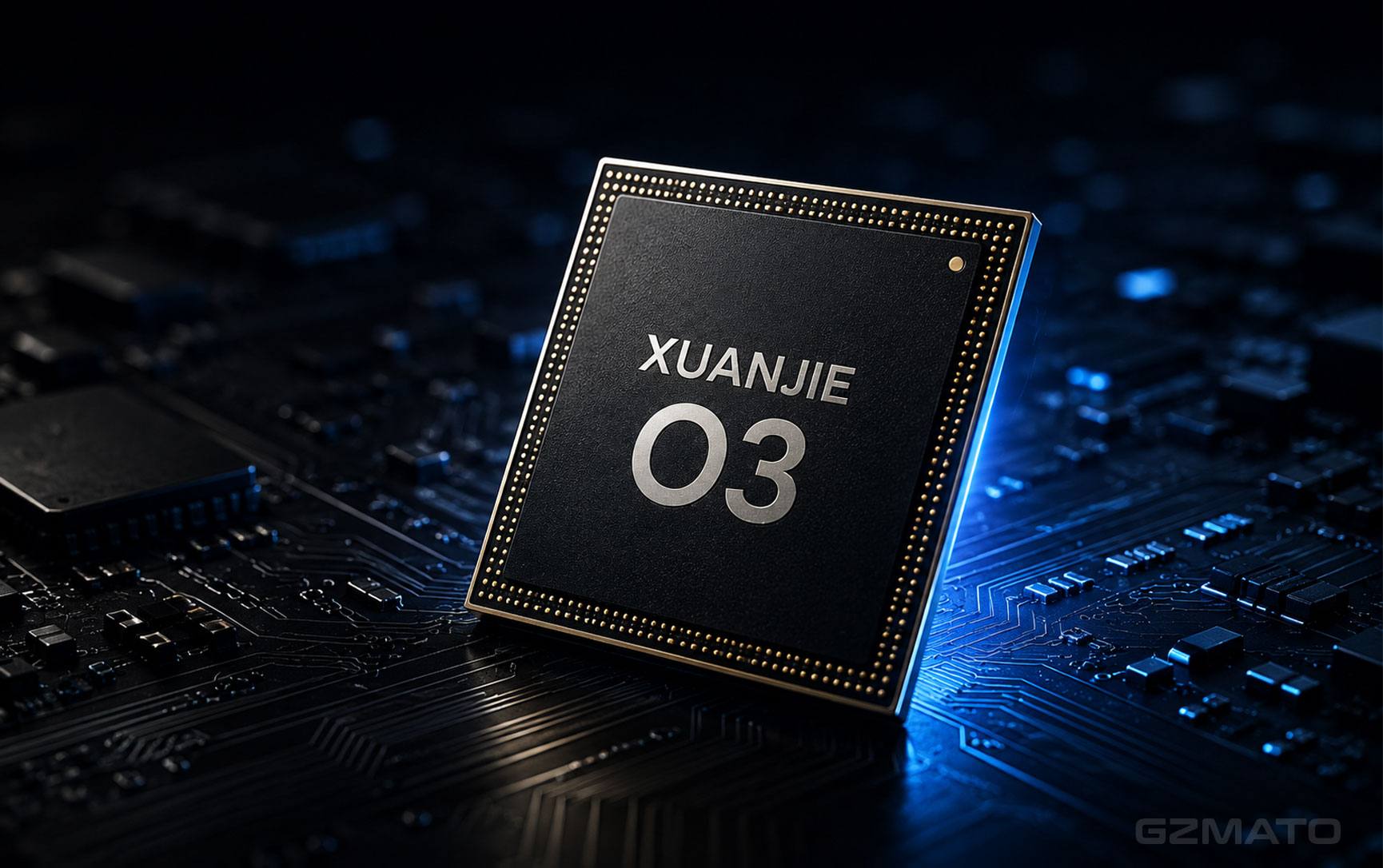
- Xiaomi Xuanjie O3: The 5.22M AnTuTu Score That Changes Everything
- By the Numbers: What 5.22M AnTuTu Actually Means
- Three Chips, One Strategy: Xiaomi's "Human-Car-Home" AI Foundation
- China's Chip Ecosystem Breakthrough: LPDDR6 and Beyond
- Why This Matters: From "Catching Up" to "Leading"
- Shop Xiaomi & Tech at Gzmato
- Key Takeaways
August 24, 2026 — Xiaomi didn't just launch a new chip. It launched three of them — and in doing so, it reshaped the narrative around what Chinese semiconductor design can achieve [citation:1][citation:4][citation:6].
The flagship among them, the Xuanjie O3, is a 3nm AI旗舰 SoC that scored 5.22 million on AnTuTu — the first mobile platform to break the 5 million barrier [citation:1][citation:2][citation:7]. But the real story isn't just the score; it's the ecosystem strategy behind it.
Xiaomi also unveiled two additional chips: the Xuanjie O100, a 6nm 3D wafer-stacked AI accelerator designed to break the "memory wall," and the Xuanjie D100, China's first 3nm automotive-grade autonomous driving chip [citation:1][citation:4][citation:15]. All three chips have completed tape-out verification [citation:1][citation:6].
By the Numbers: What 5.22M AnTuTu Actually Means
The Xuanjie O3 is built on a 3nm process with 240 billion transistors packed into a 133mm² die — a 26% increase over last year's O1 [citation:4][citation:5][citation:8]. Xiaomi's chip team expanded its custom standard cell library from 480 to over 2,400 cells to achieve this density [citation:8][citation:15].
The CPU uses a 10-core "all-big-core" architecture: 6 super-cores + 4 performance cores, clocked up to 4.35GHz. This configuration delivers a 60% multi-core performance boost over the O1, with a 25% reduction in power consumption for everyday workloads [citation:4][citation:12].
The GPU is an even bigger story. The 16-core G2-Ultra NX delivers 85% peak performance gains and 182% ray-tracing improvements, with power consumption reduced by up to 64% at equivalent performance levels [citation:1][citation:2][citation:7]. This isn't incremental progress — it's a generational leap.
For AI workloads, the O3's NPU is designed specifically for large language models, delivering 200 TOPS of tensor compute and 3.13 TFLOPS of vector compute. In tests running Xiaomi's MiMo 3B model, inference speed is 45% faster than competing flagship SoCs, with 26% lower power consumption [citation:4][citation:8][citation:15].
The LPDDR6 Milestone
Perhaps the most significant technical achievement: the Xuanjie O3 is the world's first mobile SoC to support LPDDR6 memory, with bandwidth reaching 113.8GB/s — a 48% increase over LPDDR5X [citation:1][citation:2][citation:8].
Critically, Chinese memory leader ChangXin Memory Technologies (CXMT) is the core LPDDR6 partner for this chip [citation:3][citation:10]. Previously, every new LPDDR standard's flagship debut was dominated by Samsung, SK Hynix, and Micron. This marks the first time a Chinese memory supplier has broken into the flagship mobile memory supply chain at launch [citation:3].
Three Chips, One Strategy: Xiaomi's "Human-Car-Home" AI Foundation
The O3 is impressive. But the real strategic signal is the simultaneous launch of two other chips.
The Xuanjie O100 is a 6nm AI accelerator designed to break the "memory wall" — the growing gap between compute speed and data delivery bandwidth that limits AI performance [citation:5][citation:15]. Using 3D wafer-level stacking technology, the O100 stacks memory and compute dies vertically, creating a direct data path that achieves 1.22 TB/s bandwidth [citation:5][citation:15].
In plain terms: while traditional chips are limited by the bandwidth of their memory interface (like a building with only a few elevators), the O100 gives every compute unit its own dedicated data channel [citation:15]. It's designed for scenarios where network connectivity may be limited, enabling full-speed AI inference on-device without relying on cloud servers [citation:15].
The Xuanjie D100 is China's first 3nm automotive-grade chip for autonomous driving, featuring a 20-core CPU and 16-core NPU capable of running 200-billion-parameter models locally [citation:5][citation:7][citation:15].
Together, these three chips form what Xiaomi CEO Lei Jun calls the "Xuanjie AI Compute Foundation" — a unified self-developed architecture spanning smartphones, smart cars, and IoT devices [citation:6][citation:9]. "Xuanjie is not just Xiaomi's chip strategy," Lei Jun wrote on social media. "It is the physical foundation of Xiaomi's AI strategy" [citation:6][citation:7][citation:9].
China's Chip Ecosystem Breakthrough: LPDDR6 and Beyond
The CXMT-LPDDR6 partnership is arguably as significant as the O3 itself. It signals that the Chinese semiconductor supply chain is beginning to work as an integrated ecosystem at the flagship level, not just in budget segments [citation:3][citation:10].
In the mobile memory supply chain, flagship SoC memory selection sets the direction for the entire industry. LPDDR6 was standardized by JEDEC in July 2025 [citation:3]. Previously, every LPDDR standard's flagship debut was dominated by the three legacy memory giants [citation:3]. The Xuanjie O3 + CXMT LPDDR6 combination represents a decisive break from that pattern.
This matters for the broader Chinese tech industry because it validates a model where domestic design, domestic memory, and domestic packaging can deliver world-class performance at the high end — not just in mid-tier products [citation:7][citation:10].
Xiaomi's three-chip launch is the latest in a wave of semiconductor advancements from Chinese companies. Earlier in August, the second World Humanoid Robot Games showed China leading in robotics hardware. Now, Xiaomi is demonstrating that China can also compete at the very highest levels of chip design.
For the past decade, "Chinese chips" meant low-end, budget, or "good enough." The O3's AnTuTu score and 3nm process, combined with its LPDDR6 support and ecosystem strategy, suggest that the narrative is shifting. Xiaomi has spent over 210 billion RMB on chip R&D over five years, building a team of nearly 3,000 engineers [citation:7]. That investment is now beginning to show results.
Why This Matters: From "Catching Up" to "Leading"
For years, the narrative around Chinese semiconductors was one of catching up. Xiaomi's Xuanjie O3 — with its 5.22 million AnTuTu score, 3nm process, global-first LPDDR6 support, and accompanying AI and automotive chips — suggests the conversation may be shifting [citation:7][citation:9].
Counterpoint analyst Ivan Lam noted that based on the published specifications, the O3 ranks in the top tier of 3nm flagship SoCs [citation:5]. It will be directly compared to Qualcomm's and MediaTek's offerings once devices with the same generation and process are available [citation:5].
CCTV News covered the launch, stating: "Three chips launched together — a new breakthrough for China's chip industry" [citation:9]. That official recognition signals the significance the Chinese government attaches to this moment.
The real-world impact will, of course, depend on execution. The O3 will first appear in Xiaomi's 18 Fold, launching in September 2026 [citation:1][citation:6][citation:8]. The O100 and D100 are scheduled for commercial availability in 2027 [citation:1][citation:5][citation:8].
Shop Xiaomi & Tech at Gzmato
Xiaomi Smartphones | Xiaomi Tablets | Smart Home Devices | Electronics & Accessories | In Stock Now
Special Offer: Use code TECH2026 for a discount on your first order!
Shop Now at GzmatoWe're actively expanding our catalog and can often source specific models on request. Chat with our team or open a request.
Key Takeaways
| # | What You Need to Know About Xiaomi's Xuanjie Chip Launch |
|---|---|
| 1 | 5.22 million AnTuTu score — the Xuanjie O3 is the first mobile SoC to break 5 million, built on 3nm with 240 billion transistors [citation:1][citation:2][citation:7] |
| 2 | Three chips, one strategy — O3 (mobile), O100 (AI accelerator), and D100 (automotive) form Xiaomi's "Human-Car-Home" AI compute foundation [citation:4][citation:5][citation:6] |
| 3 | Global-first LPDDR6 support — the O3 is the world's first mobile SoC to support LPDDR6 memory, with CXMT as the core Chinese memory partner [citation:3][citation:10] |
| 4 | Narrative shift — Chinese chip design is moving from "catching up" to competing at the flagship level, as recognized by CCTV and industry analysts [citation:5][citation:7][citation:9] |
| 5 | Coming soon — O3 debuts in Xiaomi 18 Fold (September 2026); O100 and D100 planned for 2027 commercialization [citation:1][citation:5][citation:8] |
- 中国电子报 / CENA — Xiaomi Xuanjie O3, O100, D100 launch and specifications [citation:1]
- PChome / Sohu — O3 3nm process, 5.22M AnTuTu score, full technical details [citation:2]
- 上海证券报 / Sohu — CXMT LPDDR6 partnership confirmation and industry analysis [citation:3][citation:10]
- 界面新闻 / Eastmoney — In-depth analysis of three-chip strategy and Counterpoint analyst commentary [citation:5]
- 大洋网 — Lei Jun statement on "Human-Car-Home" AI compute foundation [citation:6]
- 新浪财经 / Sohu — Industry significance and 210 billion RMB R&D investment [citation:7]
- 21世纪经济报道 — Zhu Dan interview, O3 technical details, and "all-big-core" CPU architecture [citation:8]
- 太平洋科技 / 快科技 — CCTV News coverage and official recognition [citation:9]
- 新京报 / 北京日报 — O3 performance data and chip details [citation:13][citation:15]



- Xiaomi Xuanjie O3
- Xiaomi chip
- 3nm SoC
- 5.22 million AnTuTu
- LPDDR6
- CXMT
- Chinese semiconductor
- Xuanjie O100
- Xuanjie D100
- Xiaomi 18 Fold
- AI chip
- autonomous driving chip
- Gzmato