China's 360TB Glass Hard Drive: 100,000-Year Lifespan, 100% Domestic Production
China's 360TB Glass Hard Drive: 100,000-Year Storage Revolution
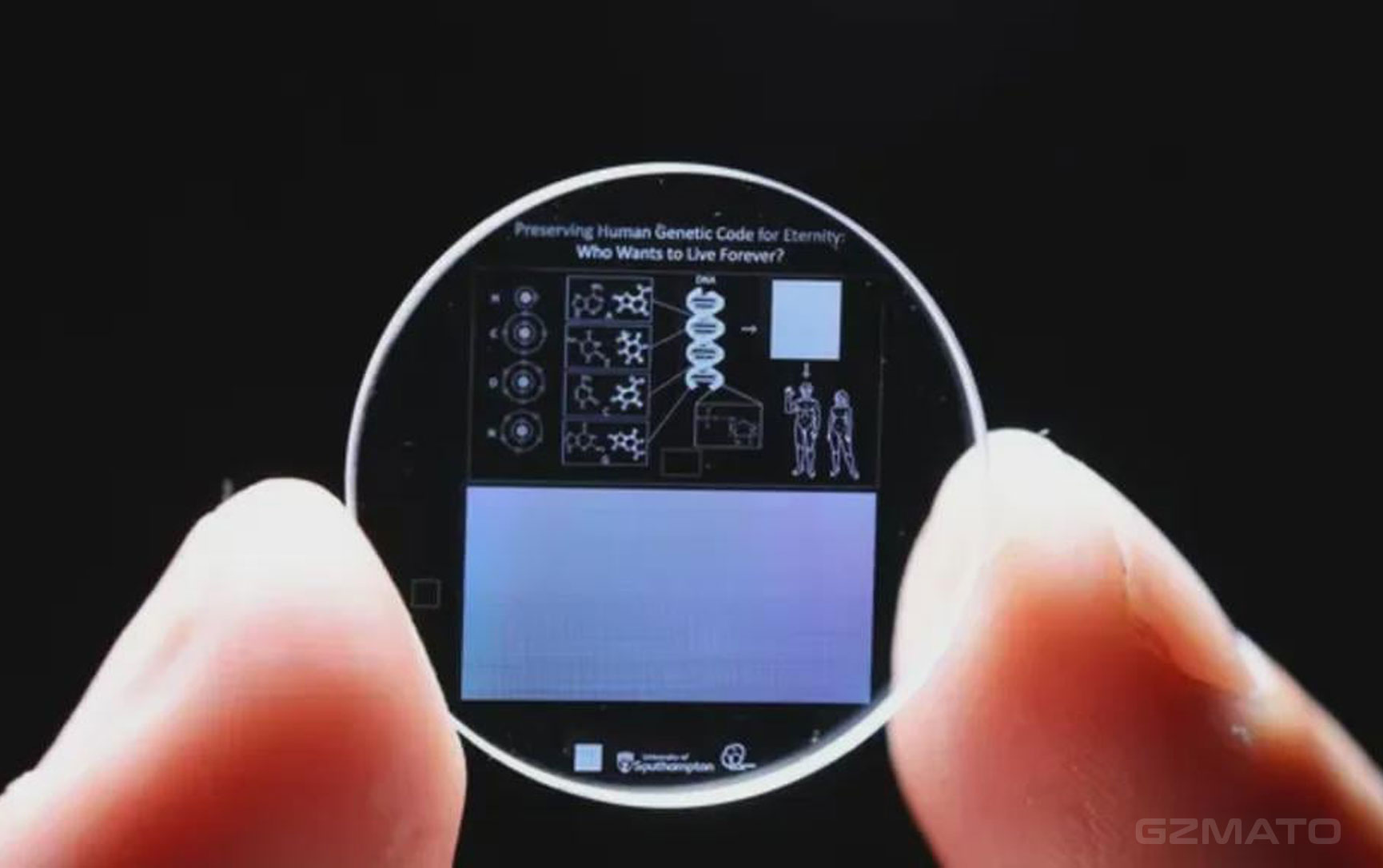
On May 30, 2026, Hubei Guanggu Laboratory announced a breakthrough that could fundamentally reshape the data storage industry: the successful small-scale mass production of a glass-based hard drive with a single-disk capacity of 360 terabytes (TB) and a lifespan of 100,000 years .
The drive is fully resistant to extreme temperatures, waterproof, and immune to electromagnetic interference — making it one of the most durable storage mediums ever developed. Perhaps most significantly, the entire production chain is 100% domestically produced, with media costs approximately one-tenth that of traditional hard drives .
The Numbers That Redefine Storage
The glass hard drive leverages a five-dimensional (5D) optical storage technology, where data is encoded in nanostructured dots embedded within quartz glass. The technology was originally demonstrated by the University of Southampton's Optoelectronics Research Centre, but Chinese researchers have now scaled it to commercial viability .
| Specification | Value |
|---|---|
| Single-Disk Capacity | 360 TB |
| Estimated Lifespan | 100,000 years at room temperature (up to 300°C for hours) |
| Media Cost | Approximately 1/10 of traditional hard drives |
| Data Reading Method | Standard optical microscope (no special equipment required) |
| Environmental Tolerance | Waterproof, fireproof, immune to electromagnetic pulses |
| Supply Chain | 100% domestic — from raw materials to finished product |
The technology uses femtosecond laser pulses to create nanoscale structures within the glass. These structures change the polarization of light passing through, allowing data to be read back using a standard optical microscope . The data is stored in five dimensions — three spatial dimensions plus two optical parameters (slow axis orientation and strength of retardance).
Glass Drive vs HDD vs SSD: Complete Comparison
How does the new glass drive compare to existing storage technologies?
The glass drive is not designed for active computing workloads. Reading data requires an optical microscope and is relatively slow. This technology is optimized for cold storage and archival preservation — data that must be kept safe for decades or centuries but accessed infrequently.
For active data, SSDs and HDDs remain superior. But for archival storage, the glass drive offers an unprecedented combination of capacity, durability, and cost.
100% Domestic Supply Chain: A Strategic Breakthrough
Perhaps the most significant achievement of the glass drive project is the complete localization of its supply chain. From raw glass materials to femtosecond laser manufacturing equipment to optical readout systems, every component is produced domestically .
This stands in stark contrast to traditional storage technologies. HDDs rely on precision mechanical components dominated by Western and Japanese manufacturers. SSDs depend on NAND flash chips, where global supply chains remain vulnerable to geopolitical disruptions .
The cost advantage is equally notable. With media costs roughly one-tenth that of traditional hard drives, the glass drive could dramatically reduce the total cost of ownership for massive cold storage deployments . Data centers currently spend enormous sums on power, cooling, and floor space for archival data. Glass drives require no power for storage, no active cooling, and can be densely packed.
Where Will Glass Drives Be Used?
The glass drive is not a replacement for everyday SSDs and HDDs. Instead, it targets specific high-value applications:
| Application | Why Glass Drive Excels |
|---|---|
| National Archives & Libraries | 100,000-year lifespan ensures permanent preservation of historical records, manuscripts, and cultural heritage |
| Data Center Cold Storage | Massive capacity per disk reduces floor space; no power required for storage cuts electricity costs dramatically |
| Government & Military Archives | EMP immunity and 100% domestic supply chain eliminate foreign dependency risks |
| Space & Extreme Environments | Withstands radiation, temperature extremes, and vacuum without degradation |
| Insurance & Financial Records | Permanent, tamper-proof storage for contracts, transactions, and regulatory compliance |
Key Takeaways
- Single-disk capacity of 360TB — enough to store approximately 12 million hours of music or 360,000 Blu-ray movies
- 100,000-year lifespan at room temperature — can withstand up to 300°C for hours without data loss
- Media cost approximately 1/10th of traditional hard drives — dramatic reduction in cold storage economics
- 100% domestic supply chain — from raw materials to finished product, eliminating foreign dependency risks
- Ideal for cold storage and archival applications — not designed for active computing workloads
- Readable with a standard optical microscope — no special equipment required for data recovery
- Environmental resilience — waterproof, fireproof, immune to electromagnetic interference
Sources & Methodology (as of June 1, 2026):
- CSDN Blog — 360TB glass hard drive announcement and technical specifications
- 快科技 (MyDrivers) — Glass hard drive cost and supply chain analysis
- Hubei Guanggu Laboratory — Official technology demonstration
- International Data Corporation (IDC) — Storage market projections
- University of Southampton ORC — 5D optical storage foundational research
Stay Ahead of Tech Trends with Gzmato
Fast Chargers | USB-C Cables | Screen Protectors | Wireless Chargers | Power Banks | Travel Adapters
Special Offer: Use code TECH2026 for discount on your first order!

- glass hard drive
- 360TB storage
- 5D optical storage
- cold storage
- China storage technology
- archival storage
- glass storage media