How Does a CDN Work Benefits, Features and When to Use
If your company's website gets a lot of hits from geographically distant users, then you need to know right away what CDN is.
After all, delivering a site that makes content available quickly is one of the main requirements to please the user and rank in the search engines.
However, this speed is directly related to the physical location of the server. This means that the further away the user is geographically, the longer the page will take to load.
Fortunately, there are distribution networks, such as CDN, that improve the speed of accessing a website even when accessed by people who are far from the server.
With this, you can rank on Google and still allow your visitors to have an excellent browsing experience on your page.
Want to know how to achieve this feat? Then continue reading this content!
What is a CDN?
CDN is the acronym for Content Delivery Network, Its function is to allow the content of a website to be cached. But what does that mean?
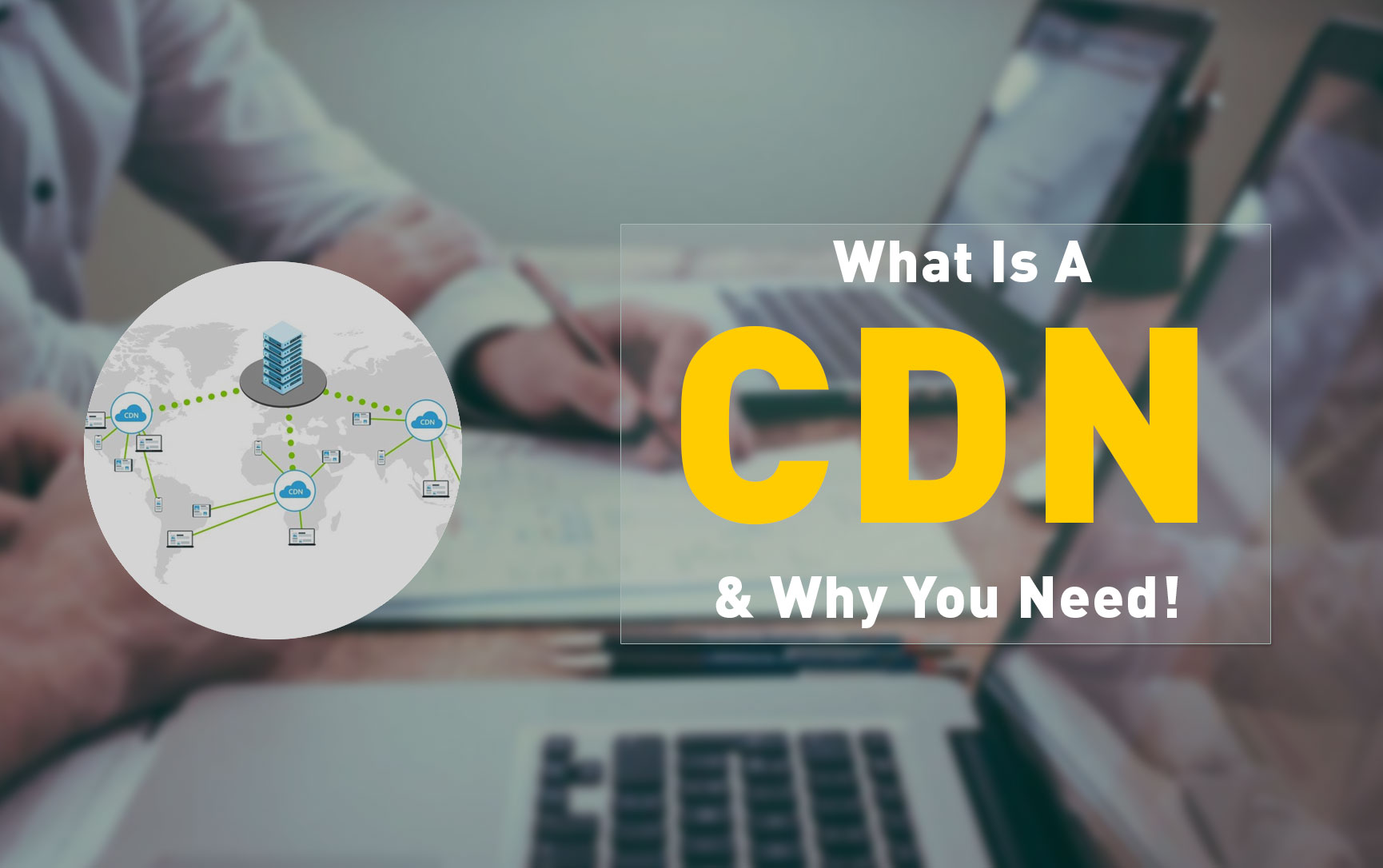
Well, that means content stored on the central server is duplicated. This version, in turn, is saved in Points of Presence (PoP), which are scattered throughout the world.
With this, the bandwidth of the hosting is reduced and the user who is in Australia, for example, can access a Canadian site quickly and without interruptions in the service. Amazing, isn't it?
It should also be mentioned that there are three types of CDN, namely:
1. Private networks: their access is restricted to a small group of individuals. In this sense, they function as their own cluster of servers.
2. Content service protocols: These networks deliver the content of a website. They are designed, hosted and managed for this purpose.
3. Peer-to-peer (P2P): These are networks connected between private computers.
How does a CDN work?
When there is a CDN, the servers that are part of a network replicate the contents of a given site and store them in the cache, which is a memory. This replicated version is saved in strategic locations around the world, the Points of Presence (PoP).
Thus, when a user accesses the site, the CDN finds the nearest PoP and delivers the requested content with a much faster speed and with a much higher throughput if there was no such distribution network.
For you to understand better, when there is no CDN and the user tries to access a website, the computer sends a request to the central server to grant access to the content. Then, that server responds and shows what is requested by the individual.
In this case, the latency time (the time between the moment of the request and the response) can vary greatly, being greater the further the user is physically from the server.
On the other hand, when you have a CDN, the user's access request is not taken to the central server, but to the closest server, which already has a copy of the contents stored.
In this sense, a mapping system is used that verifies the location of the user to deliver to him a copy that is closer.
And if, for a given case, data has not yet been replicated and stored, the PoPs contact the central server so that it provides the content, thus meeting future demands.
It should be mentioned that, in addition to speed, the CDN also makes it possible to distribute traffic evenly among the various servers. With this, the chances of there being instability on the site due to the large amount of hits are considerably reduced.
How does using CDN benefit your website?
You can already see that the CDN has many benefits, right? However, to make the advantages of the Content Delivery Network even clearer, we have listed all its pros. Check out!
Improved loading time
The main and clearest advantage is, without a doubt, the improvement of the site's loading time. After all, as you have seen, the responses are much faster and the latency time is drastically reduced when there is a CDN.
And it is worth saying that this can be a great differentiator to ensure your user experience. That's because, for Internet users, who always want quick answers, an extra second can make a difference in the impression they will have of your site.
Greater security
As the response time is shortened with a CDN, the vulnerability of the website is also reduced. That's because hacker attacks miss those fractions of seconds that would be crucial for intrusion into systems.
The DDoS attacks themselves, which are those that try to bring down the website and make its resources unavailable to users, also lose strength.
In addition, the CDN manages the traffic received by the website to ensure that it is always up and running and thus prevent malicious attacks.
Cost reduction
The CDN can also significantly reduce the expenses that go into keeping a website up and running. This is because it promotes lower bandwidth consumption, which minimizes costs with this infrastructure.
In addition, as there is a decentralization in access and, therefore, a lower load on the central server, the costs with this can also be reduced.
Therefore, it is possible to save a good amount that can be invested for the implementation of other important strategies in the company.
Infrastructure
Infrastructure is also a massive advantage for any smaller live streaming service because of how convenient it is to have an entire CDN infrastructure ready for work immediately with little to no investments. It is only natural that the massive platforms such as YouTube or Twitch would be able to build their own CDN networks, but smaller services don't often have this kind of money or capability - which is where a CDN service comes in.
Performance in organic results (SEO)
Search engine optimization, or simply SEO, is the focus of every company. After all, following a set of SEO strategies can make your website appear in the top positions of search engines organically.
In this sense, know that an important SEO strategy is site speed. This is because, among other issues, Google takes into account the loading time of your website to rank it or not.
This means that with the CDN, as your website loads faster, the greater the chances of you appearing in the top positions of this search engine.
What features does a CDN solution offer?
When a CDN solution is contracted, in addition to the basic functioning that we explain here, it also offers other features that can be used to further increase the performance of the website. Meet some of them:
Compression
One of CDN's features is to compress text-based responses in gzip or Brotli. You even have the option of doing this compression on the origin server and on the distribution network, something that will further improve the site's performance.
After all, these compressions will minimize the size of the resource transfer and can even help to respond to user requests faster and more effectively.
Image optimization
Another important feature of CDN is image optimization. With it, it is possible to reduce the transfer size of the images, something that directly impacts the page size, which becomes much smaller.
Minification
Minification is also a feature that optimizes website performance. That's because it removes unnecessary characters from HTML, CSS and JavaScript, which naturally makes the page lighter.
It is worth mentioning that, whenever possible, give preference to minification on the origin server over other storage points. This is a way to obtain more accurate and efficient results.
HTTP/2 and HTTP/3
Instead of using HTTP/1, the CDN uses HTTP/2 and HTTP/3, which are more efficient and perform better than the first protocol.
HTTP/2 has numerous features that increase website performance, such as multiplexing, header compression, negotiation protocol and stream prioritization.
HTTP /3 , in turn, although not yet fully standardized, is also capable of offering many advantageous features, such as the elimination of frontal blocking and reduced connection setup time.
Examples of businesses where a CDN is indicated
Despite being a highly advantageous feature, not every website necessarily requires a CDN.
Want to know if yours needs it? We list below some niches in which this feature is practically indispensable. Check out!
e-commerce
E-commerce sites get hits from people all over the world. After all, the purpose of this type of business is precisely to eliminate geographical barriers when making purchases.
In this sense, to ensure a fast page loading, regardless of where the person is, and also to avoid instabilities when there is high flow, especially during promotional periods, it is necessary to invest in a CDN.
It should be mentioned that CDN can also help prevent DDoS attacks. All of this contributes to the user experience.
Digital advertising
Digital advertising businesses also need to invest in CDN. That's because ads demand a lot of resources to work, especially in recent times, when the contents are multimedia and full of information and, therefore, weigh the page.
However, with the Content Delivery Network, your ads will no longer slow down the page loading process. This ensures better site performance and good user retention.
Online games
One of the biggest dilemmas in the gaming industry is precisely to deliver an amazing game which doesn't overload the system.
In this case, gaming CDN can help, and a lot! That's because developers are able to host an entire game on the CDN server, thus unburdening the origin server.
With this, gamers can have excellent experiences and enjoy good, interactive, powerful and fast-loading games.
Financial Institution
Finally, another niche that needs to implement the CDN is financial institutions.
In addition to the issue of page load time and information processing, this solution becomes essential as it contributes to the security of the system.
And it goes without saying that banking websites, for example, need to have a really robust and effective security scheme, since confidential information is available on them.
In this sense, the CDN can greatly assist in this function, as it can contribute to preventing DDoS attacks from occurring.
How to implement a CDN solution on your website?
To implement a CDN solution, ideally, your website should not be online yet. This makes it easier to choose a provider that really meets your needs.
But if the site is already live, no problem. Know that it is possible to perform the implementation in the same way.
Thus, the first step is precisely to choose a provider, such as Cloudflare, ideal for sites that have very large traffic, since it has servers around the world.
After this selection, you must install the CDN on your website. To do this, just follow the settings and commands given by the CDN provider itself.
This implementation is very simple, and the most important thing is really the choice of provider, which will guarantee the performance of your site.
Conclusion
Now that you know what CDN is and how it can benefit your business, whether it's improving user experience, ranking your business on Google or bringing more security to your website, it's time to take the next step!


-
 -62%
Google AC-1304 WiFi System 1 Pack Solution Single WiFi Point Router for Whole Home CoverageSpecial Price $49.99 Regular Price $129.99
-62%
Google AC-1304 WiFi System 1 Pack Solution Single WiFi Point Router for Whole Home CoverageSpecial Price $49.99 Regular Price $129.99 -
-45%
NETGEAR Nighthawk 8-Stream AX8 Wifi 6 Router (RAX80) – AX6000 Wireless Speed (Up to 6 Gbps) | 2,500 sq. ft. CoverageSpecial Price $216.51 Regular Price $397.00