iPhone 20: 7 Jaw-Dropping Features Rumored for 2027 Anniversary Edition
- iPhone 20: The 20th Anniversary Revolution
- "Glasswing": The Liquid Glass Design
- The Seven Jaw-Dropping Features
- Solid-State Buttons: The End of Physical Switches
- Under-Display Technologies: Hiding the Hardware
- 6,000 mAh Battery: The Silicon Anode Revolution
- LOFIC Camera: 20 Stops of Dynamic Range
- Release Timeline & Product Lineup
- A Note of Caution
- Final Verdict: The iPhone X of 2027?
- Shop iPhone Accessories at Gzmato
May 10, 2026 – In 2017, the iPhone X redefined what a smartphone could be — eliminating the home button and introducing Face ID. In 2027, Apple is preparing to do it again. The 20th anniversary iPhone, likely called iPhone 20 or iPhone XX, is shaping up to be the most radical redesign since the original iPhone launched in 2007 [citation:4][citation:6].
iPhone 20: The 20th Anniversary Revolution
According to multiple sources including Bloomberg's Mark Gurman and Omdia analyst Heo Moo-yeol, Apple is planning to skip iPhone 19 entirely and jump directly to iPhone 20 in 2027 [citation:4][citation:6]. This mirrors the 2017 strategy when Apple jumped from iPhone 7 to iPhone X (pronounced "ten") to mark the 10th anniversary [citation:10].
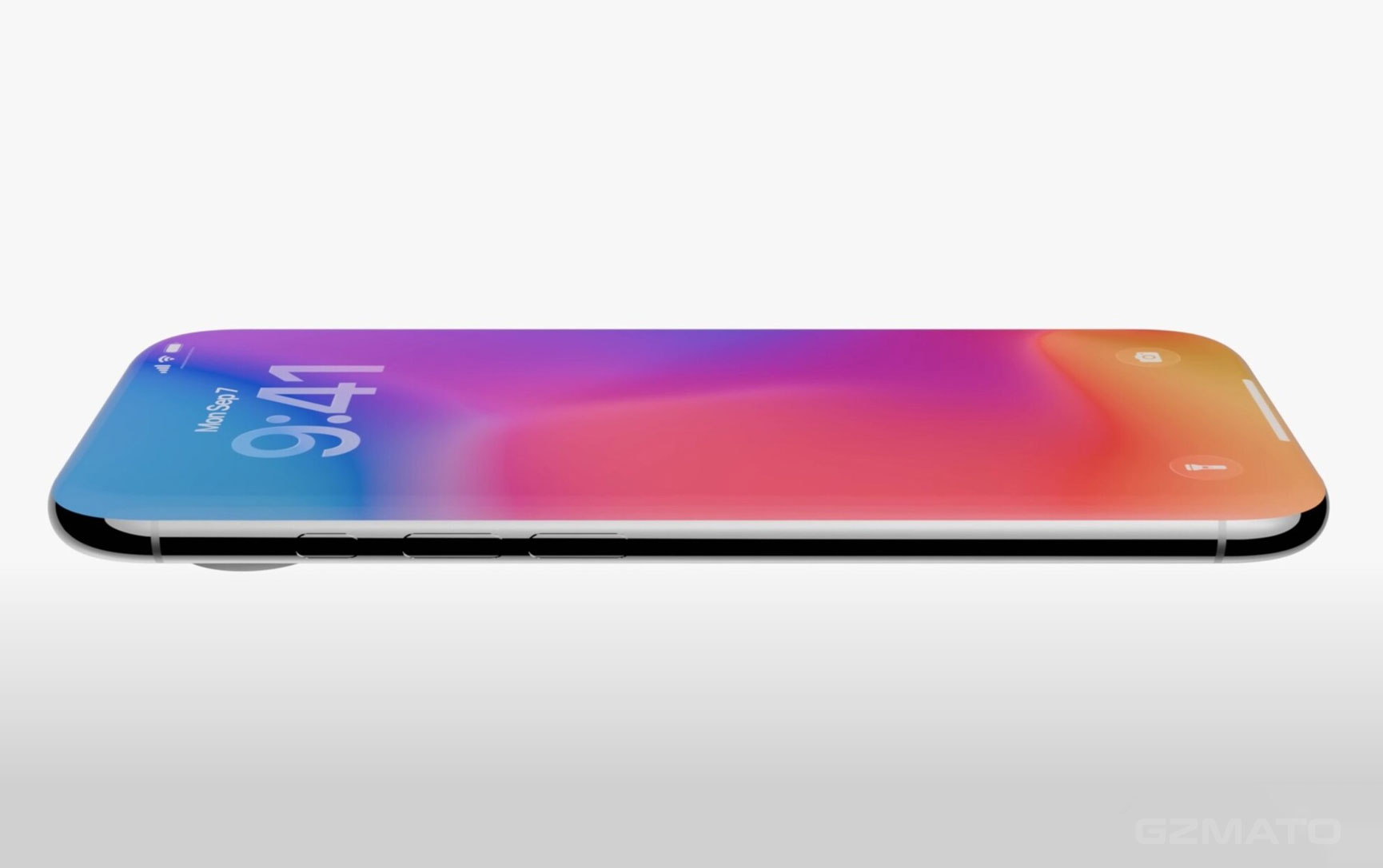
Internally codenamed "Glasswing" — inspired by the transparent-winged butterfly — the project represents Apple's most ambitious design overhaul in a decade [citation:7][citation:8]. The goal is a seamless device with no visible ports, no buttons, and no display cutouts — a true "slab of glass" that Steve Jobs once envisioned [citation:7].
"Glasswing": The Liquid Glass Design
A Four-Sided Curved Display Like No Other
The centerpiece of iPhone 20's redesign is the display. Unlike the "waterfall" curves found on some Android phones, Apple's approach is described as "emphasizing visual depth rather than extreme curvature" [citation:3][citation:8]. The glass will curve subtly on all four edges, while maintaining a flat surface for interaction — balancing aesthetics with usability.
Key display technologies:
- Samsung custom OLED panel: "Isometric four-curved surface" design, not the aggressive edge found on other phones [citation:3]
- COE (Color Filter on Encapsulation): Removes the polarizer layer, potentially increasing light transmission by ~33%, reducing power consumption by 25%, and enabling thinner construction [citation:3]
- Ultra-scratch-resistant display: Next-generation Ceramic Shield with improved durability [citation:1][citation:5]
- Bezel reduction: Internal schematics suggest frames as thin as 1.1mm — approaching the physical limit [citation:3]
The Seven Jaw-Dropping Features
According to leaker Instant Digital, who has a mixed but notable track record, the iPhone 20 could feature all of the following [citation:1][citation:5]:
| Feature | Description |
|---|---|
| Solid-state buttons with haptic feedback | Taptic Engine replaces physical volume, power, Action, and Camera Control buttons |
| Under-display Face ID | Infrared sensors hidden beneath the OLED panel — no visible cutout |
| Under-display front-facing camera | Selfie camera concealed under the display for a truly seamless front |
| Under-display speaker | Earpiece replaced by actuators that vibrate the display to produce sound |
| Reverse wireless charging | Charge AirPods or Apple Watch directly from the back of the phone |
| Ultra-scratch-resistant display | Enhanced Ceramic Shield for improved drop and scratch resistance |
| 6,000 mAh battery | Silicon anode technology for higher energy density |
Solid-State Buttons: The End of Physical Switches
From Moving Parts to Haptic Feedback
The transition to solid-state buttons is perhaps the most certain of all rumored features. Apple originally planned to introduce this technology on the iPhone 15 Pro in 2023 under "Project Bongo," but canceled it due to technical challenges [citation:5][citation:8]. Since then, the feature has been repeatedly delayed.
According to Instant Digital, the solid-state button system has now passed functional testing, including use while wearing gloves, with wet hands, in extreme temperatures, and when the phone has a case on [citation:5]. An ultra-low-power microprocessor would allow the buttons to remain functional even when the phone is powered off or the battery is depleted [citation:3][citation:5].
Under-Display Technologies: Hiding the Hardware
Face ID, Camera, and Speaker — All Invisible
The most technically ambitious aspect of iPhone 20 is moving all front-facing sensors completely under the display. The Dynamic Island — introduced with iPhone 14 Pro in 2022 — would finally disappear after five years [citation:3].
Technical challenges:
- Under-display Face ID: Requires infrared sensors to function through the OLED panel without image distortion. Some sources suggest this is achievable by 2027, using advanced UDIR (Under-Display Infrared) technology [citation:3].
- Under-display camera: More difficult than Face ID. The camera must capture enough light through the display for quality selfies. Some analysts suggest the camera may be the last sensor to be fully hidden, with a small transparent area or pixel gap reserved for it.
- Under-display speaker: Replaces the earpiece slit with actuators that vibrate the display glass to produce sound. This eliminates one of the last remaining visible openings on the phone's front [citation:3][citation:5].
6,000 mAh Battery: The Silicon Anode Revolution
A Historic Capacity for iPhone
The rumored 6,000 mAh battery would be the largest ever in an iPhone — by a significant margin. For comparison, the iPhone 17 Pro Max features approximately 4,700 mAh. This represents a roughly 28 percent increase in capacity [citation:1][citation:3].
How Apple might achieve this:
- Silicon anode technology: Silicon can store up to 10 times more lithium ions than traditional graphite anodes. The challenge has always been managing expansion during charging cycles, which causes degradation. Apple reportedly has found a solution for mass production [citation:3].
- Space savings from other components: Eliminating physical buttons and moving sensors under the display frees internal volume for a larger battery.
- Display efficiency gains: COE technology and dual-layer OLED panels reduce power consumption [citation:3][citation:5].
A 6,000 mAh battery, combined with power-efficient components and the A21 chip (second-generation 2nm), could potentially deliver two full days of normal use — an unprecedented achievement for an iPhone [citation:3].
LOFIC Camera: 20 Stops of Dynamic Range
From Smartphone to Cinema Camera
One of the most technically impressive rumored features is the camera system. Apple is reportedly adopting LOFIC (Lateral Overflow Integration Capacitor) technology for the iPhone 20 [citation:3].
What LOFIC does: Each pixel has an "overflow pool" that captures excess light before it saturates the main photodiode. This prevents the highlights from blowing out in high-contrast scenes [citation:3].
The result: Approximately 20 stops of dynamic range.
- iPhone 17 Pro: ~12-13 stops [citation:3]
- Professional ARRI Alexa cinema camera: ~14-15 stops [citation:3]
- iPhone 20 (rumored): ~20 stops — exceeding professional cinema cameras
This would represent a fundamental shift in computational photography. Instead of relying on multi-frame HDR stacking (which can create artifacts in moving scenes), single-frame wide dynamic range capture would become possible. Motion blur artifacts in photos of moving subjects could be dramatically reduced [citation:3].
Release Timeline & Product Lineup
A Note of Caution
Read This Before Getting Too Excited
Multiple sources — including 9to5Mac and MacRumors — urge caution when evaluating these rumors for several reasons [citation:1][citation:5]:
- Many of these features have been rumored for years: Solid-state buttons were first expected with iPhone 15 Pro in 2023. Under-display Touch ID has been "coming next year" since 2020 [citation:5].
- Feasibility remains unproven: Mass-producing under-display cameras at iPhone scale without quality degradation is unproven. No major manufacturer has yet achieved this in a commercially successful device.
- The language suggests speculation: Instant Digital phrased the list as "Guess what jaw-dropping features Apple might finally unveil" — not based on supply chain evidence [citation:1].
That said, Apple has a pattern of using milestone anniversaries to introduce truly transformative products. The iPhone X in 2017 delivered Face ID, OLED, and edge-to-edge display — all of which were rumored for years but seemed impossible until they shipped. The iPhone 20 could follow the same pattern.
Final Verdict: The iPhone X of 2027?
If even half of these rumors materialize, iPhone 20 will be the most significant iPhone redesign since 2017. The combination of a four-sided curved "Glasswing" display, complete elimination of physical buttons, under-display Face ID and front camera, 6,000 mAh silicon-anode battery, and 20-stop LOFIC camera would represent a generational leap.
For consumers, the practical benefits are clear:
- A truly uninterrupted display with no notch, no Dynamic Island, no cutouts of any kind
- Potentially two-day battery life for the first time in iPhone history
- Professional-grade camera capabilities that exceed dedicated cinema cameras
- A more durable device with fewer moving parts
The biggest open question is feasibility. Can Apple actually produce under-display cameras and Face ID at scale by 2027? Will the silicon anode battery survive real-world usage without rapid degradation? Is solid-state button technology reliable enough to replace physical switches on 200 million devices annually?
If Apple succeeds, iPhone 20 could be remembered as the device that redefined the smartphone — just as the original iPhone did in 2007 and the iPhone X did in 2017. If the company cannot deliver on the most ambitious features, the 2027 iPhone may be an incremental update rather than a revolution. Either way, the 20th anniversary is clearly a line in the sand: Apple intends to mark the occasion with something memorable.
Prepare for the Future with Gzmato
MagSafe Chargers | Fast Cables | Premium Cases | Screen Protectors | Wireless Power Banks
IPHONE20
Data Sources & Methodology (as of May 10, 2026):
- MacRumors / 9to5Mac – Instant Digital leak analysis and cautionary notes [citation:1][citation:5]
- Bloomberg / Mark Gurman – "Glasswing" codename and anniversary plans [citation:7][citation:8]
- Omdia / Heo Moo-yeol – Product naming and timeline forecasts [citation:4][citation:6]
- Whatsmind / 什么值得买 – Technical feature compilation [citation:3]
- 凤凰网 / DoNews – Chinese market and supply chain reporting [citation:4][citation:10]

- iPhone 20
- iPhone 20th anniversary
- solid-state buttons
- under-display Face ID
- 6000 mAh iPhone
- LOFIC camera
- Glasswing iPhone
- Apple 2027