Snap Specs AR Glasses: The $2,195 Consumer AR Bet, Compared to Meta and XREAL
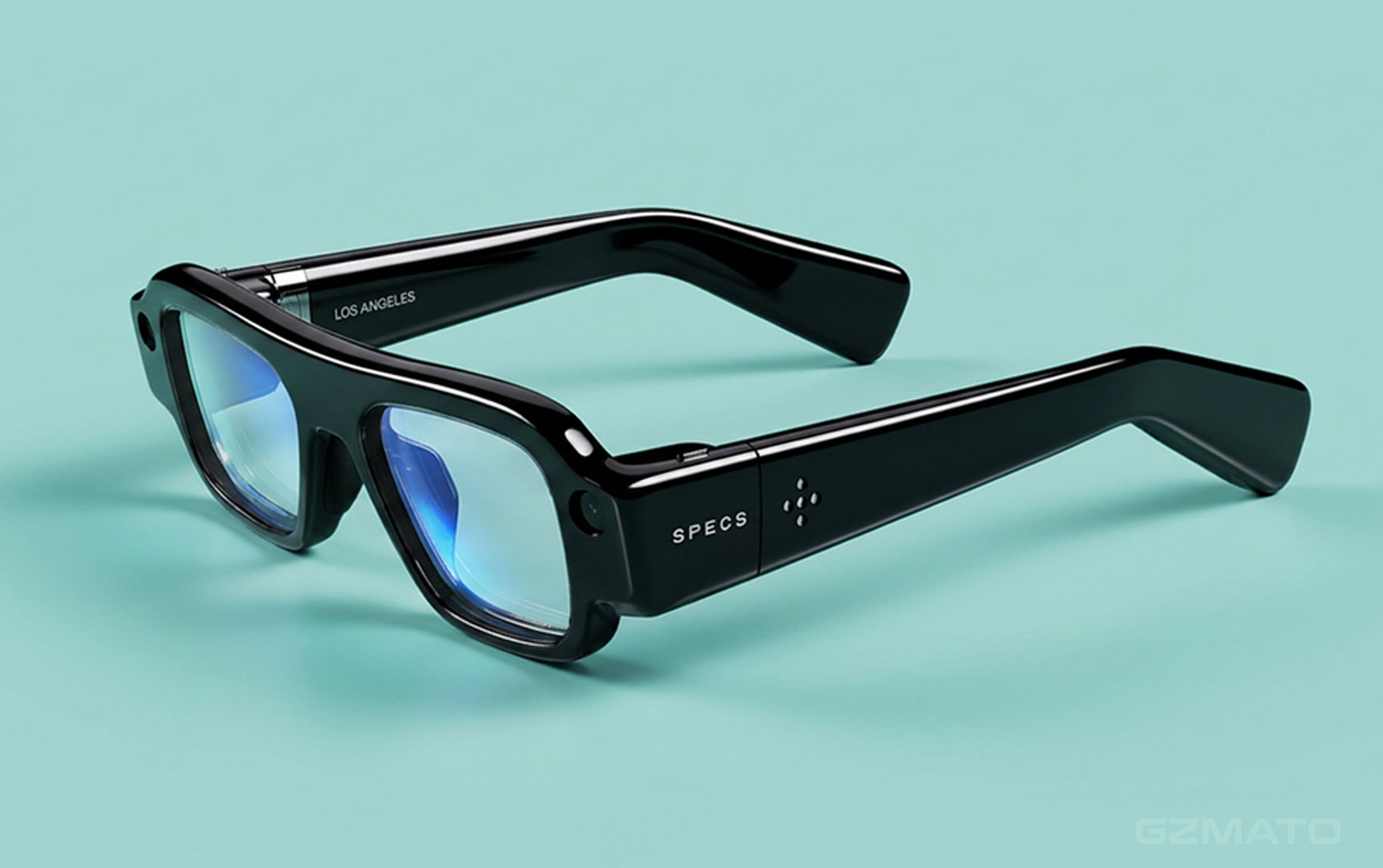
On June 16, 2026, at the Augmented World Expo in Long Beach, California, Snap CEO Evan Spiegel took the stage to unveil the company's most ambitious hardware product yet: Specs, a pair of standalone augmented reality glasses priced at $2,195 .
This is not a developer kit. It is not a limited-edition experiment. It is a consumer product, available for pre-order now with a $200 refundable deposit, shipping this fall in the United States, the United Kingdom, and France .
Snap has spent more than a decade and filed over 7,000 patents to reach this point . The company is betting that the world is ready for a computer you wear on your face — one that overlays digital content onto the physical world, with no phone, no puck, and no cable required.
Specs: Technical Specifications
Snap has positioned Specs as a standalone AR device that bridges the gap between lightweight smart glasses and bulky mixed-reality headsets . Here is what we know:
| Specification | Detail |
|---|---|
| Price | $2,195 / £1,995 |
| Pre-order | $200 refundable deposit, shipping Fall 2026 |
| Availability | US, UK, France |
| Weight | 132g (47mm size) / 136g (52mm size) |
| Field of View | 51-degree diagonal |
| Motion-to-Photon Latency | 7ms |
| Battery Life | 4 hours mixed use; 20 hours with charging case |
| Display Technology | LCoS (Liquid Crystal on Silicon) |
| Processors | Dual Snapdragon chips (one for computer vision, one for system/graphics) |
| Lenses | Fully transparent, electrochromic (clear to tint in ~10 seconds) |
| Input Methods | Hand tracking, voice control, head-based targeting |
| Use Cases | Navigation, language translation, spatial browser, AI assistant, app development |
There are notable omissions from the public specifications. Snap has not disclosed the display resolution, brightness in nits, refresh rate, RAM, storage capacity, or camera specifications . For a $2,195 product entering a market where consumers are accustomed to detailed spec sheets, the omissions are conspicuous. Whether they reflect specifications Snap considers uncompetitive or a deliberate strategy to avoid direct comparisons with rivals is unclear .
What Snap has disclosed is equally significant. Specs are standalone computing devices. They require no phone tether, no external processing puck, and no cable . This is a distinction Snap is emphasising against every AR headset that has come before — and against the devices currently shipping from competitors.
The Market: Three Competing Visions for AI Glasses
Snap Specs enter a market that has three distinct competing visions: Meta's AI-first wearable approach, Google and XREAL's Android XR platform, and Snap's standalone AR ambition .
Meta: Everyday Wearability and AI Assistance
Meta has taken a fundamentally different path. Instead of full AR glasses, the company has focused on building products people are already willing to wear .
The Meta Ray-Ban Display glasses cost $799 and feature a monocular display with a 20-degree field of view . They are intentionally modest: notifications, navigation, translation — not a cinema strapped to your face . This modesty has helped Meta sell over seven million devices of its Ray-Ban Meta line, which do not even have display technology integrated .
More recently, Meta launched a new line of smart glasses under its own brand, starting at $299, slightly less than its Ray-Ban-branded glasses which start at $379 . The new glasses are made in partnership with EssilorLuxottica but do not carry the Ray-Ban or Oakley branding . They support photo and video capture, music, calls, and an integrated AI assistant with live translation in 20 languages .
At the top of Meta's lineup is the Ray-Ban Display model at $799, which features a single-eye display and the Meta Neural Band, an EMG wristband for gesture control . Meta's AI glasses are designed to be worn all day and provide AI assistance, not to immerse users in a digital layer over the real world.
XREAL AURA: The Android XR Challenger
XREAL, the Chinese AR company, has taken a third path with the XREAL AURA, developed in partnership with Google and Qualcomm .
AURA is a split-form device: lightweight 95g glasses connected to a separate spatial computing unit . It offers a 70-degree field of view — wider than Snap's 51-degree — and is built on the Android XR platform, giving it access to millions of existing Android apps .
The device is priced at $1,099 and features XREAL's self-developed X1S spatial computing chip plus the Qualcomm Snapdragon Reality Elite Platform . It supports hand tracking, 6DoF spatial positioning, and multimodal AI interactions powered by Gemini . Open for pre-order on June 16, AURA reportedly received 2,000 paid reservations in its first 10 hours .
Unlike Specs, AURA requires a tether — it is not a standalone device. But its 95g weight is significantly lighter than Snap's 132g, and its 70-degree field of view is larger . The Android XR platform gives it a much broader app ecosystem, though it relies on the smartphone or computing unit for processing.
Direct Comparison: Snap Specs vs. Meta vs. XREAL
| Product | Price | Weight | FOV | Tether Required | Best For |
|---|---|---|---|---|---|
| Snap Specs | $2,195 | 132-136g | 51° | No | Full AR immersion, standalone |
| Meta Ray-Ban Display | $799 | ~70g | 20° | No | AI notifications, everyday wear |
| XREAL AURA | $1,099 | ~95g | 70° | Yes (split-form) | Android XR ecosystem, wide FOV |
Each of these devices represents a different philosophy. Meta is betting on "the glasses you already wear, with AI added." XREAL is betting on "the Android ecosystem, extended into spatial computing." Snap is betting on "augmented reality as its own platform, independent of phones or computing pucks."
Which approach wins depends on who is right about what consumers actually want from a computer on their face.
Our Perspective: Three Ways to Look at Specs
1. Specs Are the Only True Standalone Consumer AR Device Available Today
This is Snap's single most important advantage. Every other AR or mixed-reality product on the market requires a phone, a puck, or a computing unit . Specs is the only device that ships as a complete, standalone computer in the form of glasses .
Meta's smart glasses, even the display-equipped ones, are functionally smartphone companions. The Ray-Ban Display glasses rely on a phone for most computing tasks. XREAL AURA, despite its advanced capabilities, requires a separate computing unit . Specs runs entirely on its dual Snapdragon processors, with no external dependency.
This is the "Macintosh moment" for AR: the first self-contained consumer product in a new computing category. Whether the market is ready for it is a separate question.
2. The Price Point Is a Major Barrier
At $2,195, Specs cost more than a fully-equipped MacBook Pro and significantly more than Meta's $799 Ray-Ban Display glasses . Snap is essentially saying: "This is what standalone AR costs in 2026."
Ben Hatton, a market analyst at CCS Insight, told the BBC that the price tag means the technology is "unlikely to become a mainstream device any time soon" . The comparison is stark: Meta offers smart glasses for $299 with no display, and $799 with a display. XREAL AURA offers a 70-degree FOV for $1,099. Snap is asking consumers to pay $2,195 to be early adopters of a technology that is still being defined.
Snap's defense is that Specs offers a fundamentally different experience than anything else on the market. A 51-degree FOV with 7ms latency, hand tracking, and a completely standalone design — there are trade-offs to achieve that.
3. The Weight Question Is Overstated — But Not Irrelevant
At 132-136g, Specs are heavier than conventional glasses. But as Moor Insights & Strategy notes in its analysis, most comparisons of weight are inaccurate because they fail to account for external batteries and processing units .
Meta's Ray-Ban Display glasses are lighter at ~70g, but they rely on a phone for most processing. XREAL AURA is lighter at 95g, but it requires a separate computing unit. Apple Vision Pro, at 600g, requires a battery pack. The comparison is not between glasses and glasses — it is between glasses and glasses plus everything you need to carry with them .
Moor Insights also notes that much of Specs' extra weight likely comes from the integrated battery, which is positioned to counterbalance the displays and optics at the front . A well-balanced 132g device can feel more comfortable than a poorly balanced 95g device.
- Third-party developer momentum: Snap has not announced which major apps will be available at launch. Developers have praised Snap as one of the best platforms to develop for, but the critical mass of apps remains uncertain .
- Missing specifications: Snap has not disclosed resolution, brightness, RAM, or storage .
- Market timing: Specs launch in the same window as XREAL AURA and Meta's wearable push. The smart glasses category is entering a period of intense competition .
Shop Smart Wearables and Tech at Gzmato
Whether you are looking for smart glasses, AI wearables, audio gear, or the latest tech accessories, Gzmato carries a curated selection of innovative products from leading brands.
Ray-Ban Meta | Meta Glasses | Rokid AI Glasses | Huawei AI Glasses | Even Realities G2 | XREAL One Pro
Special Offer: Use code TECH2026 for a discount on your first order!
Shop Smart Wearables at GzmatoChat with our team live, or open a request if you need help picking the right device for your needs.
Key Takeaways
| # | What You Need to Know About Snap Specs and the AR Glasses Market |
|---|---|
| 1 | Snap Specs are the only standalone consumer AR device available — no phone, no tether, no external processing unit; dual Snapdragon processors and 7ms latency |
| 2 | The price is a major barrier — at $2,195, Specs cost more than a MacBook Pro and significantly more than Meta's $799 Ray-Ban Display glasses |
| 3 | Three competing visions for AI glasses — Snap's full AR immersion ($2,195), Meta's everyday AI assistance ($299-$799), and XREAL's Android XR ecosystem ($1,099) |
| 4 | Snap is betting on a future where AR is its own platform — independent of phones and computing pucks, fully self-contained in the form of glasses |
| 5 | XREAL AURA offers a compelling middle ground — $1,099, 95g, 70-degree FOV, Android XR ecosystem, but requires a tether |
| 6 | Meta continues to lead in volume — over 7 million Ray-Ban Meta units sold, emphasizing everyday wearability over AR immersion |
| 7 | Specs' weight is a trade-off for standalone functionality — 132-136g includes the battery and computing power that competitors offload to phones or pucks |
- ExtremeTech — Snap Specs launch and technical specifications, June 2026
- BBC News — Snap Specs UK pricing and analyst commentary, June 2026
- Digit — Snap Specs vs Meta vs Android XR comparison, June 2026
- Xinhua / 新华网 — XREAL AURA launch and specifications, June 2026
- BSS / AFP — Meta Glasses launch and pricing, July 2026
- Moor Insights & Strategy — Specs technical analysis and industry perspective, June 2026
- The Economic Times — Snap Specs market positioning, June 2026
- Longcheer — XREAL AURA and Android XR ecosystem, June 2026
- 网易手机 / 智东西 — Meta Glasses detailed specifications and AI features, June 2026
- XREAL — Project Aura Google I/O 2026 demonstration
- UBI Research Net — XR device market competition analysis
- Snap Specs
- Snap AR glasses
- Snap smart glasses
- Meta smart glasses
- XREAL AURA
- Android XR
- AR glasses comparison
- wearable AR
- consumer AR
- Gzmato