SpaceX Completes $600B Cursor Acquisition: AI Coding's New Era
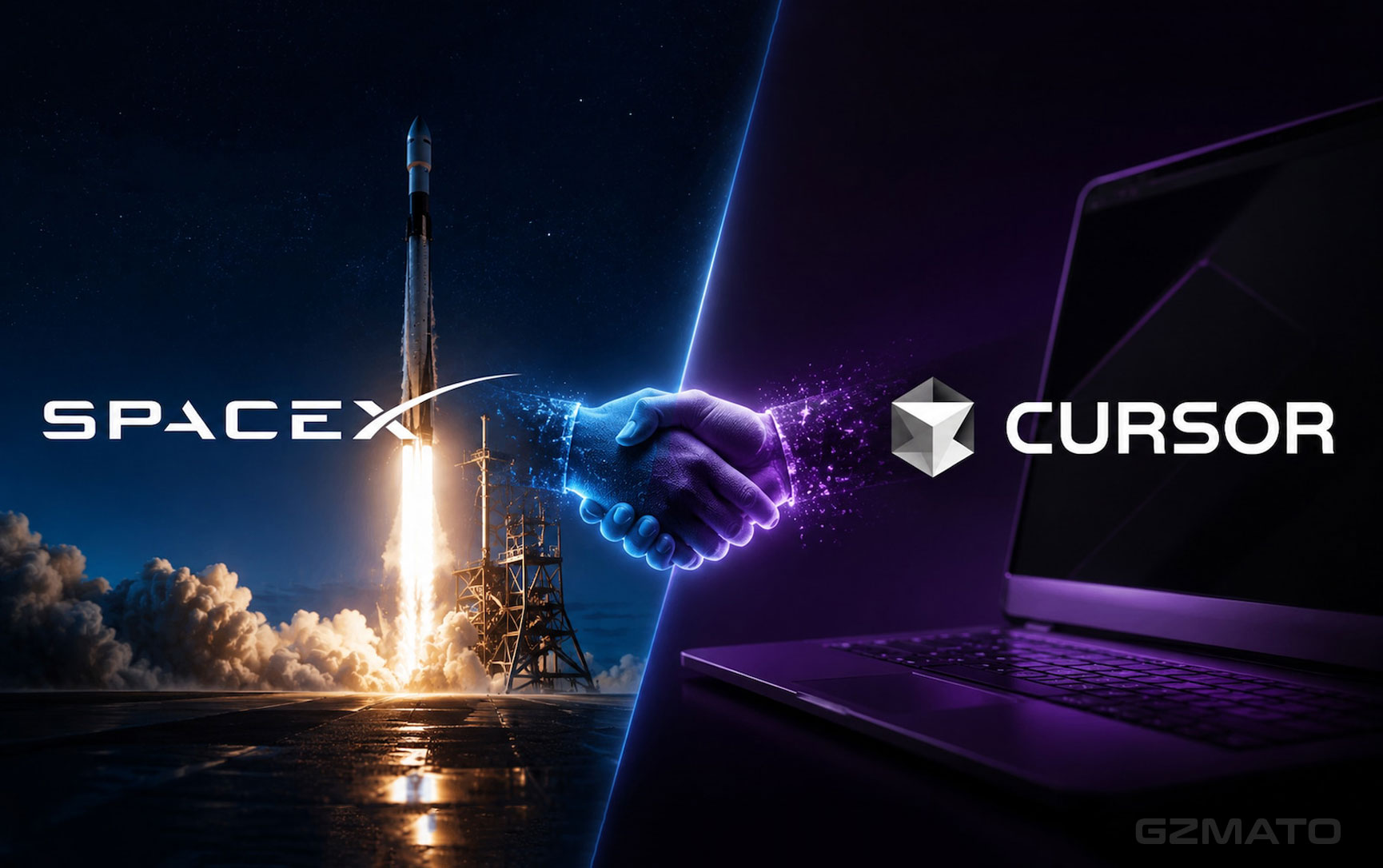
- SpaceX Buys Cursor: The $600 Billion Bet on AI-Powered Software Development
- Why Acquire Cursor? More Than a Coding Tool
- What Is Cursor? The AI-Native IDE
- A Two-Way Benefit: What Each Side Gains
- The Vertical Flywheel: Colossus → Cursor → Enterprise Revenue
- The Growth Story: Cursor's Rapid Rise
- The $28.5 Trillion Vision: Why This Fits the Bigger Picture
- Early Results: Grok 4.5, Grok Bot, and Grok 4.6
- Implications for the AI Programming Market
- Key Takeaways
SpaceX Buys Cursor: The $600 Billion Bet on AI-Powered Software Development
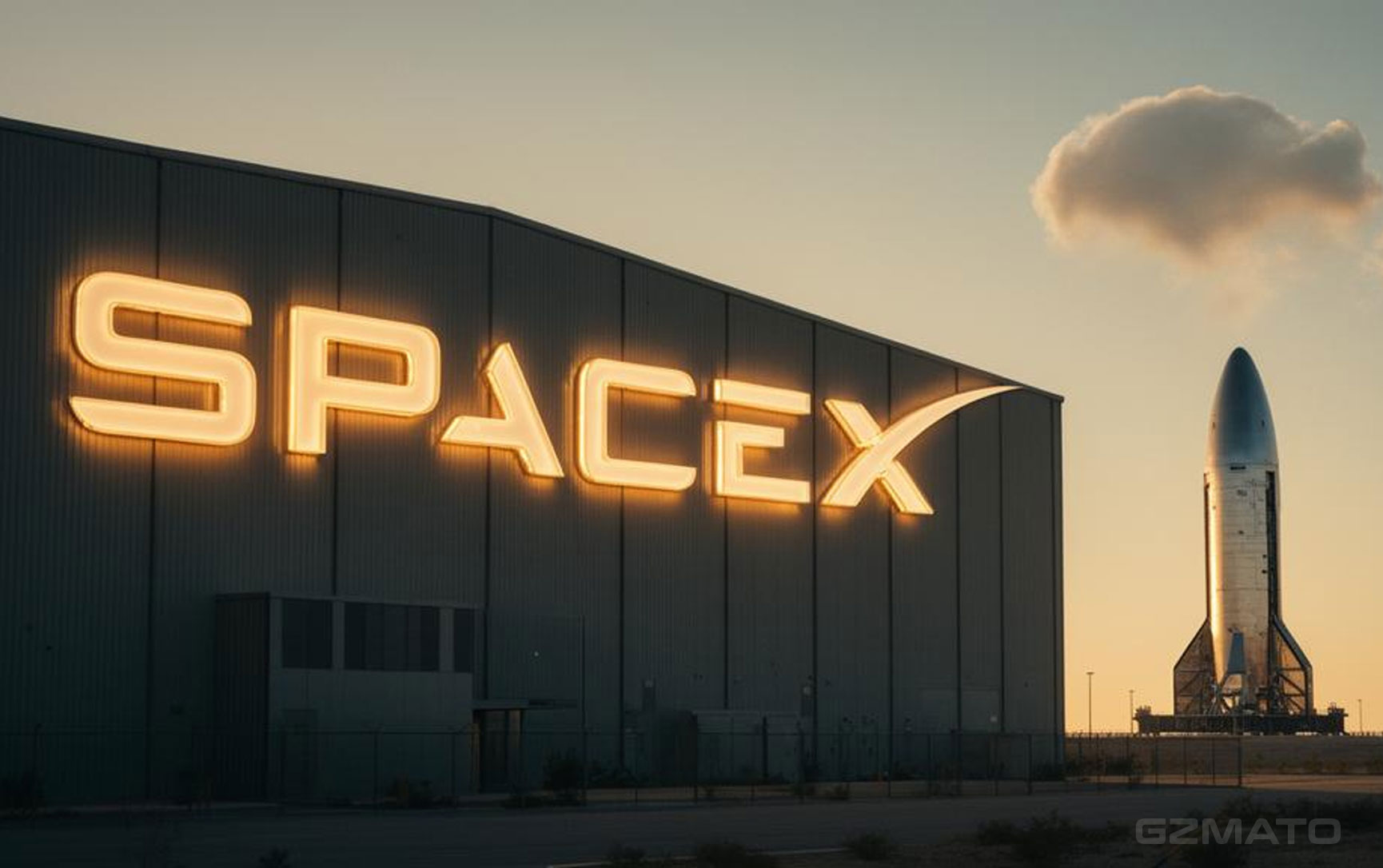
On June 16, 2026, just days after its blockbuster IPO, SpaceX announced it was acquiring AI programming company Anysphere — the developer of Cursor — for $600 billion in an all-stock transaction. The deal officially closed on August 14, 2026.
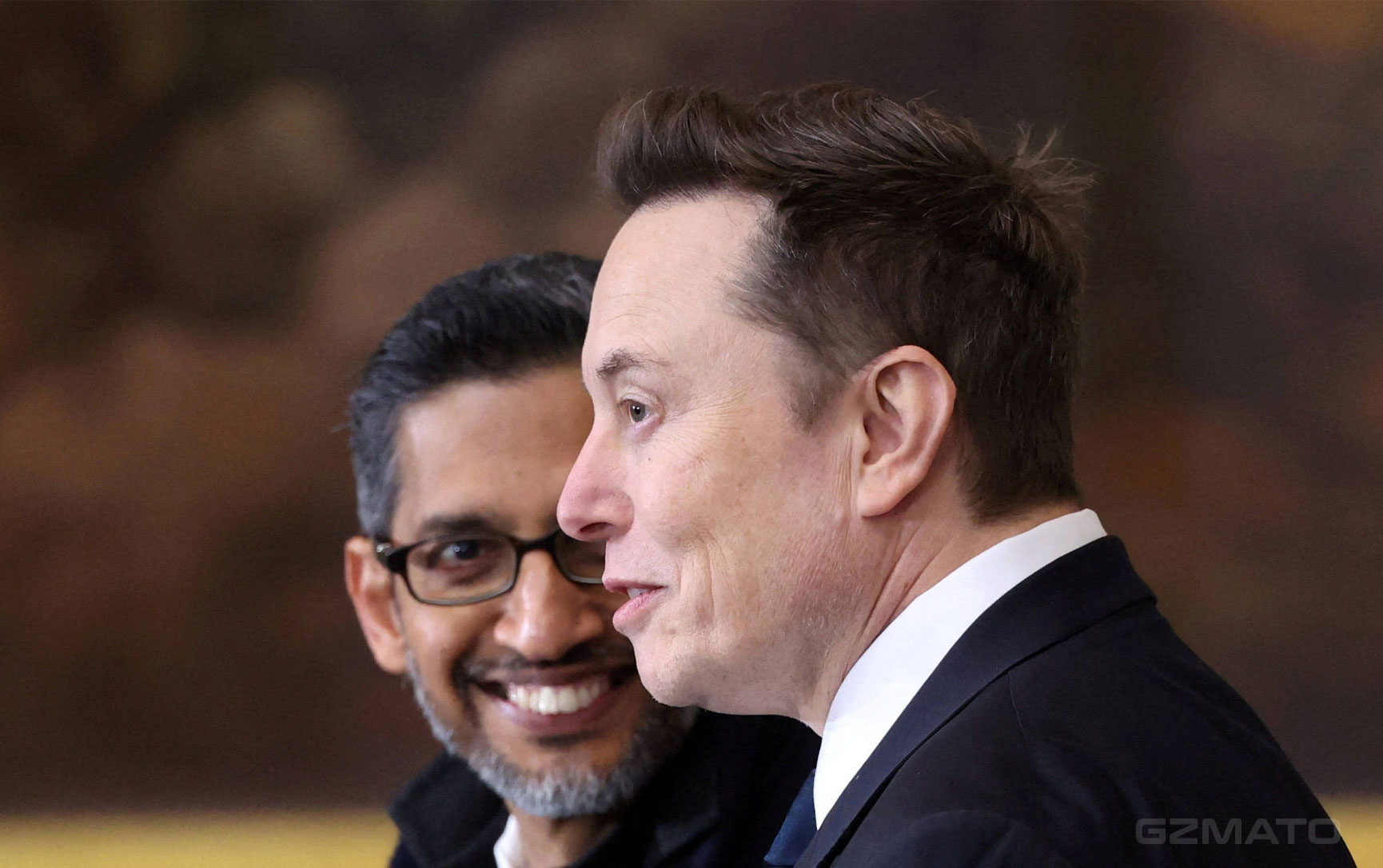
Elon Musk's reaction was characteristically ambitious: "AI will achieve Stockfish-level programming capabilities and general computer use." The reference to Stockfish — the world's strongest open-source chess engine — signals Musk's intention to create AI that operates at superhuman proficiency in software development.
This is not a typical acquisition. It is a signal that the AI industry's next frontier is not just better models, but the complete automation of software creation itself.
Why Acquire Cursor? More Than a Coding Tool
Cursor is an AI-native code editor, forked from VS Code, that integrates AI deeply into the coding workflow. It provides code completion, in-line editing, agent-based multi-file modifications, codebase indexing, and semantic search.
By April 2026, SpaceX had secured an option to acquire Cursor at a $600 billion valuation — or pay a $100 billion "breakup fee" to walk away. The fact that SpaceX exercised this option signals that Cursor is central to Musk's AI strategy.
There are at least five strategic reasons why SpaceX acquired Cursor:
- Market position: Cursor has achieved massive enterprise adoption, entering 67% of Fortune 500 companies
- Data moat: Every Cursor interaction generates code — real, working, production-grade code — that can be used to train AI models
- Developer channel: Cursor is used by professional software engineers at scale, making it the ideal distribution channel for AI tools
- Complement to Colossus: SpaceX's 100,000 H100-equivalent GPU supercomputer needs a valuable AI application to justify its existence
- Competitive response: xAI's Grok has lagged behind OpenAI's Codex and Anthropic's Claude Code — Cursor closes the gap
As SpaceX stated in its filing: "Cursor's leading product and its distribution channels among experienced software engineers will complement our Colossus training supercomputer, equivalent to 1 million H100s, to help us build the world's most useful model."
What Is Cursor? The AI-Native IDE
Cursor was founded in 2022 by four MIT graduates, all of them born after 2000. Within four years, the company raised approximately $3.4 billion across six funding rounds.
- Tab completion and inline edits: Real-time AI suggestions as you type
- Composer 2 Agent mode: Multi-file modifications based on natural language prompts
- Codebase indexing and semantic search: Understands the entire project, not just the open file
- Rules, Skills, and Hooks: Customizable project-level behavior
- Bugbot: Independent code review product
- Cloud agents: Background task execution for long-running jobs
Cursor is fundamentally different from traditional coding assistants. It's not a plugin or a chat window. It's the editor itself — with AI woven into every part of the experience.
A Two-Way Benefit: What Each Side Gains
What Cursor Gains
- Unlimited compute: Access to Colossus supercomputer — 100,000 H100-equivalent GPUs — for training next-generation models
- Enterprise credibility: SpaceX's brand validates Cursor for large-scale enterprise deployment
- AI model integration: Direct integration with xAI's Grok models, combining coding capabilities with reasoning
What SpaceX Gains
- Revenue diversification: Cursor's rapidly growing enterprise revenue gives SpaceX a software revenue stream
- AI training data: Cursor users generate massive amounts of real-world code that can train next-generation AI models
- Developer ecosystem: Access to millions of professional developers who use Cursor daily
- Software automation: The ability to automate SpaceX's own software development, reducing costs and accelerating timelines
The Vertical Flywheel: Colossus → Cursor → Enterprise Revenue
This acquisition creates a new vertical flywheel for SpaceX's AI business:
- Colossus / xAI provides the model and compute infrastructure
- Cursor provides the developer entry point and code data loop
- Enterprise customers contribute high-value workflows and payment
- Revenue funds the expansion of data centers, GPUs, and satellite internet infrastructure
Altimeter Capital CEO Brad Gerstner called this the "most underappreciated" part of SpaceX's valuation: the ability to internalize massive compute capacity and monetize it through enterprise AI software.
The Growth Story: Cursor's Rapid Rise
Cursor's growth trajectory is one of the fastest in software history. The company hit key milestones at an accelerating pace:
- January 2025: Annualized revenue run rate (ARR) reached $100 million
- May 2025: ARR surpassed $500 million
- October 2025: ARR broke $1 billion
- February 2026: ARR exceeded $2 billion
- April 2026: ARR reached $4 billion
Morgan Stanley projects Cursor's annualized ARR will climb from $4 billion in June to $8 billion by the end of 2026, $17 billion in 2027, and $33 billion by 2030.
The company's enterprise penetration is equally impressive: Cursor has entered 67% of Fortune 500 companies, with enterprises generating approximately 150 million lines of code per day through the platform.
The $28.5 Trillion Vision: Why This Fits the Bigger Picture
SpaceX's IPO prospectus described a $28.5 trillion total addressable market (TAM). Most of it — $22.7 trillion — comes from enterprise AI applications, not rockets or Starlink.
| Market Segment | Estimated TAM |
|---|---|
| AI Enterprise Applications | $22.7 trillion |
| AI Infrastructure | $2.4 trillion |
| AI Consumer Subscriptions | $760 billion |
| AI Digital Advertising | $600 billion |
| Starlink Broadband and Mobility | $1.61 trillion |
| Space-Enabled Solutions | $370 billion |
Cursor gives SpaceX its first major enterprise AI revenue stream to begin realizing this vision. As one analyst noted, "Cursor will become the most easily valued and understood revenue anchor for SpaceX's AI business in the public market."
At an August 2026 employee meeting, Musk stated that AI revenue "may exceed all of SpaceX's other revenue by September" and will "significantly surpass" it in the fourth quarter.
Early Results: Grok 4.5, Grok Bot, and Grok 4.6
Even before the acquisition officially closed, SpaceX and Cursor had already begun collaborating on new products.
- Grok 4.5 (July 2026): The first jointly developed model, focused on coding, financial, and legal tasks. Priced competitively against other models.
- Grok Bot: An AI agent that works like a team of AI assistants, handling tasks around the clock.
- Grok 4.6 (August 2026): An upgraded model released shortly after the acquisition closed.
The combined entity has already launched a beta version of "Grok Bot," and analysts anticipate the Cursor brand will eventually phase out in favor of the Grok moniker.
Implications for the AI Programming Market
The acquisition reshapes the competitive landscape of AI programming tools.
| # | Tool | Parent / Ecosystem |
|---|---|---|
| 1 | Cursor | SpaceX / xAI |
| 2 | Claude Code | Anthropic |
| 3 | Codex / ChatGPT | OpenAI |
| 4 | GitHub Copilot | Microsoft |
Each of these tools has a different product philosophy:
- Claude Code is a CLI-based terminal agent focused on multi-file tasks and automation
- Codex is a lightweight CLI agent integrated with OpenAI's ecosystem
- Cursor is an IDE-based harness, designed for daily visual coding work
- Copilot is a plugin-based assistant with deep GitHub integration
Cursor's move under the SpaceX umbrella changes the calculus. It now has access to virtually unlimited compute and a clear strategic mandate: build AI that codes better than humans.
This acquisition is widely considered the largest startup acquisition on record and SpaceX's first major acquisition since its historic June IPO.
Key Takeaways
| # | Key Takeaway |
|---|---|
| 1 | Deal closed on August 14, 2026 — The $600 billion all-stock acquisition officially took effect, approximately two months after the June 16 announcement. |
| 2 | 389 million SpaceX shares issued — Cursor shareholders received Class A shares in an all-stock transaction, with additional RSU and option conversions. |
| 3 | This is not about better autocomplete — SpaceX's goal is AI that replaces human developers, inspired by "Macrohard" vision of AI-driven software creation. |
| 4 | Data and compute synergy — Cursor provides real-world code data; Colossus provides the compute to train the next generation of models. |
| 5 | Cursor growth is accelerating — Morgan Stanley projects ARR will hit $8B by year-end, $17B in 2027, and $33B by 2030. |
| 6 | Early results are already shipping — Grok 4.5, Grok Bot, and Grok 4.6 have been released since the acquisition was announced. |
| 7 | AI revenue is accelerating — Musk told employees AI revenue may exceed all other SpaceX revenue by September 2026. |
| 8 | Cursor has entered 67% of Fortune 500 companies — generating ~150 million lines of code per day. |
SpaceX has officially completed its $60 billion acquisition of Cursor. The merger took effect on August 14, 2026, approximately two months after the deal was first announced on June 16, 2026.
Key developments since the original article was published:
- Cursor shareholders received ~389 million SpaceX Class A shares in an all-stock transaction
- Elon Musk told employees: AI revenue "may exceed all of SpaceX's other revenue by September" and will "significantly surpass" it in Q4
- Cursor has entered 67% of Fortune 500 companies, generating approximately 150 million lines of code per day
- Morgan Stanley projects: Cursor's annualized revenue run rate will climb from $4 billion in June to $8 billion by year-end, $17 billion in 2027, and $33 billion by 2030
- Already launched: Grok 4.5 (July), Grok Bot, and upgraded Grok 4.6
- 钛媒体 / 观点网 / 东方财富 — SpaceX-Cursor closing details and SEC filing summary
- Edgen — Morgan Stanley projections, Musk AI revenue comments, Fortune 500 penetration
- 智通财经 / Investing.com — Grok 4.5, Grok Bot, and Grok 4.6 launch details
- 36Kr — Macrohard project and AI developer replacement vision
- Aliyun Developer — AI programming tools comparison and product positioning
Updated: August 14, 2026 — reflecting the official closing of the acquisition and new developments.
AI-Ready Laptops | Development Kits | Fast Chargers | USB-C Cables | Power Banks | Tech Accessories
Special Offer: Use code TECH2026 for discount on your first order!
- SpaceX Cursor acquisition
- SpaceX buys Cursor
- Cursor AI
- xAI Grok
- AI coding
- $600B acquisition
- Elon Musk AI
- AI developer tools
- Gzmato