SpaceX and Google in Talks for Orbital Data Centers as Global Spaceports Planned
- SpaceX's Double Announcement: Orbit and Earth
- Google and SpaceX: The Orbital Data Center Partnership
- Project Suncatcher: Google's Space Computing Vision
- The Numbers Behind the Ambition
- Global Spaceports: Supporting the Starship Era
- Why Orbit? The Case for Space Computing
- The Fine Print: Technical Hurdles Remain
- The IPO Connection: A $1.75 Trillion Narrative
- Final Verdict
- Shop AI & Computing Hardware at Gzmato
May 13, 2026 – SpaceX dropped two major announcements on May 12 that together reveal the company's dual-pronged strategy for the AI era. First, Elon Musk confirmed SpaceX is evaluating multiple domestic and international locations for new "global most advanced" spaceports . Second, The Wall Street Journal reported that Google is in talks with SpaceX for rocket launch services to place data centers in orbit .
SpaceX's Double Announcement: Orbit and Earth
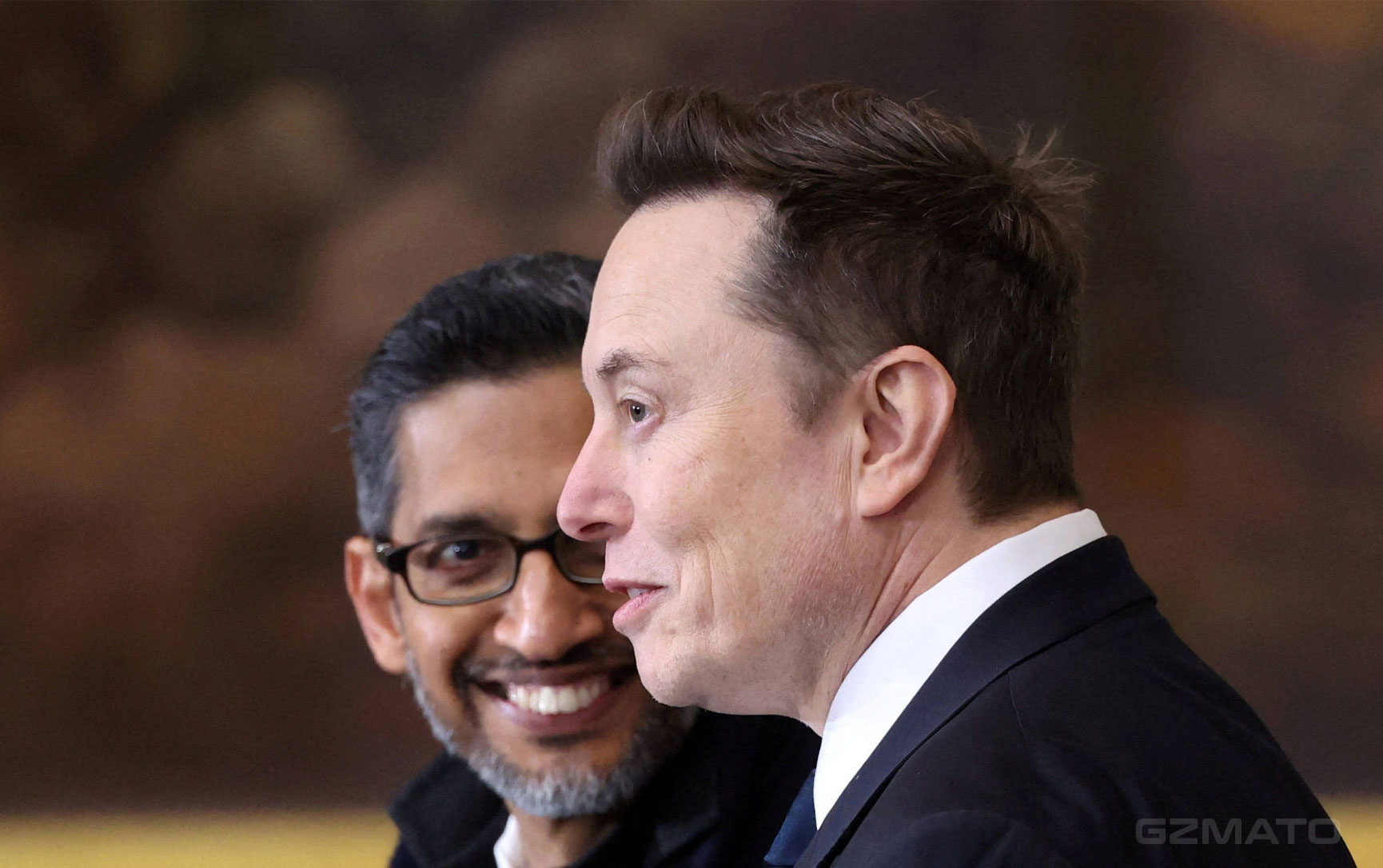
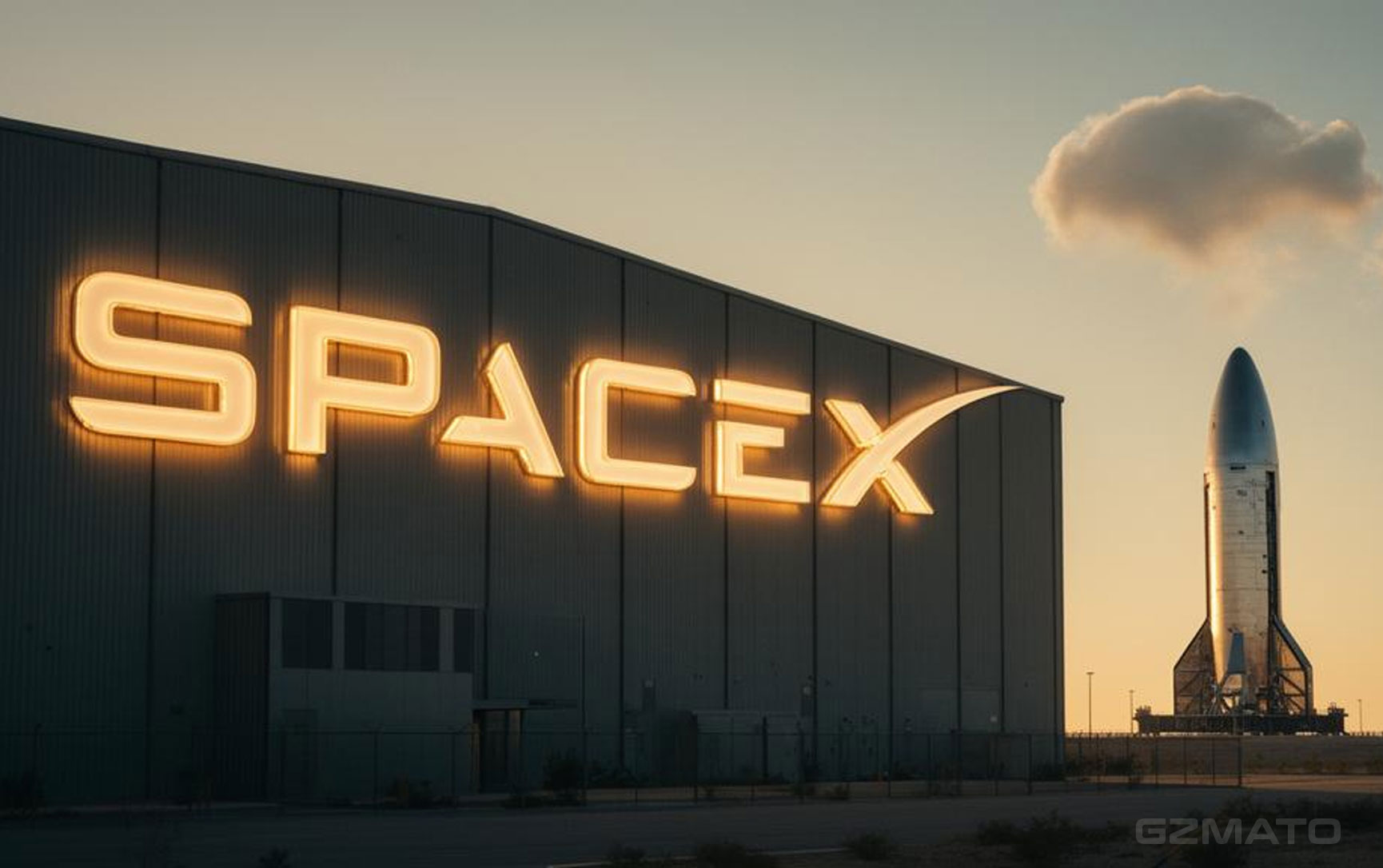
On May 12, 2026, two pieces of news emerged from SpaceX that together outline a comprehensive strategy for the AI-driven computing future. On the orbital front, Google is negotiating with SpaceX to launch data center hardware into space under its "Project Suncatcher" initiative . On the terrestrial front, Musk announced that SpaceX is scouting locations for new "spaceports" to support Starship's planned thousands of annual launches .[citation:2][citation:4]
The timing is not coincidental. SpaceX is preparing for what Reuters has called "the world's biggest initial public offering," targeting a June listing at a valuation of approximately $1.75 trillion .[citation:4] Both announcements directly support the IPO narrative.
Google and SpaceX: The Orbital Data Center Partnership
Two Tech Giants Converge on Space Computing
According to The Wall Street Journal, Google is in active negotiations with SpaceX for rocket launch services to deploy data center hardware into Earth orbit . The talks are confirmed by a person familiar with the matter, and Google is also speaking with other rocket launch companies to maintain flexibility .[citation:7]
Google already has skin in the game. The company holds a 6.1 percent stake in SpaceX, and Google executive Don Harrison serves on SpaceX's board of directors .[citation:9] This existing relationship provides a foundation for deeper collaboration on what could become a transformative infrastructure category.
The orbital data center concept is ambitious: Instead of building more power-hungry, land-intensive server farms on Earth, Google would place computing racks aboard satellites powered by solar arrays. The primary drivers are the same factors constraining terrestrial AI expansion — power availability and land costs .[citation:3]
Project Suncatcher: Google's Space Computing Vision
2027 Prototype Satellite Planned
Google launched "Project Suncatcher" in 2025, with plans to launch prototype satellites by 2027 .[citation:1] The company is collaborating with Planet Labs, the satellite imaging firm, to build the necessary hardware for orbital computing .[citation:1][citation:9]
The initial phase involves testing small-scale computing modules on satellites. If successful, Google would scale the architecture to larger orbital deployments — potentially creating a distributed computing network in space .[citation:9]
The Numbers Behind the Ambition
| Aspect | Details |
|---|---|
| Orbital Data Center Target | First prototype satellites by 2027 |
| Satellite Constellation Plan | Up to 1 million satellites filed with FCC |
| SpaceX Valuation (IPO target) | ~$1.75 trillion |
| Google's SpaceX Stake | 6.1% |
| Anthropic GPU Deal | 220,000+ GPUs, 300+ megawatts |
Global Spaceports: Supporting the Starship Era
Scaling Launch Capacity for Thousands of Annual Flights
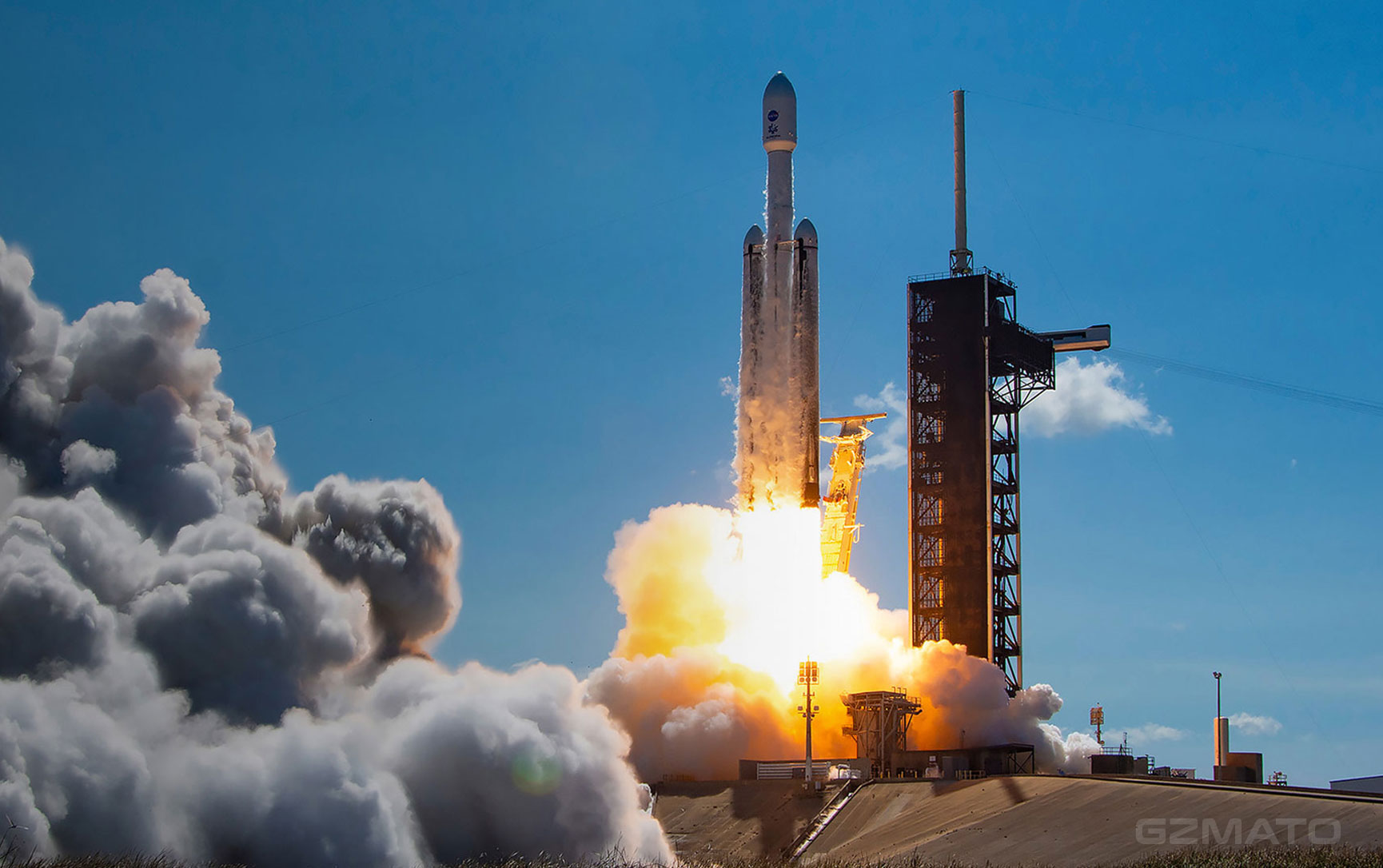
Musk announced on May 12 that SpaceX is evaluating "several locations domestically and internationally" to build "the world's most advanced space launch site" .[citation:2] The expansion is driven by Starship's full reusability — a system designed to launch thousands of times annually with minimal refurbishment .[citation:4]
According to SpaceX, the fully reusable Starship system is designed to carry more than 100 metric tons of cargo . Current launch capacity at Starbase, Texas, and Florida facilities is insufficient for the company's long-term plans, which include Mars colonization, satellite deployment expansion, and rapid point-to-point Earth transportation.[citation:4]
Why Orbit? The Case for Space Computing
Solving AI's Energy and Land Constraints
The push for orbital data centers is driven by real constraints in terrestrial AI infrastructure .[citation:1][citation:3]
- Unlimited solar power: Space-based data centers would draw power directly from solar arrays, bypassing grid constraints entirely
- No land acquisition: Orbital real estate is abundant, with no zoning restrictions or environmental impact reviews
- Cooling advantages: Space offers passive cooling, though the vacuum of space presents its own thermal management challenges
- Low-latency potential: For certain applications, orbital proximity could reduce latency compared to distant terrestrial data centers
Industry observers note that orbital computing could fundamentally reshape the economics of AI infrastructure. The primary costs shift from energy and real estate to launch and satellite deployment — costs that SpaceX is uniquely positioned to minimize .[citation:3]
The Fine Print: Technical Hurdles Remain
Not Quite Ready for Prime Time
For all the ambition, significant technical challenges remain unresolved :[citation:3][citation:9]
- Heat dissipation: In the vacuum of space, cooling electronics is counterintuitively difficult — there's no air to carry heat away. Radiators are required, but their effectiveness is limited.
- Maintenance and repair: Unlike terrestrial data centers where failed servers can be swapped in hours, orbital failures might require weeks or months to address — assuming on-orbit servicing exists at all.
- Latency for interactive AI: Geostationary orbit introduces significant signal delay. Low Earth orbit (LEO) reduces latency but still exceeds terrestrial fiber optic networks.
- Launch costs: Even with Starship's reusability, deploying thousands of computing nodes in space remains expensive.
- Radiation hardening: Space electronics require shielding against cosmic radiation, adding weight and cost.[citation:3]
Google CEO Pichai acknowledged the timeline: "We will put micro racks into space, attached to satellites, and test them. Then we will scale up." The process will take years, not months .[citation:9]
The IPO Connection: A $1.75 Trillion Narrative
Why Both Announcements Matter for Investors
SpaceX's summer 2026 IPO is expected to be the largest in history, with a target valuation of approximately $1.75 trillion .[citation:4] Both the orbital data center talks and the spaceport expansion serve as investor narratives — signaling that SpaceX is not merely a launch provider but an infrastructure company for the AI era.
The orbital data center concept differentiates SpaceX from traditional launch competitors. If successful, the company would create a new market category where it controls both the transportation and the computing infrastructure in space.
Recent strategic moves reinforce this positioning:
- Acquisition of xAI (merged into SpaceXAI) valued at $250 billion
- Option to acquire AI coding startup Cursor for $60 billion later this year [citation:1]
- Major AI compute deal with Anthropic: 220,000+ NVIDIA GPUs, 300+ megawatts, with Anthropic expressing interest in orbital computing collaboration
Final Verdict: Vision or Hype?
For AI infrastructure watchers, the orbital data center announcement is significant regardless of its timeline. Even if the technology doesn't mature until 2030 or later, the fact that two of the world's largest technology companies — Google and SpaceX — are actively planning for it signals a genuine shift in thinking about computing's physical constraints .[citation:9]
The spaceport expansion addresses a more immediate need. With Starship targeting thousands of annual launches, current facilities are insufficient. New launch sites — potentially including international locations — will be necessary regardless of orbital data center timelines.[citation:4]
The IPO context explains the timing. Both announcements serve as investor communications. They tell a story of SpaceX's future — not just launching satellites, but powering the AI revolution from orbit .[citation:3] This is valuable for the IPO prospectus, regardless of how quickly the technology materializes.
For the rest of the industry, the message is clear: The next phase of AI infrastructure may not be on Earth. The companies placing early bets on orbital computing are positioning themselves for a potential paradigm shift. Whether that shift happens by 2030 or 2040, the groundwork is being laid now.
Power Your AI Workloads with Gzmato
High-Performance Servers | AI Development Workstations | Networking Equipment | Data Center Solutions
SPACEXAI15
Data Sources & Methodology (as of May 13, 2026):
- The Wall Street Journal – Google-SpaceX orbital data center negotiations
- IT之家 / 华尔街日报 reporting – Project Suncatcher and prototype timeline [citation:1]
- 财联社 / 东方财富 – Musk's global spaceport announcement [citation:2]
- MarketScreener – SpaceX IPO details and Starship launch projections [citation:4]
- Reuters – IPO valuation and timing [citation:4]
- AASTOCKS – Google's 6.1% stake and board representation [citation:9]
- SpaceX regulatory filings – FCC satellite application [citation:1][citation:3]
- SpaceX orbital data center
- Google Project Suncatcher
- space computing
- SpaceX IPO 2026
- Musk spaceport
- Starship launch sites
- AI infrastructure space