xAI Dissolved, SpaceXAI Launched: Musk Leases 220,000 GPUs to Anthropic
- The End of xAI and the Rise of SpaceXAI
- xAI Dissolved: From 11 Founders to Zero
- The $1.25 Trillion Merger
- The Anthropic Deal: 220,000 GPUs and 300 Megawatts
- Rate Limits Immediately Increased
- Musk's 180-Degree Turn on Anthropic
- The "Kill Switch" Clause
- The Grand Vision: Orbital AI Computing
- Beyond Computing: The $119B Terafab
- Final Verdict: AI's Infrastructure Era
- Shop AI-Ready Hardware at Gzmato
May 8, 2026 – Elon Musk has officially pulled the plug on xAI. Just over two years after founding the company to build a "maximum truth-seeking AI," Musk announced that xAI will be dissolved and absorbed into SpaceX as a new division called SpaceXAI [citation:1][citation:3]. At the same time, the new SpaceXAI unit struck a blockbuster deal with Anthropic — leasing the entire Colossus 1 supercomputer with over 220,000 NVIDIA GPUs to its one-time rival [citation:1][citation:7].
The End of xAI and the Rise of SpaceXAI
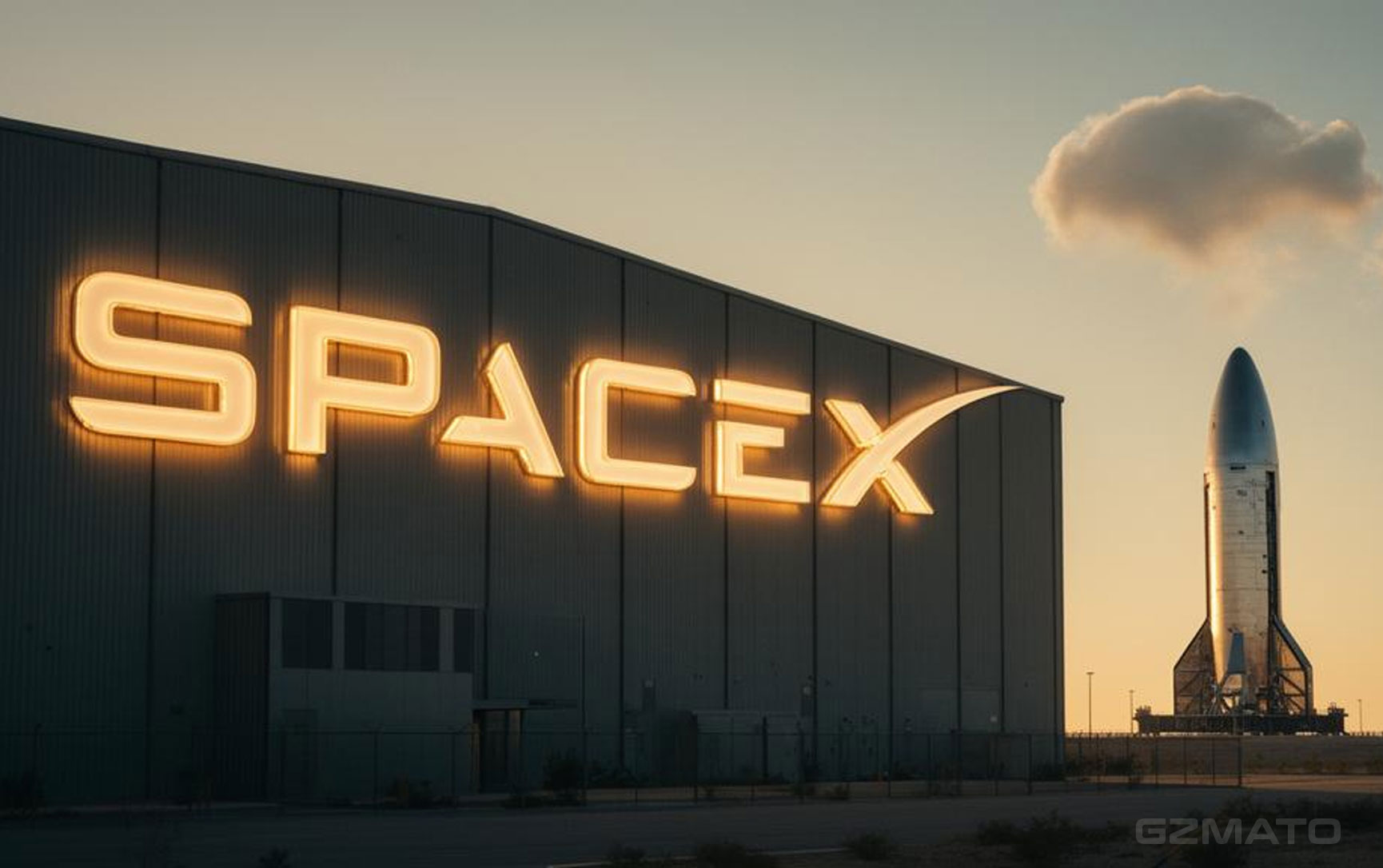
"xAI will no longer exist as a separate company," Musk posted on X. The AI startup, which Musk founded in July 2023 to "understand the true nature of the universe," will become SpaceXAI — an AI product division within SpaceX [citation:1][citation:6].
This move completes a process that began in February 2026, when SpaceX acquired xAI. At the time, the acquisition created a merged entity valued at $1.25 trillion, with SpaceX valued at approximately $1 trillion and xAI at $250 billion [citation:3].
xAI Dissolved: From 11 Founders to Zero
The signs were visible for months. Since early 2026, xAI's founding team had been steadily departing [citation:3][citation:5].
- January 2026: Co-founder Greg Yang stepped away to focus on undisclosed health matters [citation:5][citation:6]
- February 2026: Co-founder Tony Wu announced his departure [citation:5][citation:6]
- March 2026: Ross Nordeen, former Tesla Autopilot executive and the last remaining non-Musk founder, left the company [citation:1][citation:5]
By the end of March, all 11 original xAI founders — besides Musk himself — had departed [citation:1][citation:5]. The company's leadership had completely turned over within months of its peak valuation.
The $1.25 Trillion Merger
The February 2026 acquisition of xAI by SpaceX was one of the largest tech mergers in history. Combined valuation reached $1.25 trillion, establishing SpaceX as an AI powerhouse by default [citation:3].
- SpaceX valuation at acquisition: Approximately $1 trillion
- xAI valuation at acquisition: Approximately $250 billion
- Combined valuation: $1.25 trillion
Following the acquisition, xAI briefly maintained independent operations before the final dissolution now being finalized [citation:3].
The Anthropic Deal: 220,000 GPUs and 300 Megawatts
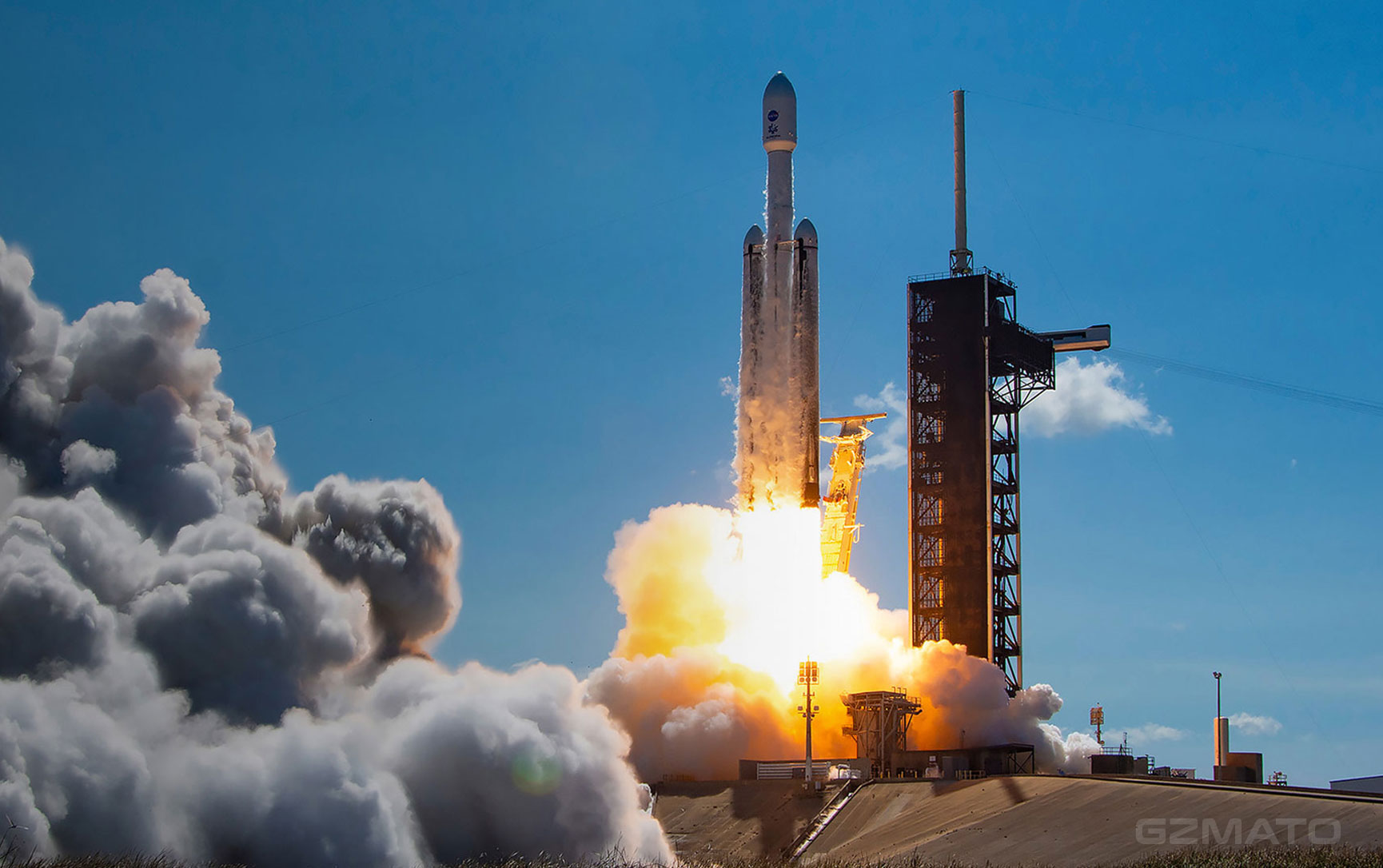
Simultaneous with the dissolution announcement, SpaceXAI and Anthropic revealed that Anthropic would take over the entire capacity of Colossus 1 — SpaceX's flagship AI supercomputer cluster located in Memphis, Tennessee [citation:1][citation:8].
The scale is staggering:
- Total GPUs: Over 220,000 NVIDIA units, including H100, H200, and next-generation GB200 accelerators [citation:1][citation:10]
- Power capacity: More than 300 megawatts added to Anthropic's available compute [citation:1][citation:8]
- Timeline: Access available within one month [citation:8]
Colossus 1 was built in a record 122 days from planning to operation — a testament to Musk's engineering and supply chain capabilities [citation:8]. It is widely considered one of the fastest-deployed large-scale AI supercomputers ever constructed.
Rate Limits Immediately Increased
Starting immediately, Anthropic announced significant increases to Claude access limits [citation:1][citation:8]:
- Claude Code rate limits doubled for all paid tiers (Pro, Max, Team, Enterprise) — five-hour rolling window limits are now twice what they were
- Peak-hour restrictions removed for Pro and Max accounts on Claude Code
- Claude Opus API rate limits substantially raised — the most powerful Claude model is now significantly more accessible to developers
- For some tiers, the per-minute input token limit for Claude Opus increased by more than 15 times [citation:2]
These changes address developer complaints that had been growing for months, particularly around Claude Code — Anthropic's AI coding assistant that had been severely rate-limited due to compute shortages [citation:1].
Musk's 180-Degree Turn on Anthropic
Perhaps the most surprising aspect of the deal is Musk's complete reversal on Anthropic. Just months ago, Musk had been openly hostile toward the company. In February, he called Anthropic "misanthropic and evil" and predicted the company would inevitably "become the very thing its name warns against" [citation:5][citation:6]. As recently as March, he was publicly asking, "Is there a more hypocritical company than Anthropic?" [citation:6]
Critics note Musk's change of heart coincided with a deal that brings significant revenue to SpaceX as it prepares for a highly anticipated IPO [citation:8].
The "Kill Switch" Clause
Musk isn't letting Anthropic use his GPUs without conditions. The agreement reportedly includes a clause allowing SpaceX to reclaim compute capacity if Anthropic's AI engages in behavior deemed harmful to humanity [citation:2][citation:7].
Analysts have described this as both a safety measure and a formal control mechanism — a "kill switch" that gives SpaceX ultimate authority over how its compute is used [citation:2]. Anthropic's leadership would be aware that its access to SpaceX's GPUs could be terminated based on a subjective judgment about its AI's behavior.
The Grand Vision: Orbital AI Computing
Beyond the immediate Colossus 1 leasing deal, SpaceXAI and Anthropic have signaled a much more ambitious long-term vision: orbital AI data centers [citation:1][citation:10].
The logic for space-based computing:
- Earth-based AI clusters face compounding constraints: power availability, land costs, cooling capacity, and regulatory hurdles [citation:1][citation:7]
- Orbital data centers could tap into near-infinite solar energy and passive space cooling [citation:1][citation:3]
- SpaceX is the only organization with the launch frequency, orbital insertion economics, and constellation operation experience to make orbital computing a near-term engineering project [citation:1]
Anthropic has expressed interest in collaborating on multi-gigawatt-scale orbital AI computing [citation:1][citation:8]. This remains at the "interest" stage for now, but SpaceX has previously filed FCC documents for plans involving millions of satellites for orbital data centers [citation:2].
Beyond Computing: The $119B Terafab
The same day as the Anthropic announcement, details emerged about SpaceX's plans for Terafab — a massive semiconductor fabrication facility in Texas with a potential total investment of $119 billion [citation:4].
- Initial investment: $55 billion
- Potential total: $119 billion
- Target process: 2nm chips
- Compute goal: 1 terawatt annual AI compute capacity
- Status: Proposal under review in Grimes County, Texas; tax abatement hearing scheduled for June 2026
Musk has called the proposed facility "critical" to meeting compute demands across his robotics, space, and AI businesses [citation:4].
Final Verdict: AI's Infrastructure Era
For AI model builders: The Anthropic-SpaceX deal illustrates that compute capacity is now the single biggest constraint in AI development. Even at $380 billion valuation, Anthropic cannot access enough GPUs quickly enough without turning to former rivals for emergency capacity [citation:2][citation:8].
For the industry: The move reinforces that the AI battle has shifted from model quality to infrastructure. Musk, having failed to make xAI a leader in the model race, is pivoting to become the "AI infrastructure landlord" — selling picks and shovels to the AI gold rush [citation:1][citation:4]. With Colossus 1 and Colossus 2, and the proposed Terafab, SpaceX is positioned to become a major compute provider.
For consumers: The immediate effects will be felt through Claude Pro and Claude Max, where rate limits have already increased. But over the longer term, the consolidation of AI under the umbrella of a few infrastructure owners raises questions about market concentration and competition.
AI-Ready Hardware at Gzmato
High-Performance Computing | AI Development Kits | Storage Solutions | GPUs and Accelerators
SPACEXAI15
Data Sources & Methodology (as of May 8, 2026):
- 36氪 / 机器之心 – xAI dissolution and Anthropic partnership (May 7, 2026) [citation:1]
- 36氪 / 智东西 – SpaceXAI-Anthropic deal details and Grok 4.3 (May 7, 2026) [citation:7]
- 澎湃新闻 – Musk announces xAI dissolution, 220,000 GPUs to Anthropic (May 7, 2026) [citation:3]
- 财联社 – Anthropic leases entire Colossus 1 capacity (May 7, 2026) [citation:8]
- DoNews – xAI dissolution, Terafab plans (May 7, 2026) [citation:4]
- 凤凰网科技 / IT之家 – Colossus 1 lease and orbital computing vision (May 7, 2026) [citation:10]

- xAI dissolved
- SpaceXAI
- Anthropic SpaceX partnership
- Colossus 1
- 220
- 000 GPUs
- Elon Musk AI
- Grok 4.3
- Claude rate limits