SpaceX's Space Data Center: AI1 Satellites, 1GW Target, and the Sci-Fi Vision Behind It
- SpaceX's Space Data Center: From Sci-Fi to Reality
- Core Concept: What Is an Orbital Data Center?
- Why Space? The AI Energy Bottleneck
- Timeline: From FCC Filing to 1GW in Space
- The Challenges: Physics, Radiation, and Cost
- Side Note: Geostorm and the Dark Side of Space Infrastructure
- China's Response: Not a Spectator
- Key Takeaways
SpaceX's Space Data Center: From Sci-Fi to Reality
In the 2017 sci-fi disaster film Geostorm, humanity builds a vast satellite network called "Dutch Boy" to control the weather — only to watch it be weaponized by villains, triggering catastrophes across the globe. Hong Kong sinks, Tokyo freezes, and Dubai drowns. The message was clear: putting humanity's critical infrastructure in space is both an extraordinary achievement and a profound risk.
Eight years later, Elon Musk's SpaceX is bringing that vision to life — not to control the weather, but to solve what Musk calls AI's "ultimate obstacle": energy [citation:2].
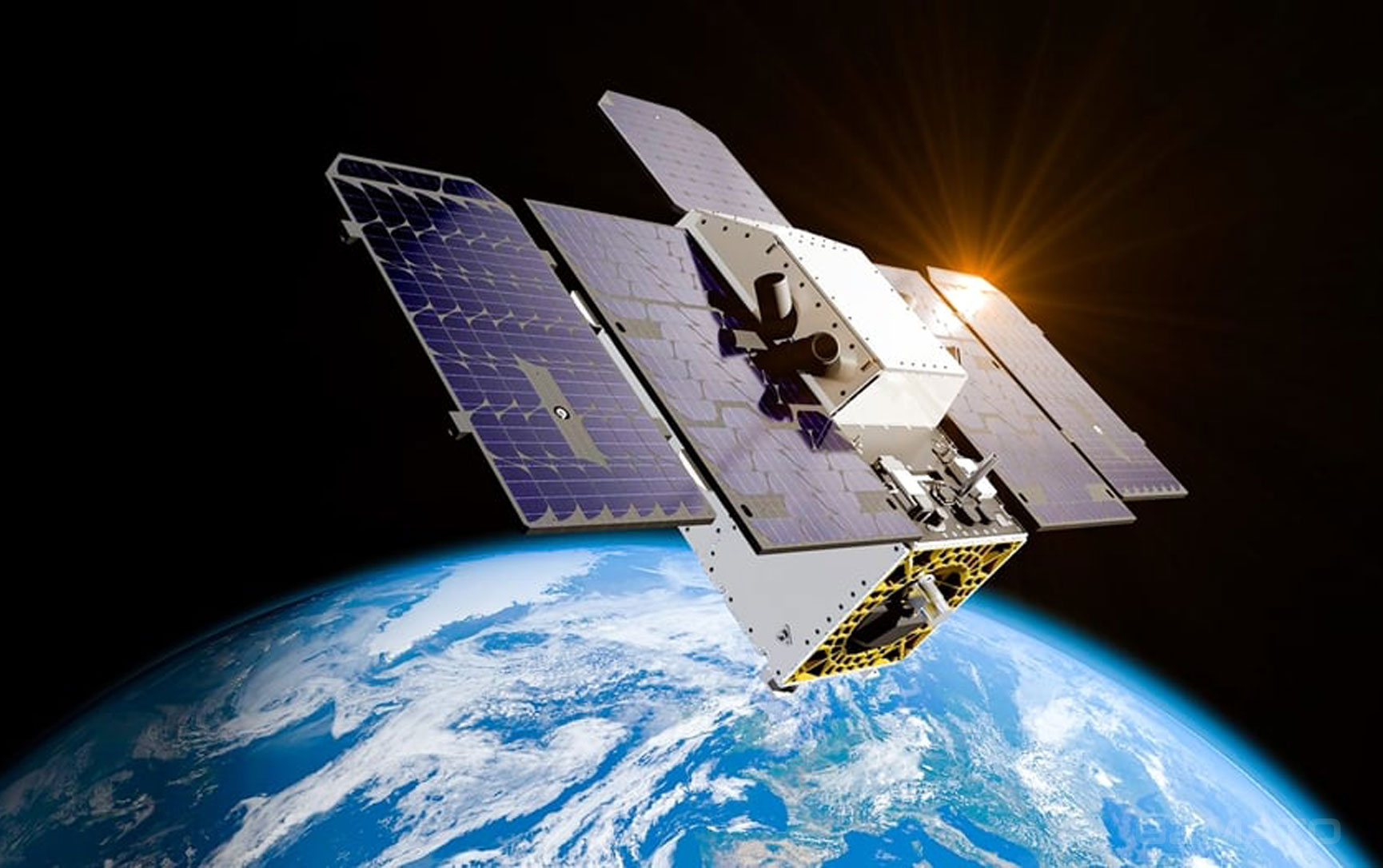
On January 30, 2026, SpaceX filed an application with the U.S. Federal Communications Commission (FCC) to deploy up to one million satellites in low Earth orbit to build an "orbital data center" network [citation:2][citation:9]. By June 2026, Musk unveiled the first prototype: the AI1 satellite, designed to deliver AI compute power equivalent to an NVIDIA GB300 server rack — but in space [citation:3].
This is not a fantasy. This is a real plan with a timeline, a factory, and a billion-dollar budget.
Core Concept: What Is an Orbital Data Center?
SpaceX's orbital data center is essentially a network of AI compute satellites in low Earth orbit. Instead of building more power-hungry data centers on the ground, SpaceX wants to move AI training and inference into space.
According to researchers, space-based compute enables "in-orbit collection, real-time computation, intelligent analysis, and result transmission" — a model called "space compute, space process" rather than the traditional "collect on satellite, compute on ground" model [citation:1].
The AI1 satellite, unveiled in June 2026, provides the first concrete specifications [citation:3][citation:4]:
| # | Specification | Detail |
|---|---|---|
| 1 | Solar Array Wingspan | 70 meters (230 feet) |
| 2 | Average Power | 120 kW |
| 3 | Peak Power | 150 kW |
| 4 | Cooling System | 110 square meters of liquid-cooled radiator panels |
| 5 | Communications | Inter-satellite laser links + Starlink integration |
| 6 | Compute Equivalent | Roughly an NVIDIA GB300 server rack [citation:3] |
The AI1 satellite draws 120-150 kW of continuous power from its 70-meter solar arrays — enough to match a ground-based GB300 AI server rack. For context, the International Space Station generates about 100 kW total. Each AI1 satellite alone would exceed the ISS's entire power output [citation:3].
SpaceX's Texas facility, named Gigasat, spans over 11 million square feet (approximately 1.02 million square meters) and will produce these satellites at scale [citation:4]. The factory includes silicon wafer production, PCB manufacturing, and satellite assembly lines.
Why Space? The AI Energy Bottleneck
Musk has repeatedly warned that AI's exponential growth is hitting a fundamental wall: energy [citation:2][citation:5].
AI chips are being produced at an explosive rate, but electricity supply is not keeping up. According to SpaceX's IPO prospectus, the company's total addressable market is estimated at $28.5 trillion — and over 90% of that comes from AI applications constrained by "the Earth's inability to rapidly expand power generation capacity" [citation:10].
Space offers three advantages that ground-based data centers cannot match:
- Uninterrupted solar power: Solar power in space is 5x more efficient than on the ground, with no day-night cycle, weather, or cloud cover [citation:1][citation:10]
- Free cooling: Space offers a natural heat sink through radiation. The vacuum of space, while not "cold" in the sense of thermal convection, allows heat to radiate away without consuming water or electricity [citation:1]
- No land or grid constraints: Ground data centers face competition for land, water, and power grid capacity. Space eliminates all three bottlenecks [citation:1]
The U.S. already has over 45 GW of planned data center capacity, and by 2030 it is expected to exceed 200 GW — about 40% of total U.S. power generation [citation:2]. Moving compute into space sidesteps this entire constraint [citation:1].
An expert quoted by China News Service noted that space data centers can achieve a Power Usage Effectiveness (PUE) close to 1.0 — meaning almost all energy goes to computing, not cooling — with near-zero carbon emissions [citation:1].
Timeline: From FCC Filing to 1GW in Space
SpaceX's orbital data center plan has been accelerating rapidly in 2026:
| # | Date | Milestone |
|---|---|---|
| 1 | January 30, 2026 | FCC application filed for 1 million AI satellites [citation:2] |
| 2 | June 2026 | AI1 satellite specifications revealed; Gigasat factory construction announced [citation:3][citation:4] |
| 3 | End of 2027 | Target: 1 GW annualized space-based AI compute (~10,000 satellites) [citation:3] |
| 4 | 2030 | Target: 100 GW annualized space compute [citation:3] |
| 5 | Long-term | Target: 1 terawatt (TW) of space-based AI compute [citation:3] |
The timeline is ambitious. 1 GW of space compute represents roughly 10,000 AI1 satellites. At current Starship capacity, that could require 100 Starship launches — a scale Musk believes is achievable but which industry analysts view as extremely optimistic [citation:10].
Behind the AI satellites is Terafab, Tesla's planned chip factory with an annual capacity of 100 billion to 200 billion advanced AI and memory chips. Musk has stated that 80% of Terafab's output will go to space compute, with only 20% for ground applications [citation:5]. Terafab's projected investment is $20 billion [citation:5].
The Challenges: Physics, Radiation, and Cost
Despite Musk's bold vision, experts have raised serious technical and economic concerns.
Heat Dissipation: The Counterintuitive Problem
In the vacuum of space, there is no air or water to carry away heat. The only way to cool is through thermal radiation — a slow and inefficient process [citation:10].
As one expert explained in a detailed analysis, the efficiency of thermal radiation scales with the fourth power of temperature. A satellite needs massive radiator surfaces to dissipate even modest amounts of heat [citation:10].
AI1's 110-square-meter liquid-cooled radiator system is a start, but experts question whether it can handle sustained 150 kW loads [citation:3][citation:10].
Cosmic Radiation: The Chip Killer
Space is filled with high-energy particles that can disrupt or destroy semiconductor chips. Terafab's "D3" chips are designed to be radiation-hardened, but the technology is unproven at the scale required [citation:5][citation:6].
China's院士 Wang Jianyu has highlighted "radiation-hardened chips" as a core challenge that is still being researched [citation:6].
Cost: The Ultimate Barrier
Even with Starship's lower launch costs, the economics are unclear. Two former SpaceX employees and space industry experts debated the cost calculations [citation:10]:
- One estimated the launch cost of a solar panel to space at roughly 10-20% of its energy production value, suggesting a 2-year payback
- A more conservative estimate factored in 10x reuse, orbital redundancy, and the need for extra satellites, concluding that early space data centers would not be cost-competitive with ground-based equivalents
The Silicon Valley 101 analysis concluded: "Space data centers may ultimately be feasible, but not within 3 years" [citation:10].
Orbital Congestion and the Kessler Syndrome
One million satellites would increase orbital congestion by a factor of 100 compared to today's approximately 11,000 active satellites [citation:2][citation:9]. The risk of collisions and cascading debris — known as the Kessler Syndrome — is a serious concern [citation:2][citation:10].
SpaceX's plan to dispose of defunct satellites by sending them into "heliocentric orbits" (away from Earth) [citation:2] is one proposal, but the scale and feasibility of such disposal remain unproven.
Side Note: Geostorm and the Dark Side of Space Infrastructure
The 2017 disaster film Geostorm imagined a world where humanity's climate-control satellite network is turned into a weapon. The parallels to SpaceX's orbital data center are worth noting.
In Geostorm, a network of satellites called "Dutch Boy" is built to stop extreme weather. But a villain hijacks the system, causing catastrophic disasters — Hong Kong sinks into the ocean, Tokyo is frozen solid, Dubai is swallowed by a tsunami. The system designed to save humanity becomes its greatest threat.
SpaceX's orbital data center is not a weapon. But Geostorm offers a useful cautionary tale. When critical infrastructure — AI compute, communications, or energy — is centralized in a single, private space network, the risks of misuse, monopoly, or single-point failure become existential.
As one expert noted, "The space data center, once operational, will carry the world's most critical AI infrastructure. What if it is misused? What if it is controlled by a single entity?" These are not accusations; they are questions any society must ask before deploying infrastructure of this scale [citation:1].
China's Response: Not a Spectator
China is not waiting to see if SpaceX succeeds. According to state media and industry reports, China is actively developing its own space computing capabilities.
- Three-Body Computing Constellation: Led by Zhejiang Lab, the first 12 compute satellites were launched in May 2025. It has already deployed 11 AI models in orbit, including an 8-billion-parameter model for Earth observation and an 8-billion-parameter model for astronomical time-domain analysis [citation:8]
- Super AI No. 1: China's first "first satellite, first rocket" integrated compute satellite, capable of processing remote sensing data and performing AI inference in orbit in minutes — reducing response time from hours to minutes [citation:3][citation:7]
- Multiple cities: Beijing, Tianjin, Shanghai, and Hangzhou are all developing space computing clusters, with Beijing focusing on radiation-hardened chips, Tianjin on ground-space integration, and Shanghai on the "Starlink" industrial ecosystem [citation:1]
China's space computing strategy is explicitly framed as a response to SpaceX. The country's Ministry of Industry and Information Technology has stated it supports "forward-looking research on space-based compute technology" and will "orderly promote the development of the space computing industry" [citation:1].
According to the China Association for Science and Technology, China's space computing capabilities are in the "global first tier" [citation:1][citation:6]. As one researcher put it: "In the field of space computing, China is no longer a follower, but a leader" [citation:8].
Key Takeaways
| # | Key Takeaway |
|---|---|
| 1 | SpaceX filed for 1 million AI satellites — The FCC application on January 30, 2026, is the legal foundation for the orbital data center [citation:2]. |
| 2 | AI1 satellite specs revealed — 70m wingspan, 120-150 kW power, 110 sq m cooling, equivalent to a GB300 server rack [citation:3]. |
| 3 | 2027 target: 1 GW of space AI compute — Approximately 10,000 satellites; requires ~100 Starship launches [citation:3][citation:10]. |
| 4 | Space offers energy and cooling advantages — Uninterrupted solar power, 5x higher efficiency, near-zero water usage, PUE ~1.0 [citation:1]. |
| 5 | Challenges remain significant — Heat radiation in vacuum, cosmic radiation damage to chips, cost economics, and orbital debris [citation:2][citation:10]. |
| 6 | Geostorm offers a cautionary tale — Centralizing critical infrastructure in space creates vulnerabilities that must be anticipated [citation:author analysis]. |
| 7 | China is actively competing — Three-Body Computing Constellation, Super AI No. 1, and multiple cities are developing space compute capabilities [citation:1][citation:3][citation:7]. |
| 8 | Musk's plan is more than a vision — Gigasat factory construction, AI1 prototypes, and a specific 2027 deadline make this a real project [citation:3][citation:4]. |
- China News Service / 中国新闻网 — Space compute development across Chinese cities
- Phoenix News / 凤凰网 — FCC filing and orbital congestion analysis
- 长江证券 — AI1 satellite specifications and compute capacity
- 中国能源报 — Gigasat factory and Terafab details
- 新浪财经 — Terafab project and investment
- 中国工程院院士馆 / 中国电子报 — Wang Jianyu on radiation-hardened chips
- 科技日报 — Three-Body Computing Constellation and AI in space
- 光明网 — Filling and scale analysis
- 36氪 — Space data center economic and physics analysis
AI-Ready Laptops | Fast Chargers | USB-C Cables | Power Banks | Tech Accessories | Smart Devices
Special Offer: Use code TECH2026 for discount on your first order!
Shop Now at Gzmato →
- SpaceX space data center
- AI1 satellite
- orbital AI compute
- Musk space compute
- Gigasat factory
- Terafab chip factory