AI Custom Chip Race: OpenAI, DeepSeek, Anthropic, Meta Build Their Own Silicon
- The New AI Chip Race: Model Makers Turn to Custom Silicon
- OpenAI Jalapeño: First Custom Inference Chip
- DeepSeek Enters the Chip Game
- Anthropic Explores Custom Silicon with Samsung
- Meta Iris: Production in September
- Why Now? The Economics of Inference
- The Bigger Picture: From Buying to Defining Compute
- Key Takeaways
The New AI Chip Race: Model Makers Turn to Custom Silicon
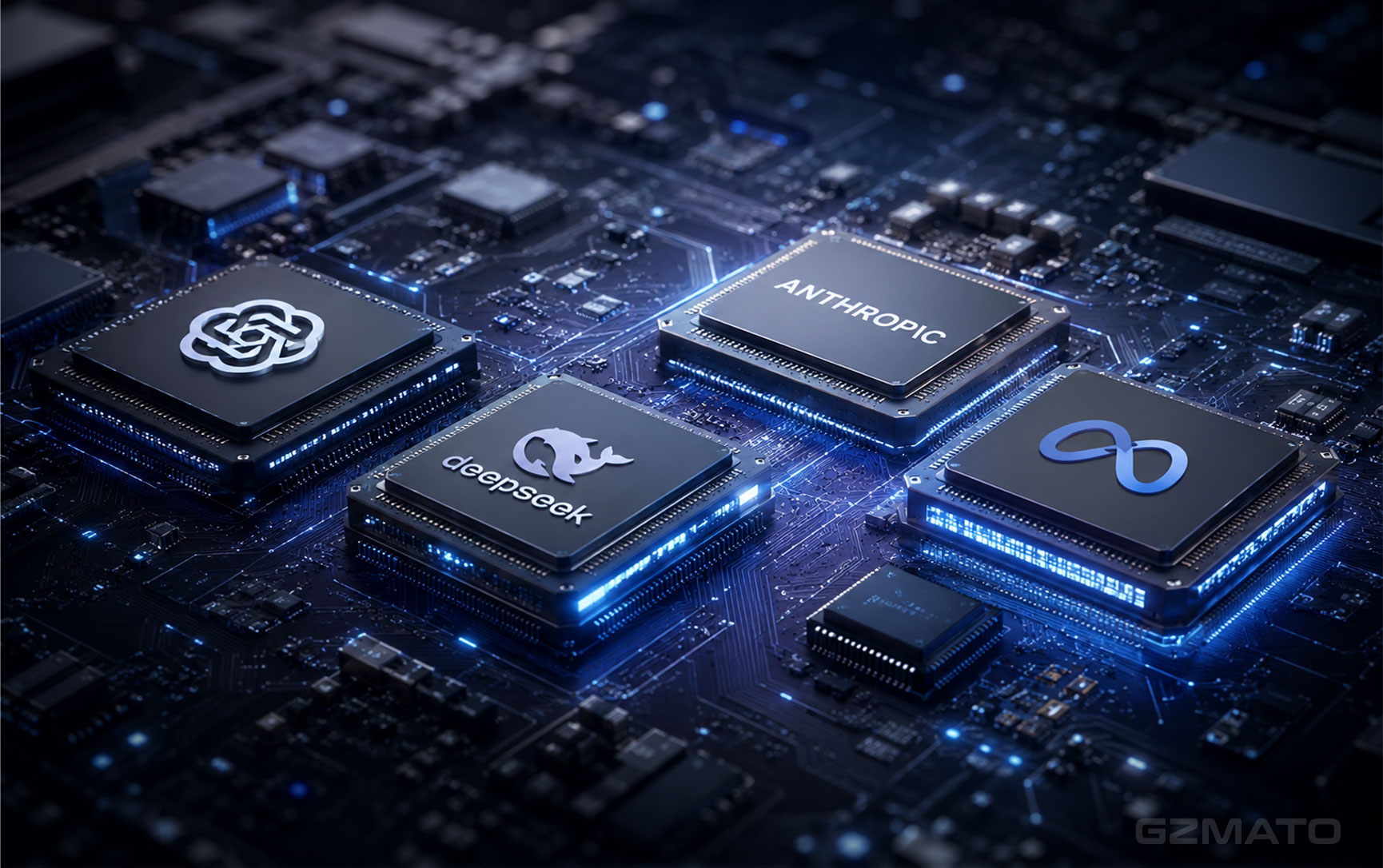
July 2026 marks a turning point in the AI industry. For years, the dominant narrative was simple: AI labs trained models on Nvidia GPUs and paid per token for inference. That model is now breaking apart. In just the past few weeks, DeepSeek, OpenAI, Anthropic, and Meta have all advanced their custom AI chip plans — signaling a fundamental shift from "buying compute" to "defining compute."
OpenAI Jalapeño: First Custom Inference Chip
On June 24, 2026, OpenAI unveiled Jalapeño, its first custom Intelligence Processor — an accelerator designed from the ground up for large language model inference. The chip was co-developed with Broadcom and Celestica in just nine months, a timeline OpenAI describes as potentially the fastest ASIC development cycle ever achieved in high-performance semiconductors [citation:4][citation:9].
Jalapeño is not a general-purpose accelerator. It was designed around OpenAI's deep understanding of LLM fundamentals, informed by its roadmap of models, kernels, serving systems, and product needs. Engineering samples are already running ML workloads in the lab at production target frequency and power, including GPT-5.3-Codex-Spark [citation:4].
Early testing shows the chip will deliver "performance per watt substantially better than current state-of-the-art," according to OpenAI's announcement [citation:4]. The architecture reduces data movement and balances compute, memory, and networking resources to achieve utilization much closer to theoretical peak performance.
The chip is designed for flexibility to work with all LLMs, guided by OpenAI's insights into inference needs across the industry. It is the first step in a multi-generation compute platform, with initial deployment planned by the end of 2026 at gigawatt scale with data center partners including Microsoft [citation:4][citation:9].
Key specs and details:
| Aspect | Detail |
|---|---|
| Purpose | LLM inference accelerator |
| Design Partner | Broadcom |
| Foundry | TSMC |
| Development Time | 9 months (design to tape-out) |
| Performance | Performance per watt substantially better than current SOTA |
| Deployment | End of 2026 at gigawatt scale |
| Key Feature | Optimized around OpenAI's model roadmap and serving patterns |
Greg Brockman, President and Co-Founder of OpenAI, described the strategic importance: "The world is moving to a compute-powered economy. Jalapeño is part of our long-term full-stack infrastructure strategy to make compute more abundant, resulting in AI which is faster, more reliable, more affordable for people and businesses" [citation:4].
DeepSeek Enters the Chip Game
On July 7, 2026, Reuters reported that DeepSeek is developing its own AI inference chip, with the project having started approximately one year ago [citation:1][citation:14]. The chip is designed specifically for inference — the process of generating responses to user queries — not for training.
This move represents a significant strategic pivot for the Chinese AI company. DeepSeek's journey has been defined by navigating chip restrictions: it trained its R1 model on Nvidia H800 chips before they were banned, then adapted its V4 model to Huawei Ascend architecture, and is now designing its own silicon [citation:1].
According to sources cited by Reuters, DeepSeek has engaged with chip design firms, foundries, and memory suppliers. The company has been quietly expanding its chip design team over recent months through headhunting and internal referrals — no public job postings were used [citation:1].
The project is backed by DeepSeek's first-ever external funding round completed in June 2026, raising approximately 51 billion yuan ($7.4 billion) at a valuation between $52 billion and $59 billion. The funding is explicitly allocated toward expanding compute centers (primarily with domestic chips), developing its own AI chips, and recruiting global talent [citation:1].
Key details:
| Aspect | Detail |
|---|---|
| Purpose | Inference-only AI chip |
| Status | Early development stage |
| Project Start | ~July 2025 |
| Funding | ~$7.4B raised June 2026 |
| Strategic Rationale | Reduce dependence on Nvidia and Huawei; lower inference costs |
| Hiring Approach | Stealth recruitment via headhunting and internal referrals |
The motivation is clear: DeepSeek's aggressive pricing strategy — V4 Flash at 2 yuan per million output tokens, less than 1/20th of GPT-5.5 — has generated massive usage. But with tens of millions of daily active users, every token costs money. At that scale, even small efficiency gains translate into billions of dollars in savings [citation:1].
Industry analysts view this as a natural progression for China's AI champion. DeepSeek's chip journey mirrors the broader trajectory of China's AI industry: from reliance on Nvidia, to adaptation on Huawei, to ultimately designing its own silicon [citation:1][citation:6].
Anthropic Explores Custom Silicon with Samsung
On July 2, 2026, The Information reported that Anthropic is in early discussions with Samsung Electronics about potential manufacturing partnerships for custom AI chips [citation:2][citation:7][citation:11]. The project remains in very early stages — Anthropic has not yet finalized the chip's design, processing function, performance specifications, or deployment architecture [citation:2].
According to sources, Anthropic is considering Samsung's 2nm process technology and advanced packaging solutions. The company has engaged with multiple chip design firms but has not yet entered detailed design, testing, or manufacturing phases [citation:7][citation:15].
The move follows Anthropic's aggressive hiring: in June 2026, the company brought on Clive Chan, an early member of OpenAI's custom chip team who previously worked on Tesla's Dojo supercomputer project [citation:15].
Key details:
| Aspect | Detail |
|---|---|
| Status | Very early exploration stage |
| Potential Foundry | Samsung (2nm process, advanced packaging) |
| Purpose | Custom AI inference chip |
| Key Hire | Clive Chan (ex-OpenAI custom chip team) |
| Strategic Rationale | Reduce supplier concentration; gain long-term bargaining power |
Anthropic's official response emphasizes that AWS Trainium, Google TPU, and Nvidia GPUs will remain central to its compute strategy [citation:11]. The company is not abandoning its multi-supplier approach — rather, it's adding a fourth option. This reflects the unique position Anthropic has carved out: while OpenAI is tied to Nvidia and xAI to its own infrastructure, Anthropic has been hedging across multiple hardware platforms [citation:15].
But the economics are pushing toward custom silicon. Anthropic's annualized revenue run rate has grown from $9 billion at the end of 2025 to over $47 billion by May 2026 — a five-fold increase in five months [citation:15]. With that kind of scale, even a few percentage points of efficiency translate into billions in savings. And as the company acknowledged, rapid growth creates "inevitable pressure" on infrastructure [citation:15].
Meta Iris: Production in September
On July 9, 2026, Reuters reported that Meta's custom AI chip, code-named Iris, will enter production in September 2026 [citation:3][citation:12]. An internal memo reviewed by Reuters shows the chip cleared six weeks of testing without any major issues — a notable milestone for a program that has struggled for years [citation:12].
Iris is part of Meta's Training and Inference Accelerator (MTIA) program, which includes four planned chip generations: MTIA 300, 400, 450, and 500. The company plans to release a new generation approximately every six months through 2027, roughly twice the speed of a typical chip development cycle [citation:3][citation:12].
Broadcom is the design partner on Iris, and Taiwan Semiconductor Manufacturing Co. (TSMC) is the foundry. Meta has also signed long-term supply agreements with Samsung Electronics for memory chips, Sandisk for flash storage, and Sumitomo Electric for fiber-optic equipment [citation:3][citation:12].
Key details:
| Aspect | Detail |
|---|---|
| Status | Production starts September 2026 |
| Design Partner | Broadcom |
| Foundry | TSMC |
| Program | MTIA (4 generations: 300, 400, 450, 500) |
| Release Cadence | ~Every 6 months through 2027 |
| Testing | 6-week test, no major issues found |
| Compute Target | 14 GW by 2027 (up from 7 GW in 2026) |
| 2026 Capex | $125B - $145B |
Meta's internal memo contains a candid admission: adopting the latest GPUs at Meta's scale "has been a heavy lift, and it has cost us time" [citation:12]. Iris is designed to run ranking and recommendation systems (which power Facebook and Instagram feeds) and generative AI features — alongside, not instead of, the GPUs Meta continues to buy from Nvidia and AMD [citation:12].
The chip effort sits inside a much larger infrastructure push. Meta plans to double its data center computing capacity from 7 gigawatts in 2026 to 14 gigawatts in 2027. One gigawatt is roughly enough to power 800,000 homes; 14 gigawatts would power more than 11 million [citation:12].
Iris is Broadcom's third major custom chip project after Google's TPU and OpenAI's Jalapeño — a sign that the chip design firm has become the go-to partner for companies that want custom silicon without building a chip design team from scratch [citation:12].
Why Now? The Economics of Inference
The timing of these announcements is no coincidence. All four companies are responding to the same structural shift: the AI industry's compute center of gravity is moving from training to inference.
Training is a one-time cost. You train a model once (or a few times per year). It's expensive, but it's a capital project.
Inference is a recurring cost. Every user query, every API call, every agent action consumes compute. As products scale, inference costs become an operational expense that can quickly eclipse training costs.
DeepSeek's situation illustrates the math. With tens of millions of daily active users, each query costing a fraction of a cent, the aggregate bill becomes massive. DeepSeek's V4 Flash is priced at 2 yuan per million output tokens — aggressively low to capture market share. But that strategy only works if you can bring down the underlying compute cost to match [citation:1].
Anthropic is running a similar calculation. With annualized revenue run rate exceeding $47 billion and a growth curve that's nearly vertical, the company needs to squeeze every dollar of efficiency out of its compute stack [citation:15].
For Meta, the pressure comes from volume. Its recommendation systems power billions of users, and adding generative AI features multiplies the compute demand further [citation:12].
For OpenAI, the math is about both cost and control. As ChatGPT, Codex, and agentic products scale, having a chip designed specifically for the workloads it actually runs becomes a competitive advantage [citation:4].
- General-purpose GPU: Built for everything, optimized for nothing. Pays a premium for flexibility you may not need.
- Custom inference chip: Built for your specific model architecture. Eliminates unnecessary features; optimizes for your exact workload.
- Savings potential: Even 10-20% efficiency gains at multi-billion-dollar scale translate into hundreds of millions in annual savings.
The Bigger Picture: From Buying to Defining Compute
The deeper story is not about individual chips but about a structural power shift in the AI industry.
For the past decade, the dominant model has been simple: chip companies (primarily Nvidia) design general-purpose processors; AI companies buy them. The chip companies defined the compute; the AI companies built on top of it.
That model is now being inverted. AI companies are beginning to define the compute they need and telling the industry how to build it.
This manifests in several ways:
- Cost control: At scale, every milliwatt matters. Custom chips eliminate inefficiencies that cost billions when multiplied across thousands of servers.
- Supply security: AI companies have faced chip shortages, export restrictions, and supply chain disruptions. Owning the design reduces dependence on any single supplier.
- Bargaining power: Having a credible alternative chip changes the negotiation dynamic with suppliers. Even if you never fully replace a supplier, the option changes the terms.
Broadcom has emerged as a key enabler of this shift. The chip design firm is the common thread across three major custom silicon programs: Google's TPU, OpenAI's Jalapeño, and Meta's Iris [citation:12]. Analysts estimate Broadcom's AI-related revenue reached $10.8 billion in its fiscal second quarter of 2026, up 143% year-over-year, and the company has forecast AI revenue exceeding $100 billion in fiscal 2027 [citation:13].
| Company | Custom Chip | Design Partner | Foundry | Status (Mid-2026) |
|---|---|---|---|---|
| Meta | Iris | Broadcom | TSMC | Production starts Sept 2026 |
| OpenAI | Jalapeño | Broadcom | TSMC | Unveiled June 2026; deployment by year-end |
| TPU (Ironwood) | Broadcom | TSMC | Generally available since late 2025 | |
| Amazon | Trainium 3 | Marvell | TSMC | Generally available since Dec 2025 |
| Microsoft | Maia 200 | Marvell | TSMC | Running internally since Jan 2026 |
| DeepSeek | Unnamed | Undisclosed | Undisclosed | Early development |
| Anthropic | Unnamed | Undisclosed | Samsung (exploring) | Very early exploration |
What is notable is that all these chips — regardless of who designs them — are manufactured by TSMC. This means the AI chip design battle is fought on software and architecture, not manufacturing. Nvidia's dominance is not threatened by manufacturing constraints but by the fact that its customers are increasingly capable of designing chips that do exactly what they need, and nothing more.
For now, Nvidia remains the dominant player, with approximately 74% of the inference market share [citation:15]. But the trend lines are clear: AI companies are building their own chips not to replace Nvidia today but to define their own compute destiny for tomorrow.
Key Takeaways
| # | What You Need to Know About the AI Custom Chip Wave |
|---|---|
| 1 | OpenAI unveiled Jalapeño — its first custom inference chip, co-designed with Broadcom in just 9 months, delivering substantially better performance per watt than current SOTA |
| 2 | DeepSeek is developing its own inference chip — backed by ~$7.4B in funding, the project has been running for ~1 year, with the goal of reducing reliance on Nvidia and Huawei |
| 3 | Anthropic is exploring custom silicon with Samsung — in very early stages, considering 2nm process and advanced packaging, targeting a fourth compute option alongside AWS, Google, and Nvidia |
| 4 | Meta's Iris chip enters production in September — 6-week testing cleared without major issues; part of 4-generation MTIA roadmap with ~6-month release cadence |
| 5 | Broadcom is the quiet winner — design partner on Google TPU, OpenAI Jalapeño, and Meta Iris; AI chip revenue up 143% YoY, expected to exceed $100B in fiscal 2027 |
| 6 | Inference economics are driving the shift — as AI moves from training to inference, general-purpose GPUs become too expensive and inefficient for model-specific workloads |
| 7 | The AI industry is moving from buying compute to defining it — model companies are designing chips around their own architectures, not adapting to what chip makers sell |
| 8 | Nvidia's dominance isn't ending overnight — but the trend line points toward a more fragmented market where AI companies have meaningful control over their own silicon |
Shop Smart Wearables at Gzmato
Whether you need audio glasses, camera-first glasses, a privacy-conscious HUD, or a full AR experience for gaming and media, Gzmato carries the full range of smart wearables.
Ray-Ban Meta | Meta Glasses | Rokid AI Glasses | Huawei AI Glasses | Even Realities G2 | XREAL One Pro
Special Offer: Use code TECH2026 for a discount on your first order!
Shop Smart Wearables at Gzmato- Reuters — DeepSeek custom AI inference chip development, July 2026
- Reuters — Meta Iris chip production, internal memo, July 2026
- OpenAI — Jalapeño custom inference chip announcement, June 2026
- The Information — Anthropic custom chip exploration with Samsung, July 2026
- TechCrunch — Anthropic chip plans and Samsung partnership discussions
- Bloomberg — Anthropic annualized revenue run rate
- Pulse — Samsung 2nm semiconductor roadmap for AI customers
- Broadcom — Fiscal Q2 2026 earnings report
- Reuters — Broadcom AI revenue growth and customer concentration
- DeepSeek — Corporate funding announcement, June 2026


- custom AI chip
- OpenAI Jalapeño
- DeepSeek chip
- Anthropic chip
- Meta Iris
- inference chip
- AI silicon
- Broadcom
- custom silicon
- AI hardware
- inference economics
- AI chip race
- Gzmato