Alibaba's AI Finds Cancer with 99.8% Accuracy – ByteDance Spends $23B on Chips
- Two Giants, Two Approaches: AI's Dual Path Forward
- Alibaba DAMO COCA: The Third Cancer Screening AI
- How DAMO COCA Works: "Localize Then Diagnose"
- Clinical Results: 5 Missed Cancers Found in Real-World Tests
- Beyond Colorectal Cancer: The Five-Cancer Vision
- ByteDance's AI Hardware Empire: From Chips to Infrastructure
- The Chip Strategy: Four Product Lines, One Thousand Engineers
- The $23 Billion Compute Arms Race
- Doubao: The Flywheel Driving It All
- Final Verdict: From Diagnosis to Compute
- Shop AI Development Gear at Gzmato
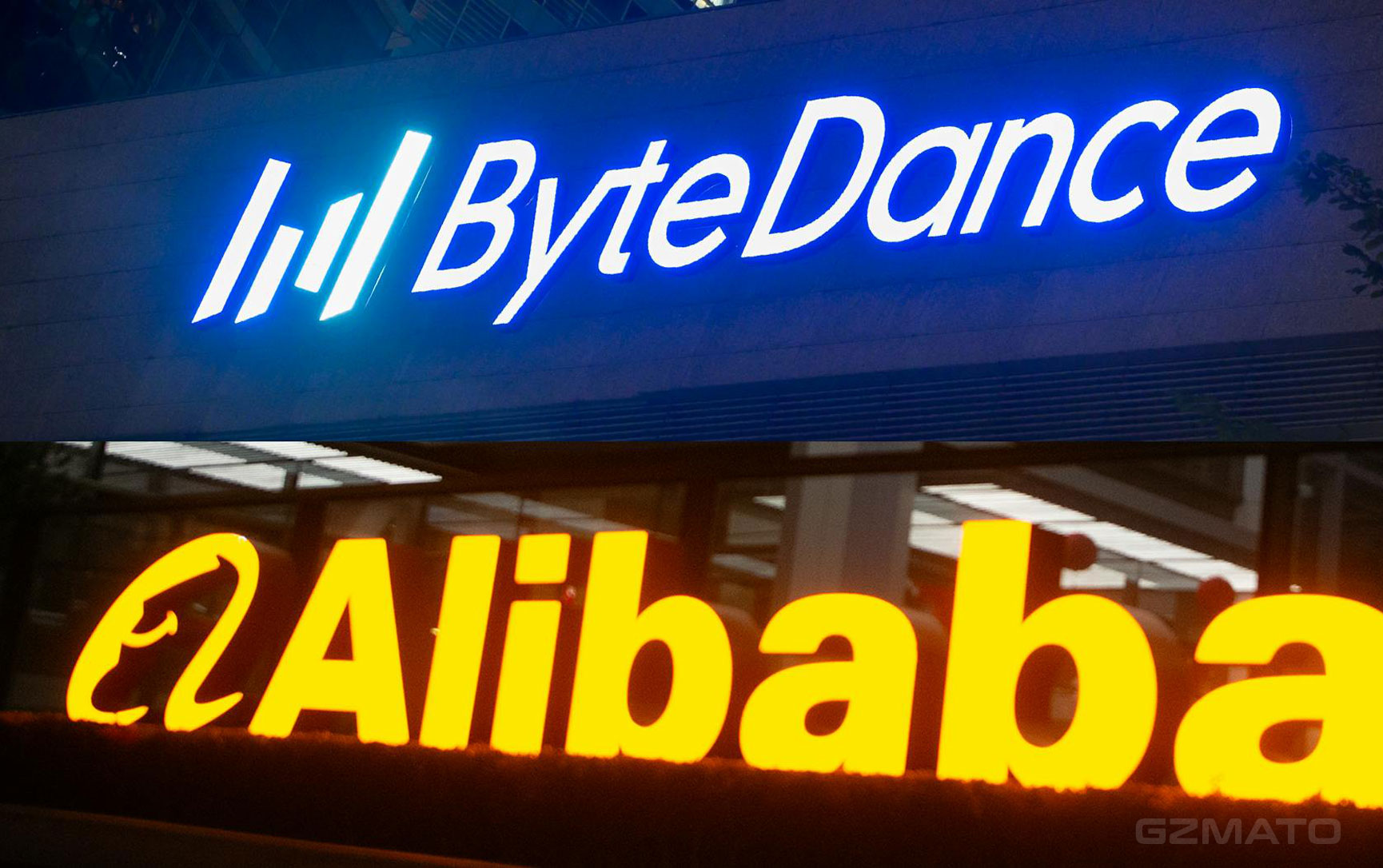
April 29, 2026 – Two of China's biggest tech giants made significant moves this week, but their focus could not be more different. Alibaba's DAMO Academy unveiled its third AI cancer screening model, while ByteDance continues its relentless expansion into AI hardware infrastructure. Both represent China's AI ambitions – one focused on saving lives through software, the other on building the computing backbone for the next generation of AI. [citation:1][citation:4]
Two Giants, Two Approaches: AI's Dual Path Forward
Alibaba and ByteDance are pursuing AI from opposite ends of the stack. Alibaba is applying AI directly to a human problem: early cancer detection. ByteDance is building the foundational infrastructure – chips, servers, and massive compute clusters – to power the next generation of AI applications. [citation:1][citation:4]
Both are essential. Without AI models like DAMO COCA, the technology lacks real-world impact. Without infrastructure like ByteDance's, those models cannot scale. Here's what each company announced.
Alibaba DAMO COCA: The Third Cancer Screening AI
On April 28, 2026, Alibaba DAMO Academy, in collaboration with Guangdong Provincial People's Hospital and other institutions, unveiled DAMO COCA – an AI model for colorectal cancer screening based on non-contrast CT scans. The approach is groundbreaking: it requires no bowel preparation, making it completely "invisible" to the patient. [citation:1][citation:5]
This is the third cancer screening AI from DAMO Academy, following DAMO PANDA for pancreatic cancer and DAMO GRAPE for gastric cancer. With COCA, DAMO has officially validated its "non-contrast CT + AI" multi-cancer screening technology roadmap. [citation:1][citation:8]
Colorectal cancer is the second deadliest cancer globally, with a 90%+ five-year survival rate if caught early – but only around 14% if diagnosed late. Alarmingly, incidence among those under 30 is rising sharply. Traditional screening methods face low compliance: fecal immunochemical tests require sample collection, while colonoscopies need bowel preparation and can be uncomfortable. Nearly half of eligible individuals in China skip recommended screening. [citation:1][citation:5]
How DAMO COCA Works: "Localize Then Diagnose"
Non-contrast CT scans are widely available – China produces hundreds of millions annually for routine health checks, trauma assessments, and abdominal pain. The challenge is that these scans are taken without bowel preparation. The intestinal tract is full of content that severely interferes with image interpretation, and the colon's complex, winding structure makes manual detection extremely difficult. [citation:5][citation:6]
DAMO Academy's solution is a two-stage deep learning architecture: "localize then diagnose." The AI first identifies the colorectal region, then detects suspicious lesions within that area. The model was specifically trained on early tumors smaller than 3cm, using a hybrid supervised learning strategy to overcome content interference and precisely segment complex intestinal structures. [citation:1][citation:5]
The technical approach builds on lessons from PANDA (2023, pancreatic cancer) and GRAPE (2025, gastric cancer). Gastric cancer, involving hollow organs, presented similar challenges to colorectal cancer and helped validate the methodology. [citation:6]
Clinical Results: 5 Missed Cancers Found in Real-World Tests
DAMO COCA's performance metrics are compelling. In validation across six international centers covering 2,053 patients, the model achieved an AUC of 0.967 to 0.996. Sensitivity reached 86.6%, and specificity hit 99.8% – meaning the false positive rate is just 0.2%. [citation:1][citation:5]
In comparative testing against 10 radiologists with varying years of experience:
- DAMO COCA's sensitivity was 20.4% higher than the average physician
- Specificity was 5.4% higher
- When doctors used AI assistance, their sensitivity improved by 14.5% and specificity by 3.1%
- One experienced radiologist's accuracy jumped from 75.6% to 90.3% with AI support [citation:5]
Most notably, in real-world retrospective validation covering 27,433 consecutive patients, DAMO COCA identified 5 previously missed colorectal cancer cases. One patient had undergone non-contrast CT scans for two consecutive years – both were initially read as normal. Only in the third year, after colonoscopy confirmed cancer (with the tumor having grown significantly), did retrospective AI analysis reveal the lesion had been visible on earlier scans. [citation:1][citation:6]
Beyond Colorectal Cancer: The Five-Cancer Vision
DAMO Academy has now validated its "non-contrast CT + AI" approach across five digestive system cancers: pancreatic, gastric, colorectal, liver, and esophageal. Research is also ongoing for breast and kidney cancer screening. [citation:1][citation:8]
Dr. Zhang Ling, senior algorithm expert and technical lead for multi-cancer screening AI at DAMO Academy, stated: "DAMO Academy has successfully established the original technical route for 'non-contrast CT + AI' multi-cancer screening, using a single scan to identify multiple cancers." [citation:1][citation:8]
The model comes in two versions: high-specificity (low false positive) for mass population screening, and high-sensitivity (designed to catch almost every case) for high-risk populations. The high-sensitivity version achieves 83-92% detection for Stage I colorectal cancer and can even detect advanced adenomas before they become malignant – outperforming other approaches in current literature. [citation:5]
ByteDance's AI Hardware Empire: From Chips to Infrastructure
While Alibaba's news is about AI application, ByteDance's recent moves are about AI infrastructure. The company has quietly built a chip engineering team exceeding 1,000 people, with over 500 focused on AI chips alone and approximately 200 on CPUs. [citation:2][citation:9]
This represents a significant evolution from ByteDance's earlier public statements. The company previously denied plans to develop general-purpose chips, but the scale of its current investment tells a different story. The chip business began around 2020 and has now matured into four distinct product lines. [citation:9]
The Chip Strategy: Four Product Lines, One Thousand Engineers
| Product Line | Purpose | Current Status |
|---|---|---|
| AI Chips | Doubao LLM inference | "SeedChip" sampling by March 2026; target 100K units in 2026 [citation:2] |
| Server CPUs | Data center general compute | ~200-person team [citation:9] |
| VPU | Video decoding & content moderation | For Douyin/TikTok workloads [citation:2] |
| DPU | Data center network optimization | Led by same team as AI chips [citation:2] |
The $23 Billion Compute Arms Race
ByteDance's 2026 capital expenditure plan is staggering: approximately $23 billion total, with at least $14 billion (about 100 billion yuan) committed to Nvidia AI chips alone. [citation:4]
The strategy is multi-pronged:
- Immediate compute: Securing massive allocations of H200 and Blackwell-class GPUs for overseas data centers, navigating U.S. export controls through a bifurcated strategy [citation:4]
- Domestic operations: Using China-compliant chips (Nvidia's H200 under "managed access") plus alternatives from Huawei Ascend, Cambricon, Hygon, and Kunlunxin in the tens of thousands [citation:2][citation:9]
- Custom silicon: Working with Broadcom to develop custom AI ASICs expected in late 2026, designed to offload lighter inference tasks from expensive GPUs [citation:4]
This "buy now, build later" approach parallels strategies elsewhere in the industry. By late 2025, ByteDance had already stockpiled nearly 120,000 Nvidia A100/A800/H800 accelerators and close to 1 million H20/L20/L40 chips. [citation:2][citation:9]
Doubao: The Flywheel Driving It All
ByteDance isn't just buying chips speculatively. Its Doubao LLM ecosystem provides the demand. As of late 2025, Doubao had over 159 million monthly active users, making it China's most popular AI app and overtaking the previous sensation, DeepSeek. [citation:7]
According to Goldman Sachs, ByteDance's daily token consumption exceeded 30 trillion in October 2025 – strikingly close to Google's 43 trillion. This massive scale creates a data flywheel that refines its models with real-world usage at a velocity few companies can match. [citation:7]
The shift toward "Agentic AI" – models that can execute multi-step tasks like autonomous content creation and software development – is a key driver of the massive compute rollout. The upcoming Nvidia Rubin architecture (expected late 2026) with its Vera CPU and HBM4 memory promises 3.5-5x performance improvement, specifically designed for the long-context requirements of AI agents. [citation:4]
Final Verdict: From Diagnosis to Compute
Alibaba's DAMO COCA represents a genuine breakthrough in accessible cancer screening. By piggybacking on routine CT scans with no additional patient preparation, the model dramatically lowers the barrier to early detection. The clinical results – 86.6% sensitivity, 99.8% specificity, five missed cancers found in real-world testing – are compelling. And as the third in a series (following pancreatic and gastric cancer models), DAMO COCA validates the "non-contrast CT + AI" approach across multiple cancer types. The path to covering all five digestive cancers is now clear. [citation:1][citation:8]
ByteDance's infrastructure build-out is equally significant, if less immediately tangible. The company is constructing the compute foundation for the next generation of AI applications. The $14 billion Nvidia commitment, the thousand-person chip team, the four product lines, and the massive GPU stockpile all point to a company preparing for an AI-first future where compute capacity is the primary strategic asset. [citation:2][citation:4]
What connects both stories is the reality of AI's two-front progress. One front is application – using AI to solve real human problems like cancer detection. The other front is infrastructure – building the chips, servers, and networks needed to run these applications at scale. Neither can succeed without the other. Alibaba's models need compute; ByteDance's compute needs applications. Together, they represent the dual engine of China's AI development.
Build AI Infrastructure at Gzmato
AI Workstations | High-Performance GPUs | Storage Solutions | Development Kits | Cooling Systems
Special Offer: Use code AIINFRA15 for 15% off your next hardware purchase
Shop AI Hardware Now →Data Sources & Methodology (as of April 29, 2026):
- Alibaba DAMO Academy official announcement (April 28, 2026) via Phoenix Technology and Sohu [citation:1][citation:8]
- Annals of Oncology research paper on DAMO COCA (April 2026) [citation:1][citation:5]
- DoNews and EET China reports on ByteDance chip team expansion (February 2026) [citation:2][citation:9]
- Wedbush Securities analysis of ByteDance $14B Nvidia commitment (January 2026) [citation:4]
- TipRanks ByteDance $23B capex coverage (December 2025) [citation:7]


- Alibaba DAMO COCA
- colorectal cancer AI screening
- ByteDance AI chips
- ByteDance capex 2026
- Nvidia H200
- Doubao LLM
- AI infrastructure
- Chinese AI