AMD Helios vs Nvidia Vera Rubin: The AI Infrastructure War Heats Up
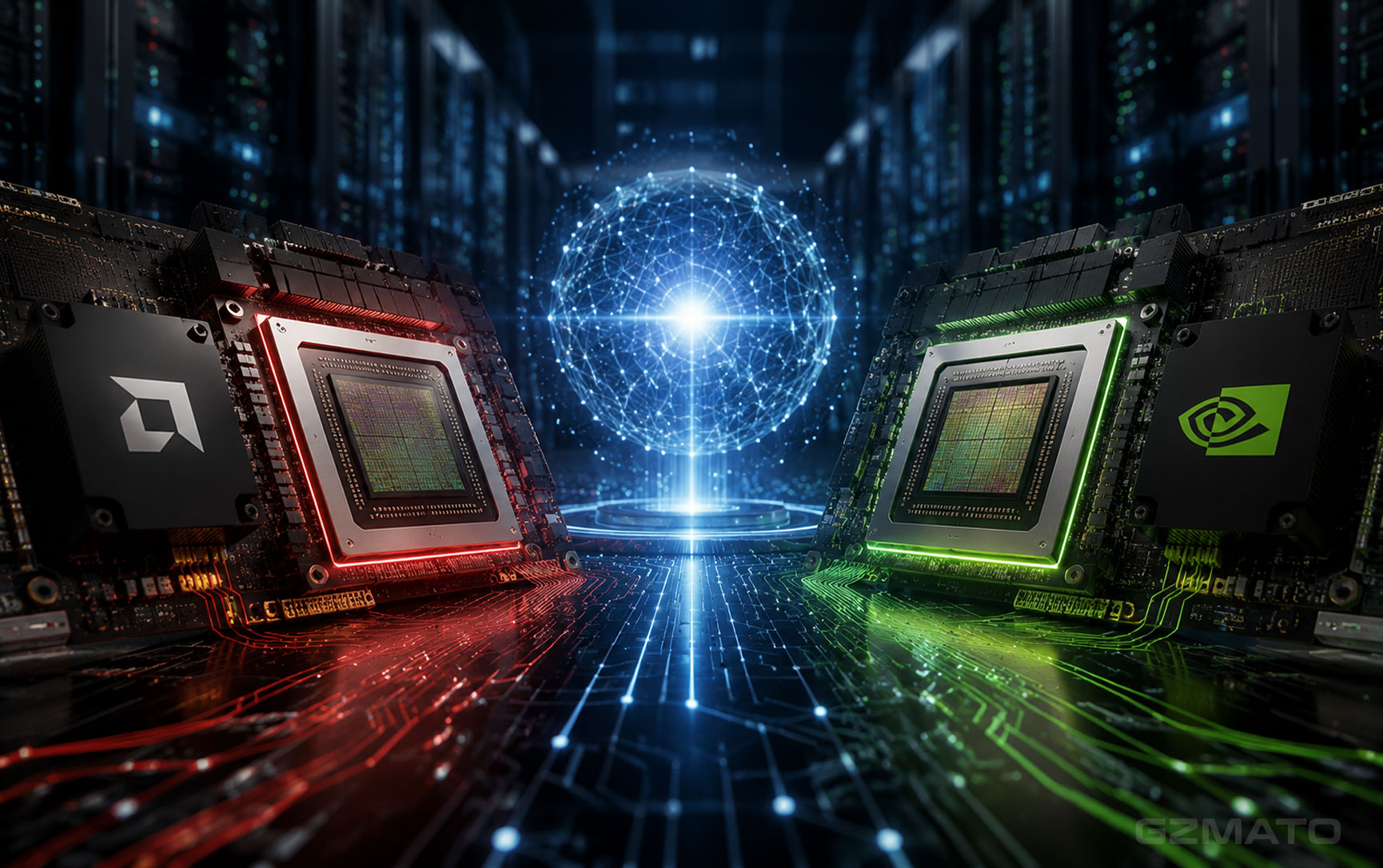
July 22, 2026 — For years, Nvidia has dominated the AI infrastructure market with an iron grip, controlling over 95% of data center GPU shipments and setting the pace for the entire industry. That dominance is now being challenged on two fronts: Nvidia's own relentless march forward with Vera Rubin NVL72 — and AMD's most ambitious counterpunch yet, the Helios rack-scale system.
Helios is the first major system-level competitor to Nvidia's rack-scale dominance. And it has lined up an unprecedented customer list: Microsoft, Meta, OpenAI, and Oracle are all deploying the system . The AI infrastructure war has entered a new phase.
AMD Helios: The System That Changes Everything
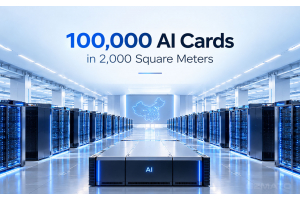
Helios is AMD's first fully integrated rack-scale AI system. It combines AMD Instinct MI455X GPUs, EPYC "Venice" CPUs, Pensando networking, and the ROCm software stack into a single, integrated rack-scale product .
This is a fundamental shift in AMD's strategy. Instead of selling components that customers integrate themselves, AMD is now delivering complete systems — exactly the model that has made Nvidia so successful with its DGX and NVL72 platforms.
Helios will be deployed at scale by Microsoft for internal workloads and to power Azure AI services . Microsoft and AMD have formed a "long-term strategic partnership" to create "a joint computing infrastructure — from silicon to system — and deliver it into the cloud" . In other words, this is not a one-off vendor relationship. It is a deep, multi-year alignment between the two companies to challenge Nvidia's hegemony.
Key details on AMD Helios:
- Deployment schedule: First customer deliveries in the second half of 2026
- Customer list: Microsoft, Meta, OpenAI, and Oracle
- Estimated system cost: $5 million to $5.5 million per rack
- Strategy shift: AMD is moving from component supplier to system integrator
Nvidia Vera Rubin NVL72: The Incumbent Strikes Back
Nvidia is not standing still. The Vera Rubin NVL72 platform has already entered volume production and is being deployed across the industry .
Vera Rubin comprises the Vera CPU (with 88 "Olympus" cores) and the Rubin GPU, built on Nvidia's next-generation architecture . The platform is designed for the "agentic AI" era — not just running inference, but orchestrating complex, multi-step tasks .
CoreWeave, one of the first cloud providers to test the system, reported that Vera Rubin NVL72 delivers a 10x increase in tokens per megawatt compared to the previous Grace Blackwell NVL72 platform . That is a staggering efficiency gain — enough to justify the transition for any large-scale operator.
The system already has a strong customer base: Google Cloud has launched A5X instances based on Vera Rubin, and CoreWeave's infrastructure is already running production workloads.
Key details on Vera Rubin NVL72:
- Status: In volume production, already shipping to customers
- Vera CPU: 88 Olympus cores, purpose-built for agentic AI
- Performance: 10x tokens per megawatt vs. Grace Blackwell
- Customer base: Google Cloud, CoreWeave, Microsoft Azure, Oracle Cloud
- Supply chain: 300+ partners across 30+ countries, 350+ factories worldwide
- Estimated system cost: $3.5 million to $4 million per rack
- Vera Rubin NVL72: 10x token-per-megawatt improvement over Grace Blackwell
- AMD claims: Helios's inference capabilities and memory bandwidth are "better than Nvidia's" — though AMD has not provided public benchmarks
- But: Helios is more expensive ($5M-$5.5M vs $3.5M-$4M) — a significant disadvantage for cost-conscious operators
Head-to-Head: Helios vs Vera Rubin
| Aspect | AMD Helios | Nvidia Vera Rubin NVL72 |
|---|---|---|
| Status | First deliveries in H2 2026 | In volume production, already shipping |
| Key customers | Microsoft, Meta, OpenAI, Oracle | Google Cloud, CoreWeave, Microsoft, Oracle |
| CPU | EPYC "Venice" | Vera (88 Olympus cores) |
| GPU | Instinct MI455X | Rubin (next-gen architecture) |
| Performance claim | Better inference and memory bandwidth | 10x token per megawatt vs Grace Blackwell |
| Estimated cost | $5M – $5.5M per rack | $3.5M – $4M per rack |
| Target market | Cloud providers, AI developers | Cloud providers, AI developers, enterprise |
Market Implications: What This Means for the AI Industry
AMD's current data center GPU market share is around 4.5%, compared to Nvidia's roughly 95% . However, analysts believe AMD is aiming for a 20-25% market share — a massive leap that would translate into tens of billions in revenue .
Helios represents AMD's best chance to make that leap. By moving from "component supplier" to "system provider," AMD can offer a complete, integrated solution that competes directly with Nvidia's rack-scale systems. This is the strategy that Nvidia used to build its dominance; now AMD is employing it against the incumbent.
But the cost difference between Helios and Vera Rubin ($5M+ vs $3.5M-$4M) is significant. AMD is betting that customers will pay a premium for better inference capabilities and memory bandwidth. Nvidia, meanwhile, is betting that its cost advantage and installed base will keep customers locked in.
The broader AI infrastructure battle is also playing out at the national level. South Korea's semiconductor sector — a critical supplier of AI memory chips — has rallied sharply. On July 22, SK Hynix and Samsung Electronics helped drive the KOSPI index up over 6%, triggering sidecar trading halts . The market is signaling that the AI boom is still in its early stages.
China is also making its move. WAIC 2026 wrapped up with 40,000 attendees, 351 global product debuts, and $2.8 billion in intended procurement, signaling that the Asian AI infrastructure market is accelerating rapidly .
Key Takeaways
| # | What You Need to Know About AMD Helios vs Nvidia Vera Rubin |
|---|---|
| 1 | AMD is shifting from components to systems — Helios is AMD's first rack-scale AI system, competing directly with Nvidia's NVL72 platforms |
| 2 | Helios has a blue-chip customer list — Microsoft, Meta, OpenAI, and Oracle are all deploying the system |
| 3 | Nvidia Vera Rubin is already in volume production — with 300+ partners across 30 countries and 10x token-per-megawatt gains |
| 4 | Helios is more expensive — $5M-$5.5M per rack vs $3.5M-$4M for Vera Rubin, a significant disadvantage |
| 5 | AMD targets 20-25% market share — up from 4.5%, which would represent tens of billions in revenue |
| 6 | The AI infrastructure war is heating up — both at the system level and at the national level, with semiconductor stocks surging globally |
- TechCrunch — AMD Helios announcement and customer deployment details, July 2026
- TechCrunch — AMD Helios customer and performance details, July 2026
- Computerbase — Nvidia Vera Rubin NVL72 volume production report, July 2026
- Tom's Hardware — Vera Rubin NVL72 performance and supply chain details, July 2026
- Tom's Hardware — Vera Rubin CPU and GPU architecture details, July 2026
- Korea Economic Daily — SK Hynix and Samsung Electronics stock surge, July 2026
- WAIC 2026 — Conference closing announcements, July 2026

- AMD Helios
- Nvidia Vera Rubin
- AI infrastructure
- AI chips
- Microsoft Azure
- Meta AI
- OpenAI
- Oracle cloud
- rack-scale AI
- AMD Instinct MI455X
- Nvidia Rubin GPU
- Gzmato