Gaming’s Next Wave: AI, Next-Gen Consoles, and Cloud Dominance

The global gaming industry is standing at a critical inflection point, with 2026 shaping up to be a year of massive upheaval. This transition is not just about incremental graphical updates; it's being driven by transformative AI tools, a compressed console hardware cycle, and shifting economic models that are challenging traditional distribution methods.
Here are the three biggest trends that analysts predict will dominate the gaming conversation over the next few years.
1. The Console Cycle Compression: Next-Gen Arrives Early
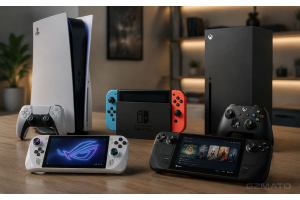
The traditional console generation—typically running seven years—is rumored to be accelerating. Microsoft, in particular, is signaling a move toward a more frequent hardware refresh cycle, potentially positioning the next Xbox console for a late 2026 launch.
| Platform Focus | Expected Timeline | Key Technology Differentiator |
|---|---|---|
| Next-Gen Xbox (Codename TBD) | Q4 2026 | Deep PC alignment, leveraging AMD RDNA 5 architecture for high efficiency. |
| Xbox Handheld SKU | Late 2026 | Dedicated cloud-first, hybrid device to expand the Game Pass ecosystem. |
| PlayStation 6 | Early 2027 Preview | Focus on AI upscaling (PSSR) and dedicated Ray-Tracing cores for 8K targets. |
2. Generative AI: The New Dev Pipeline and LLM-NPCs
Generative AI (GenAI) is moving beyond simple code assistance and into the core creative loop, fundamentally changing how large-scale worlds are built and how players interact with them.
- Procedural Asset Generation: AI tools are automating the creation of vast amounts of environmental assets, textures, and foliage, drastically reducing the time and cost associated with world-building.
- Dynamic, Conversational NPCs: The first wave of major AAA titles is expected to feature **Large Language Model (LLM)-driven NPCs**. These characters will generate real-time, context-aware dialogue, making every player interaction unique and unpredictable.
- Live Content Personalization: AI will be used to dynamically adjust game difficulty, curate in-game promotions, and tailor social hubs based on individual player behavior and engagement metrics.
3. Cloud Dominance and the $100 Retail Barrier
While technology evolves, the economics of developing modern blockbusters are reaching a breaking point, forcing changes in both consumer pricing and distribution.
- Cloud as the Baseline: The ability to stream high-fidelity games to low-cost devices (like smart TVs and mobile phones) is becoming a mandatory expectation for ecosystem health, pushing Cloud Gaming from a niche to the default distribution safety net.
- Subscription Necessity: The speculated $100 price point will make platform subscription services (Game Pass, PlayStation Plus) essential, serving as a critical justification for consumer value against increasing upfront costs.
Final Thought
Conclusion:
The next era of gaming will be defined by speed: faster hardware cycles, quicker content creation thanks to AI, and the rapid shift to cloud-based access. The industry is transforming into an always-on, personalized, and highly competitive service model.
Let's Connect:
What are your thoughts on the $100 game price tag? Would you prefer we dive deeper into the technical specifics of AI-driven NPC models, or perhaps explore the rumored cloud capabilities of the next console generation?
- PS6 rumors
- Next Xbox
- Generative AI Gaming
- Cloud Gaming 2026
- AAA game pricing
- Microsoft Gaming
- Sony
- LLM NPCs