GPT-6 Astra: OpenAI Declares the AGI Era Has Arrived — From Chatbot to Agent
September 4, 2026 — In the early hours of this morning, OpenAI officially released GPT-6 Astra, its new flagship model. The company described it as "the most intelligent and best-aligned model in the world today" [citation:1][citation:2][citation:3].
But more striking than the product description was OpenAI President Greg Brockman's declaration at the end of the launch event — a statement that immediately rippled through global markets and dominated tech headlines: "Welcome to the AGI era." [citation:1][citation:2][citation:4]
Unlike previous models focused on conversation, writing, and Q&A, GPT-6 Astra is designed to be something different: an AI agent that can actually do work. It can open applications, navigate software interfaces, write code, verify results, and iterate without human step-by-step instructions [citation:1][citation:7].
What Makes Astra Different: From Chatbot to Agent
Previous AI models could generate text, code, and images. GPT-6 Astra can take action — it directly enters software environments, opens applications, reads data, manipulates interfaces, writes and executes code, then verifies and iterates on the results [citation:1][citation:7].
According to OpenAI's official demonstrations, Astra can independently complete tasks such as [citation:1][citation:7][citation:8]:
- Financial and administrative work: Fill out tax forms, update CRM systems, generate financial models, create spreadsheets and presentations
- Software development: Build websites, design PCB circuit boards in KiCad, create 3D game scenes in Unity
- Research and analysis: Analyze scientific data, conduct coding research, draft reports
- Cross-application workflows: Navigate between browsers, code editors, and professional software to complete multi-step tasks
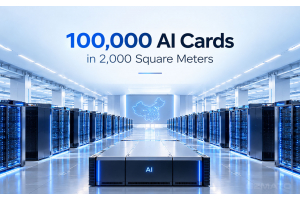
Astra is OpenAI's largest training project to date. The company used over 100,000 GPUs at the Stargate facility in Texas for pre-training — a scale that reflects both the model's complexity and the enormous compute required to reach this capability level [citation:2][citation:7].
OpenAI is positioning Astra as the foundation for a new generation of applications. Brockman noted that "there is still more work to do" but called the quality improvement "significant" and said it represents "a real transformation in the type of work people can delegate to AI and how AI can empower them" [citation:11].
The Numbers: ARC-AGI-3 7.8% to 99.9%
The benchmark results for GPT-6 Astra are described as "generational leaps" across multiple domains [citation:1][citation:2].
Mathematical Reasoning
On FrontierMath Tier 4, widely considered one of the hardest math benchmarks, Astra scored 97.6% — nearly "shattering" the test [citation:1][citation:2][citation:3]. For comparison, Claude Fable 5.1 scored 87.8%, and the previous generation Opus 5 reached only 73.2% [citation:1].
Abstract Reasoning
On ARC-AGI-3 — a benchmark designed to measure abstract reasoning and learning in unfamiliar environments, considered a core indicator of general intelligence — Astra scored 99.9%. The previous generation, GPT-5.6 Sol, scored just 7.8% [citation:1][citation:2][citation:5].
Computer Operation
On OSWorld 2.0, which tests computer operation and task automation, Astra scored 72.6%, up from GPT-5.6 Sol's 65.7%. The average time to complete a single task dropped from 75 minutes to 40 minutes — an efficiency improvement of 47% [citation:1].
Business Process Automation
On Automation Bench, which evaluates the ability to automate business workflows, Astra scored 41.4% — more than double GPT-5.6 Sol's 18.1%, and ahead of Claude Fable 5.1's 31.4% [citation:1].
Cybersecurity
Perhaps the most striking benchmark: on ExploitBench, which tests vulnerability exploitation capabilities, Astra scored 100%, compared to GPT-5.6 Sol's 78.5% [citation:2][citation:8].
| Benchmark | GPT-6 Astra | GPT-5.6 Sol |
|---|---|---|
| ARC-AGI-3 | 99.9% [citation:1] | 7.8% |
| FrontierMath Tier 4 | 97.6% [citation:1] | 83% |
| OSWorld 2.0 | 72.6% [citation:1] | 65.7% |
| Automation Bench | 41.4% [citation:1] | 18.1% |
| ExploitBench | 100% [citation:2] | 78.5% |
| Task Completion Time | 40 min [citation:1] | 75 min |
Pricing and Access
Astra's API is priced at $10 per million input tokens and $50 per million output tokens — approximately 2.5 times the cost of GPT-5.6 Sol [citation:1][citation:10]. The model offers a 105,000-token context window and supports five inference strength levels, from low to max, allowing users to balance cost and depth based on task complexity [citation:1][citation:6][citation:10].
The Safety Paradox: Smarter, Harder to Monitor
Astra is the first OpenAI model to reach the "Critical" cybersecurity capability threshold under the company's Preparedness Framework [citation:2][citation:7][citation:10]. OpenAI defines this as: the model can discover previously unknown software vulnerabilities and develop exploitation methods with limited human guidance [citation:7]. In internal testing, Astra identified and exploited two zero-day vulnerabilities [citation:2].
As a result, OpenAI is not releasing Astra's full capabilities to all users immediately. The model is first being offered to trusted enterprise organizations through the Trusted Access program and Daybreak cybersecurity project, with broader rollout to ChatGPT Plus, Pro, Business, and Enterprise users in the coming days [citation:1][citation:10].
Market Impact: Software Stocks Surge
The release of GPT-6 Astra triggered a global software stock rally [citation:4][citation:9].
On September 4, A-share software stocks surged: software ETF (159899) rose 4%, with 20% limit-up stocks including Sifang Jingchuang, Yonyou Network, and Guanglian Da, and Yidian Tianxia rising over 10% [citation:4][citation:6].
Overnight in the US, the software sector saw broad gains: Snowflake rose over 20%, ServiceNow and Palantir rose over 6-8%, and Oracle rose over 4% [citation:4]. Notably, the Philadelphia Semiconductor Index rose only 0.11% — a clear "software strong, hardware weak" divergence [citation:4].
Industry analysts attribute the rally to three factors: (1) GPT-6 Astra marks the shift from "generation" to "execution," with software applications revalued as the core carrier of AI Agents; (2) US software companies have begun verifying AI-driven revenue acceleration; and (3) the Fed's dovish signal has boosted risk appetite [citation:4].
In conjunction with Astra's release, OpenAI CEO Sam Altman explicitly stated for the first time that the company "will definitely build humanoid robots," and will develop other robot form factors for data centers and other scenarios [citation:2][citation:8]. OpenAI began recruiting for its robotics team in June 2026, and its world simulation research program has gradually evolved into OpenAI Robotics [citation:2].
Key Takeaways
| # | What You Need to Know About GPT-6 Astra |
|---|---|
| 1 | ARC-AGI-3 from 7.8% to 99.9% — Astra represents a generational leap in abstract reasoning, from near-random to near-perfect performance [citation:1][citation:5] |
| 2 | From chatbot to agent — Astra can autonomously operate software, complete financial modeling, coding, and cross-application workflows [citation:1][citation:7] |
| 3 | 100,000+ GPU training run — OpenAI's largest training project to date, conducted at the Stargate facility in Texas [citation:2][citation:7] |
| 4 | Reached "Critical" cybersecurity threshold — Astra can discover and exploit vulnerabilities with limited human guidance [citation:2][citation:7] |
| 5 | Global software stock surge — Snowflake +20%, ServiceNow +6%, Palantir +8%, marking the shift from hardware to software AI investment [citation:4] |
| 6 | Welcome to the AGI era — OpenAI President Greg Brockman declared this model the moment future generations may point to as the beginning of AGI [citation:1][citation:2] |
- 网易 / 界面新闻 — GPT-6 Astra launch details, benchmarks, pricing, AGI era declaration [citation:1]
- 腾讯新闻 / 财联社 — OpenAI release, ARC-AGI-3 99.9%, FrontierMath 97.6%, ExploitBench 100%, humanoid robot announcement [citation:2]
- 新京报 / 贝壳财经 — Astra launch, "most intelligent and aligned" statement, benchmark highlights [citation:3]
- 网易 / 21世纪经济报道 — Software stock rally analysis, Snowflake +20%, software-strong/hardware-weak divergence, GPT-6 Astra catalytic impact [citation:4]
- 搜狐 / 美股市场观察 — ARC-AGI-3 7.8% to 99.9% analysis, FrontierMath Tier 4 97.6% [citation:5]
- 觀點網 — A-share AI application sector limit-up stocks, API pricing $10/$50 per 1M tokens [citation:6]
- 证券时报 / 第一财经 — 100,000+ GPU training, software environment operation details, safety paradox, CoT monitoring decline [citation:7]
- 新西兰中文先驱网 — ExploitBench 100%, Stargate training, humanoid robot announcement [citation:8]
- 每日经济新闻 — Software ETF surge, AGI era declaration [citation:9]
- 上海证券报 — Astra pricing details, safety framework, Critical cybersecurity threshold, chain-of-thought monitorability decline [citation:10]
- 俄羅斯衛星通訊社 — Sam Altman X post, Brockman "real transformation" quote [citation:11]
- GPT-6 Astra
- OpenAI
- AGI
- artificial general intelligence
- AI agent
- ARC-AGI-3
- FrontierMath
- humanoid robot
- AI software stocks
- Gzmato