Huawei's September: Ascend 950 Commercial Deployment and the Mate 90's Logic-Folding Chip
September 17, 2026 — Huawei is having a September that few companies could sustain. On the same day that its rotating chairman took the stage at Huawei Connect 2026 in Shanghai to announce that Ascend 950 supernodes have entered mass commercial deployment, the company is also preparing to launch its next flagship smartphone — the Mate 90 series — just six days later in Shenzhen [citation:1][citation:3].
These are not two separate stories. They are two ends of the same strategy: when access to the most advanced manufacturing processes is constrained, compete on architecture instead [citation:14].
The Cloud Front: Ascend 950 Enters Mass Commercial Use
The headline from Huawei Connect 2026 was not a new chip announcement. It was a deployment milestone: Ascend supernodes have been deployed in over 1,000 systems, serving more than 370 customers [citation:1][citation:19].
This matters because it moves the conversation from "can Huawei build AI infrastructure?" to "is anyone actually using it?" The answer, according to Huawei's rotating chairman Wang Tao, is yes — at scale [citation:1][citation:10].
Wang outlined seven strategic priorities during his keynote, but the core message was direct: "Huawei's AI strategy centers on computing power, and we will monetize through hardware" [citation:1].
| Strategic Priority | What It Means |
|---|---|
| Computing power as the core | Hardware monetization is the business model — not software licensing or cloud services alone |
| Supernodes + clusters | Build a "solid computing foundation for China" using system-level architecture instead of single-chip performance |
| Open-source ecosystem | Support native training of mainstream large models, embrace the "hundreds of models" landscape |
| Pangu for Huawei products | Pangu large model focuses on making Huawei's own products more competitive |
| Flexible compute options | Offer both online and offline compute solutions to accelerate industry adoption |
| Diverse compute | AI into devices, into vehicles — "intelligence everywhere" |
| New-generation networks | Build communication networks around "using compute," delivering intelligence to everyone |
Ascend 960 Arrives Early: A Three-Quarter Acceleration
The more consequential announcement was about what comes next. Ascend 960, originally planned for Q4 2027, is now scheduled for Q1 2027 — a full three quarters ahead of schedule [citation:1].
Wang described the chip as "doubling performance" with development "exceeding expectations" [citation:1]. The company also revealed that Atlas 960 will be the industry's first supernode to use near-packaged optics (NPO) — a technology that moves optical interconnects closer to the processor, reducing power consumption and increasing bandwidth [citation:19].
| Milestone | Original Plan | Updated Plan |
|---|---|---|
| Ascend 960DT | Q4 2027 | Q1 2027 (3 quarters early) |
| Ascend 960PR | Q4 2027 | Q3 2027 (1 quarter early) |
| Atlas 960 (liquid-cooled) | — | Q3 2027 |
| Atlas 960 (air-cooled) | — | Q2 2027 |
| Ascend 970 | — | 2028 |
| Ascend 980 | — | 2029 |
The acceleration signals something important: Huawei's chip iteration cadence is speeding up, not slowing down. Wang said the company will "maintain a one-generation-per-year rhythm, relying on Tao's Law to continue doubling computing scale" [citation:1].
The Device Front: Mate 90 and the "Tao's Law" Chip
Six days after Huawei Connect closes, the company will hold its Mate 90 series launch event in Shenzhen on September 23 [citation:3][citation:20]. The timing is not coincidental — Huawei is signaling that its cloud and device strategies are built on the same foundation.
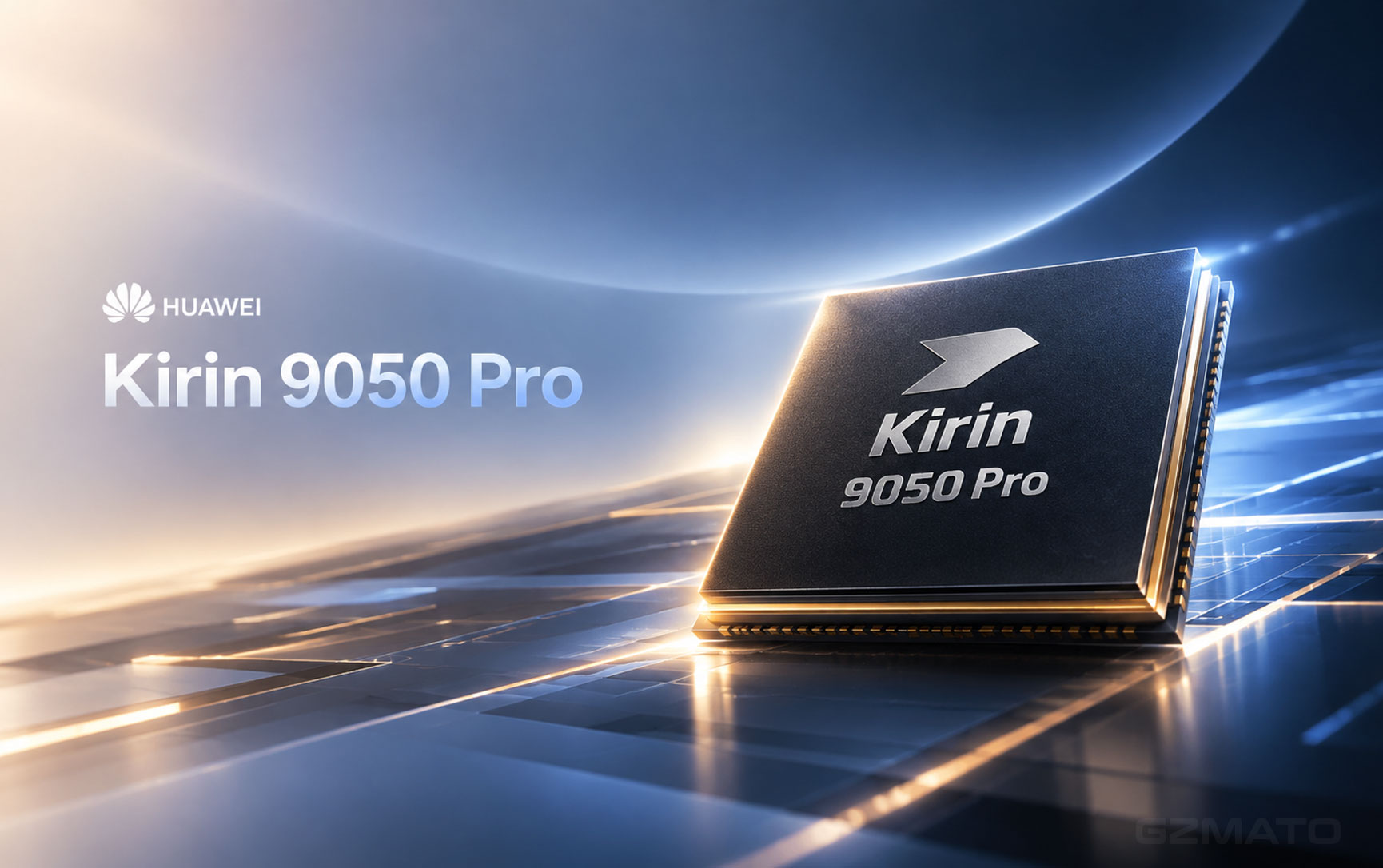
The centerpiece of the Mate 90 series is expected to be the Kirin 9050 Pro, the first commercial chip to implement Huawei's "Tao's Law" (韬定律) logic-folding architecture [citation:12][citation:14].
Traditional chip design pursues "geometric scaling" — shrinking transistors to fit more of them on a chip. Logic folding takes a different approach: it stacks logic units vertically within the same chip, adding vertical interconnect channels that shorten signal paths and reduce latency [citation:4][citation:14].
Huawei's semiconductor chief He Tingbo first proposed the concept at the 2026 International Symposium on Circuits and Systems. She described it as using time-based scaling to replace geometric scaling — "compressing signal propagation delay" instead of shrinking transistor dimensions [citation:11].
The reported result: 53.5% increase in transistor density (to 238 MTr/mm²), 41% improvement in prime core energy efficiency, and 12.7% increase in peak frequency [citation:11][citation:20].
According to leaks, the Kirin 9050 Pro will use a 9-core CPU configuration: 1 prime core, 2 performance cores, 4 efficiency cores, and 2 little cores [citation:4]. The GPU is a new Mali design with hardware ray tracing support, claiming 142% improvement in rendering performance over the previous generation [citation:4].
The display is another headline feature. The Mate 90 Pro and Pro Max are expected to use dual-layer OLED panels with peak brightness reaching 10,000 nits — roughly double the brightest flagship phones currently on the market [citation:5][citation:12]. The stacked structure distributes electrical load across two light-emitting layers, reducing thermal stress and extending panel lifespan [citation:6].
The Common Thread: Architecture Over Lithography
Place the Huawei Connect announcements next to the Mate 90 leaks, and a clear pattern emerges. Both the cloud and device strategies are built on the same premise: when you cannot access the most advanced manufacturing processes, redesign the architecture [citation:14].
| Layer | Constraint | Architectural Response |
|---|---|---|
| Cloud (Ascend) | Limited access to leading-edge foundry nodes | Supernode + cluster design, self-developed HBM, near-packaged optics (NPO) |
| Device (Kirin) | Same constraint, tighter power envelope | Logic folding for density, dual-layer OLED for brightness, 9-core hybrid CPU |
The strategy is not without trade-offs. Logic folding increases density and reduces latency, but it also concentrates heat — a challenge that the Mate 90 Pro Max's 6,800mAh battery and vapor chamber cooling will need to address [citation:5]. Supernodes deliver cluster-level performance, but they consume more power and require more physical space than single-chip solutions [citation:19].
But the alternative — waiting for access to advanced lithography that may never come — is not a strategy. Huawei's approach is to build around the constraint, and September 2026 is the month that approach reaches commercial scale on both fronts.
Shop at Gzmato
Huawei | iPhone 18 Pro | Xiaomi 18 Fold | Accessories & Components
Special Offer: Use code TECH2026 for a discount on your first order!
Shop Phones at GzmatoOur team can help you compare Huawei, Apple, and Xiaomi options based on your budget and use case. Chat with us or open a request.
Key Takeaways
| # | What You Need to Know About Huawei's September 2026 Push |
|---|---|
| 1 | Ascend 950 supernodes enter mass commercial use — over 1,000 deployed across 370+ customers [citation:1][citation:19] |
| 2 | Ascend 960 arrives three quarters early — Q1 2027 instead of Q4 2027, with doubled performance and industry-first NPO supernodes [citation:1] |
| 3 | Mate 90 series launches September 23 — expected to debut the Kirin 9050 Pro, the first chip built on Huawei's logic-folding architecture [citation:3][citation:20] |
| 4 | Logic folding delivers 53.5% higher transistor density — Huawei's answer to the lithography constraint [citation:11] |
| 5 | Dual-layer OLED targets 10,000 nits — potentially the brightest smartphone display ever, with improved panel lifespan [citation:5][citation:12] |
| 6 | The common strategy: architecture over lithography — both cloud and device lines are built on the same design philosophy [citation:14] |
- 星岛环球网 / 财联社 — Wang Tao keynote, Ascend 960 timeline, supernode deployment figures [citation:1][citation:19]
- 钛媒体 — Ascend 950 mass commercial use confirmation [citation:10]
- Huawei Official — Huawei Connect 2026 event details [citation:2]
- IT之家 — Mate 90 launch date, Tao's Law chip details [citation:20]
- 泡泡網 — Kirin 9050 Pro specs, dual-layer OLED [citation:12]
- 中华液晶网 / CHINAZ — Dual-layer OLED 10,000 nits, battery capacity [citation:5][citation:13]
- 36Kr — Tao's Law explanation, logic folding transistor density [citation:14]
- Sohu — Kirin 9050 Pro architecture details [citation:4]
- Vietnam.vn — Hardware tiering strategy, battery specs [citation:6]
- Huawei Connect 2026
- Ascend 950
- Ascend 960
- Mate 90
- Kirin 9050 Pro
- Tao's Law
- logic folding
- supernode
- NPO
- dual-layer OLED
- 10000 nits
- Gzmato