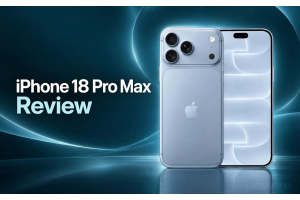
iPhone 18 Pro Review After Two Days: Thermals and Battery Are the Real Upgrade
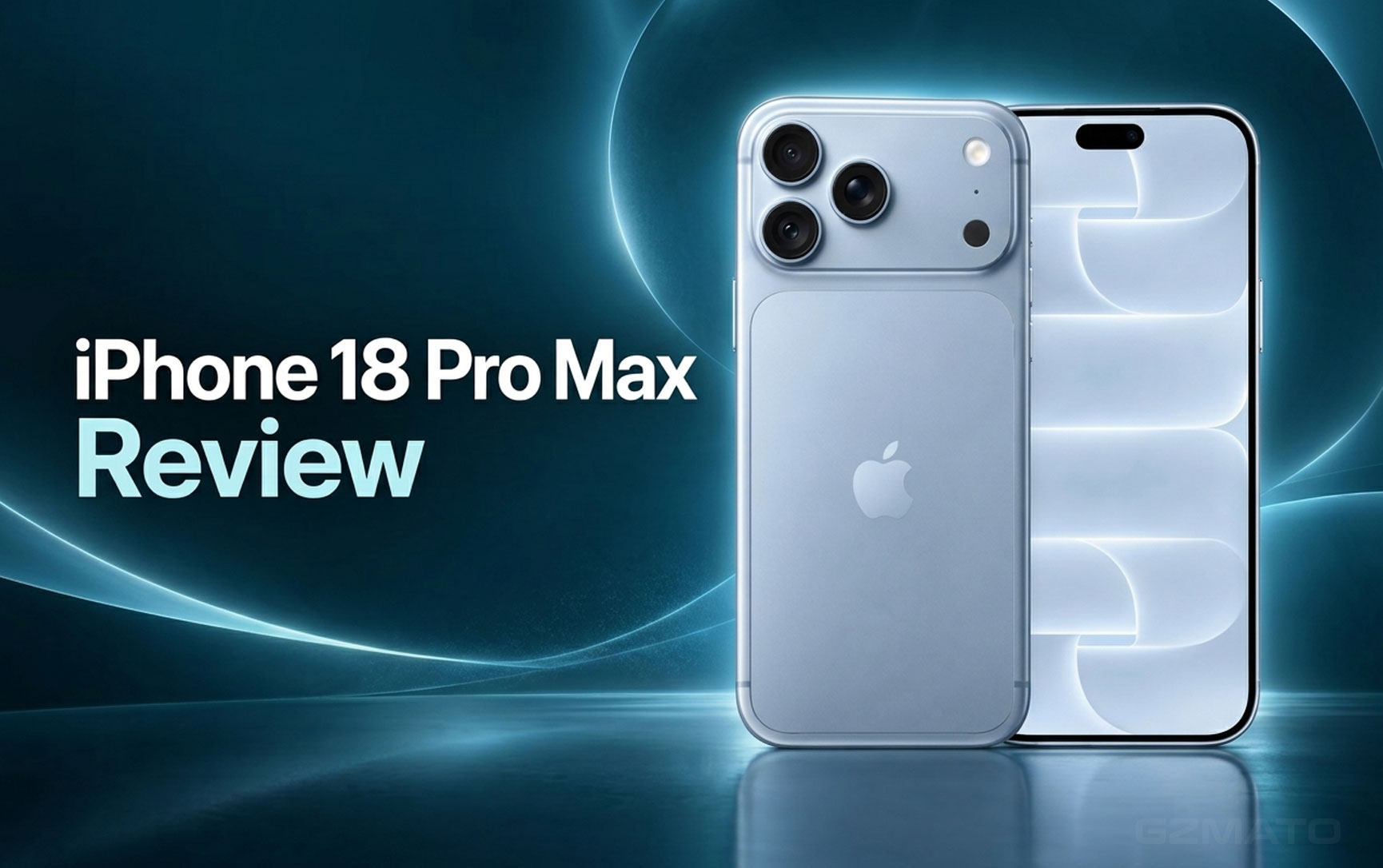
September 19, 2026 — Two days after the iPhone 18 Pro went on sale in China, the first wave of professional reviews is in. The verdict from major outlets like WIRED, CNET, TechRadar, and Tom's Guide is clear: this is not a redesign, but it is a meaningful refinement — with two upgrades that matter more than any spec sheet suggests.
The short version: thermals and battery life are the real story, not the 2nm chip or the variable aperture camera. Here's what the data actually shows.
Thermals: The Most Underrated Upgrade
The consensus across reviewers is unusually strong: thermal management is the defining improvement of this generation.
TechRadar's review states it plainly: "Thermals are the real story of this generation." The iPhone 18 Pro uses a redesigned vapor chamber with three times the surface area of the iPhone 17 Pro, plus a new "Nanotwin" copper material with better heat conductivity. The memory has also been repositioned from a stacked layout to a side-mounted one, reducing heat concentration.
The real-world results are measurable:
| Test | iPhone 18 Pro | Comparison |
|---|---|---|
| WIRED: Control 1 hour | Warm but no hot spots | 17 Pro reportedly hotter in same test |
| 凰家评测: Genshin Impact 30 min (front) | 35.3°C | 17 Pro: 45.5°C — nearly 10°C cooler |
| Tom's Guide: 3DMark stress test | Higher sustained performance | Pro Max 25% better stability than 17 Pro Max |
The practical effect: games maintain higher frame rates for longer, video exports don't throttle as aggressively, and the phone stays comfortable during extended use. This is the kind of improvement you feel every day, even if it doesn't show up in a benchmark chart.
The A20 Pro's peak benchmark scores are impressive, but peak performance only lasts for seconds. What matters in real use is sustained performance — how long the chip can maintain high speeds before throttling. The thermal redesign directly addresses this, and reviewers agree it's the most consequential change in the iPhone 18 Pro.
Battery & Charging: The Biggest Leap in Years
Battery life was already a strength of the Pro Max line. The iPhone 18 Pro Max extends that lead further.
Tom's Guide's standardized battery test measured the Pro Max at 18 hours 27 minutes — the longest runtime ever recorded in an iPhone under their testing protocol, and roughly 33 minutes longer than the iPhone 17 Pro Max.
Chinese review outlet 凰家评测 ran a continuous mixed-use test (gaming, video, browsing) and recorded:
| Device | Runtime | Change vs. 17 Pro |
|---|---|---|
| iPhone 18 Pro | 6 hours 38 minutes | +近2小时 |
| iPhone 18 Pro Max | 7 hours 57 minutes | +约1.5小时 |
Charging is the other surprise. The iPhone 18 Pro reached 50% in about 15 minutes and 57% in 18 minutes in 爱范儿's testing, with peak power around 51.5W. Full charge took roughly 1 hour 7 minutes. Critically, the phone stayed cool throughout — a marked contrast to previous generations that throttled charging when warm.
This is the fastest charging the Pro Max line has ever offered, and it happens without the heat penalty that used to accompany it.
Variable Aperture: A Tool for Photographers, Not Everyone
The variable aperture main camera is the headline feature Apple chose to lead with. Reviewers agree it's genuinely useful — for a specific kind of user.
CNET's review headline was direct: "Apple's Best Camera Isn't for Everyone." The f/1.48 to f/4.0 mechanical aperture does two things well:
- Wide open (f/1.48): Noticeably better low-light performance, with shallower depth of field
- Stopped down (f/4.0): Sharper edge-to-edge detail, and true starburst effects from bright light sources
For photographers who understand aperture, this is a meaningful creative tool. For everyone else, Mashable's assessment is blunt: "Most users will try manual aperture once, then switch back to auto."
1. Lens flare still exists. The blue sapphire glass cover that Apple uses for camera protection continues to produce the characteristic "ghost" flare that iPhone users have complained about for years. 爱范儿 confirmed it's still present on the 18 Pro.
2. New irregular glare at small apertures. Because the variable aperture uses physical blades, stopping down to f/4.0 can produce an unusual trapezoidal glare pattern at certain angles. This is a new artifact introduced by the mechanical aperture design.
A20 Pro & C2 Modem: Power Meets Trade-Offs
A20 Pro: 2nm, But Modest Gains
The A20 Pro is Apple's first 2nm chip. Geekbench 6 scores from multiple review units averaged ~4,720 single-core and ~12,760 multi-core — roughly 17-21% higher than the A19 Pro in the iPhone 17 Pro.
That's a solid generational gain, but not a transformative one. For everyday tasks — messaging, browsing, photos, social media — the difference is imperceptible. The gains show up in sustained gaming, video editing, and on-device AI workloads.
C2 Modem: Strong in Weak Signal, Weaker in Strong Signal
The C2 is Apple's own cellular modem, replacing Qualcomm. Chinese reviewer 何同学 ran a detailed signal comparison, and the results are nuanced:
| Scenario | iPhone 18 Pro (C2) | iPhone 17 Pro (Qualcomm) |
|---|---|---|
| Strong 5G signal | ~20 Mbps slower download | Faster download speeds |
| Weak signal (e.g., underground garage) | Faster upload and download, ~1.2ms lower latency | Slower in weak conditions |
| Network reacquisition | Slower to reconnect | Faster to reconnect |
In other words: the C2 is designed to perform better in marginal conditions, which is where signal problems actually affect users. But it gives up some peak throughput and reconnection speed. For most users, this trade-off will be acceptable — but it's a real difference worth knowing.
Should You Upgrade?
Reviewers are broadly aligned on who should buy and who should wait.
| Your Current Phone | Recommendation |
|---|---|
| iPhone 14 Pro or older | Worth upgrading. The thermal, battery, and camera improvements represent a genuine generational leap. |
| iPhone 15 Pro | Replace the battery first. Hardware differences alone don't justify the cost. |
| iPhone 16 Pro / 17 Pro | Skip this generation. Wait for the next major redesign, or consider the iPhone Duo if you want a different form factor. |
| Choosing between Pro and Pro Max | ZDNET recommends the smaller Pro for the first time. The camera systems are identical, the Pro is lighter and more comfortable, and the battery is already strong enough for a full day. |
For years, the Pro Max was the default recommendation for anyone who cared about battery life or camera performance. This generation, the calculus has shifted. The Pro and Pro Max have identical camera systems, and the Pro's battery improvements have closed much of the gap. ZDNET's reviewer explicitly recommends the smaller Pro for the first time, citing comfort and the fact that the Pro Max now weighs 249g — heavy enough to notice in daily use.
Shop iPhones at Gzmato
iPhone 18 Pro | iPhone 18 Pro Max | Brightstar iPhone 17 | Accessories
Special Offer: Use code TECH2026 for a discount on your first order!
Shop Phones at GzmatoOur team can help you compare the iPhone 18 Pro, Pro Max, and other options based on your needs and budget. Chat with us or open a request.
Key Takeaways
| # | What You Need to Know About the iPhone 18 Pro |
|---|---|
| 1 | Thermals are the real upgrade — up to 10°C cooler than the 17 Pro in heavy gaming, with a vapor chamber 3x larger |
| 2 | Battery life is the best ever in an iPhone — Pro Max measured at 18h 27m in Tom's Guide testing |
| 3 | Charging is finally fast — 50% in 15 minutes, full charge in about 1 hour, with no heat penalty |
| 4 | Variable aperture is for photographers — genuinely useful for creative control, but most users won't notice |
| 5 | Lens flare and new glare artifacts persist — sapphire glass ghosting remains, and small apertures introduce irregular glare |
| 6 | C2 modem favors weak signal — better in marginal conditions, slightly slower in strong-signal downloads |
| 7 | 14 Pro users should upgrade; 16/17 Pro users should wait — ZDNET recommends the smaller Pro for the first time |
- WIRED — Thermal performance, Control gaming test
- CNET — Camera review, variable aperture real-world assessment
- TechRadar — Thermal redesign analysis, Nanotwin copper, vapor chamber details
- Tom's Guide — Standardized battery test, 3DMark stress test, charging measurements
- ZDNET — Pro vs. Pro Max recommendation, weight and comfort analysis
- MacRumors — Geekbench scores aggregation, review roundup
- Mashable — Variable aperture usability assessment
- 凰家评测 — Genshin Impact thermal test, continuous battery runtime, aperture mechanical analysis
- 爱范儿 — Charging curve measurements, lens flare and glare testing
- 何同学 — C2 modem signal comparison, weak vs. strong signal performance


- iPhone 18 Pro review
- iPhone 18 Pro thermals
- iPhone 18 Pro battery life
- iPhone 18 Pro variable aperture
- A20 Pro review
- C2 modem review
- iPhone 18 Pro vs 17 Pro
- Gzmato