1983 Lisa $9,995 → 1984 Macintosh $2,495: How Steve Jobs Slashed Prices in One Year
- 1983 Lisa $9,995 → 1984 Macintosh $2,495: How Steve Jobs Did It in One Year
- Steve Jobs’ 1983 Vision: Revolutionary Tech Predictions
- Apple Lisa: The $10,000 Pioneer (1983)
- Macintosh 128K: The $2,495 Revolution (1984)
- Why the Massive Price Drop in Just One Year?
- Lisa vs Macintosh: Side-by-Side Specs
- Legacy & Lessons for Today
- Shop Current Macs at Gzmato
January 27, 2026 – In January 1983, Steve Jobs unveiled the Apple Lisa at $9,995, introducing revolutionary features that shaped modern computing. One year later, in January 1984, he launched the Macintosh at $2,495 – a 75% price drop. How did he do it? This article explores the vision, the Lisa’s failure, the Macintosh’s success, and the strategy behind the dramatic cut.
1983 Lisa $9,995 → 1984 Macintosh $2,495: How Steve Jobs Did It in One Year
Steve Jobs’ 1983 Lisa keynote predicted a future of personal computing that is now reality. Yet Lisa failed commercially. One year later, the Macintosh succeeded at a fraction of the price. Here’s the story of vision, trade-offs, scale, and marketing genius.
Steve Jobs’ 1983 Vision: Revolutionary Tech Predictions
In his January 24, 1983 Lisa launch and other 1983 speeches, Jobs outlined a future that sounded like science fiction. Most predictions have come true:
- Graphical User Interface (GUI) + mouse + desktop metaphor: Now standard in macOS, Windows, iOS, Android.
- WYSIWYG editing: Word, Pages, Google Docs made it universal.
- Integrated office suite + file sharing: Office 365, Google Workspace, iCloud realized it.
- Voice synthesis: Siri, Alexa, ChatGPT voice mode evolved from Lisa’s demo.
- Mouse + bitmap graphics: Touchscreens and high-res displays are now everywhere.
- “Computer as bicycle for the mind”: Smartphones, AI, cloud amplify human capability.
Apple Lisa: The $10,000 Pioneer (1983)
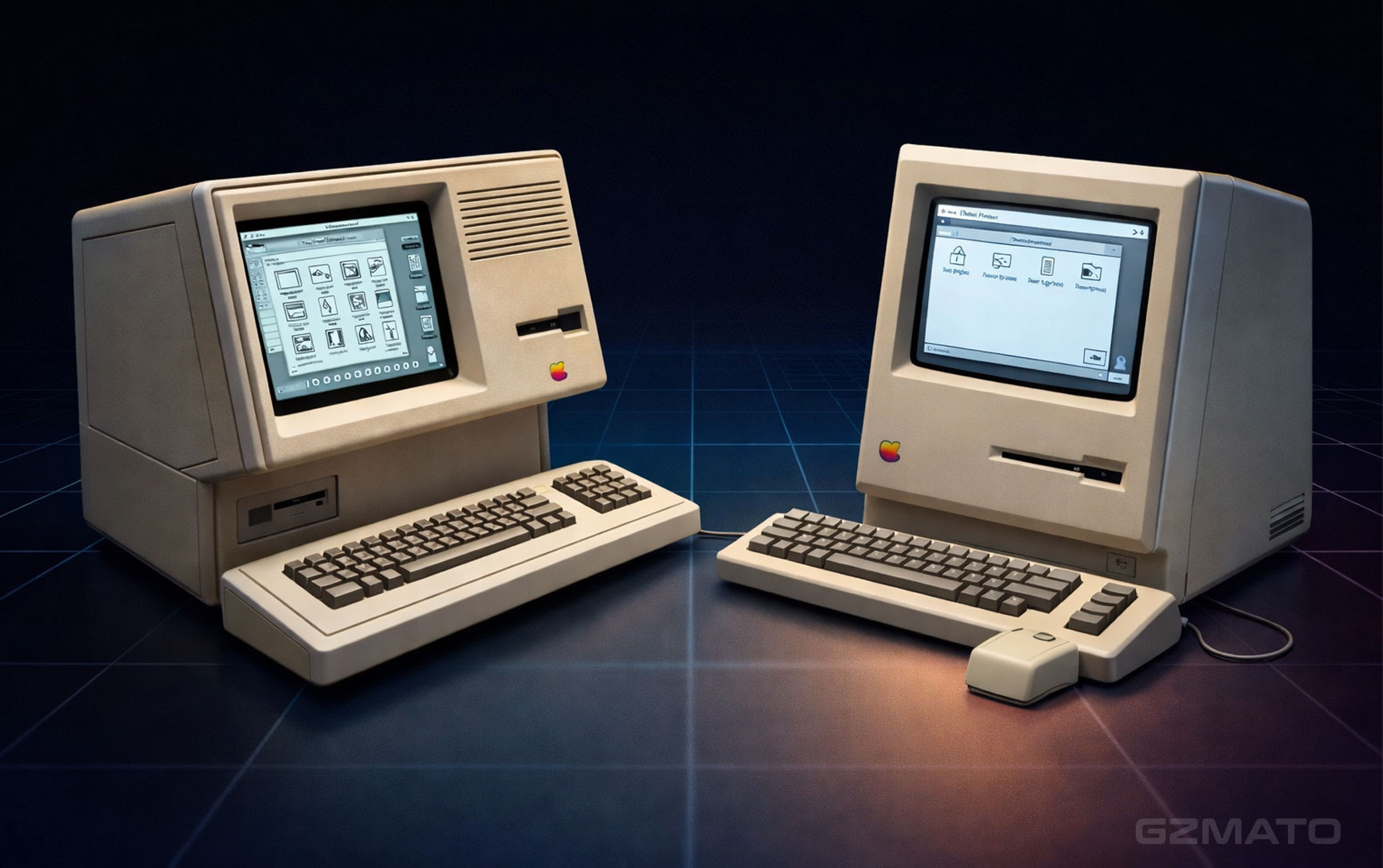
Launched January 19, 1983 at $9,995 (~$30,000 today), Lisa was the first commercial GUI computer with icons, windows, menus, mouse, and desktop metaphor. It had:
- Motorola 68000 @ 5 MHz
- 1 MB RAM
- 5/10 MB hard drive + dual floppy
- Built-in 12" 720×360 CRT
Market feedback: Revolutionary interface, but too expensive, slow, limited software. Total sales: ~60,000–100,000 units. Commercial failure.
Macintosh 128K: The $2,495 Revolution (1984)
Launched January 24, 1984 at $2,495, Macintosh inherited Lisa’s GUI but made it affordable. Key specs:
- Motorola 68000 @ 8 MHz
- 128 KB RAM
- Single 400 KB 3.5" floppy (no hard drive)
- External 9" 512×342 CRT
First-year sales: 250,000+ units. It saved Apple and defined personal computing.
Why the Massive Price Drop in Just One Year?
Jobs achieved the 75% cut through ruthless strategy:
- Market shift: From expensive workstation to mass-market personal computer.
- Hardware cuts: No hard drive, 128 KB RAM, external display, plastic shell.
- Mass production: Lisa
- Marketing: “1984” ad + $2,495 sweet-spot pricing.
Lisa vs Macintosh: Key Specs Side-by-Side
| Feature | Apple Lisa (1983) | Macintosh 128K (1984) |
|---|---|---|
| Price | $9,995 | $2,495 |
| CPU | Motorola 68000 @ 5 MHz | Motorola 68000 @ 8 MHz |
| RAM | 1 MB | 128 KB |
| Storage | 5/10 MB hard drive + dual floppy | Single 400 KB floppy |
| Display | Built-in 12" 720×360 | External 9" 512×342 |
| Sales | ~60,000–100,000 total | 250,000+ year one |
Legacy & Lessons for Today
Lisa invented the future but failed commercially. Macintosh made that future affordable, saving Apple and shaping modern computing. Today’s MacBook Air and Pro continue that legacy – powerful, accessible, and visionary.
Shop Current Macs at Gzmato
Fast shipping, 1-year warranty, official stock – experience the legacy today
New Year Offer: Use code GZMMAC26 for 10% off!
Shop Macs Now →Data Sources & Methodology (as of Jan 27, 2026):
- Apple official Lisa & Macintosh historical documentation
- Walter Isaacson’s Steve Jobs biography
- Contemporary reports from Byte, InfoWorld, Macworld
- Gzmato current Mac pricing & inventory data
- apple lisa vs macintosh
- steve jobs 1984 macintosh price
- apple lisa failure
- macintosh success
- apple gui history 1983 1984