MacBook Ultra: Apple's First Touchscreen Mac, OLED Display, and Dynamic Island
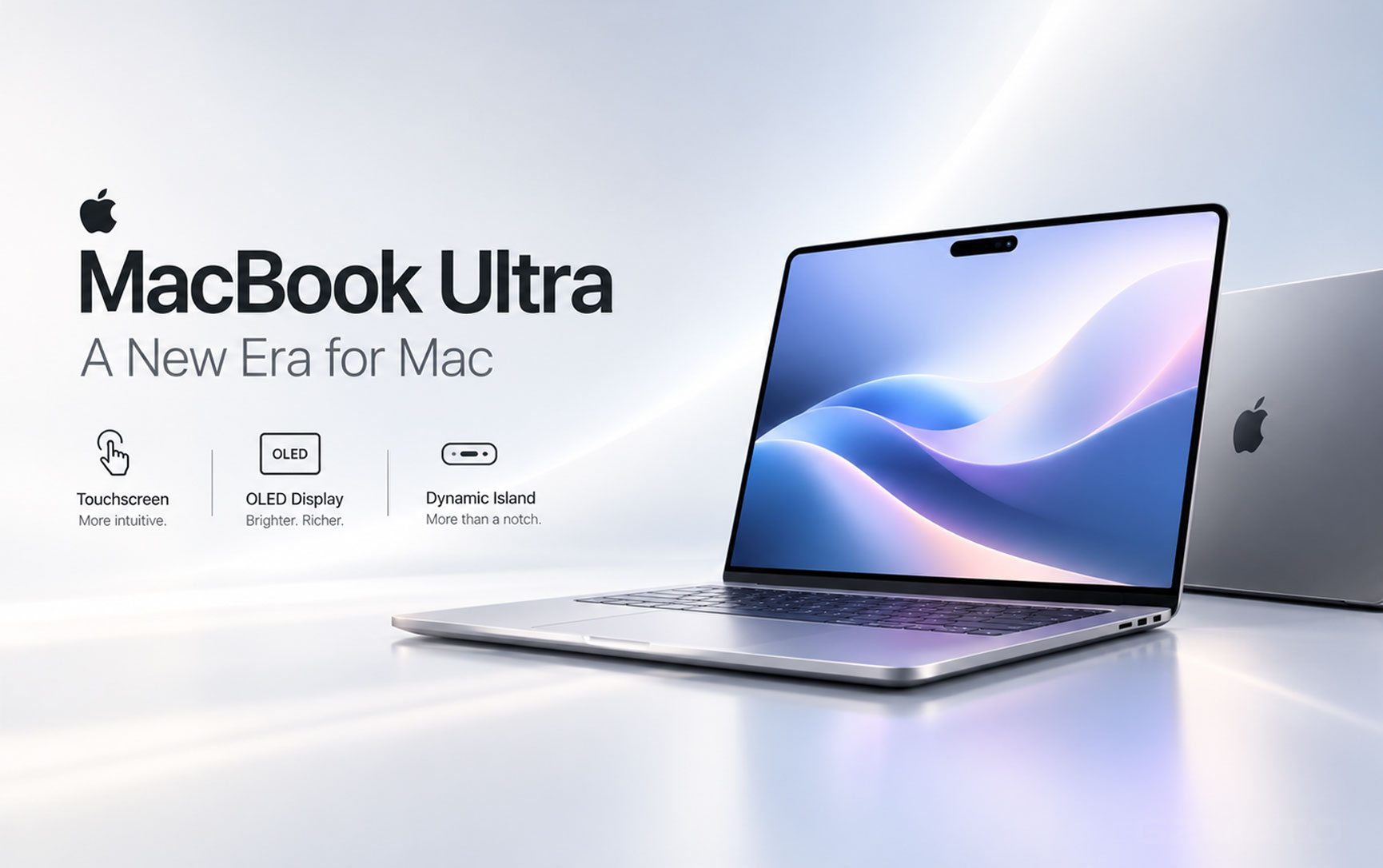
- MacBook Ultra: Apple's Touchscreen Moment, With a Caveat
- Touchscreen: Compromise or Evolution?
- OLED: More Than Just Deeper Blacks
- Dynamic Island on Mac: The Notch Finally Goes
- The Chip Surprise: Why M5 Pro, Not M6?
- The Wild Card: Memory Crisis Could Delay It
- MacBook Ultra vs. MacBook Pro: Which One?
- Shop Macs at Gzmato
- Key Takeaways
September 26, 2026 — For years, Apple has insisted that the Mac doesn't need a touchscreen. The company's official position, repeated by executives for over a decade, was that reaching up to touch a vertical display causes arm fatigue, and that the trackpad and keyboard are superior input methods.
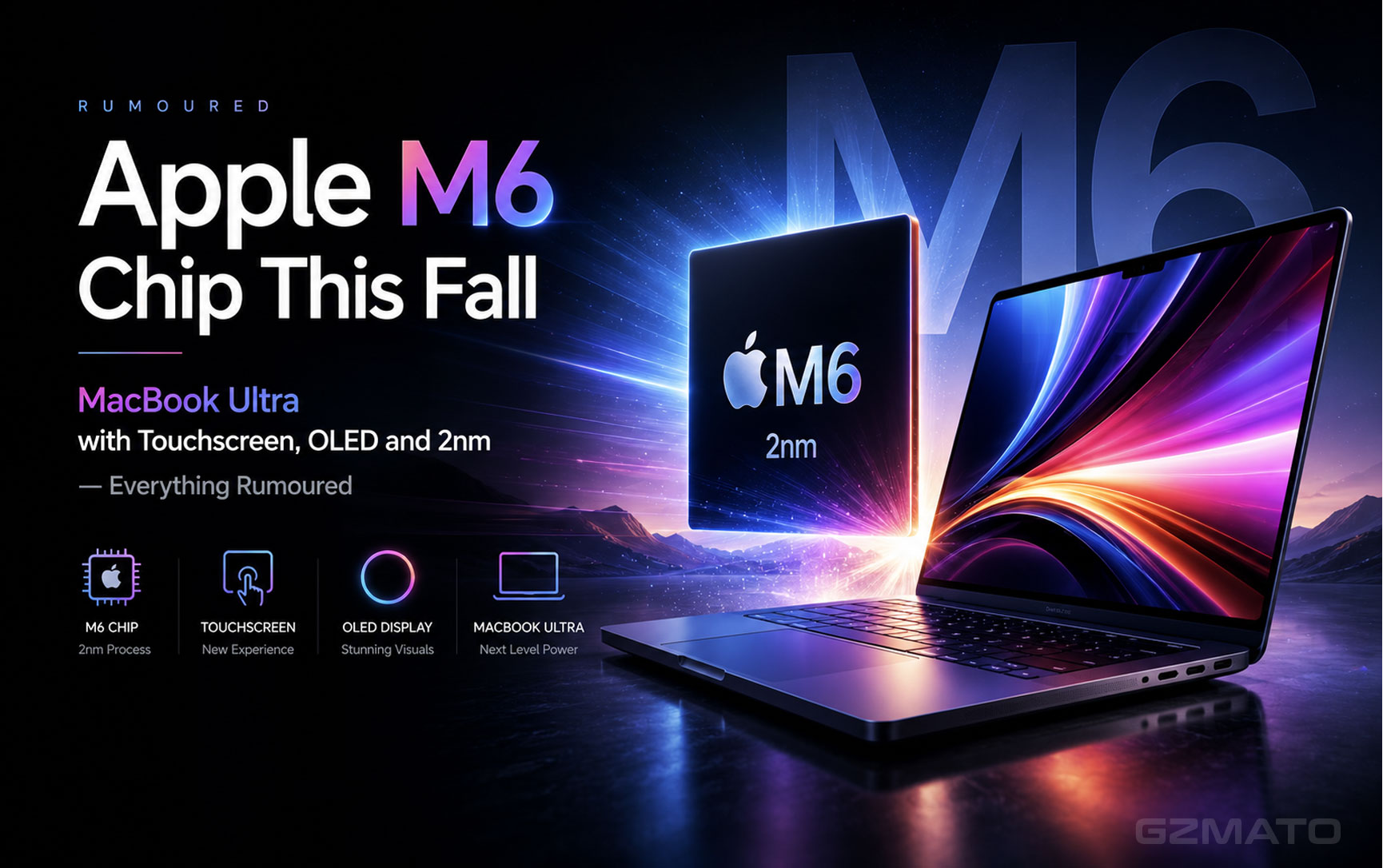
That position is about to change. According to multiple reports from Bloomberg's Mark Gurman and corroborated by MacRumors and 9to5Mac, Apple is preparing a high-end MacBook that will be the first to support direct touch input on its display [citation:1][citation:4]. The device may be called MacBook Ultra, and it could arrive as early as this October — though a global memory shortage is threatening that timeline [citation:3][citation:17].
MacBook Ultra: Apple's Touchscreen Moment, With a Caveat
The device has been internally codenamed K114 and K116, and Apple is reportedly testing it with macOS 27.1 — the version of macOS scheduled for release in late October [citation:3]. That timing aligns with Apple's pattern of launching new Macs in October.
But the memory crisis that has already affected iPhone pricing and Mac mini availability could push the launch into early 2027 [citation:17]. As Gurman's reporting notes, if Apple can't secure the components it needs for a major new MacBook, the schedule will slip.
Touchscreen: Compromise or Evolution?
Apple's resistance to touchscreen Macs has been one of its most consistent positions. Steve Jobs famously dismissed the idea in 2010, and the company has repeated the "arm fatigue" argument for years.
The MacBook Ultra's approach appears to be different from a typical touchscreen PC. Gurman describes the philosophy as "touch-friendly, not touch-first" [citation:4]. The trackpad and keyboard remain the primary input methods; touch is an additional option, not a replacement.
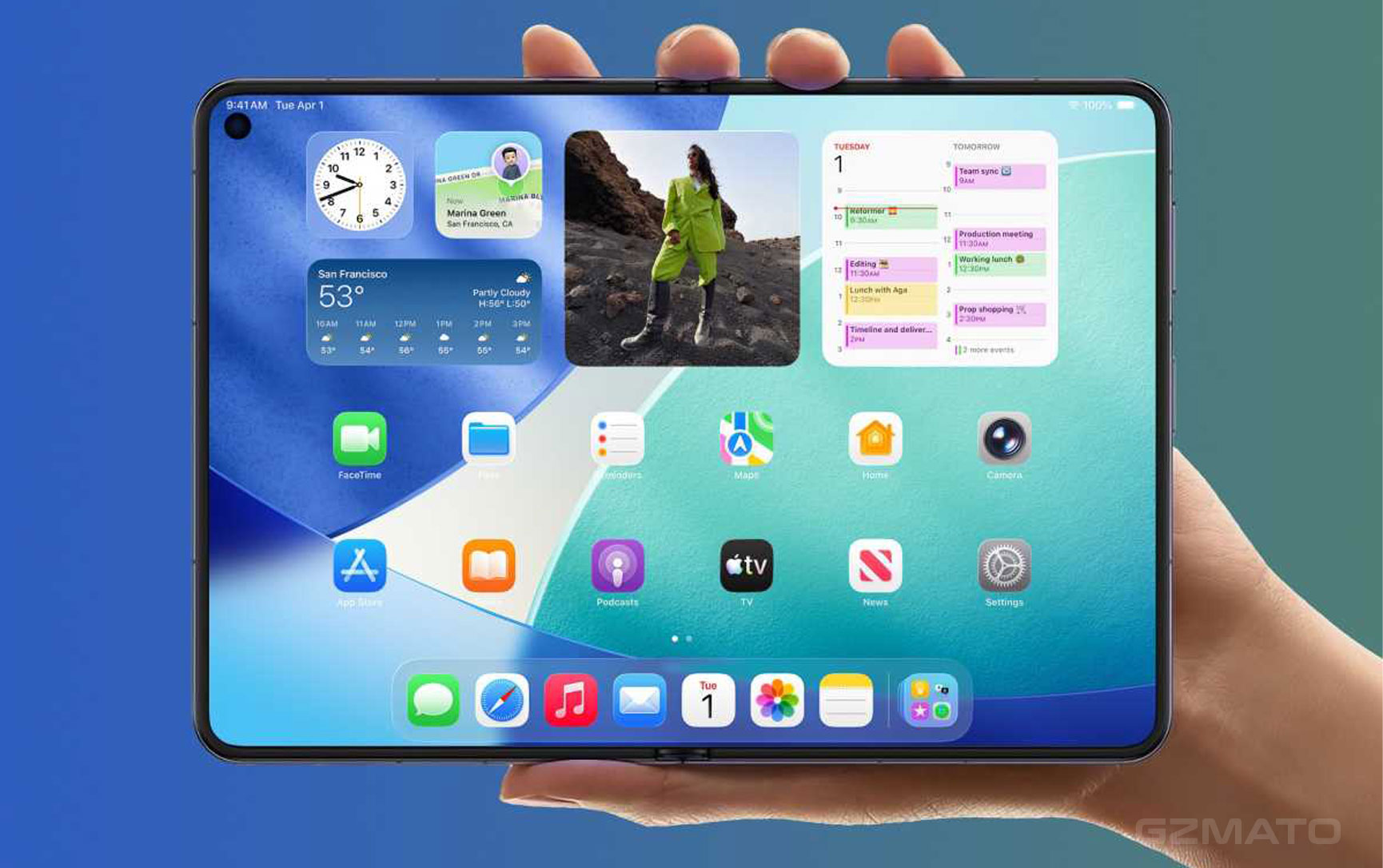
There are already hints in macOS Golden Gate that Apple is preparing for this. The system supports an iPhone-style pull-to-refresh gesture in apps like Safari, Mail, and News — a feature that makes most sense on a touch display [citation:1]. Apple also added direct touch input to Sidecar, allowing users to tap macOS elements when using an iPad as a display [citation:1].
A touchscreen laptop has a physical challenge: when you tap the display, it tends to wobble. Apple has reportedly developed a reinforced hinge and screen hardware to prevent this [citation:1]. It's a small detail, but it's exactly the kind of engineering problem Apple would need to solve before shipping a touchscreen Mac.
OLED: More Than Just Deeper Blacks
The MacBook Ultra is expected to use an OLED display, with Samsung Display as the exclusive supplier [citation:1]. Samsung has invested heavily in an 8.6-generation OLED production line in South Korea, which reached a key mass-production milestone in May [citation:1].
OLED brings obvious benefits: true blacks (individual pixels turn off), higher contrast, and better power efficiency than mini-LED. But for a laptop, the more important benefit may be thinness.
Gurman has reported that Apple is working to make the OLED MacBook "significantly thinner" as part of a broader strategy to create "the thinnest and lightest products in their categories across the whole tech industry" [citation:1]. The tandem OLED architecture and oxide TFT technology allow for thinner panels without sacrificing brightness or durability.
The tension here is that the current MacBook Pro got thicker in its 2021 redesign, which reintroduced ports that had been removed for thinness. How Apple makes the new model thinner without removing those ports again is an open question.
Dynamic Island on Mac: The Notch Finally Goes
One of the most visible changes will be at the top of the screen. The MacBook Ultra is expected to replace the notch with a smaller pill-shaped cutout — essentially a Mac version of the iPhone's Dynamic Island [citation:1][citation:4].
Like the iPhone version, the Mac Dynamic Island would be interactive and expand contextually based on the app or feature in use. It could display battery status, AirPods connection, or a Siri entry point [citation:1].
The notch has been a persistent complaint since it debuted on the MacBook Pro in 2021. Replacing it with a smaller, interactive cutout addresses that criticism while keeping the camera and sensor array where it needs to be.
The Chip Surprise: Why M5 Pro, Not M6?
One of the more surprising details in the reporting is the chip strategy. The MacBook Ultra is expected to use M5 Pro and M5 Max chips, not the newer M6 [citation:1][citation:9].
According to MacRumors, Apple reportedly plans to skip the M6 Pro and M6 Max entirely, moving directly to M7 Pro and M7 Max for the next generation [citation:1]. An entry-level M6 MacBook Pro is still expected this fall, but the high-end Ultra will launch with the M5 generation.
This is unusual, but it makes sense if Apple views the Ultra as a design-first product. The chip is already powerful enough for the target audience; the OLED touchscreen and new form factor are the real selling points.
The Wild Card: Memory Crisis Could Delay It
The biggest uncertainty is not the technology — it's the supply chain.
The global memory shortage has already had visible effects on Apple's product line. Mac mini, Mac Studio, and even MacBook Air shipping times have been extended due to memory shortages [citation:17]. Apple has raised prices on Mac and iPad models by roughly 20% to offset component costs [citation:16].
Bernstein analysts estimate that DRAM and NAND now account for 90% of the added cost in the iPhone 18 Pro Max compared to its predecessor [citation:10]. The memory crisis is not a temporary blip; it's a structural shift driven by AI demand for HBM and server memory.
MacBook Ultra vs. MacBook Pro: Which One?
Apple appears to be positioning the MacBook Ultra as a new tier above the existing MacBook Pro, not a replacement [citation:1]. The current M5 Pro and M5 Max MacBook Pros are expected to remain on sale alongside the Ultra.
| Feature | MacBook Ultra (Rumored) | MacBook Pro (Current) |
|---|---|---|
| Display | OLED, touch-enabled | Mini-LED, no touch |
| Top Cutout | Dynamic Island (pill-shaped) | Notch |
| Design | Thinner, reinforced hinge | Standard thickness |
| Chip | M5 Pro / M5 Max | M5 Pro / M5 Max |
| Price (Estimated) | ~20% higher | Current pricing |
The pricing question is significant. OLED panels are expensive — the OLED iPad Pro launched at a price roughly 80% higher than the equivalent mini-LED model [citation:6]. If the MacBook Ultra follows a similar pattern, it could start well above $2,000.
Shop Macs at Gzmato
MacBook Pro | MacBook Air | Mac mini | Mac Studio | Accessories
Special Offer: Use code TECH2026 for a discount on your first order!
Shop Macs at GzmatoOur team can help you compare based on your workflow, budget, and how soon you need a new Mac. Chat with us or open a request.
Key Takeaways
| # | What You Need to Know About MacBook Ultra |
|---|---|
| 1 | First touchscreen Mac — Apple is finally adding touch input, with a "touch-friendly, not touch-first" philosophy [citation:4] |
| 2 | OLED display with Dynamic Island — the notch is replaced by a smaller, interactive cutout similar to the iPhone [citation:1] |
| 3 | M5 Pro / M5 Max chips, not M6 — Apple reportedly plans to skip M6 Pro/Max entirely, moving to M7 next [citation:1] |
| 4 | Expected late October launch — but the global memory shortage could delay it to early 2027 [citation:3][citation:17] |
| 5 | Pricing expected to rise ~20% — OLED panels are expensive, and the Ultra sits above the current Pro lineup [citation:16] |
| 6 | Not a replacement for MacBook Pro — current M5 Pro/Max models are expected to stay on sale [citation:1] |
- MacRumors — "MacBook Ultra" Coming Soon With Touchscreen and 5 Other Changes [citation:1]
- 9to5Mac — MacBook Ultra release timing, macOS 27.1 testing, memory shortage risk [citation:3]
- 9to5Mac — Apple has three products launching soon [citation:7]
- MacRumors — MacBook Ultra design details, Dynamic Island, pricing context [citation:4]
- Digital Today — MacBook Ultra late October launch, memory supply wild card [citation:17]
- OFweek — Memory price surge, PC market impact, Apple price increases [citation:5]
- Yahoo Finance — Memory costs account for 90% of iPhone 18 Pro Max added cost [citation:10]
- FPT Shop — OLED iPad Pro pricing reference [citation:6]
- MacBook Ultra
- touchscreen Mac
- OLED MacBook Pro
- MacBook Pro redesign
- Dynamic Island Mac
- M5 Pro MacBook
- Apple October event
- memory shortage
- Gzmato