The Nansha Shift: From “Big Sale Warehouse” to “Regional Hub”
November 24, 2026 — The Double 11 numbers from Nansha are in. During the promotional period from October 20 to November 10, Nansha Customs supervised over 4.02 million cross-border e-commerce import manifests [citation:1][citation:2]. For most observers, that is a logistics milestone. For sellers who read between the lines, it is a signal of something more structural: the way Asia-Pacific brands approach the China market is changing.
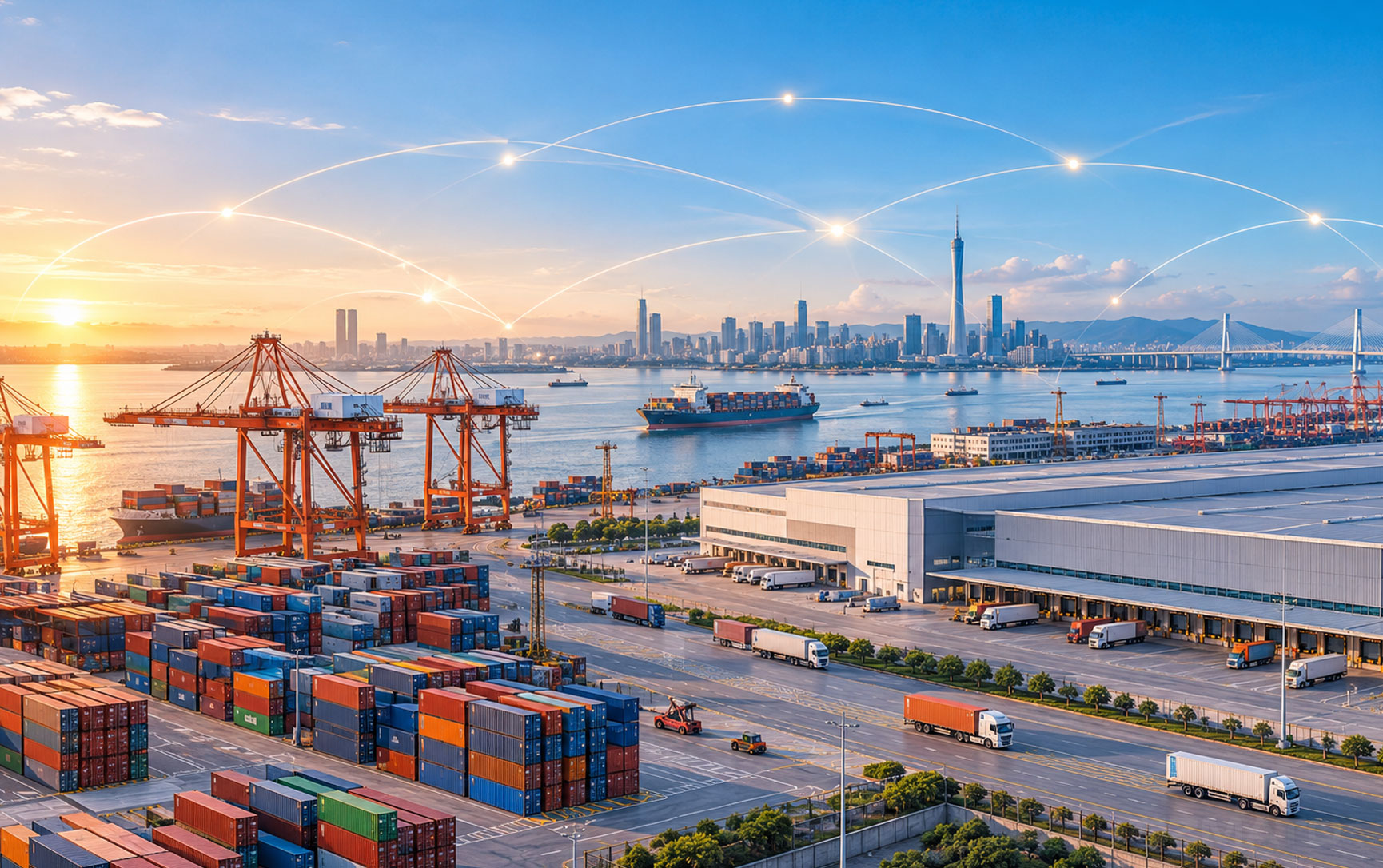
According to industry insiders quoted by CCTV and multiple Chinese outlets, brands are no longer treating Nansha as a “temporary transit warehouse” for Double 11 or Black Friday. They are moving toward a “front-positioned regional warehouse + global single inventory pool” model. Instead of rushing emergency shipments from overseas right before a major sale, they are building permanent positions in Nansha—not just to serve China, but to act as a distribution hub for the broader Asia-Pacific region [citation:1][citation:2].
The Logic Shift: Why Brands Stopped Gambling on Big Sales
The old playbook was simple: wait for Double 11 or Black Friday, ship a massive container of inventory to a temporary warehouse, and hope it sells. The risks were obvious—high trial-and-error costs, volatile order patterns, and a slow response to changing Chinese consumer preferences.
The new model is different. Brands are asking for a single warehouse that can serve both nationwide China and regional Asia-Pacific distribution. They want increasingly granular SKUs in smaller quantities, supported by pre-positioned compliance reviews to manage risk before goods arrive. The goal is not to maximize any single promotional spike, but to use consumer data to refine products continuously [citation:1][citation:3].
This is not a theory. It is what the logistics providers on the ground are seeing. A brand tests a new sunscreen formula or a new supplement SKU with a small batch in Nansha. Sales data flows back. If it works, they scale. If it doesn’t, the loss is contained, and the inventory can be reallocated or returned through Nansha’s return infrastructure. The warehouse becomes a laboratory, not a bet.
The Hidden Engine: Return Infrastructure as a Competitive Moat
Why can brands now afford to test small batches? Because the cost of failure has dropped. And the reason it has dropped is the export return “one-stop” supervision model pioneered at Nansha.
Historically, cross-border returns were a black hole. A seller shipping to an overseas warehouse effectively wrote off returned goods. Nansha changed that. Export e-commerce returns can now be sent back to the Nansha comprehensive bonded zone, where unpacking, sorting, shelving, storage, and re-export are completed in one place. The model was selected as a “Best Practice Case” by the Ministry of Commerce and included in APEC’s list of replicable projects [citation:1][citation:6].
The practical effect is significant. A garment returned from Europe or the US can be processed in Nansha, combined with newly produced goods in the same container, and shipped to the Middle East within 48 hours [citation:6][citation:7]. The return is no longer a pure cost. It is a recoverable asset.
What This Means for Gzmato Sellers
The Nansha shift is not just a story about import brands. It is a signal about the direction of cross-border supply chains overall—and it validates the logic behind Gzmato’s tiered inventory structure.
| The Nansha Trend | The Gzmato Parallel |
|---|---|
| Brands want small-batch trial sales | Gzmato’s Brown Box and BS Stock allow sellers to test SKUs at a fraction of retail cost. If a product doesn’t move, the capital exposure is limited. |
| Brands want flexible inventory across markets | Gzmato’s tiered product structure (New, Refurbished, Brown Box, BS Stock) lets sellers mix and match inventory quality and price points for different channels. |
| Brands want return infrastructure to reduce risk | GzmatoCare+ provides extended warranty coverage for lower-tier inventory, so sellers can offer competitive pricing without carrying all the after-sales risk themselves. |
The lesson is not that every seller should start using Nansha. It is that the era of “stock deep and hope” is ending. The sellers who thrive in 2027 will be the ones who can test many SKUs cheaply, read the data quickly, and scale only what proves itself. Gzmato’s inventory structure was built for that workflow.
Key Takeaways
| # | What You Need to Know |
|---|---|
| 1 | Nansha handled over 4 million import manifests during Double 11, but the bigger story is the shift in how brands use the warehouse [citation:1][citation:2]. |
| 2 | Brands are moving from “temporary big-sale transit” to “front-positioned regional hub + global single inventory pool.” Nansha is becoming a permanent Asia-Pacific distribution node, not a seasonal stop. |
| 3 | The new playbook is “normalized small-batch trial sales.” Brands use consumer data to refine SKUs, rather than gambling on a single promotional spike [citation:1][citation:3]. |
| 4 | Nansha’s export return “one-stop” model makes failure survivable. Returned goods can be processed, recombined, and re-exported within 48 hours, turning a cost center into a recoverable asset [citation:6][citation:7]. |
| 5 | Flexibility beats scale. The sellers who will win are those who can test cheaply, learn fast, and scale only what works. |
| 6 | Gzmato’s tiered inventory mirrors this logic. Brown Box, BS Stock, and GzmatoCare+ let sellers test SKUs without tying up capital or carrying full after-sales risk. |
- CCTV (央广网) — A Batch of Asia-Pacific Brands Are Building Warehouses in the Greater Bay Area (Nov 24, 2026)
- China Economic Times — From a Cherry to an Asia-Pacific “Single Pool of Goods” (Nov 20, 2026)
- Hong Kong Economic Herald — Asia-Pacific Brands Flock to Nansha (Nov 19, 2026)
- Yangcheng Evening News — Asia-Pacific Brands Accelerate Warehouse Building in Nansha (Nov 18, 2026)
Tell us what categories you are considering, and we can help you map out a low-risk trial plan using Gzmato’s tiered inventory and warranty options. Chat with us or open a request.



- Nansha cross-border e-commerce
- small-batch trial sales
- front-positioned regional warehouse
- cross-border return infrastructure
- inventory strategy
- Gzmato