Black Friday 2026: From "Fast" to "On Time"
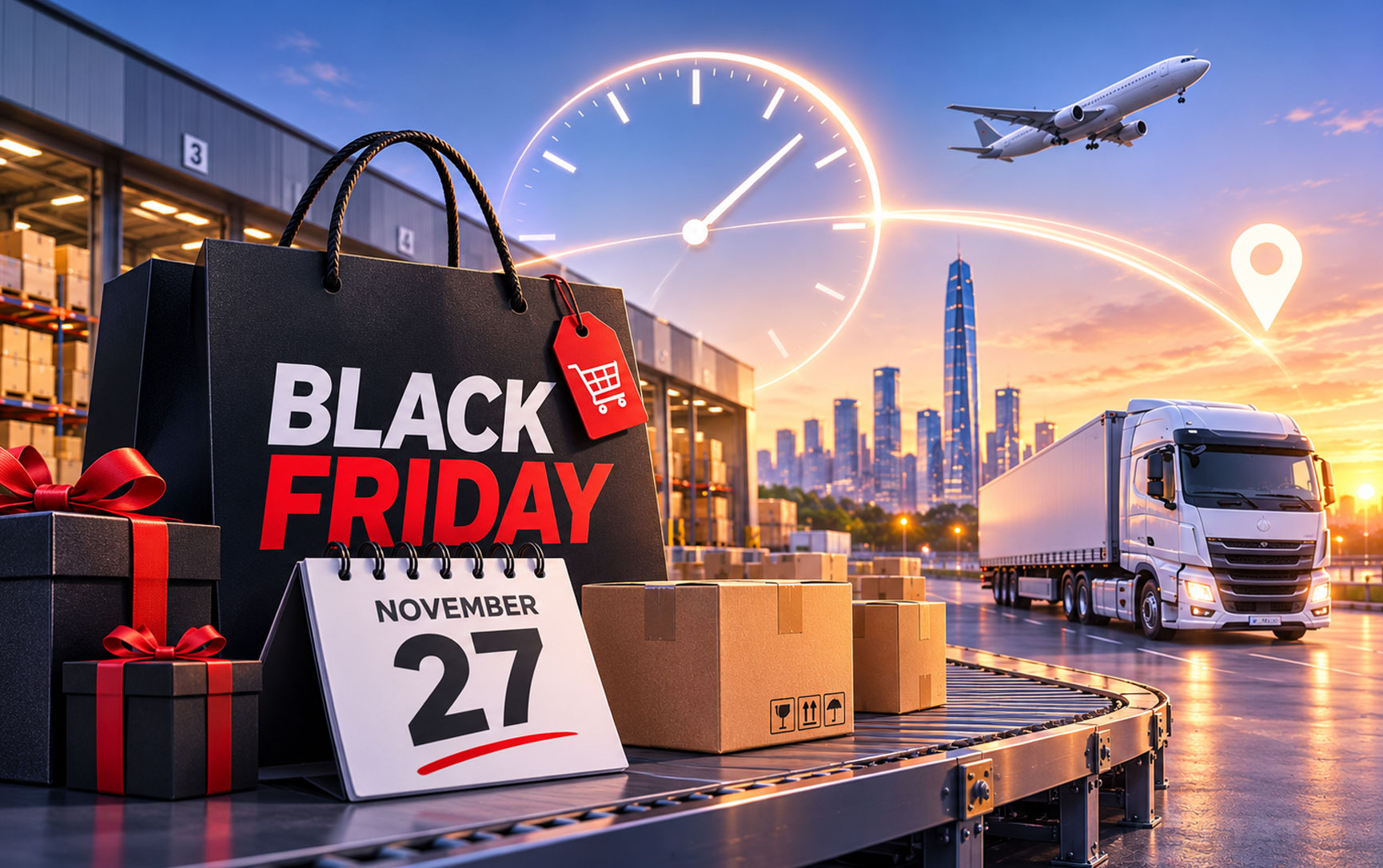
November 24, 2026 — Black Friday 2026 is officially underway, and the numbers look incredible on paper. Adobe Analytics projects U.S. online spending to hit $12.9 billion on Black Friday alone (up 9.2% year-over-year), with Cyber Monday expected to reach $15.1 billion. On the surface, the consumer spending engine is roaring.
But talk to sellers on the ground, and the mood is far more cautious. Some are seeing record traffic but razor-thin margins. Others are looking at European sales channels that feel unusually quiet. The consensus is clear: Demand hasn't vanished. But the game of capturing it has fundamentally changed.
The End of the "Single-Day" Gamble
If you are a seller, you have likely noticed the most significant structural change: Black Friday is no longer a day. It is a season.
Amazon has stretched its Black Friday event from November 19 to November 30. Walmart has divided its promotions into three distinct rounds. TikTok Shop started its mega-sale in early November. This means the traditional playbook—stocking up heavily for a 24-hour flash sale—is dead.
The math has changed. Holding inventory for 12 days instead of 2 increases storage costs and ties up capital. If you understock, you face 12 days of lost sales and a plummeting algorithm rank. If you overstock, the post-holiday long tail of dead inventory will eat whatever profit you made during the peak.
Logistics: Speed vs. Certainty
While the timeline has stretched, the consumer's expectation has sharpened. Fast delivery is no longer a competitive advantage; it is a baseline requirement. The real battle is now about certainty.
Cainiao recently reported a 300% surge in daily orders on its UK 3-day delivery routes. But the headline wasn't about the speed—it was about their "Late Delivery Refund" guarantee. Platforms and logistics providers are now putting money behind their delivery promises. Similarly, JD Logistics is expanding its overseas warehousing footprint to offer post-sale support, including local returns inspection and restocking of good items.
During the holiday rush, if you cannot make a guaranteed delivery promise, your conversion rate will tank. A generic "7-15 day shipping" label will lose out to a competitor offering "Guaranteed 3-Day Delivery, or Your Money Back." Your choice of logistics channel directly dictates your ability to compete.
The Low-Risk Inventory Playbook
So how do you survive a 12-day marathon without getting buried by inventory costs or losing out to competitors with better logistics guarantees? The answer is micro-testing.
Instead of gambling your entire marketing budget and warehouse space on a single SKU, successful sellers are using Gzmato's tiered product structure to test the waters. They deploy a small batch of "Brown Box New" or "Brightstar Stock" units to gauge market response. If the SKU pops off, they reorder immediately. If it flops, their capital loss is minimal.
Here are the categories where this low-risk strategy works best:
By utilizing the "Brown Box No Warranty + GzmatoCare+" combination, sellers can offer a competitively priced product while keeping costs low, testing the market's appetite without the heavy burden of full-retail pricing.
Key Takeaways
| # | What You Need to Know |
|---|---|
| 1 | Black Friday is now a 12-day season. Platforms have stretched the timeline, making single-day flash-sale stocking strategies obsolete. |
| 2 | Logistics is about certainty, not just speed. "Late delivery refunds" and local after-sales support are becoming the new standard for high conversion rates. |
| 3 | Inventory risk is the biggest threat. Overstocking for a long season ties up capital; understocking kills your algorithm ranking. |
| 4 | Micro-testing is the solution. Use low-cost inventory (like Brown Box or BS Stock) to test SKUs before committing to large orders. |
| 5 | Gzmato's tiered products enable agility. Testing high-ticket items like phones, laptops, and TVs without tying up all your cash flow. |
| 6 | Protect your margins. With spending up but margins tight, using GzmatoCare+ to cover low-cost inventory ensures you don't lose money on returns. |
Tell us what product categories you are targeting, and we can help you choose the right Gzmato inventory tier (Brown Box, BS Stock) to maximize your margin and minimize risk. Chat with us or open a request.


- Black Friday 2026
- cross-border logistics
- on-time delivery guarantee
- inventory risk management
- micro-testing SKUs
- Gzmato