NVIDIA Rubin Ultra: 100 Petaflops, 1TB HBM4e, 600kW AI Rack Coming 2027
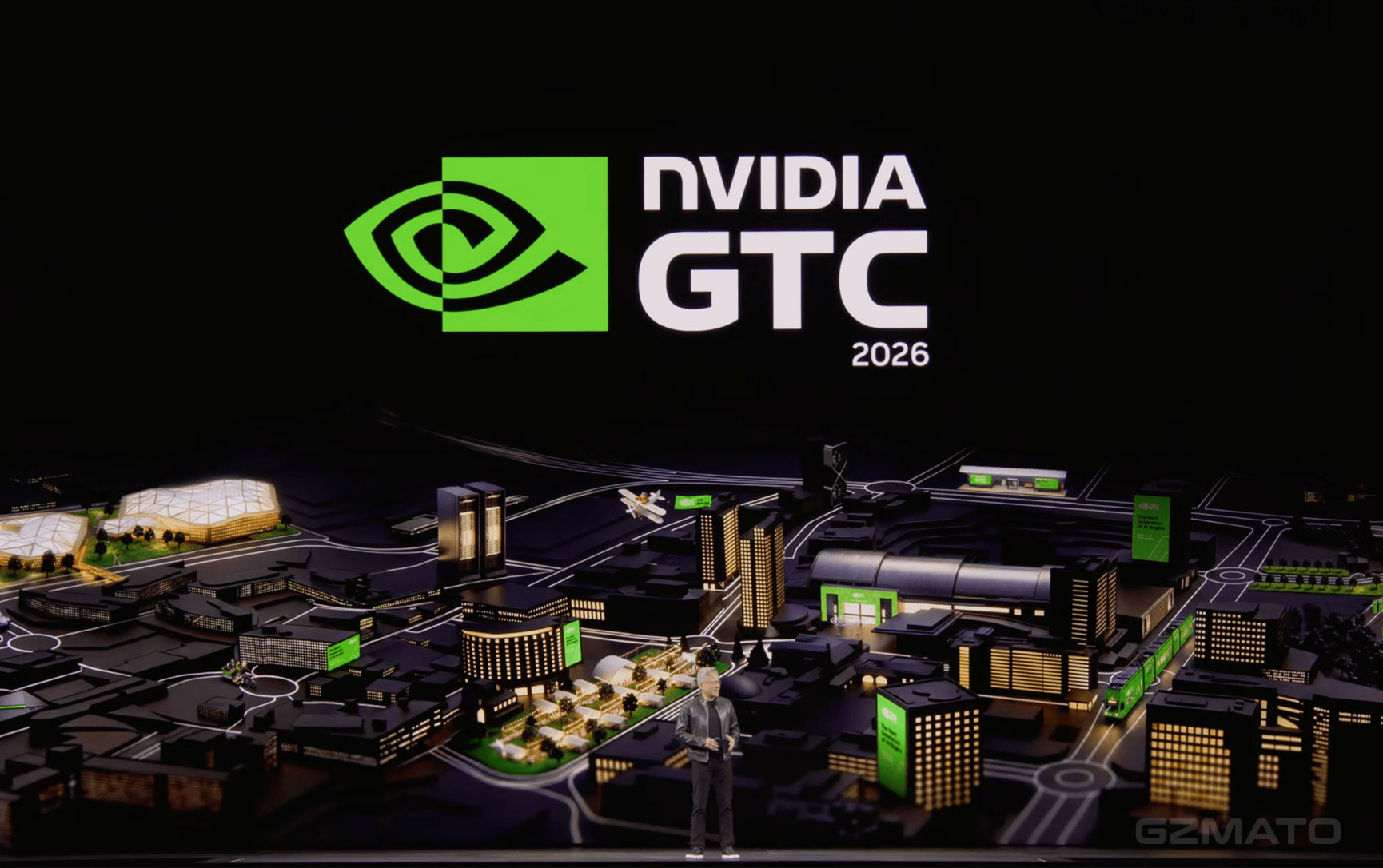
At GTC 2025, NVIDIA CEO Jensen Huang unveiled the company's most ambitious AI platform yet: Rubin Ultra. Scheduled for the second half of 2027, this 600kW rack-scale system pushes the boundaries of what's possible in AI computing.
NVIDIA Rubin Ultra: The 600kW AI Beast Arrives in 2027
NVIDIA's AI roadmap is clear: Rubin in late 2026, Rubin Ultra in late 2027, and Feynman in 2028. At the top of the portfolio sits Rubin Ultra, a chip that takes the Rubin architecture and doubles the silicon — four compute dies instead of two, each measuring roughly 800 mm².
The result is staggering: 100 petaflops of FP4 performance per GPU, paired with 1 terabyte of HBM4e memory across 16 stacks.
Rubin Ultra: Four GPUs, One Terabyte of HBM4e
Rubin Ultra represents a fundamental shift in how NVIDIA packages its GPUs. While the standard Rubin uses two compute dies, Rubin Ultra uses four, creating a massive 3200 mm² of silicon per package.
Key specifications:
- 4 reticle-sized GPU dies per package
- 16 HBM4e memory stacks totaling 1 TB
- 100 petaflops FP4 performance per GPU
- 3.2 TB/s memory bandwidth per GPU
Vera CPU: 88 Custom Cores
Each Rubin Ultra system pairs GPUs with NVIDIA's new Vera CPU — 88 custom Arm cores with 176 threads, succeeding the Grace architecture.
Kyber Rack: 144 GPUs, No Cables
NVIDIA designed an entirely new server platform for Rubin Ultra, codenamed Kyber. Instead of traditional horizontal server drawers, the Kyber rack uses vertical levels to pack more compute into a smaller footprint.
The full NVL576 system crams 576 Rubin Ultra GPUs into a single rack consuming 600 kW of power. Total performance reaches 15 exaflops of FP4 inference and 5 exaflops of FP8 training.
Perhaps most impressively, the Kyber rack eliminates complex cabling entirely, using fixed power and data lines through a midplane and backplane design. This dramatically shortens installation time.
NVIDIA's AI Roadmap: Rubin, Rubin Ultra, Feynman
NVIDIA's data center GPU roadmap extends through 2028:
| Platform | Launch | FP4 Performance | Memory | System |
|---|---|---|---|---|
| Blackwell Ultra | 2H 2025 | — | HBM3e | NVL72 |
| Vera Rubin | 2H 2026 | 3.6 exaflops | HBM4 | NVL144 |
| Rubin Ultra | 2H 2027 | 15 exaflops | HBM4e (1TB) | NVL576 |
| Feynman | 2028 | TBA | Next-gen HBM | TBA |
Jensen Huang noted that Rubin will "drive the cost down significantly" compared to the Hopper generation when factoring in flops, bandwidth, and power consumption.
AMD Strikes Back: MI455X and Helios Platform
AMD isn't standing still. At CES 2026, CEO Lisa Su unveiled the MI455X accelerator, which delivers 10x the performance of the previous MI355X generation.
The MI455X features 432GB of HBM4 memory and 320 billion transistors on a 2/3nm hybrid process. AMD also introduced the Helios open 72-card server platform, scheduled for the second half of 2026.
AMD's roadmap calls for the MI500 series in 2027 on 2nm with HBM4e, targeting 30x the performance of the MI455X.
Key Takeaways
- Rubin Ultra launches in the second half of 2027, delivering 15 exaflops of FP4 inference — 14x the performance of current systems
- Kyber rack eliminates cabling entirely, using vertical levels to pack 144 GPUs into a 600kW footprint
- Vera CPU debuts with 88 custom Arm cores, succeeding NVIDIA's Grace architecture
- AMD responds with MI455X (10x performance) and Helios platform targeting late 2026
- Roadmap extends to Feynman in 2028, with next-generation HBM memory
Gear Up Your AI Setup with Gzmato
Fast Chargers | USB-C Cables | Screen Protectors | Thermal Paste | Cable Management | Tool Kits
TECH2026
Sources & Methodology (as of May 20, 2026):
- NVIDIA GTC 2025 keynote
- CES 2026 announcements
- heise online — Kyber Rack details
- The Register — Vera Rubin analysis
- Wccftech — Rubin Ultra specifications
- Guru3D — Vera Rubin Superchip
- ARN — Roadmap and Feynman
- NVIDIA Rubin Ultra
- Rubin GPU
- Vera CPU
- Kyber rack
- HBM4e
- AI chip
- NVIDIA roadmap
- AMD MI455X
- GTC 2025