RTX Spark vs MacBook Air vs Windows PC: Is $3,000 Worth It? Token Math
- RTX Spark vs MacBook Air vs Windows PC: The $3,000 Question
- The Price Gap: How Much More Are You Paying?
- Token Math: What Can You Buy With the Difference?
- How Long Will Those Tokens Last You?
- Token Prices Are Falling Fast
- Head-to-Head: RTX Spark vs PC + API
- Who Should Actually Buy RTX Spark?
- How Many Years Will RTX Spark Last You?
- The Verdict: Is It Worth It?
- Key Takeaways
RTX Spark vs MacBook Air vs Windows PC: The $3,000 Question
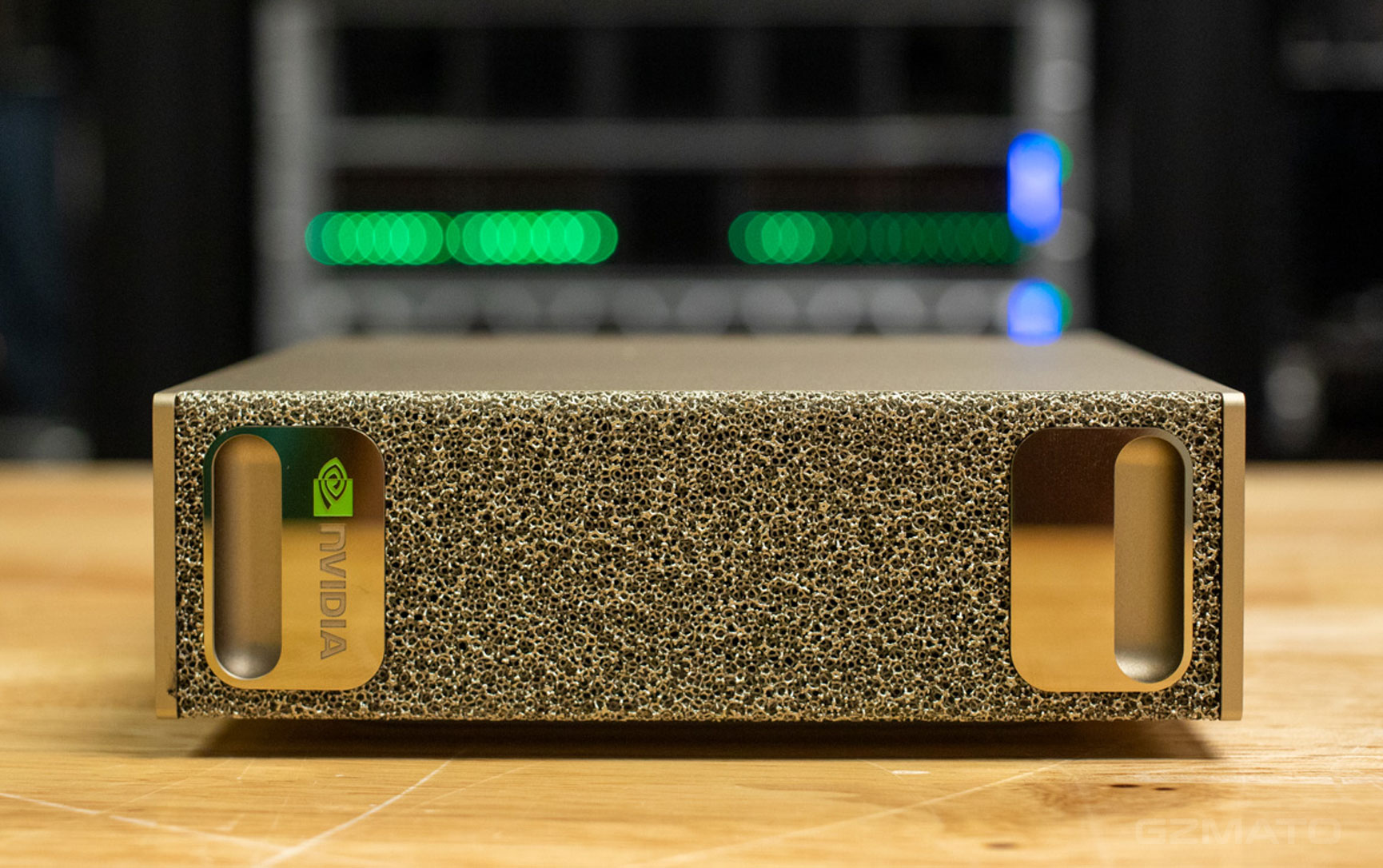
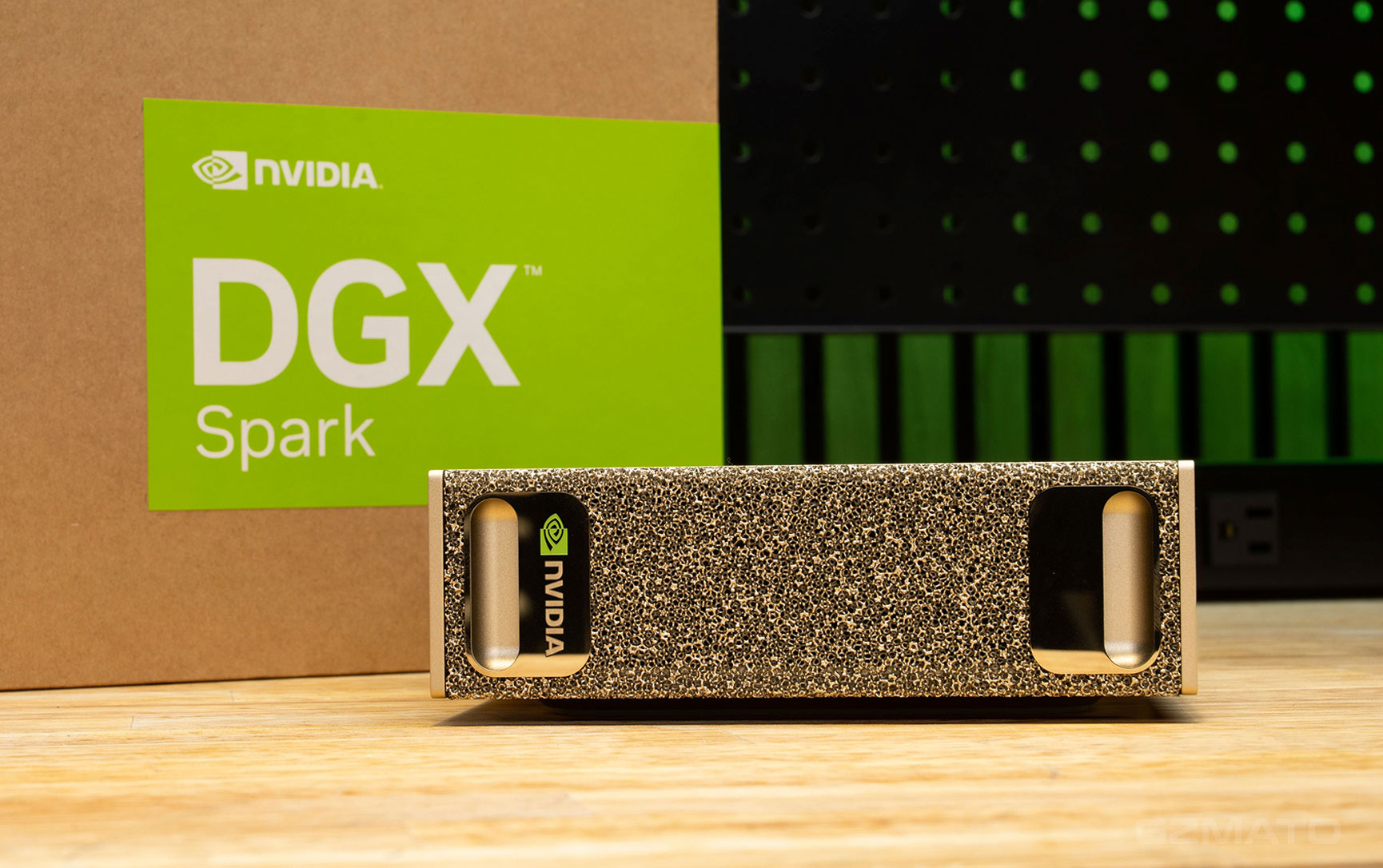
NVIDIA's RTX Spark platform promises to bring professional-grade AI capabilities to your desk. The specs are impressive: 1 petaflop of AI performance, 128GB of unified memory, and full CUDA compatibility. But the price tag is equally impressive — an RTX Spark laptop is expected to cost approximately $3,000, while the desktop DGX Spark starts at $4,699.
This raises a simple but critical question: Could that $2,000-$3,000 price difference be better spent on cloud API credits instead? This article converts hardware dollars into token math — and helps you decide what makes sense for your actual AI usage.
The Price Gap: How Much More Are You Paying?
Let's establish a baseline of mainstream consumer devices and compute the RTX Spark premium.
| Device | Approximate Price | Premium vs RTX Spark Laptop | Premium vs DGX Spark Desktop |
|---|---|---|---|
| Entry-Level Windows PC | $900 - $970 | ~$2,000 - $2,100 | ~$3,700 - $3,800 |
| Mac mini M4 | $799 | ~$2,200 | ~$3,900 |
| Mac mini M4 Pro | $1,399 | ~$1,600 | ~$3,300 |
| MacBook Air M4 | $1,099 | ~$1,900 | ~$3,600 |
| RTX Spark Laptop (Base) | ~$2,999 | Baseline | ~$1,700 |
| DGX Spark Desktop | $4,699 | ~$1,700 | Baseline |
The delta is substantial: you are paying between $1,600 and $3,900 more for NVIDIA's solution over mainstream alternatives. The question is whether that premium delivers proportional value.
Token Math: What Can You Buy With the Difference?
Token prices have dropped dramatically in the past year, making cloud APIs more accessible than ever.
According to AI.cc's 2026 infrastructure report, the average enterprise token price fell from $18.40 per million tokens in Q1 2025 to just $6.07 per million tokens in Q1 2026 — a 67% year-over-year decline. With optimized multi-model routing, costs can drop to as low as $2.31 per million tokens.
Open-source models like DeepSeek, Qwen, and Llama are further driving prices down, with some providers offering token costs as low as $0.03-$0.50 per million tokens for input.
Now, let's convert the RTX Spark premium into token purchasing power. We'll use $6.07/million tokens as our baseline (realistic enterprise API cost).
| Comparison | Price Difference | Tokens You Can Buy (at $6.07/M) |
|---|---|---|
| Windows PC vs RTX Spark Laptop | ~$2,000 | 330 million tokens |
| MacBook Air vs RTX Spark Laptop | ~$1,900 | 313 million tokens |
| Mac mini M4 vs RTX Spark Laptop | ~$2,200 | 362 million tokens |
| Windows PC vs DGX Spark Desktop | ~$3,800 | 626 million tokens |
| Mac mini M4 vs DGX Spark Desktop | ~$3,900 | 643 million tokens |
If you optimize further with multi-model routing at $2.31/million tokens, these figures roughly triple. At the lowest end, the RTX Spark premium could buy you over 1.5 billion tokens.
How Long Will Those Tokens Last You?
Token consumption varies dramatically by use case. Here is how far 300 million tokens will take a typical user.
| Use Case | Daily Token Consumption | 300M Tokens Lasts | 1.5B Tokens Lasts |
|---|---|---|---|
| Casual User (daily Q&A, research) | 5,000 - 10,000 | 82 - 164 years | 411 - 822 years |
| Student / Hobbyist Developer | 15,000 - 30,000 | 27 - 55 years | 137 - 274 years |
| Professional Developer | 50,000 - 100,000 | 8 - 16 years | 41 - 82 years |
| Power User (heavy API usage) | 200,000 - 500,000 | 1.6 - 4 years | 8 - 20 years |
Even the most conservative estimate shows that the RTX Spark premium buys enough API tokens to cover years of daily, heavy AI usage. And that is before considering falling token prices.
Token Prices Are Falling Fast
Perhaps the most important factor is the trend line. Token prices are not rising — they are falling rapidly.
| Time Period | Average Token Price | Change |
|---|---|---|
| Q1 2025 | $18.40 / 1M | Baseline |
| Q1 2026 | $6.07 / 1M | -67% |
| With Multi-Model Routing | $2.31 / 1M | -87% |
| Open-Source Self-Hosting | $0.03 - 0.50 / 1M | -97%+ |
Open-source models now account for 38% of enterprise token volume (up from just 11% the previous year). This competitive pressure is forcing commercial API providers to lower prices or risk losing market share.
Hardware is a fixed cost you pay today. Cloud API costs are variable and trending sharply downward. The $2,000 you spend on RTX Spark today could buy 2-3x more tokens in 2026 than it would have in 2025 — and next year, that same $2,000 will buy even more.
RTX Spark hardware, by contrast, will be functionally the same in two years, while cloud models will be far more capable.
Head-to-Head: RTX Spark vs PC + API
Let's compare the two approaches side by side over a 5-year ownership period.
| Dimension | RTX Spark | Budget PC + Cloud API |
|---|---|---|
| Hardware Cost | $2,999 - $4,699 | $799 - $1,399 |
| Annual API Cost (moderate use) | $0 (no cloud needed) | $50 - 200 |
| 5-Year Total Cost | $2,999 - 4,699 | $1,049 - $2,399 |
| Savings | Baseline | $600 - 3,650 saved |
| Model Access | Local models only; manual updates | All models, always latest version |
| Internet Required | No (can run offline) | Yes (for API calls) |
| Data Privacy | Complete local control | Trust cloud provider |
| Maximum Model Size | Can run 70B-120B locally | Unlimited (cloud models) |
The cloud API approach not only costs significantly less but also gives you access to the latest models automatically — no manual downloads, no hardware limitations.
Who Should Actually Buy RTX Spark?
After running the token math, the pool of users for whom RTX Spark makes economic sense is quite narrow.
- Data cannot leave your premises. Medical records, financial data, government contracts, or trade secrets — if you cannot use cloud APIs for legal or compliance reasons, local hardware is your only option.
- You are a CUDA developer. If you are building and debugging CUDA-native applications that will eventually run on H100 clusters, the local environment is essential.
- You need to run 100B+ parameter models locally. The 128GB unified memory is uniquely suited for large models that do not fit on any consumer hardware.
- You have ultra-low latency requirements. Applications requiring sub-millisecond response times may not tolerate network round trips.
For everyone else, the math does not pencil out.
- Students and beginners. You do not need $3,000 hardware to learn AI. A $1,000 PC + free/cheap API access is far better.
- Most developers. Unless you specifically need CUDA or local 100B+ models, Mac mini + API is faster and cheaper.
- Content creators. The gaming performance matches an RTX 5070, but you can buy an RTX 5070 desktop for far less than the RTX Spark premium.
- Occasional AI users. If you use AI a few times per week, the API cost is trivial, and the RTX Spark premium would be wasted.
- Anyone on a budget. The $2,000-3,000 premium is real money that could be spent elsewhere.
How Many Years Will RTX Spark Last You?
Hardware longevity is another key consideration.
| Lifespan Type | RTX Spark | Cloud API Approach |
|---|---|---|
| Physical Hardware Lifespan | 3-5 years (typical computer lifespan) | N/A (no hardware) |
| Performance Lifespan | ~2-3 years before newer models require more memory | Always latest performance (cloud upgrades instantly) |
| Economic Lifespan | 2-3 years before opportunity cost of hardware exceeds cloud savings | Indefinite (pay only for what you use) |
The 128GB unified memory will remain sufficient for many models for years. However, given the rapid pace of AI research, the hardware's economic lifespan may be shorter than its physical lifespan. The $2,000-3,000 premium, invested in cloud credits, would likely generate more value over 3-5 years than the local hardware would, unless you fall into the narrow use cases described above.
The Verdict: Is It Worth It?
Based on the token math and total cost of ownership analysis:
- You are in the 5-10% of users who genuinely need local 128GB memory or CUDA compatibility
- Your data cannot legally or practically be sent to cloud APIs
- You are a professional CUDA developer using the Spark as a development workstation
- You are a researcher running experiments on 100B+ parameter models
- The cost is a business expense, not a personal one
- You are a student, hobbyist, or casual AI user
- You primarily use AI through APIs or web interfaces
- You are budget-conscious
- You do not have a specific need for local 100B+ model execution
- You are comparing it to a $1,000 PC and wondering if the extra $2,000 makes sense (it does not)
Key Takeaways
- The RTX Spark premium is $1,600-$3,900 compared to mainstream alternatives — a substantial price difference by any measure.
- That premium buys 300 million to 1.5 billion API tokens at current market rates, enough for 5-50+ years of daily AI usage for most people.
- Token prices are falling rapidly — down 67% year-over-year — making the cloud case stronger over time, not weaker.
- Open-source models now account for 38% of enterprise token volume, putting continued downward pressure on API prices.
- Only 5-10% of users genuinely need RTX Spark's capabilities — data privacy compliance, CUDA development, or local 100B+ models.
- For everyone else, mainstream PC + cloud API is more cost-effective and gives you access to the latest models without hardware lock-in.
- 5-year total cost of ownership favors the cloud API approach by $600-$3,650, depending on configuration.
- The hardware has a 3-5 year lifespan, but its economic lifespan may be shorter as models continue to grow larger than local memory can accommodate.
- RTX Spark is a specialized tool, not a mainstream computer — and should be evaluated as such.
Sources & Methodology (as of June 2, 2026):
- AI.cc — 2026 AI Infrastructure Report (token pricing trends and enterprise adoption)
- JD & Tmall — Retail prices for mainstream Windows PCs
- Apple official pricing — Mac mini, MacBook Air, MacBook Pro
- NVIDIA — DGX Spark MSRP ($4,699) and RTX Spark launch information
- Supply chain reports — RTX Spark notebook estimated pricing
- Industry analysis — Token consumption benchmarks for various use cases
Stay Ahead of Tech Trends with Gzmato
Fast Chargers | USB-C Cables | Screen Protectors | Wireless Chargers | Power Banks | Travel Adapters
Special Offer: Use code TECH2026 for discount on your first order!
- RTX Spark price
- DGX Spark cost
- RTX Spark vs MacBook Air
- token economics
- AI hardware vs cloud API
- NVIDIA pricing
- AI development workstation