SpaceX $119B Terafab & Memory Supercycle: AI Reshapes the Chip Industry
- Two Fronts in the AI Chip War
- SpaceX Terafab: The $119 Billion Gamble
- The Numbers Behind Terafab
- Musk's Audacious Vision
- The Memory Supercycle: "RAMageddon"
- The Earnings Explosion
- Demand Destruction: AI Eats the Supply Chain
- Global Implications: From Servers to Smartphones
- Final Verdict: Winners and Losers
- Shop Memory-Upgraded Devices at Gzmato
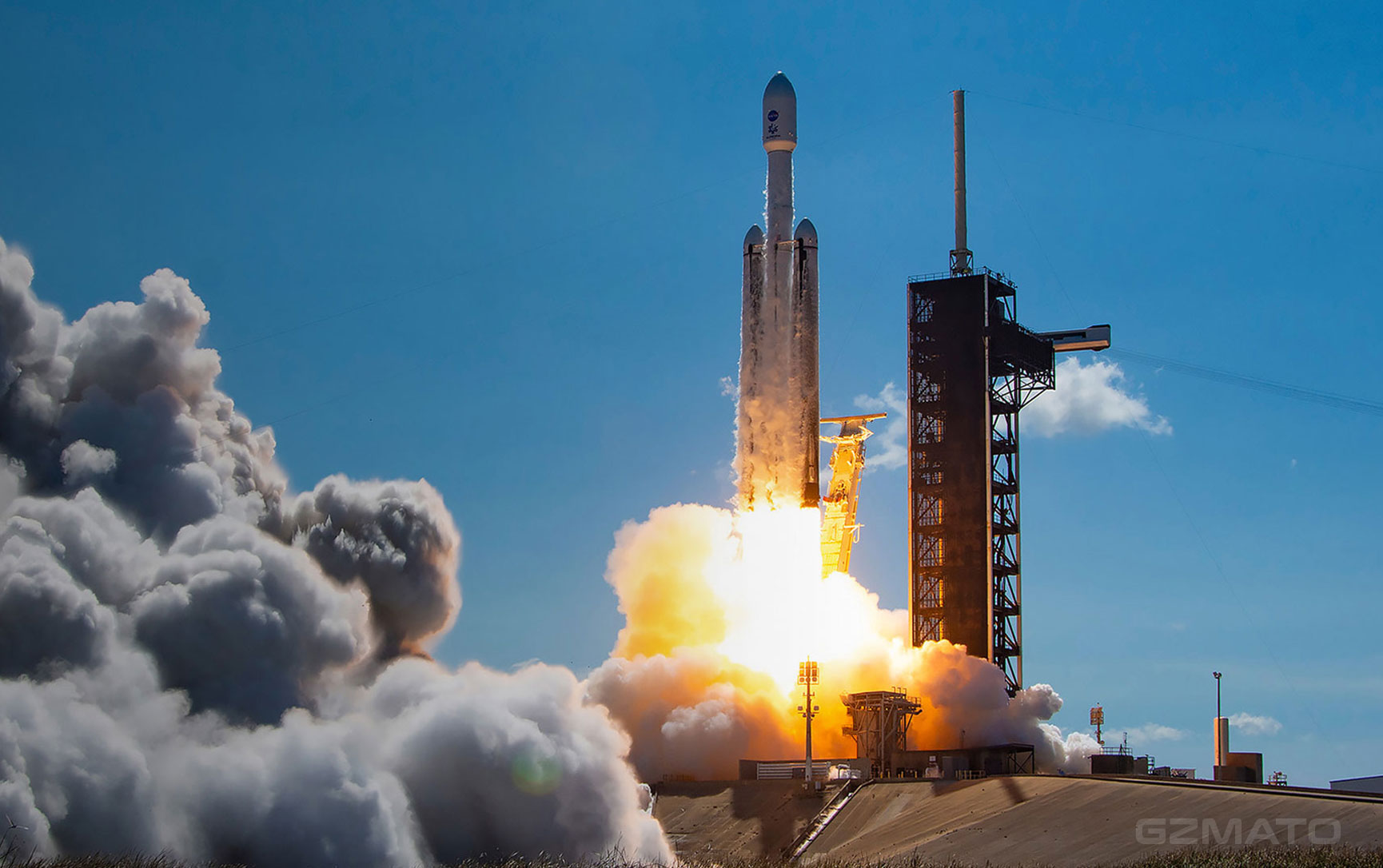
May 7, 2026 – The semiconductor industry is experiencing a once-in-a-generation transformation on two fronts. Elon Musk's SpaceX has proposed a staggering $119 billion chip manufacturing facility in Texas, targeting 2nm production and terawatt-scale computing. Meanwhile, memory chip giants are printing money as AI demand triggers what analysts are calling a "supercycle" of historic proportions [citation:1][citation:2].
Two Fronts in the AI Chip War
Forget the Large Hadron Collider—the real particle accelerator in 2026 is the global semiconductor industry, and Elon Musk has just requested a seat at the particle physics table. On one side, memory giants Samsung, SK Hynix, and Micron are seeing unprecedented demand driven by AI infrastructure. On the other, SpaceX is planning to leapfrog decades of established chipmaking expertise with a mammoth Texas fab. Both stories reflect the same underlying reality: AI is reshaping the semiconductor industry at every level [citation:4].
SpaceX Terafab: The $119 Billion Gamble
In a public filing with Grimes County, Texas, SpaceX revealed plans for a "multi-phase, next-generation, vertically integrated semiconductor manufacturing and advanced computing fabrication facility." The proposed Terafab would be located near the Gibbons Creek Reservoir, approximately 80 miles northeast of Houston [citation:1][citation:5].
The initial phase is estimated at $55 billion — roughly equivalent to 1.25 Twitters, as The Register colorfully noted. If all phases are completed, total investment could reach $119 billion, making it one of the largest private industrial projects in U.S. history [citation:5]. For context, Intel's leading-edge fab expansion in Chandler, Arizona, cost approximately $30 billion. Musk's ambition is an order of magnitude larger [citation:5].
The Numbers Behind Terafab
| Metric | Value |
|---|---|
| Initial Investment | $55 billion |
| Potential Total Investment | $119 billion |
| Target Process Node | 2nm |
| Target Compute Capacity (Annual) | 1 terawatt |
| Location | Grimes County, Texas (near Gibbons Creek Reservoir) |
| Key Vote Date | June 3, 2026 (tax abatement hearing) |
Musk's Audacious Vision
Before diving into the memory supercycle, it's worth acknowledging the chasm between Musk's ambitions and his track record. "Musk has never built a wafer fab, but he wants to burn $119B on one anyway," The Register noted dryly [citation:5]. SpaceX knows launch vehicles and satellites. xAI knows model training. Twitter knows social media. None of Musk's companies have semiconductor manufacturing experience [citation:5].
But there are pieces in place:
- Intel partnership: Tesla plans to spend roughly $3 billion on a research chip facility in Texas, with Intel contributing chip design, fabrication, and packaging expertise [citation:3].
- Equipment discussions: Musk's lieutenants have already reached out to chip equipment makers including Applied Materials, Tokyo Electron, and Lam Research for pricing and delivery timelines [citation:3].
- 14A node: The fab would use Intel's yet-unfinished 14A process node [citation:5].
At minimum, Terafab represents a statement of intent: Musk believes that computing power is the single greatest bottleneck to AI advancement, and he is willing to spend nine figures to fix it.
The Memory Supercycle: "RAMageddon"
While Musk tries to build chips, established memory manufacturers are printing money. May 6, 2026, was a historic day for semiconductor stocks [citation:2].
Price Rally Highlights (May 6, 2026):
- SK Hynix: +10.64% (all-time high)
- Samsung Electronics: +14.41% (all-time high)
- 江波龙 (Jiangbolong): +10% (all-time high)
- 兆易创新 (GigaDevice): +10% (all-time high)
- Micron Technology: +16.3% year-to-date [citation:6]
The rally was driven by extraordinary earnings reports across the sector, validating the "supercycle" thesis that began taking shape in late 2025 [citation:2].
The Earnings Explosion
| Company | Q1 2026 Net Income | YoY Growth |
|---|---|---|
| 江波龙 | 3.862 billion yuan | +2,644% |
| 佰维存储 | 2.899 billion yuan | +1,568% |
| 兆易创新 | 1.461 billion yuan | +523% |
| Samsung | — | +474% (operating profit) |
| SK Hynix | — | +398% (net profit) |
Demand Destruction: AI Eats the Supply Chain
Capacity Reallocation: AI Took Priority
The primary driver of the current memory crisis isn't a drop in total manufacturing capacity — it's a strategic reallocation of that capacity toward AI data centers [citation:4].
- 70% of global DRAM production is now consumed by data centers
- Each HBM (High Bandwidth Memory) unit displaces 2+ conventional DRAM wafers due to complexity [citation:4]
- 2028 DRAM capacity already booked
- SK Hynix: Entire 2026 DRAM, HBM, and NAND production sold out [citation:6]
- Samsung: HBM4 capacity fully sold, all advanced capacity reserved [citation:2]
Price Outlook
Forecasts for 2026 are staggering:
- DRAM average price: Estimated +88% (花旗) [citation:2]
- NAND flash average price: Estimated +74% (花旗) [citation:2]
- Q2 2026 contract prices: DRAM +58-63%, NAND +70-75% (TrendForce) [citation:2]
Counterpoint Research expects DRAM prices to rise another 40% through Q2 2026 on top of 2025's increases [citation:6].
Global Implications: From Servers to Smartphones
Consumer Electronics Under Pressure
The memory squeeze has real-world consequences for consumers [citation:4]:
- PCs & Smartphones: Memory chips historically made up ~10% of materials cost. That proportion has now surged to 20-30% [citation:4].
- HP, Dell, Lenovo, Asus, Acer have already raised prices or are planning further hikes [citation:4].
- Smartphone output: TrendForce projects global smartphone unit output will drop by at least 10% year-over-year in 2026 [citation:4].
- 128GB phones disappearing: Brands are phasing out low-capacity models, making 256GB the new baseline [citation:4].
Enterprise-Level Chaos
- Pricing power shift: Samsung has raised memory chip prices by as much as 60% since September, capitalizing on tight supply and panic ordering [citation:6].
- AI memory allocation: Even CEOs visiting suppliers in person are being told "there's simply no stock available" for certain components [citation:4].
Final Verdict: Winners and Losers
The winners are obvious: Memory manufacturers are seeing their best cycle in decades, with pricing power, sold-out capacity, and sustained demand. SK Hynix has entered a "full-blown memory supercycle" with customers ordering everything through 2026 [citation:6]. A股模组 and distributor companies have seen profits explode, with several reporting single-quarter profits exceeding their full-year 2025 totals [citation:8].
Terafab is a bet on the future. The $119 billion proposal is either visionary or delusional — possibly both. If successful, it would insulate Musk's growing portfolio (SpaceX, Tesla, xAI, X) from semiconductor supply constraints and contribute to U.S. "reindustrialization." If not, it will join a long list of Musk proposals that generated headlines without silicon [citation:9].
For consumers, prepare for higher prices. The memory shortage will inevitably raise costs for smartphones, PCs, and any device requiring DRAM or NAND. Some analysts expect the supercycle to extend into at least early 2027 before new capacity comes online [citation:2].
Upgrade Your Tech with Gzmato
As memory becomes a premium, buying storage-upgraded devices early makes sense:
High-Capacity SSDs | Premium Smartphones | Gaming Laptops | Memory Upgrades
MEMORY2026
Data Sources & Methodology (as of May 7, 2026):
- 财联社 – Terafab proposal details and investment figures (May 6, 2026) [citation:1]
- 中国证券报 / 新华财经 – Memory supercycle earnings and price forecasts (May 7, 2026) [citation:2]
- Bloomberg via Advisor Perspectives – Terafab background, Intel partnership, equipment quotes (May 6, 2026) [citation:3]
- EE Times Asia – Structural memory shift analysis (April 20, 2026) [citation:4]
- The Register – Terafab skepticism and industry context (May 6, 2026) [citation:5]
- Benzinga via Webull – Memory stock rally and pricing power (January 2026) [citation:6]
- 环球市场播报 – Terafab investment breakdown (May 7, 2026) [citation:7]
- 澎湃新闻 – A股 memory company earnings reports (May 4, 2026) [citation:8]
- Finimize – Terafab business context and tax vote (May 6, 2026) [citation:9]

- SpaceX Terafab
- 2nm chip
- Musk semiconductor
- memory supercycle
- DRAM prices
- HBM4
- SK Hynix
- Samsung
- Jiangbolong
- AI chip shortage