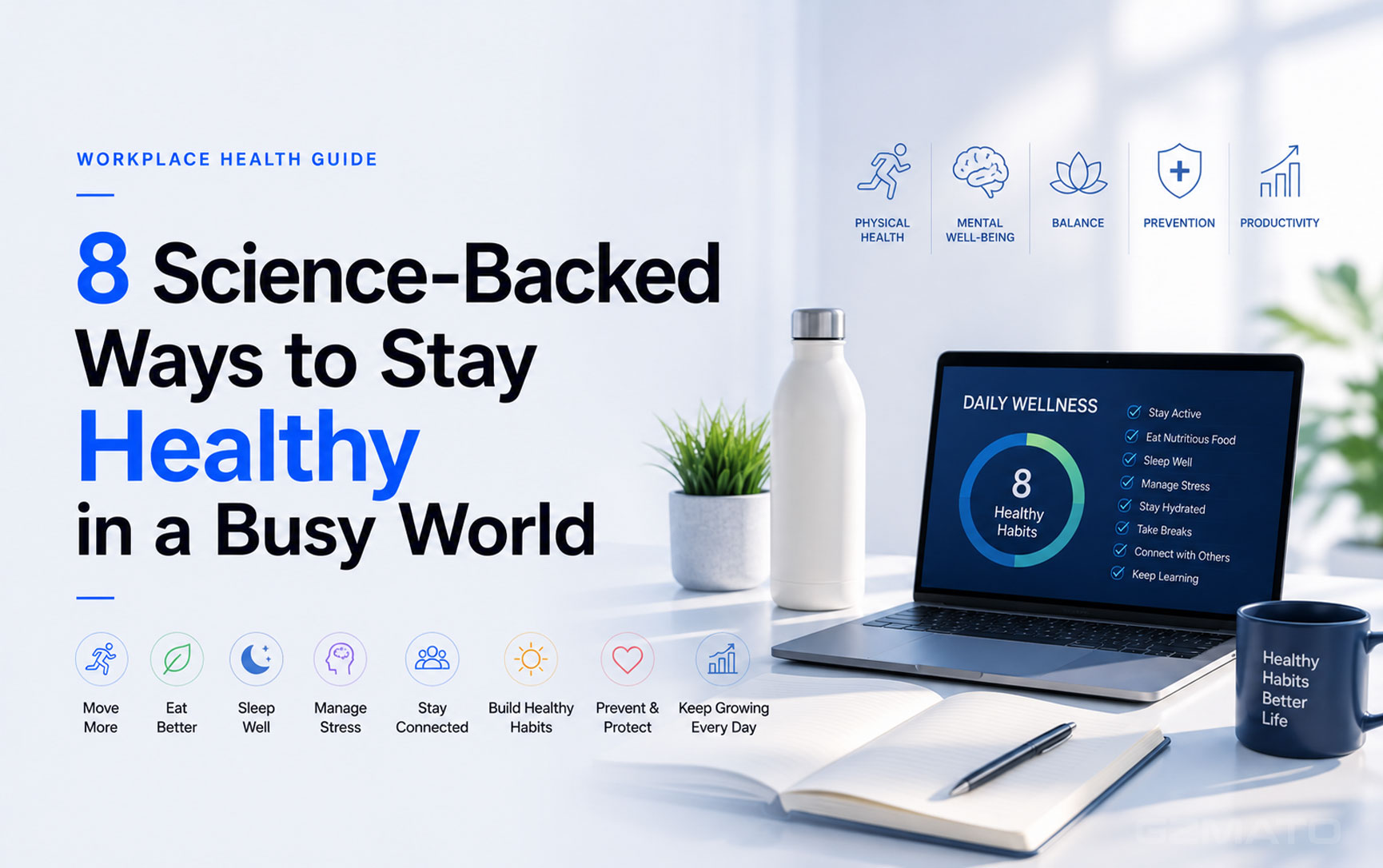
Workplace Health Guide: 8 Science-Backed Ways to Stay Healthy in a Busy World
Your Body Is Sending Warning Signs
"I'm just not feeling it today." "I can't sleep again." "My stomach has been off all week." Sound familiar?
According to recent data, the average adult spends nearly 10 hours per day on work and work-related activities. Between late nights, irregular shifts, and overwhelming workloads, workplace health is quietly declining.
Globally, the prevalence of depression and anxiety disorders continues to rise. In workplaces across different industries, occupational stress, depression, and anxiety have become increasingly common. These psychological stressors don't just affect mood — they trigger a cascade of physical symptoms: insomnia, appetite changes, fatigue, and weakened immunity.
Workplace Stress: The Invisible Health Threat
For many professionals, mental health challenges don't announce themselves dramatically. They creep in quietly — a persistent sense of unease that builds over time.
- Persistent pressure: Constantly facing performance targets, deadlines, and competitive pressure
- Emotional exhaustion and burnout: Feeling extremely tired, indifferent to work, and losing a sense of accomplishment
- Anxiety and excessive worry: Repeatedly concerned about the future, career development, and job security
- Physical warning signs: Insomnia, appetite changes, digestive issues, headaches, and reduced immunity
These signals are often dismissed as "temporary states." But without intervention, they can gradually affect work performance, relationships, and overall quality of life.
Occupational stress stems from a complex mix of individual traits and environmental factors — workload intensity, interpersonal relationships, and career development expectations all play a role. Left unmanaged, chronic stress can lead to anxiety, depression, cardiovascular disease, and weakened immune function.
Workplace Diet: Eat Right for Energy
In the workplace, diet is often an afterthought — skipping breakfast, relying on salty takeout for lunch, and reaching for sugary snacks to get through the afternoon. Irregular eating habits disrupt your body's metabolic rhythm, increasing the risk of weight gain and cardiovascular disease.
1. Regular Meals, Consistent Timing
- Never skip breakfast: Fuel your day with a quick prep of whole-grain bread, eggs, and milk
- Eat a balanced lunch: Provide about 40% of your daily energy with a mix of protein, vegetables, and whole grains
- Keep dinner light: Avoid overloading your digestive system before sleep
2. Keep Healthy Snacks Within Reach
Studies show that simply hiding the candy jar or moving it out of sight can significantly reduce sugar intake. Stock your drawer with mixed nuts, oatmeal bars, or yogurt, and keep fresh vegetables and fruit in the office fridge.
Replacing a 500ml sugary drink with water cuts about 215 calories.
3. Reduce Takeout Frequency
When possible, reduce reliance on takeout to lower your intake of oil and salt. If takeout is unavoidable, aim for balanced options — prioritize dishes with vegetables, whole grains, and quality protein.
Micro-Exercises: Breaking the Sedentary Cycle
Prolonged sitting is a universal workplace reality. Avoid sitting continuously for more than 2 hours or accumulating more than 6 hours of sitting per day.
1. Move for 5 Minutes Every Hour
Set a timer to stand up and move for 5 minutes each hour — stretch your arms, rotate your neck, or rise onto your toes. It relieves stiffness and promotes blood circulation.
2. Use Your Commute
If your office is nearby, consider walking or cycling. If you take public transport, get off one or two stops early and walk the rest of the way.
3. Simple Desk Exercises
While seated, do ankle pumps, neck stretches, or shoulder rolls. The ankle pump exercise — alternately pointing and flexing your feet — promotes leg circulation and helps prevent deep vein thrombosis.
Regular Sleep: The Foundation of Recovery
A consistent sleep schedule and quality rest are essential for maintaining mental balance and preventing emotional distress.
- Set consistent sleep and wake times: Even on weekends, avoid shifting more than an hour from your weekday schedule
- Disconnect 1 hour before bed: Blue light interferes with sleep; try reading a book or listening to calming music
- Establish a relaxing bedtime routine: A warm bath, meditation, or deep breathing exercises
- Aim for 7-8 hours of sleep each night
If overtime is unavoidable, avoid all-nighters. Take 10-minute breaks every 1-2 hours to rest your eyes and mind.
Mindset Shifts for a Healthier Work Life
1. Practice Reframing
Replace "I messed up this project completely" with "This mistake will help me avoid similar pitfalls next time." Writing in a journal or sketching can also help release mental pressure.
2. Break Big Goals into Small Steps
Divide large tasks into smaller, manageable steps. Mark each completed step — it clarifies progress and builds a sense of accomplishment.
3. Maintain Social Connections
When conflicts arise at work, communicate directly. When stress builds up, talk to friends or family. Research shows that even one meaningful conversation per week can reduce stress and improve mood.
4. Cultivate Interests Outside Work
When a sense of achievement comes from things you truly enjoy, personal growth becomes easier and more sustainable.
Key Takeaways
| # | Key Takeaway |
|---|---|
| 1 | Stress is a real health threat: Occupational stress is a work-related health condition that can lead to anxiety, depression, and cardiovascular disease if left unmanaged |
| 2 | Eat regularly: Always eat breakfast, make lunch your main meal (40% of daily energy), and keep dinner light |
| 3 | Replace sugary snacks with healthy options: Hide the candy jar; stock nuts, fruit, and yogurt instead |
| 4 | Drink water instead of sugary beverages: Each 500ml swap saves about 215 calories |
| 5 | Break the sedentary cycle: Avoid sitting more than 2 hours continuously; move for 5 minutes every hour |
| 6 | A regular sleep schedule is a powerful stress regulator: Consistent sleep stabilizes your body's stress hormone rhythm |
| 7 | Reframe your perspective: Replace "I messed up" with "This mistake will help me avoid similar pitfalls next time" |
| 8 | Stay connected: Weekly conversations with friends improve mood and reduce stress |
Sources & Methodology (as of June 28, 2026):
- China CDC — 8 Workplace Mental Health Tips
- Health News / Shanxi Hospital Association — Workplace Mental Health "Safety Net"
- Fuzhou CDC — Scientific Approaches to Occupational Stress
- Yulin CDC — 5 Key Workplace Health Areas
- People's Daily / Beijing Youth Daily — 5 Workplace Diet Tips
- Fuzhou CDC — Eating and Moving at Work
- Popular Science China / Hunan TCM University — Managing "Burnout Anxiety" with Integrated Approaches
- Dahe Health News — Scientific Stress Reduction Methods
- Guangdong Provincial TCM Hospital — 5 Stress Management Techniques
Fitness Trackers | Smart Water Bottles | Ergonomic Supports | Standing Desks | Blue Light Glasses | Health Tech Products
Special Offer: Use code TECH2026 for a discount on your first order!
Shop Now at Gzmato →


- workplace health
- occupational stress
- work pressure
- office diet
- workplace exercise
- mental health
- job burnout