From "Digital" to "Intelligent": AI Takes Center Stage at Chain Expo 2026
- A One-Character Shift: From "Digital" to "Intelligent"
- AI Goes Everywhere: From the Showcase to the Factory Floor
- Case 1: Video Editing in Minutes
- Case 2: Sorting 4 Tons of Nuts per Hour with 99% Accuracy
- Case 3: AI Accelerating R&D — 1 Day vs 1 Week
- The Deeper Shift: AI Becomes the "Operating System" for Industry
- Key Takeaways
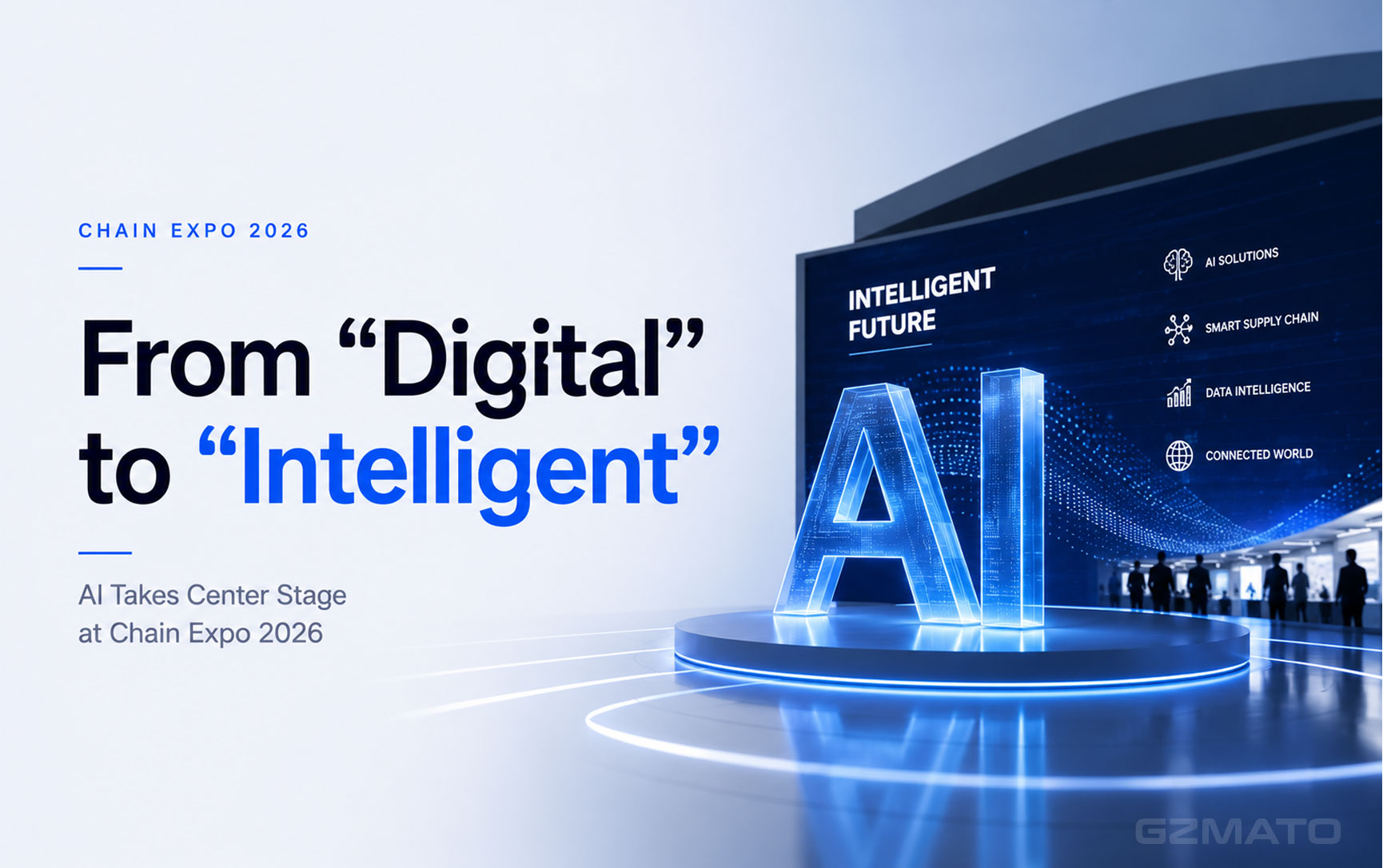
A One-Character Shift: From "Digital" to "Intelligent"
One character changed — and it says everything about where the tech industry is heading.
At the 4th China International Supply Chain Expo (Chain Expo) held in Beijing from June 22-26, 2026, the "Digital Technology Chain" was renamed to "Intelligent Technology Chain" . This wasn't a cosmetic change. It reflected a fundamental shift: AI is no longer an emerging technology — it is becoming the operating system for every industry .
The expo featured over 160 debut innovations, with AI-powered applications and intelligent collaboration solutions making up the majority of first launches [citation:11]. Unlike previous years where AI was confined to dedicated booths, this year AI was everywhere — integrated into manufacturing, healthcare, agriculture, energy, and logistics [citation:10].
"Every supply chain is also an information system," NVIDIA CEO Jensen Huang said in a video address, "and AI will give that system intelligence" [citation:10].
AI Goes Everywhere: From the Showcase to the Factory Floor
Walk through the Chain Expo halls, and the change is unmistakable. In previous years, visitors asked: "Where can I find AI?" This year, a more telling question emerged: "Where isn't AI?" [citation:10].
AI was embedded across all six industry chains:
| Industry Chain | How AI Is Being Applied |
|---|---|
| Advanced Manufacturing | AI-powered production management, predictive maintenance, industrial robotics [citation:3] |
| Smart Automotive | AI-enabled autonomous driving systems, intelligent cockpits [citation:4] |
| Clean Energy | AI-driven energy production, dispatch, and trading [citation:1] |
| Healthcare | AI-assisted surgery planning, patient management, clinical decision support [citation:4] |
| Agriculture | AI-powered precision breeding, quality inspection [citation:4] |
| Supply Chain Services | AI-optimized logistics, cross-border trade, and smart fulfillment [citation:1] |
One exhibitor who has attended all four expos noted the biggest change: "AI has become the protagonist" [citation:1].
Case 1: Video Editing in Minutes
At the AI PC experience zone, a short video editing demonstration drew crowds. A staff member imported a 5-minute video clip into a software tool running on local computing power [citation:2][citation:4].
The software automatically: identified faces, dialogue, and scenes; generated a narration script; and delivered a rough edit — all in minutes. One journalist who witnessed the demo described the AI as a "very reliable AI colleague" [citation:2][citation:4].
For content creators, this represents a massive leap in productivity: what once took hours of manual editing can now be accomplished in minutes with a local AI assistant [citation:4].
Case 2: Sorting 4 Tons of Nuts per Hour with 99% Accuracy
One of the most compelling demonstrations of AI in physical industry was a smart sorting machine equipped with eagle-eye scanning technology [citation:2].
The machine processes 4 tons of pistachios per hour, running 24/7 with over 99% accuracy. It identifies and removes defective nuts — mold, insect damage, cracks — in real-time, far exceeding what human inspectors can achieve [citation:2][citation:5].
As the sales manager explained: "It frees human workers from tedious preliminary sorting and redeploys them to higher-value quality control roles, ensuring consumers receive consistently high-quality products" [citation:2][citation:5].
A single human inspector might process a few kilograms of nuts per hour with variable accuracy. The AI-powered machine processes 4 tons per hour with 99%+ accuracy. But the goal is not replacement — it's augmentation. The humans are moved from repetitive sorting to quality assurance and process improvement roles.
Case 3: AI Accelerating R&D — 1 Day vs 1 Week
Perhaps the most transformative application on display was in R&D. An OLED materials research tool demonstrated how AI is accelerating innovation in display technology [citation:2][citation:5].
Previously, the R&D process involved manual execution of every step: molecular design, property comparison, synthesis analysis, patent analysis, chemical synthesis, and device testing [citation:2][citation:5].
Now, AI handles every step before chemical synthesis — designing, evaluating, and optimizing molecular candidates. The results are dramatic:
- Before: Researchers spent 1 week to find 1-2 new molecules
- After: Researchers can propose multiple high-quality solutions in a single day [citation:2][citation:5]
This is not about replacing researchers — it's about expanding their capacity. As one staff member put it: "AI fills the gaps in human knowledge and expands the boundaries of innovation" [citation:2][citation:5].
The Deeper Shift: AI Becomes the "Operating System" for Industry
Industry analysts see a deeper meaning in the "digital" to "intelligent" shift. As one expert explained [citation:10]:
- "Digital" focused on data collection, storage, and transmission — the infrastructure layer
- "Intelligent" goes further: using data as the foundation and AI as the engine to drive real-time decision-making, adaptive optimization, and collaborative intelligence
This is the transition from tools to operating systems [citation:10].
The expo's Intelligent Technology Chain pavilion was organized around a three-tier architecture [citation:10]:
- Bottom layer: Core technology innovation
- Middle layer: Industry incubation
- Top layer: Application scenarios
This mirrors the structure of an operating system: AI serves as the foundation and control hub, supporting a flourishing ecosystem of applications across all industries [citation:10].
AI is now being used across the entire supply chain, not just in isolated pockets. TCL reported that its AI models have increased R&D efficiency by 75% and software development efficiency by 30% [citation:10].
Key Takeaways
| # | Key Takeaway |
|---|---|
| 1 | AI is moving from "showcase" to "operating system" — It is no longer a technology on display; it is becoming the underlying infrastructure for every industry [citation:10]. |
| 2 | AI is everywhere — From manufacturing and healthcare to agriculture and energy, AI applications are now embedded across all supply chain categories [citation:3][citation:4]. |
| 3 | Video editing in minutes — Local AI computing enables real-time, privacy-preserving video editing that completes in minutes what once took hours [citation:2][citation:4]. |
| 4 | 4 tons per hour with 99% accuracy — AI-powered sorting machines demonstrate how automation can augment human workers, not replace them [citation:2][citation:5]. |
| 5 | R&D accelerated 7x — Researchers can now find multiple high-quality molecular candidates in one day, compared to one week previously [citation:2][citation:5]. |
| 6 | 160+ innovations debuted — The expo showcased over 160 first-launch innovations, with AI-powered solutions leading the charge [citation:11]. |
| 7 | AI is not replacing humans — it's amplifying them — In every use case, AI handles repetitive or computationally intensive tasks while humans focus on judgment, creativity, and quality [citation:2][citation:10]. |
Sources & Methodology (as of June 27, 2026):
- Xinhua / 新华网 — Chain Expo AI Zone coverage and case studies [citation:1][citation:2]
- China Net / 中国网 — AI applications across industry chains [citation:3]
- China Science and Technology Daily / 中国科技网 — Industry transformation analysis [citation:7]
- People's Daily / 人民网 — "Digital" to "Intelligent" one-character shift analysis [citation:10]
- Shanghai Securities News / 上海证券报 — 160+ innovation debut coverage [citation:11]
- CCTV / 央视网 — AI as the new protagonist in industry chains [citation:8]
AI-Ready Laptops | Fast Chargers | USB-C Cables | Power Banks | Development Kits | Tech Accessories
Special Offer: Use code TECH2026 for a discount on your first order!
Shop Now at Gzmato →
- Chain Expo 2026
- AI in manufacturing
- AI supply chain
- AI video editing
- smart sorting machine
- OLED AI research