HomePad: Apple's Smart Home Hub Arrives October 13 — Design, Face ID, and Siri AI
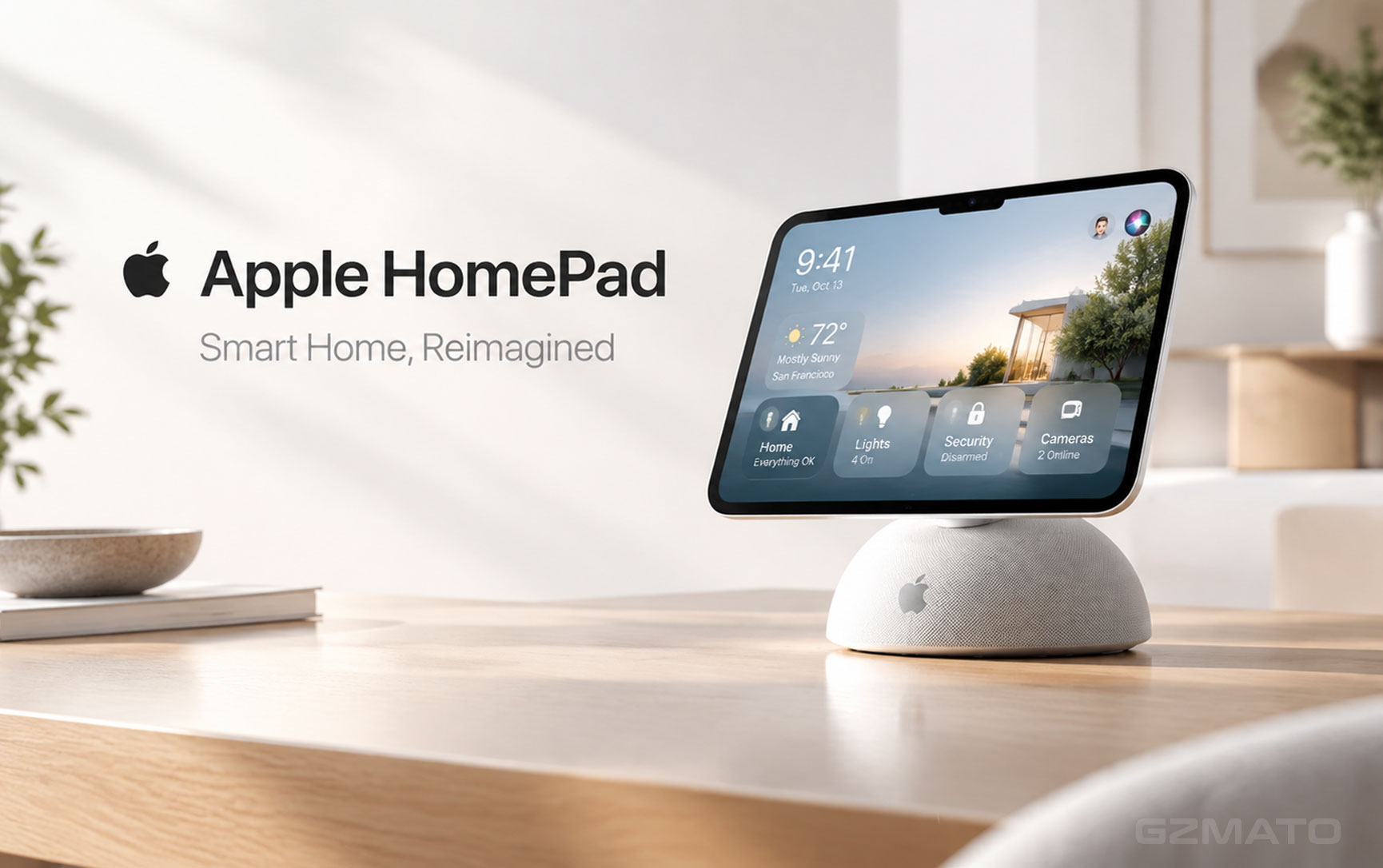
October 1, 2026 — Apple is expected to unveil the HomePad on October 13, according to Bloomberg's Mark Gurman, alongside a new HomePod mini and a fourth-generation Apple TV 4K. It would be Apple's first screen-equipped smart home hub, and the most significant expansion of its home product line in six years.
The HomePod mini hasn't been updated since 2020. The Apple TV 4K has been on the same design since 2022. Apple's smart home strategy has been stuck in neutral while Amazon and Google built out entire product families around screens and voice assistants. The HomePad is Apple's answer — but the question is why it took this long.
Design: Not a "HomePod with a Screen"
The most common mistake in early coverage is describing the HomePad as "a HomePod with a screen." That undersells what Apple appears to be building.
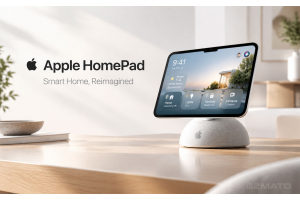
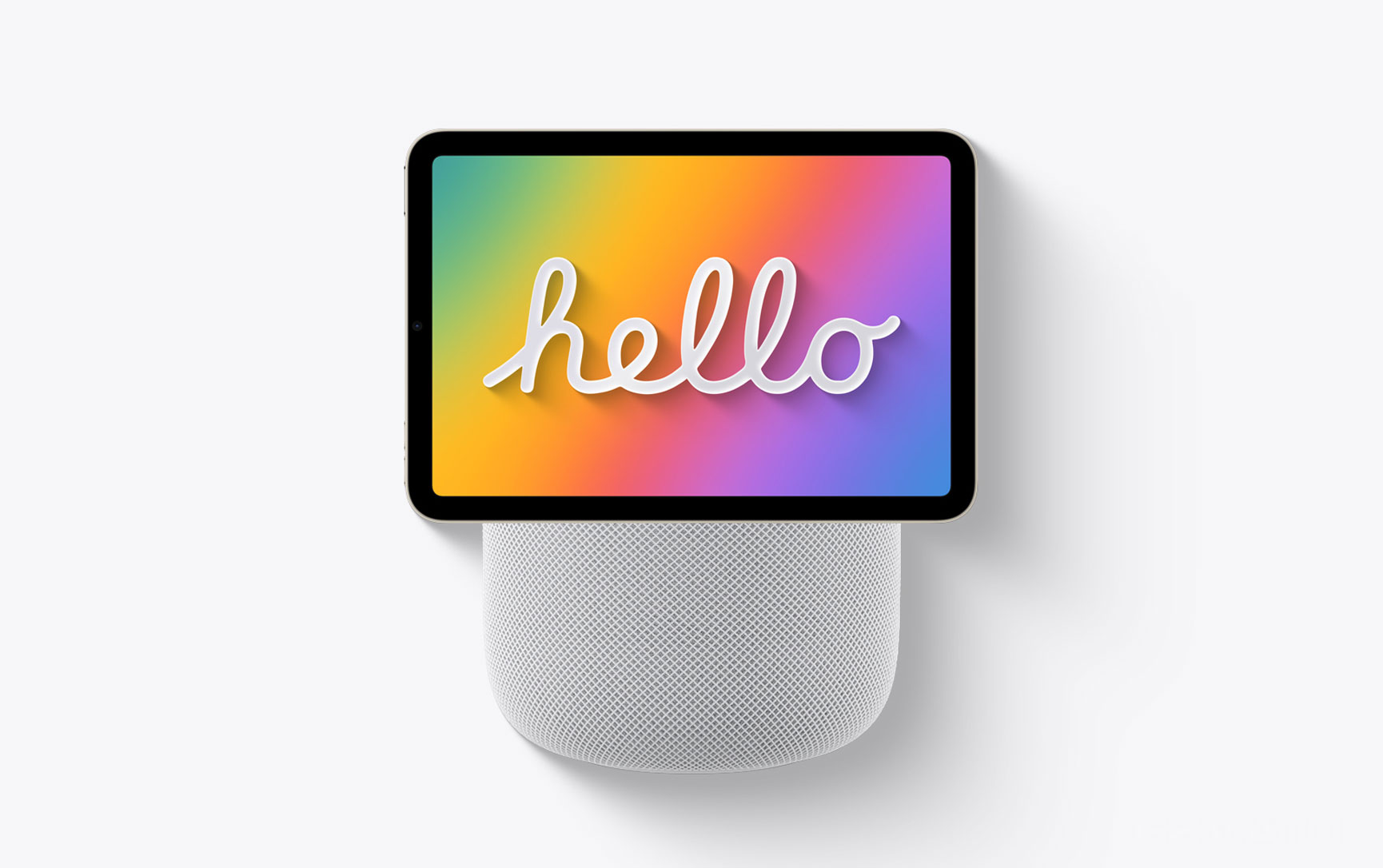
According to reports from The Verge, Gurman, and supply chain sources, the HomePad uses a 6-inch square touchscreen mounted on an adjustable arm, sitting on a circular speaker base — a design that explicitly echoes the iMac G4, Apple's iconic 2002 desktop computer. The screen can tilt to face the user, whether the device is on a countertop or mounted on a wall.
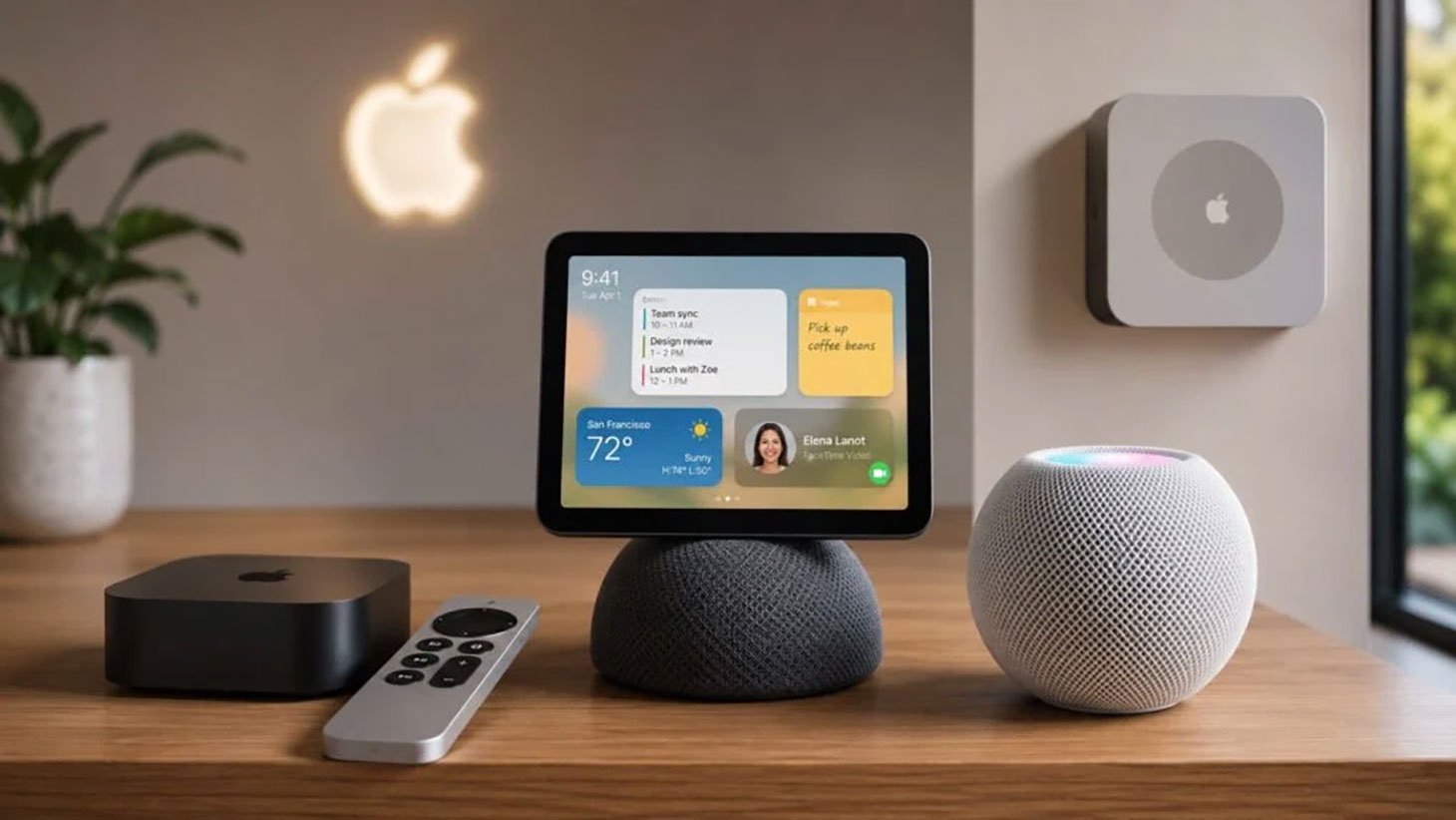
A concept rendering showing HomePad alongside a next-generation Apple TV and HomePod mini. Not an official Apple rendering.
The device is about the thickness of an iPhone, with no battery — it requires constant USB-C power. There are no physical buttons. The bezels are reportedly 1/4-inch, and the screen has rounded corners that match Apple's current design language.
Two mounting options are planned: a desktop version with the speaker base, and a wall-mounted version that attaches magnetically. Both use the same screen unit.
The iMac G4 was designed around a simple idea: the screen should adapt to the user, not the other way around. Its articulated arm let you position the display at any angle. If the HomePad follows the same logic, it suggests Apple sees this device as something you interact with from different positions — standing in the kitchen, sitting on the couch, lying in bed — rather than something fixed in place like an Echo Show.
The Real Breakthrough: Face ID and Multi-User Recognition
The feature that most clearly distinguishes the HomePad from every other smart display on the market is Face ID-based multi-user recognition.
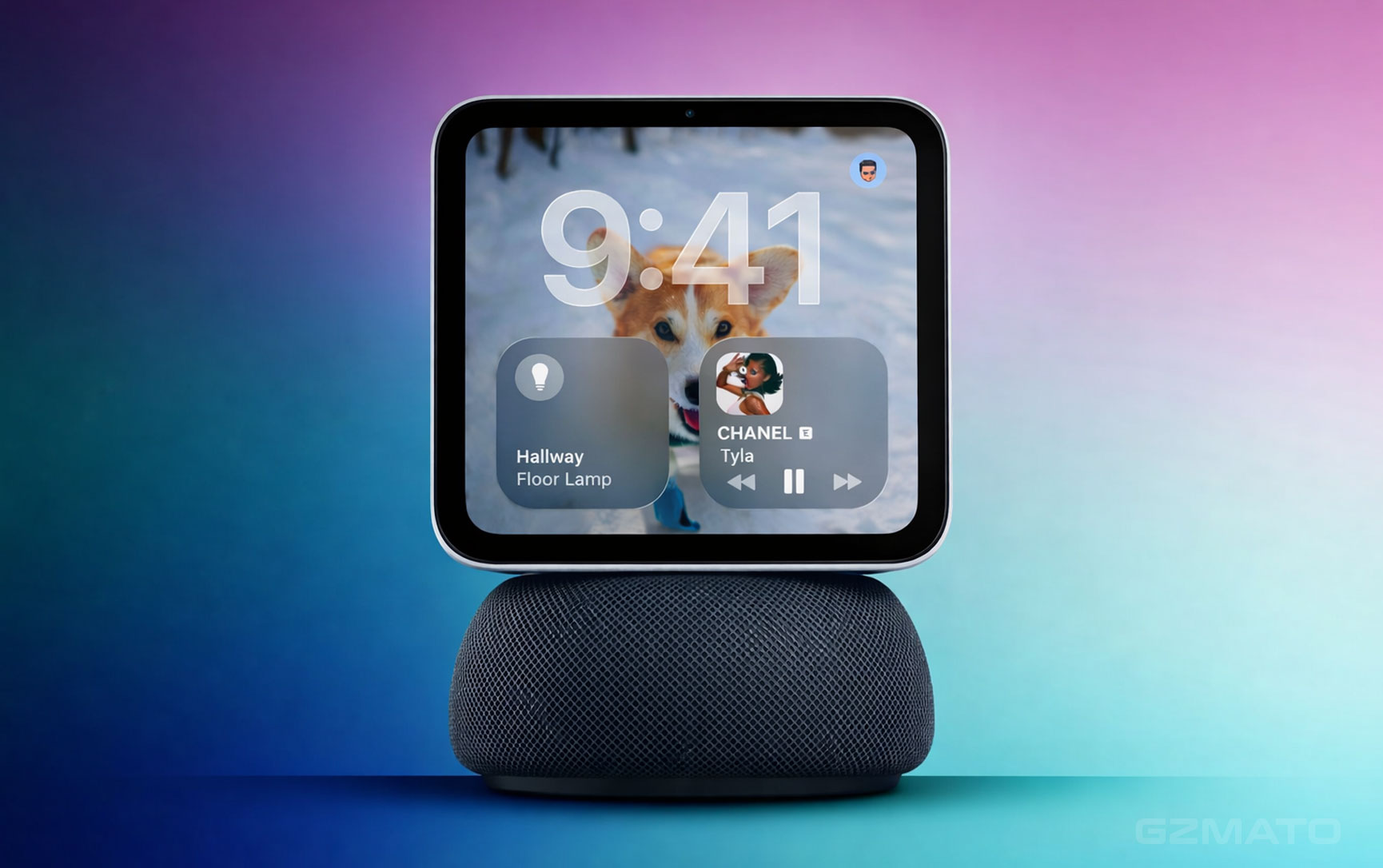
According to multiple reports, the HomePad's front camera can identify who is standing in front of it and automatically adjust the interface. Walk up as one family member, and the screen shows your calendar, your reminders, your music, your photos. Walk up as another, and it switches to theirs. If the device recognizes a guest — someone not registered as a household member — it automatically hides private information and displays only generic content.
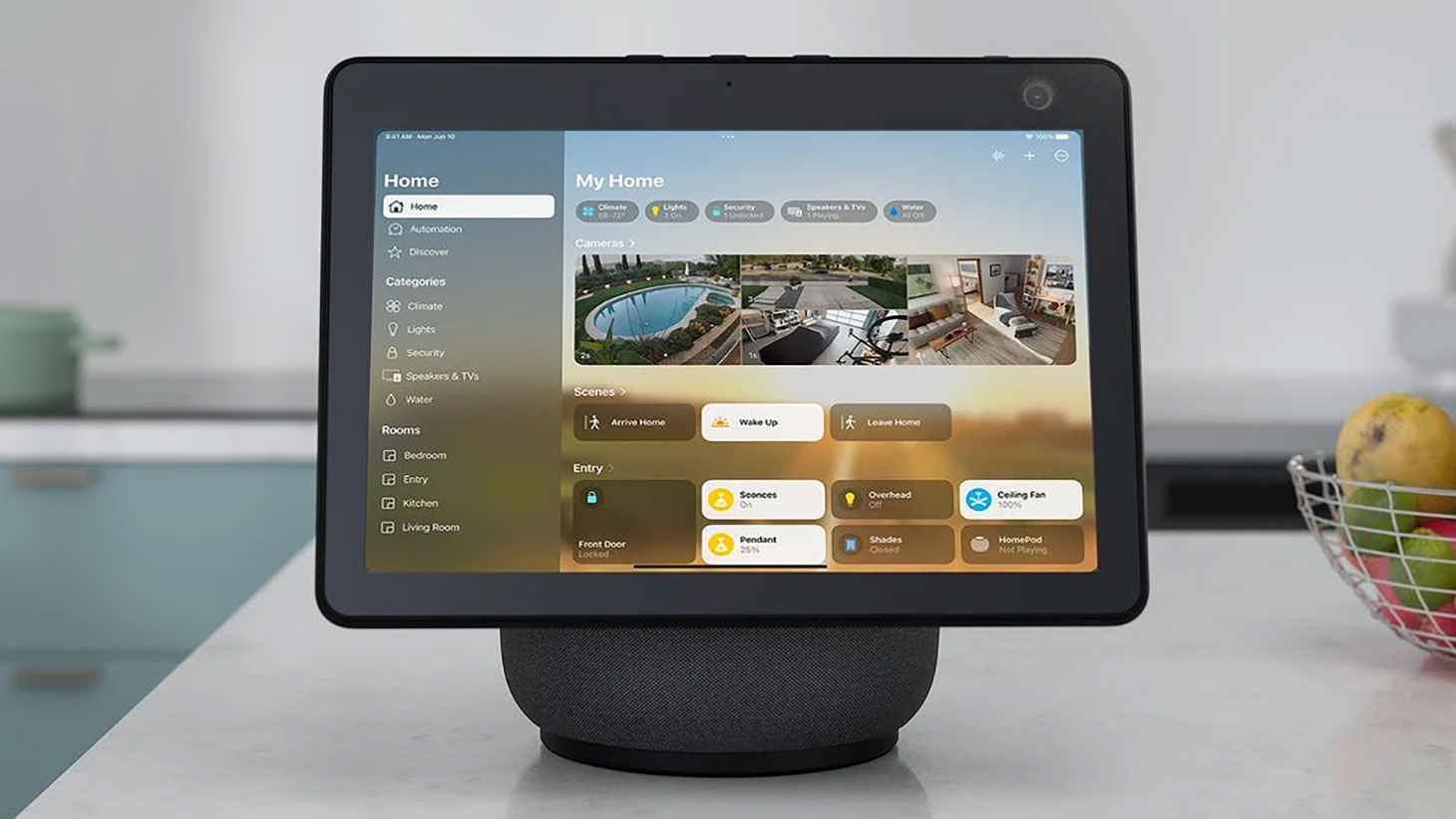
A concept rendering of HomePad running the Home app in a kitchen environment. The front camera enables multi-user recognition. Not an official Apple rendering.
This is a fundamentally different approach from Amazon and Google. The Echo Show and Nest Hub support multiple accounts, but switching between them usually requires voice commands or manual selection. The HomePad makes the switch automatic and ambient — you don't tell it who you are; it knows.
The screen also reportedly uses an edge-light function in darkness, turning into a soft night light or clock. That's a small detail, but it speaks to a device designed for continuous presence in the home, not just occasional queries.
Why Apple Waited This Long
The HomePod mini launched in October 2020. It has not received a hardware update since. The Apple TV 4K's current design dates to 2022. Meanwhile, Amazon has shipped seven generations of Echo Show, and Google has iterated on the Nest Hub through multiple hardware refreshes.
Apple's smart home lineup has been, by any objective measure, neglected.
| Product | Last Major Update | Years Since Update |
|---|---|---|
| HomePod mini | October 2020 | ~6 years |
| Apple TV 4K | October 2022 | ~4 years |
| HomePod (2nd gen) | January 2023 | ~3.5 years |
| HomePad | Expected October 2026 | New product |
The reason for this delay is not that Apple didn't see the market. It's that Apple didn't have the software to make the device worth building.
Without a mature Siri, a screen-equipped home hub is just an iPad on a stand. And Apple already sells iPads. The HomePad needed a reason to exist — a reason that wasn't "we should have a product in this category."
Siri AI Is the Key
That reason is Siri AI.
Apple's revamped Siri — powered by Apple Intelligence and available on iOS 27, iPadOS 27, and macOS 27 — is the first version of the assistant that can hold context across queries, understand personal data, and take actions across apps. It is also the first version that can run on-device for many tasks, which matters for a device designed to sit in the home and listen.
The HomePad is built around App Intents, Apple's framework for letting apps expose their functions to Siri. The goal is for Siri to move beyond "set a timer" commands to something more contextual — the kind of interaction where you say "it's cold in here" and the system adjusts the thermostat without being told which one.
iOS 27 and macOS 27 shipped on September 14. Siri AI is now in beta. The HomePad is expected on October 13. That's a one-month gap between the software foundation and the hardware that depends on it. Apple is timing the hardware launch to follow the software rollout — not the other way around.
Competition: Echo Show and Nest Hub
The HomePad enters a market with established players. Amazon's Echo Show and Google's Nest Hub have years of iteration behind them, and both are significantly cheaper.
| Feature | Apple HomePad (Expected) | Amazon Echo Show / Google Nest Hub |
|---|---|---|
| Price | ~$350 | $90 – $250 |
| Multi-user recognition | Face ID, automatic switching | Voice-based or manual account switching |
| Privacy | On-device processing for many tasks | Cloud-dependent |
| Ecosystem | HomeKit, Matter, Apple Intelligence | Alexa / Google Assistant ecosystems |
| Design | iMac G4-inspired, adjustable, wall-mountable | Fixed or limited-tilt designs |
| Availability | Expected October 13, 2026 | Available now |
Apple's advantages are privacy, ecosystem integration, and the design. Its disadvantages are price and, until this year, Siri's reputation.
The HomePad will not compete on price. Apple has never tried to win the smart home market by being cheaper. What it is betting on is that a certain kind of household — one already invested in Apple devices, HomeKit accessories, and Apple TV — will pay a premium for a device that fits seamlessly into that ecosystem.
Shop Smart Home Devices at Gzmato
Smart Speakers | Smart Displays | Home Hubs | Apple TV | HomeKit Accessories
Special Offer: Use code TECH2026 for a discount on your first order!
Shop Smart Home at GzmatoOur team can help you compare Apple, Amazon, and Google options based on your ecosystem and needs. Chat with us or open a request.
Key Takeaways
| # | What You Need to Know About the Apple HomePad |
|---|---|
| 1 | Expected launch: October 13, 2026 — alongside a new HomePod mini and fourth-generation Apple TV 4K |
| 2 | 6-inch square touchscreen on an iMac G4-inspired arm — adjustable tilt, desktop and wall-mount versions |
| 3 | Face ID multi-user recognition — automatically switches profiles based on who is nearby, with guest privacy mode |
| 4 | Siri AI is the primary interface — built around App Intents and on-device processing |
| 5 | Apple waited because Siri wasn't ready — without mature AI, a screen hub is just an iPad on a stand |
| 6 | Price expected around $350 — significantly more than Echo Show or Nest Hub |
| 7 | No physical buttons, no battery — requires constant USB-C power |
- Bloomberg / Mark Gurman — HomePad launch date, product lineup, October 13 event
- The Verge — Design details, iMac G4 reference, adjustable arm
- MacRumors — 6-inch display size, A18 chip, code references, launch timing
- 爱范儿 — Multi-user Face ID, personalized content switching, Siri AI as key feature, market analysis
- 经济观察网 — HomePad positioning, Face ID privacy mode, ecosystem integration
- 快科技 — HomePod mini and Apple TV refresh, pricing expectations
- 9to5Mac — Face ID support in leaked code, HomePad hardware details
- Kosutami (leaker) — Wall-mount version, magnetic attachment details
- Apple Official — iOS 27, iPadOS 27, macOS 27 release and Siri AI availability
- Apple HomePad
- HomePad launch
- Apple smart home hub
- HomePad Face ID
- Siri AI home hub
- iMac G4 design
- Apple HomePod mini 2
- Apple TV 4K 2026
- Gzmato