Apple at 57%: The Memory Crisis Is Reshaping the Phone Market
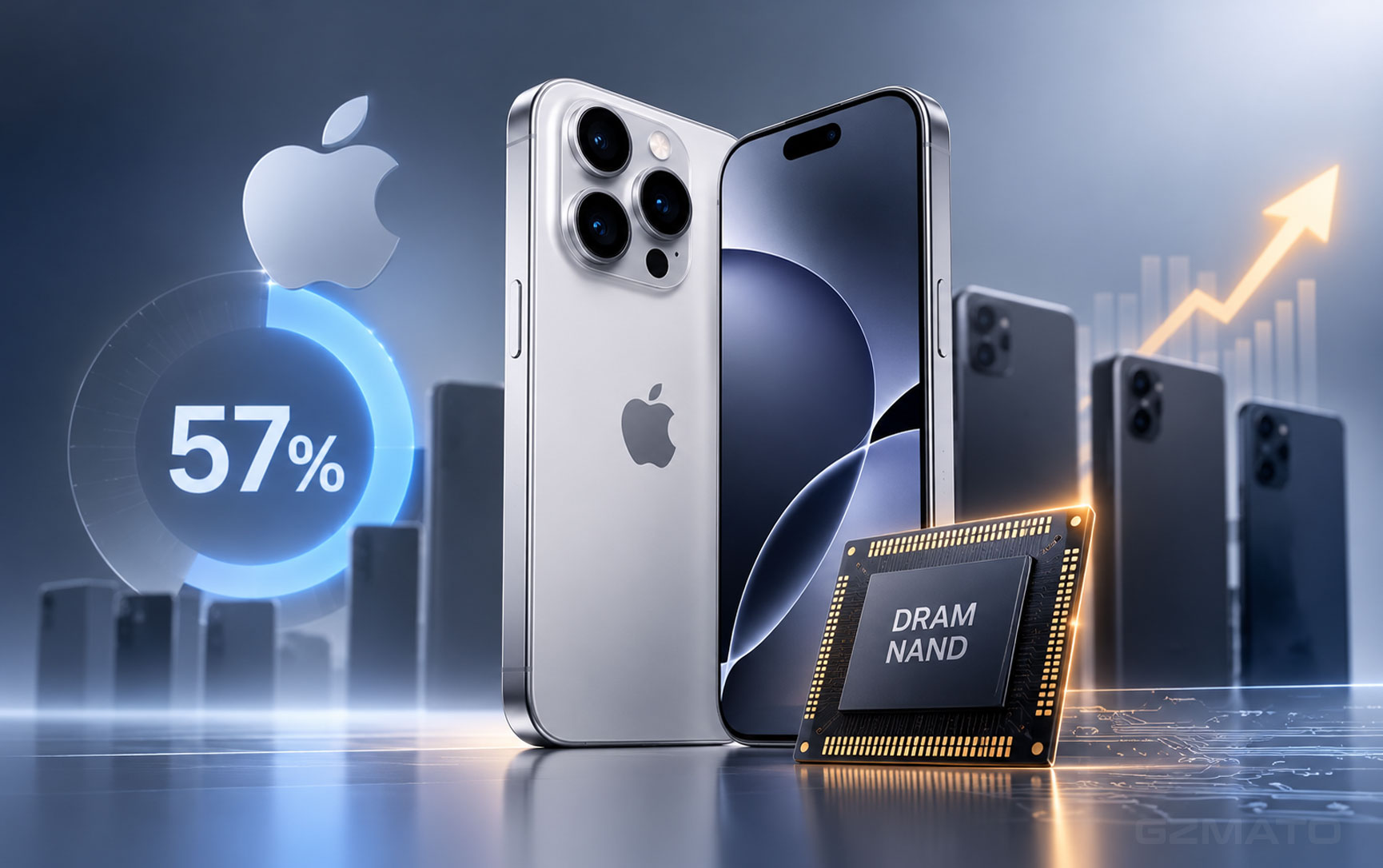
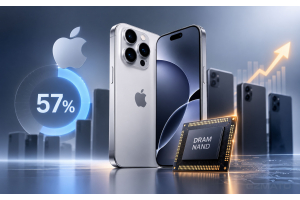
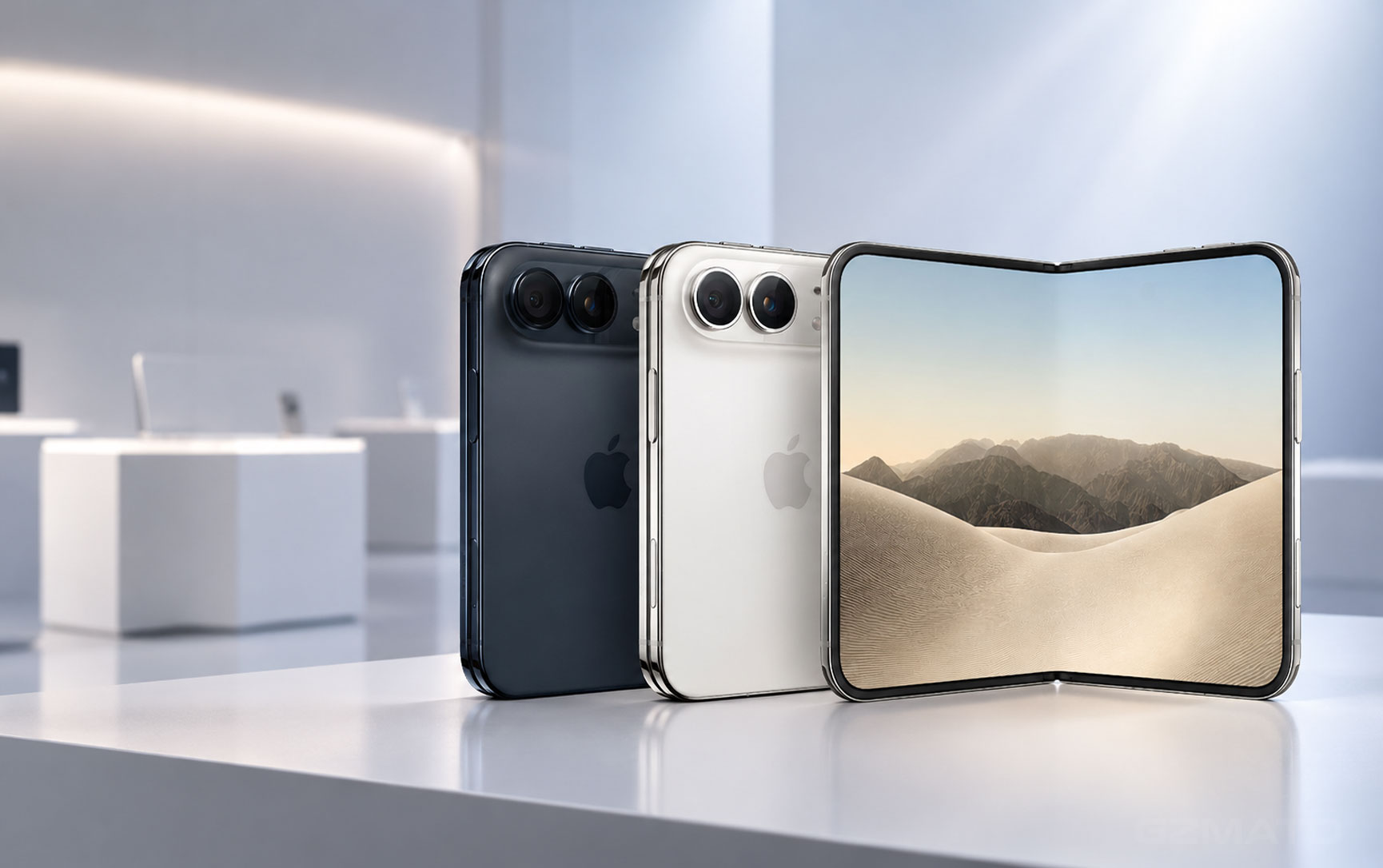
November 28, 2026 — The US smartphone market is shrinking, but Apple is getting bigger. According to Counterpoint Research’s latest data, US smartphone shipments fell 9% year-over-year in Q3 2026. Apple’s market share, however, climbed from 50% to 57%—a seven-point gain—making it the only major OEM to avoid a shipment decline[citation:1][citation:6].
Samsung was the only other brand to grow share, edging up one point to 25%, largely on the strength of its flagship and foldable lineup[citation:14]. The real damage was concentrated at the bottom. Budget Android brands, the ones that compete on price and thin margins, got hit hardest. The culprit is not a lack of demand. It is the cost of memory.
The Math: Why Android Is Getting Crushed
The numbers tell a story of structural asymmetry. Memory is not a minor component. On a low-end Android phone, the cost of DRAM and NAND flash has gone from roughly 29% of the bill of materials in Q4 2025 to an estimated 56% in Q4 2026[citation:2]. On a premium flagship, the same component cost rose from 13% to 35%. The difference is the margin cushion.
A $200 Android phone with 56% of its cost in memory has almost nothing left for the processor, display, battery, assembly, and profit. To stay afloat, the OEM must either raise the price—pushing it out of the budget segment where its customers live—or cut shipments and cede the market. That is exactly what is happening. Xiaomi’s global shipments fell over 30% year-over-year in Q3, and OPPO and vivo each dropped more than 20%[citation:2][citation:11].
| Segment | Memory Share of BOM (Q4 2026) | What It Means |
|---|---|---|
| Low-end Android | ~56% | No room to absorb cost. Must raise price or cut volume. |
| Premium flagship | ~35% | Margin cushion allows absorption without killing demand. |
Why Apple Is Winning (and It's Not Just Brand Loyalty)
It is tempting to attribute Apple’s share gain to brand loyalty alone. That is part of it. But the more concrete factor is pricing discipline and supply chain management. Apple held iPhone prices steady for most of 2026, only raising them with the iPhone 18 Pro launch in September[citation:10]. By the time Apple adjusted prices, its competitors had already been forced to raise theirs multiple times, eroding their value proposition.
There is also a structural advantage. Apple sells fewer models at higher price points. It does not need to defend a $150 or $200 price band. When memory costs rise, Apple can absorb the increase because its average selling price and margins are high enough. A budget Android OEM cannot.
Apple is not immune to demand softness. Reports suggest Apple cut iPhone 18 Pro component orders by 15–20% as demand at the higher $1,199 starting price fell short of expectations[citation:8][citation:12]. The share gain in Q3 came partly from the absence of a standard iPhone 18, which shifted the mix toward higher-priced models and lifted revenue. The lesson is not that Apple is invincible. It is that Apple’s position allows it to trade volume for margin in a way that budget Android brands cannot.
The Opportunity for Sellers: Low-Cost Inventory
The memory crisis is not just a story about Apple winning. It is a story about a widening gap between what consumers can afford and what new devices cost. Counterpoint’s analysts note that consumers are holding devices longer and increasingly considering refurbished devices as a way to access premium hardware at lower prices[citation:2].
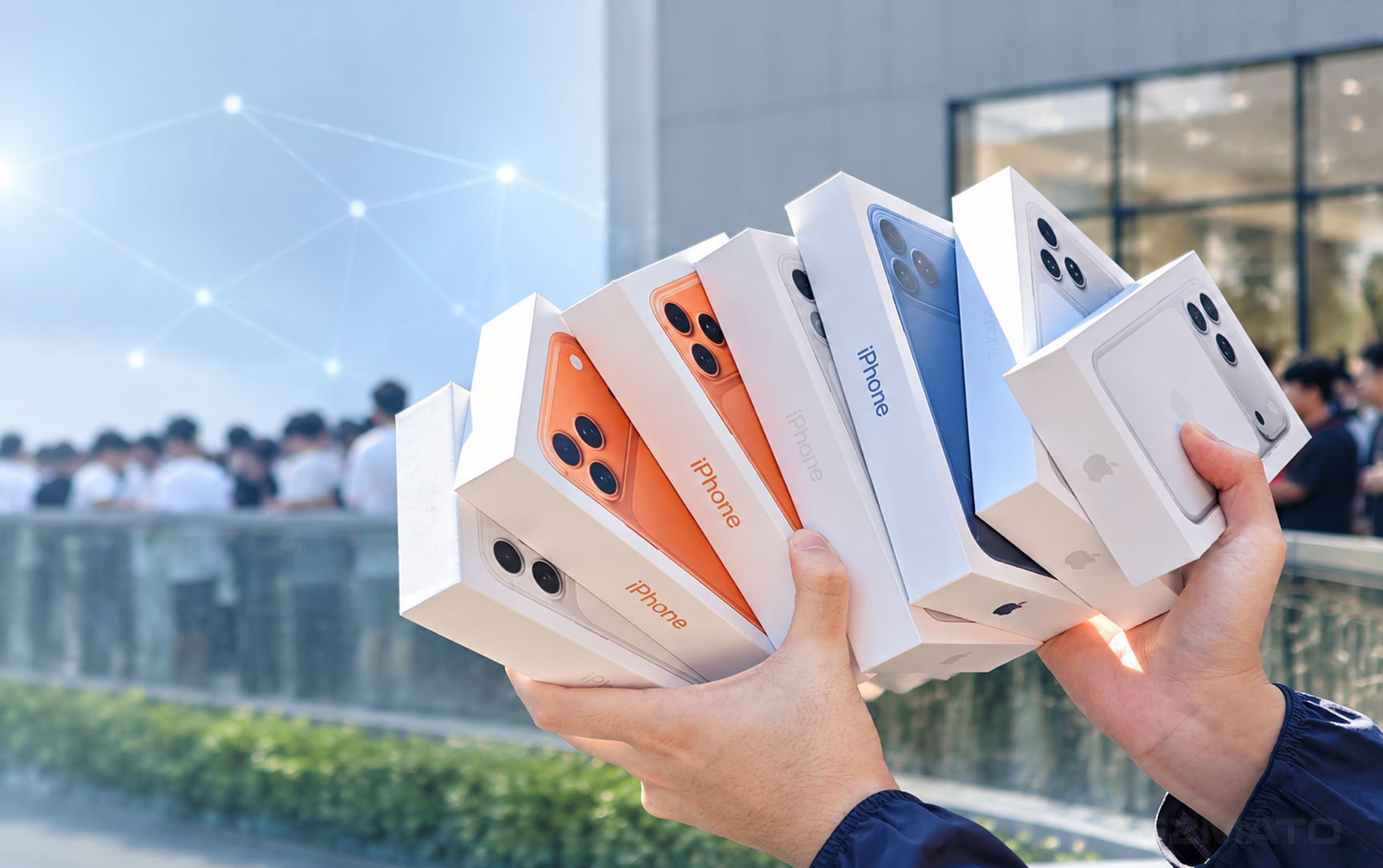
That is the operational signal for Gzmato sellers. The demand for Apple products is not disappearing. It is migrating. Buyers who want the Apple ecosystem but cannot justify a $1,199 iPhone 18 Pro are exactly the customers that low-cost Apple inventory serves. Gzmato’s tiered structure—Brown Box New without Apple warranty, Brightstar BS Stock, and GzmatoCare+—allows sellers to offer genuine Apple hardware at price points that budget Android phones can no longer reach profitably.
Key Takeaways
| # | What You Need to Know |
|---|---|
| 1 | Apple’s US share hit 57% in Q3 2026, up from 50%. It was the only major OEM without a shipment decline in a market that fell 9%[citation:1]. |
| 2 | The memory crisis is the driver. Memory is projected to hit 56% of low-end phone BOM cost, crushing budget Android margins[citation:2]. |
| 3 | Apple’s advantage is pricing discipline and premium mix. It held prices longer and does not need to defend a $200 price band[citation:10]. |
| 4 | Xiaomi, OPPO, vivo are contracting. Their global shipments fell 20–30% as they prioritize profitability over volume[citation:2][citation:11]. |
| 5 | Apple is not invincible. iPhone 18 Pro component orders were reportedly cut due to softer demand at higher prices[citation:8]. |
| 6 | Consumers are shifting to refurbished. The widening price gap is pushing budget-conscious buyers toward used and low-cost inventory[citation:2]. |
| 7 | The opportunity is in the gap. Gzmato’s Brown Box, BS Stock, and GzmatoCare+ serve buyers who want Apple quality but are priced out of new flagships. |
- Counterpoint Research — Q3 2026 US Smartphone Shipments Fell 9% YoY as Memory Costs Squeeze Android; Apple Share Climbs to 57% (Nov 25, 2026)
- NetEase / Southern Metropolis Daily — Memory costs surge, smartphone prices up 20% this year (Oct 12, 2026)
- Sohu / Cailian Press — Apple’s US market share rises to 57% (Nov 27, 2026)
- TechRepublic — Apple Reportedly Cuts iPhone 18 Pro Component Orders as Demand Softens (Oct 9, 2026)
- Digital Today — Apple US smartphone shipment share tops 57%, Samsung rises to 25% (Nov 26, 2026)
iPhone | MacBook | iPad | Brown Box New | Brightstar BS Stock | GzmatoCare+
Special Offer: Use code TECH2026 for a discount on your first order!
Shop Phones at GzmatoTell us what Apple inventory tiers you are interested in, and we can help you build a low-cost product mix that serves the growing refurbished and budget-conscious segment. Chat with us or open a request.
- Apple US market share 2026
- memory cost smartphone
- Android shipment decline
- refurbished iPhone opportunity
- low-cost Apple inventory
- Gzmato