World's First Visual AI Headphone: Gofun's Camera-Equipped Earbuds Launch May 15, 2026
- The World's First Visual AI Headphone Arrives
- Product Specifications at a Glance
- The Eyes: How Visual Perception Works
- From Passive to Proactive: True AI Intelligence
- Independent Terminal: No Phone Required
- Privacy First: The Burn After Reading Mechanism
- The Lightware OS Ecosystem
- Why Now? The End of TWS Hype Cycle
- Backed by Industry Heavyweights
- Final Verdict: A Bold Bet on AI's Next Frontier
- Shop Premium Audio Gear at Gzmato
May 12, 2026 – The TWS headphone market, which exploded in 2019, has finally hit its ceiling. In 2025, China's headphone market saw its first annual decline since the TWS boom, with shipments falling 6.9 percent year-over-year. Yet average selling prices rose 13.3 percent, and premium segment sales (over $140) surged more than 40 percent.
The World's First Visual AI Headphone Arrives
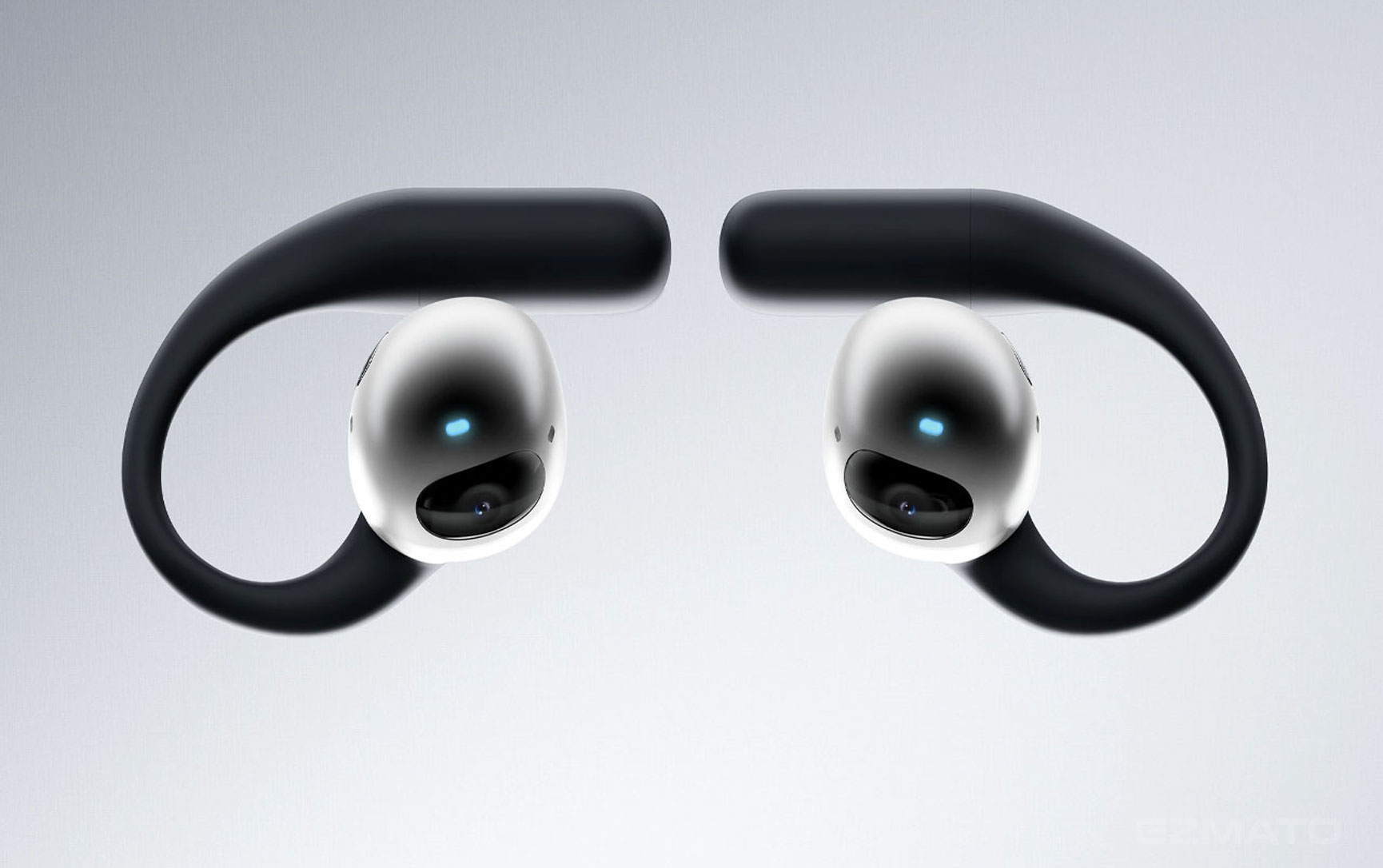
On May 9, 2026, Gofun Technology announced that its "FullSense AI Headphone" — the world's first visual AI headphone — will officially launch on May 15. The announcement comes as Apple accelerates development of its own camera-equipped AirPods, suggesting that visual AI wearables are becoming the next hardware battleground.
Gofun's product is built around three core concepts: Full Perception, Proactive AI, and Personalization. The device doesn't just listen — it sees, senses location, monitors physical state, and uses all that data to anticipate user needs rather than merely responding to commands.
Product Specifications at a Glance
| Specification | Detail |
|---|---|
| Weight (per earbud) | 11g, open-ear ear hook design |
| Cameras | Dual 2MP fixed-focus, 88-degree FOV binocular design |
| Connectivity | Bluetooth + custom 4G eSIM + dual-frequency GPS |
| Battery Life | 9h calls / 15h music play (earbuds), 90h total with case |
| Materials | Medical-grade liquid silicone, comfortable for all-day wear |
| Noise Cancellation | 38dB ENC with dual-mic + noise-canceling cavity design |
| Operating System | Lightware OS (proprietary cloud-edge-device architecture) |
The Eyes: How Visual Perception Works
Not a Camera for Photography — A Sensor for AI
The most distinctive feature of Gofun's headphone is its dual-camera system. The engineering prototype uses 2-megapixel fixed-focus cameras with an 88-degree field of view, arranged in a binocular design. Unlike smartphone cameras designed for photography, these are specifically optimized for AI visual perception — helping the device understand what you're looking at in real time, not capture shareable images.
What this enables:
- Visual shopping: Look at any product and ask "how much is this?" The AI identifies the item, checks prices online, and can even add it to your cart — all hands-free, all through voice.
- Restaurant analysis: Point your gaze at a menu or dining establishment, and the AI can pull up reviews, hours, or dietary information.
- Environmental awareness: Combined with GPS and location sensors, the headphone can understand where you are and what you're likely doing, offering relevant suggestions.
The camera module is remarkably compact — just 8 × 10.31 × 4.01mm — a custom design developed in partnership with imaging specialists to balance power consumption, image quality, and physical space constraints.
From Passive to Proactive: True AI Intelligence
No Wake Word Required
Traditional AI headphones are fundamentally passive — they wait for you to say a wake word, listen to a command, and execute. Gofun's product aims to change that. By continuously analyzing visual input, location data, and user behavior patterns, the headphone can anticipate needs and offer suggestions before you ask.
Examples of proactive assistance include:
- A reminder to pick up milk when passing a grocery store, based on shopping history
- A nutrition breakdown of menu items when looking at a restaurant
- Real-time translation of foreign text you're looking at, spoken directly into your ear
- Navigation prompts that adapt to landmarks you're currently seeing
Independent Terminal: No Phone Required
5G Connectivity Built In
Perhaps the most ambitious aspect of Gofun's design is its independence. The headphone includes a custom 4G eSIM module and dual-frequency GPS, allowing it to operate without a paired smartphone.
Current TWS headphones are essentially iPhone or Android accessories — without a phone, they're limited to stored music and basic Bluetooth functions. Gofun's headphone can:
- Connect to cellular networks independently
- Run AI inference in the cloud with low latency
- Access the internet for real-time price comparisons, translations, and information lookup
- Determine location precisely through GPS
This transforms the product category. Rather than an accessory that extends a phone's capabilities, Gofun's headphone is positioned as a standalone device that happens to pair with a phone when convenient — but doesn't require one.
Privacy First: The Burn After Reading Mechanism
Addressing the Camera-in-Ear Concern
Cameras on a headphone raise immediate privacy questions. Gofun has implemented several safeguards:
- "Burn after reading" image processing: Visual data is not stored permanently; it's processed and discarded
- Fingerprint sensor: Biometric authentication for sensitive operations
- End-to-end encryption: Data transmission is secured from device to cloud
- Optional feature toggles: Users can disable visual perception features entirely
These measures attempt to address a key market concern. Meta's Ray-Ban smart glasses have faced significant privacy criticism over unobtrusive cameras and unclear recording indicators. Gofun's "no persistent data" approach is one way to differentiate — but consumer trust will ultimately determine whether camera-equipped wearables achieve mainstream adoption.
The Lightware OS Ecosystem
A Distributed Operating System for AI Wearables
Behind the hardware is Lightware OS, Gofun's proprietary operating system designed specifically for AI wearables. Built on a cloud-edge-device architecture, Lightware OS connects multiple large language models, coordinates sensors and hardware components, and manages the proactive "attention" mechanism that distinguishes the product.
The OS approach is significant. Most TWS headphones run minimal firmware that handles audio codecs and basic Bluetooth — the "intelligence" lives entirely on the paired phone. Lightware OS allows the headphone itself to make decisions, enabling the proactive features described above.
Why Now? The End of TWS Hype Cycle
The Market Reset
According to IDC, global wearable device shipments reached 611.5 million units in 2025, growing 9.1 percent year-over-year. However, the headphone market specifically has matured. In China, 2025 headphone shipments fell 6.9 percent — the first decline since the TWS boom of 2019.
Yet average selling prices rose 13.3 percent, and premium segment sales increased over 40 percent. This data suggests consumers aren't buying fewer headphones — they're just no longer interested in incremental upgrades. Active noise cancellation, battery life, and audio quality have all reached diminishing returns.
The industry needs a new differentiator. Visual AI may be it. Apple's reported camera AirPods development and Google's Android XR push both suggest major players are betting that "AI that sees" is the next hardware cycle.
Backed by Industry Heavyweights
A Who's Who of Strategic Investors
Gofun Technology was founded in October 2024, but has already raised multiple funding rounds from an impressive roster of strategic and financial investors.
Strategic investors include: Shokz (open-ear audio pioneer), Goertek (audio component manufacturer), Lenovo, XPeng (automotive AI), CATL via Borui Capital (battery technology), and GigaDevice.
Financial investors include: CDH Investments, Alpha Startups, InnoAngel, ShuiMu Tsinghua Alumni Fund, and HKUST's Professor Gao Bingqiang.
The investor lineup is notable. Shokz brings open-ear audio expertise; Goertek and GigaDevice supply component manufacturing; CATL provides battery technology; XPeng contributes AI and autonomous systems experience. The diversity suggests Gofun is being built as a platform play, not just a single product.
Final Verdict: A Bold Bet on AI's Next Frontier
Gofun's Visual AI Headphone represents a genuine attempt to break TWS market stagnation through genuine innovation rather than spec upgrades. Adding cameras and cellular connectivity transforms the product category from phone accessory to independent device.
The promise is significant: A headphone that can see what you're looking at and offer useful information without requiring you to pull out your phone and type. For shopping, travel, and everyday information lookup, this could be genuinely faster and more convenient than current smartphone-centered workflows.
The challenges are equally real: Privacy concerns about camera-equipped wearables are legitimate, and consumer trust cannot be bought with feature sheets. Battery life with active visual processing — not just audio playback — remains to be tested. And the "proactive AI" claim is as much about software maturity as hardware capability.
Industry implications: Whether Gofun succeeds or not, the product signals a direction. Apple is reportedly developing its own camera AirPods. Google's Android XR is pushing wearable intelligence. The "AI that sees" category is opening, and Gofun is first to market — a rare advantage in a hardware space dominated by billion-dollar incumbents.
For early adopters, the May 15 launch offers a glimpse of what headphones might become: not just devices that play your music, but devices that help you navigate the physical world through AI-powered vision and voice. Whether the execution meets the ambition will be determined after launch — but the attempt itself is worth watching.
Experience Cutting-Edge Audio at Gzmato
Open-Ear Headphones | ANC Earbuds | Hi-Res Audio | Wireless Audio Accessories
GZMATOAUDIO
Data Sources & Methodology (as of May 12, 2026):
- 光帆科技官方公告 – Official product announcement and launch details
- IT之家 – Gofun visual AI headphone specifications and launch timeline
- 中关村在线 – Technical feature breakdown and "FullSense" concept explanation
- 物联网世界 – Industry analysis, market context, and Lightware OS description
- 雷峰网 – Company background, investor lineup, and product positioning
- 36氪 – Launch announcement confirmation
Note: Full pricing and comprehensive real-world performance reviews are pending public launch on May 15, 2026.


- visual AI headphone
- Gofun headphone
- camera earbuds
- AI wearable
- proactive AI
- lightware OS
- TWS innovation