Huawei Mate 90 Series: Kirin 9050 Pro Logic Folding, 10,000-Nit OLED, External Camera
- Huawei Mate 90 Series: The Logic-Folding Chip Arrives
- Five Models, Two Chip Tiers
- Kirin 9050 Pro: Architecture Over Lithography
- Dual-Layer OLED: 10,000 Nits and a Longer Lifespan
- The External Lens: A Modular Camera in Your Pocket
- Launch Timing and Availability
- Shop Huawei & Smartphones at Gzmato
- Key Takeaways
September 28, 2026 — Huawei is preparing to launch its most significant flagship lineup in years. The Mate 90 series, expected to be officially unveiled around late September or early October, will bring the first commercial smartphone chip built on Huawei's "Tao's Law" logic-folding architecture to market [citation:2][citation:6].
The lineup will also introduce dual-layer OLED displays reaching up to 10,000 nits of peak brightness, and for the first time on a Huawei phone, an external lens module that dramatically extends telephoto capability [citation:1][citation:4].
Five Models, Two Chip Tiers
Huawei is expanding the Mate 90 lineup to five models — the largest Mate series launch to date [citation:2][citation:8]. The lineup splits into two chip tiers:
| Model | Chip | Key Differentiator |
|---|---|---|
| Mate 90 | Kirin 9030 series | Standard flagship |
| Mate 90 Pro | Kirin 9030 series (upgraded) | Dual-layer OLED |
| Mate 90 Pro Max | Kirin 9050 Pro | Dual-layer OLED, 10,000 nits |
| Mate 90 Pro Max Collector's Edition | Kirin 9050 Pro | Native lens ring, external camera |
| Mate 90 RS Ultimate Design | Kirin 9050 Pro | Limited production, octagonal design |
According to channel reports, the standard and Pro models account for roughly 65% of initial inventory, while the Pro Max, Collector's Edition, and RS models will be in limited supply [citation:3][citation:8]. This mirrors Huawei's strategy of positioning the top-tier models as premium, limited-availability products.
Kirin 9050 Pro: Architecture Over Lithography
The Kirin 9050 Pro is the centerpiece of the Mate 90 series — the first smartphone chip to commercially implement Huawei's "Tao's Law" (韬定律) logic-folding architecture [citation:9][citation:21].
Traditional chip design pursues "geometric scaling" — shrinking transistors to fit more of them on a chip. Logic folding takes a different approach: it stacks logic units vertically within the same chip, adding vertical interconnect channels that shorten signal paths and reduce latency [citation:2][citation:9].
Huawei's semiconductor chief He Tingbo first proposed the concept at the 2026 International Symposium on Circuits and Systems. She described it as using time-based scaling to replace geometric scaling — "compressing signal propagation delay" instead of shrinking transistor dimensions [citation:9].
The reported results are significant [citation:9][citation:17]:
| Metric | Improvement vs. Kirin 9030 Pro |
|---|---|
| Transistor Density | +53.5% (to 238 MTr/mm²) |
| Chip Area | -37.5% |
| Power at Equivalent Performance | -41% |
| GPU Ray Tracing Performance | +142% |
The CPU configuration uses a 9-core, 16-thread design: 1 prime core, 2 performance cores, 4 efficiency cores, and 2 little cores [citation:14]. The GPU is a new Mali design with hardware ray tracing support [citation:4].
One important caveat: the Kirin 9050 Pro was first deployed in the Mate XT 2 tri-fold, where thermal constraints limit its sustained performance. The Mate 90 Pro Max's conventional slab form factor and larger vapor chamber are expected to allow the chip to perform at its full potential for the first time [citation:1][citation:9].
Dual-Layer OLED: 10,000 Nits and a Longer Lifespan
The Mate 90 Pro and Pro Max will feature dual-layer OLED displays — also known as Tandem OLED — with the Pro Max reaching a peak brightness of 10,000 nits [citation:5][citation:14].
Tandem OLED stacks two RGB light-emitting layers vertically. This architecture delivers two benefits: brightness can theoretically reach twice that of a single-layer panel, and each layer handles only half the electrical load, which significantly slows material degradation and extends panel lifespan [citation:9][citation:17].
For context, the iPhone 18 Pro has a peak outdoor brightness of around 3,000 nits, and the Galaxy S26 Ultra is rated at 2,600 nits [citation:18]. Huawei's 10,000-nit figure — if confirmed — would represent a substantial leap, though the practical difference depends on how the brightness is measured and sustained.
Chinese display maker BOE is reportedly the supplier for the dual-layer OLED panels, marking another milestone for domestic display technology [citation:9].
The External Lens: A Modular Camera in Your Pocket
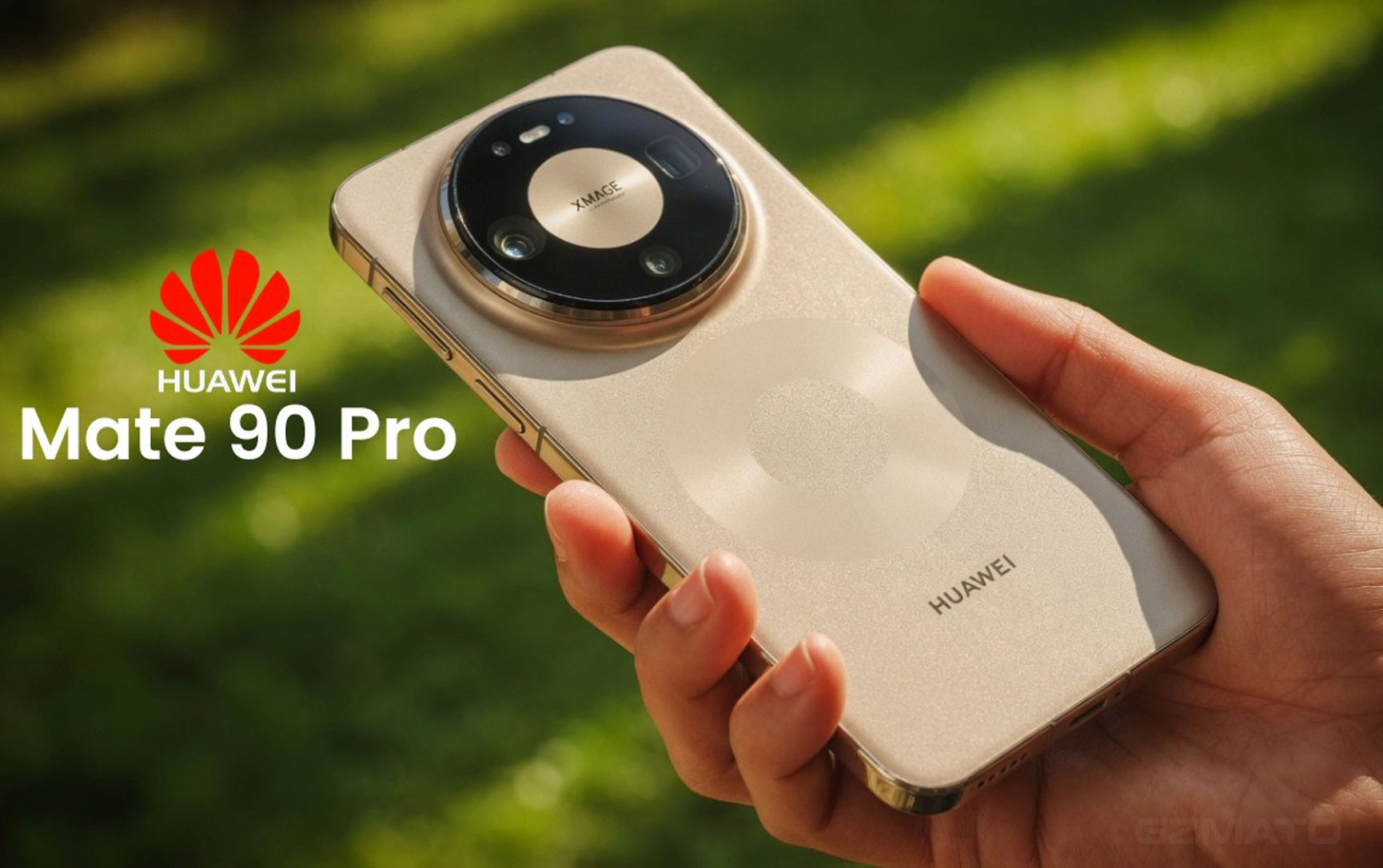
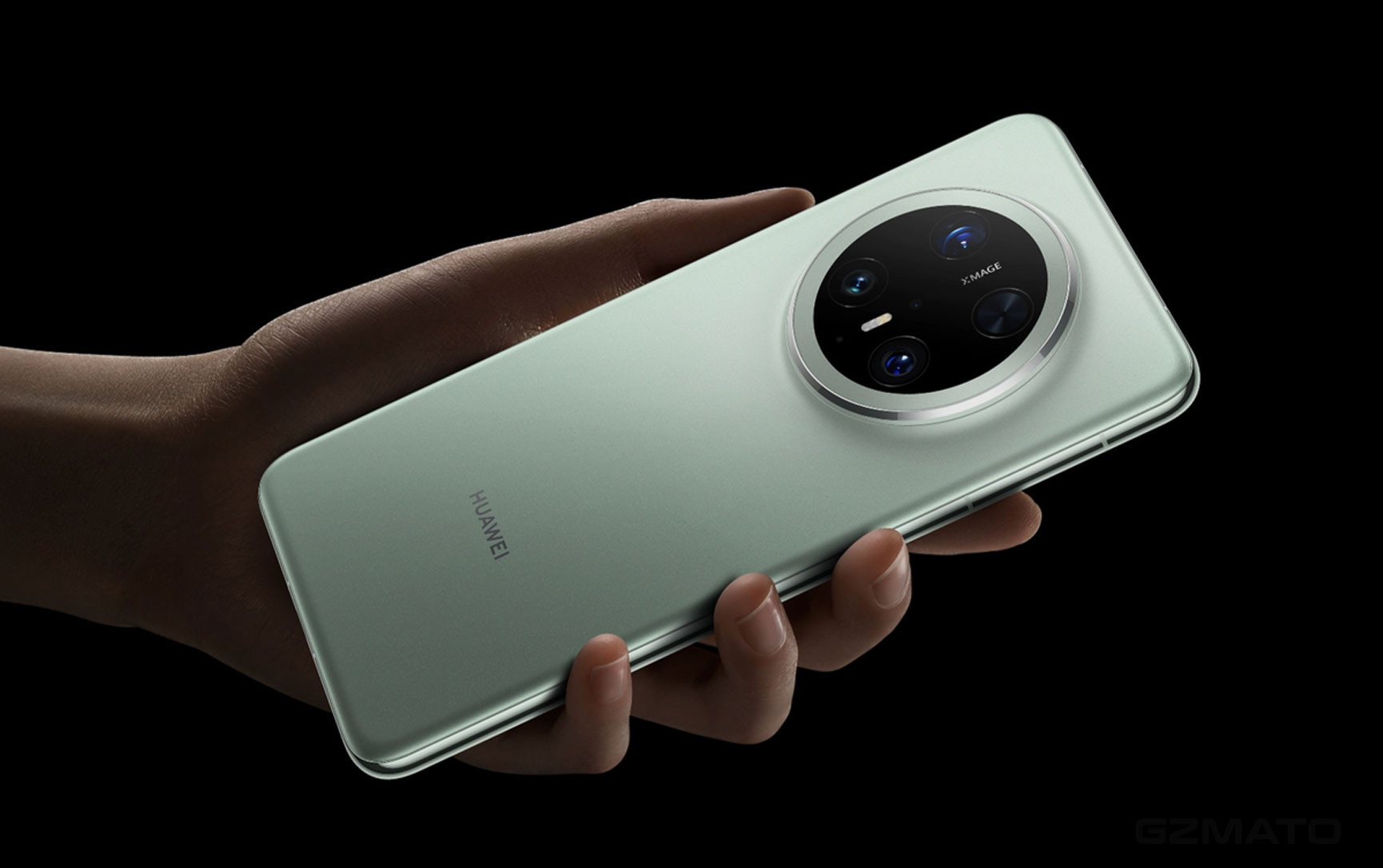
Perhaps the most unusual feature of the Mate 90 series is the Mate 90 Pro Max Collector's Edition's native lens ring, which allows an external camera module to be attached directly to the phone [citation:1][citation:4].
The module, called the Huawei Ruiying Z10, is a standalone camera unit with its own 1-inch sensor and optical system [citation:11][citation:23]:
| Huawei Ruiying Z10 Specs | Detail |
|---|---|
| Focal Length | 24-240mm equivalent |
| Optical Zoom | 10x |
| Sensor | 1-inch |
| Aperture | f/2.0 - f/4.5 variable |
Unlike traditional telephoto attachments that work with the phone's existing lens, the Ruiying Z10 contains its own sensor and optical system. The phone's imaging chip processes the data in real time, combining the external module's optical quality with the phone's computational photography capabilities [citation:11][citation:23].
Launch Timing and Availability
Huawei has not officially confirmed the Mate 90 launch date. Reports have pointed to late September or early October, with several sources citing October 1 — China's National Day — as the likely date [citation:20][citation:38].
Unusually, multiple reports suggest the launch will be a recorded broadcast rather than a live event, a departure from Huawei's usual practice for flagship launches [citation:20][citation:32]. One analysis framed this as a pragmatic choice: the Mate 90's key selling points — the logic-folding chip, 5G return, and HarmonyOS 7 — are strong enough to generate attention without a live stage, and a recorded format allows for more controlled messaging [citation:20][citation:32].
Pricing is expected to increase across the lineup due to higher component costs, with the standard model starting around RMB 5,499 and the RS Ultimate Design reaching approximately RMB 13,000 [citation:3][citation:8].
Shop Huawei & Smartphones at Gzmato
Huawei | iPhone 18 Pro | Xiaomi 18 Fold | Accessories & Components
Special Offer: Use code TECH2026 for a discount on your first order!
Shop Phones at GzmatoOur team can help you compare Huawei, Apple, and Xiaomi options based on your budget and use case. Chat with us or open a request.
Key Takeaways
| # | What You Need to Know About the Huawei Mate 90 Series |
|---|---|
| 1 | Five models, two chip tiers — Mate 90 and Pro use Kirin 9030 series; Pro Max, Collector's Edition, and RS use Kirin 9050 Pro [citation:2][citation:8] |
| 2 | Kirin 9050 Pro is the first logic-folding smartphone chip — 53.5% higher transistor density, 41% better power efficiency, and 142% faster GPU ray tracing [citation:9][citation:21] |
| 3 | Dual-layer OLED reaches 10,000 nits — potentially the brightest smartphone display yet, with extended panel lifespan [citation:5][citation:14] |
| 4 | Pro Max Collector's Edition adds an external camera — the Huawei Ruiying Z10 module has a 1-inch sensor and 10x optical zoom [citation:11][citation:23] |
| 5 | Launch expected around October 1 — possibly as a recorded broadcast rather than a live event [citation:20][citation:38] |
| 6 | Pricing expected to rise — standard model around RMB 5,499, RS model around RMB 13,000 [citation:3][citation:8] |
| 7 | Pro Max and RS will be in limited supply — standard and Pro models account for roughly 65% of initial inventory [citation:3] |
- 凤凰网科技 / IT之家 — Mate 90 Pro Max Collector's Edition details, external lens module [citation:1]
- 什么值得买 / 快科技 — Five-model lineup, Kirin 9050 Pro deployment, dual-layer OLED [citation:2]
- 手机新浪网 — Channel inventory allocation, pricing estimates [citation:3][citation:8]
- 中电网 / 快科技 — Kirin 9050 Pro specifications, logic folding details [citation:4]
- 太平洋科技 — Dual-layer OLED confirmation for Pro and Pro Max [citation:5]
- 快科技 — Launch timing, chip tier breakdown, pricing context [citation:6]
- 泡泡网 — Kirin 9050 Pro architecture, transistor density, display technology [citation:9]
- 电子工程专辑 / 快科技 — External lens module specifications [citation:11]
- ANTARA News / Gizmochina — Dual-layer OLED 10,000 nits [citation:10]
- GIGA — Brightness comparison context with iPhone and Samsung [citation:18]
- 网易 — Launch format analysis, October 1 broadcast [citation:20]
- 驱动中国 — Huawei Ruiying Z10 module camera details [citation:23]
- 微博 — Official website confirmation, launch format discussion [citation:32][citation:38]

- Huawei Mate 90
- Mate 90 Pro Max
- Kirin 9050 Pro
- logic folding
- Tao's Law
- dual-layer OLED
- 10000 nits
- Huawei Ruiying Z10
- external camera
- HarmonyOS 7
- Gzmato