Liupao Tea vs Pu-erh Tea: Differences, Flavor, and Which to Choose
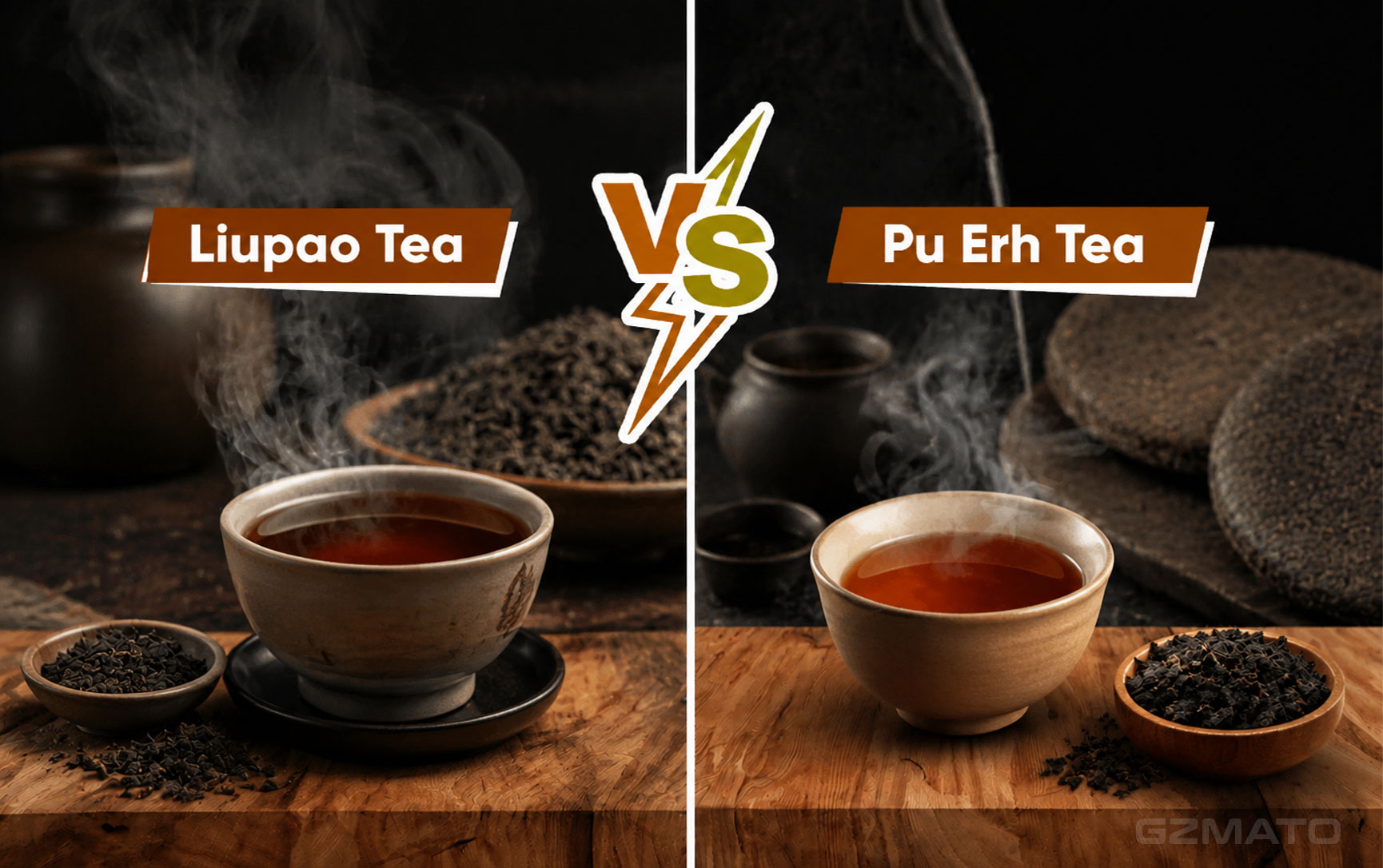
- Liupao vs Pu-erh: Two Dark Teas, Two Different Worlds
- Origin and History: Guangxi vs Yunnan
- Processing Methods: Single/Double Steaming vs Wet Piling
- Flavor Profile: Betel Nut vs Earthy Chen Xiang
- Health Benefits: Dampness Removal vs Digestion Aid
- Aging Potential: Which Ages Better?
- Complete Comparison Table
- Which One Should You Choose?
- FAQ
Liupao vs Pu-erh: Two Dark Teas, Two Different Worlds
If you are exploring Chinese dark teas (hei cha), you have likely encountered two names: Liupao and Pu-erh. Both are post-fermented teas with rich histories and devoted followings. But they are not the same.
This guide breaks down the key differences between Liupao and Pu-erh — from origin and processing to flavor and health benefits. By the end, you will know exactly which tea suits your taste and needs.
Origin and History: Guangxi vs Yunnan
| Liupao Tea (六堡茶) | Pu-erh Tea (普洱茶) | |
|---|---|---|
| Origin | Wuzhou, Guangxi, China | Xishuangbanna, Pu-erh, Yunnan, China |
| History | Over 1,500 years — tribute tea during Qing Dynasty | Over 1,700 years — traded on the Ancient Tea Horse Road |
| Export History | Exported to Southeast Asia via "Tea Boat Road" for over a century | Traded to Tibet, Mongolia, and Southeast Asia via horse caravans |
Liupao tea originated in Liupao Town, Wuzhou City, Guangxi. Its name comes from the town where it was first produced. Pu-erh takes its name from Pu-erh City in Yunnan, the historic trading hub for teas from the region.
Processing Methods: Single/Double Steaming vs Wet Piling
| Liupao Tea | Pu-erh Tea | |
|---|---|---|
| Category | Post-fermented dark tea (hei cha) | Post-fermented dark tea (hei cha) — but two types: raw (sheng) and ripe (shou) |
| Key Process | Single or double steaming + aging in bamboo baskets | Ripe pu-erh: wet piling (wo dui); Raw pu-erh: sun-drying and natural aging |
| Fermentation | Controlled microbial fermentation in constant-temperature cellars | Ripe pu-erh: accelerated fermentation (45-60 days); Raw pu-erh: slow natural fermentation |
| Shape | Loose tea, pressed baskets, cakes, bricks | Cakes (bing cha), bricks (zhuan cha), tuos (tuo cha), loose tea |
Flavor Profile: Betel Nut vs Earthy Chen Xiang
| Liupao Tea | Pu-erh Tea | |
|---|---|---|
| Signature Aroma | Betel nut fragrance (槟榔香) — clean, cooling, slightly sweet | Chen xiang (陈香) — earthy, woody, mushroom-like, medicinal |
| Taste | Smooth, sweet, mellow, with a long finish | Ripe pu-erh: thick, smooth, earthy; Raw pu-erh: bitter, astringent, then sweet |
| Mouthfeel | Thick, slick, refreshing — described as "red, rich, aged, mellow" | Ripe pu-erh: heavy, creamy, coating; Raw pu-erh: lively, bright, tannic |
| Aroma Evolution | Bright → aged wood → camphor → medicinal | Raw pu-erh: floral → fruity → woody → medicinal; Ripe: stable earthy |
Health Benefits: Dampness Removal vs Digestion Aid
| Liupao Tea | Pu-erh Tea | |
|---|---|---|
| Traditional Use | Removes dampness, aids digestion, especially in humid climates | Reduces cholesterol, aids weight loss, settles the stomach |
| Modern Research | Lipid-lowering, blood sugar regulation, anti-radiation, rich in antioxidants | Cholesterol reduction, weight management, gut health, antioxidant |
| Best For | People in humid environments, after heavy meals, daily wellness | Weight management, high-fat diets, evening digestion |
Liupao is especially prized in humid southern China for its "dampness-removing" properties. Pu-erh has a strong reputation for weight management. Both are rich in probiotics and antioxidants from fermentation.
Aging Potential: Which Ages Better?
Complete Comparison Table: Liupao vs Pu-erh
Which One Should You Choose?
- You prefer a smooth, sweet, mellow dark tea without strong earthiness
- You enjoy betel nut aroma (clean, cooling, slightly sweet)
- You live in a humid climate and want a tea that helps with dampness
- You are new to dark teas and want an easy entry point
- You want a tea that ages well but is already drinkable when young
- You enjoy deep, earthy, mushroom-like flavors
- You want a tea that can be aged for decades (raw pu-erh)
- You are interested in the investment potential of aged raw pu-erh
- You prefer a thicker, heavier body in your tea
- You want a tea specifically known for weight management
FAQ
Yes — both are brewed with 100°C water, multiple rinses, and short steeps for Gongfu style. However, Liupao tends to become sweeter after the 5th steep, while ripe pu-erh stays more consistent.
Both have a wide range. Entry-level Liupao is very affordable. Aged raw pu-erh from famous mountains can cost thousands of dollars per cake. For everyday drinking, both offer excellent value.
No. Aged white tea is a different category (white tea aged naturally, no fermentation). Liupao is post-fermented dark tea with intentional microbial fermentation.
Both are excellent. Liupao is traditionally used after heavy meals in Guangdong and Southeast Asia. Pu-erh is also famous for aiding digestion, especially after fatty foods.
Sources & Methodology (as of May 21, 2026):
- Wuzhou Tea Factory official production records and product specifications
- Yunnan Pu-erh Tea Industry Association – Pu-erh processing and history
- China Tea Marketing Association – Dark tea (hei cha) industry reports
- Academic research on dark tea health benefits – Journal of Tea Science
- International Dark Tea Symposium 2024 – Comparative studies on Liupao and Pu-erh
- Historical tea trade records – "Tea Horse Road" and "Tea Boat Road" documentation
Experience Authentic Sanhe Liupao Tea
Classic Betel Nut Fragrance | Aged Aroma Series | Golden Flower Premium | Pressed Cakes | Loose Tea
Special Offer: Use code GZTEA26 for discount on your first wholesale order!
Request Wholesale Quote →
- Liupao tea
- Pu-erh tea
- Liupao vs Pu-erh
- dark tea comparison
- betel nut aroma
- chen xiang
- hei cha
- Chinese dark tea