Technology
How Is the Performance of the M4 Chip Family? Is It Worth Upgrading from the M3 Family?
on
November 18, 2024
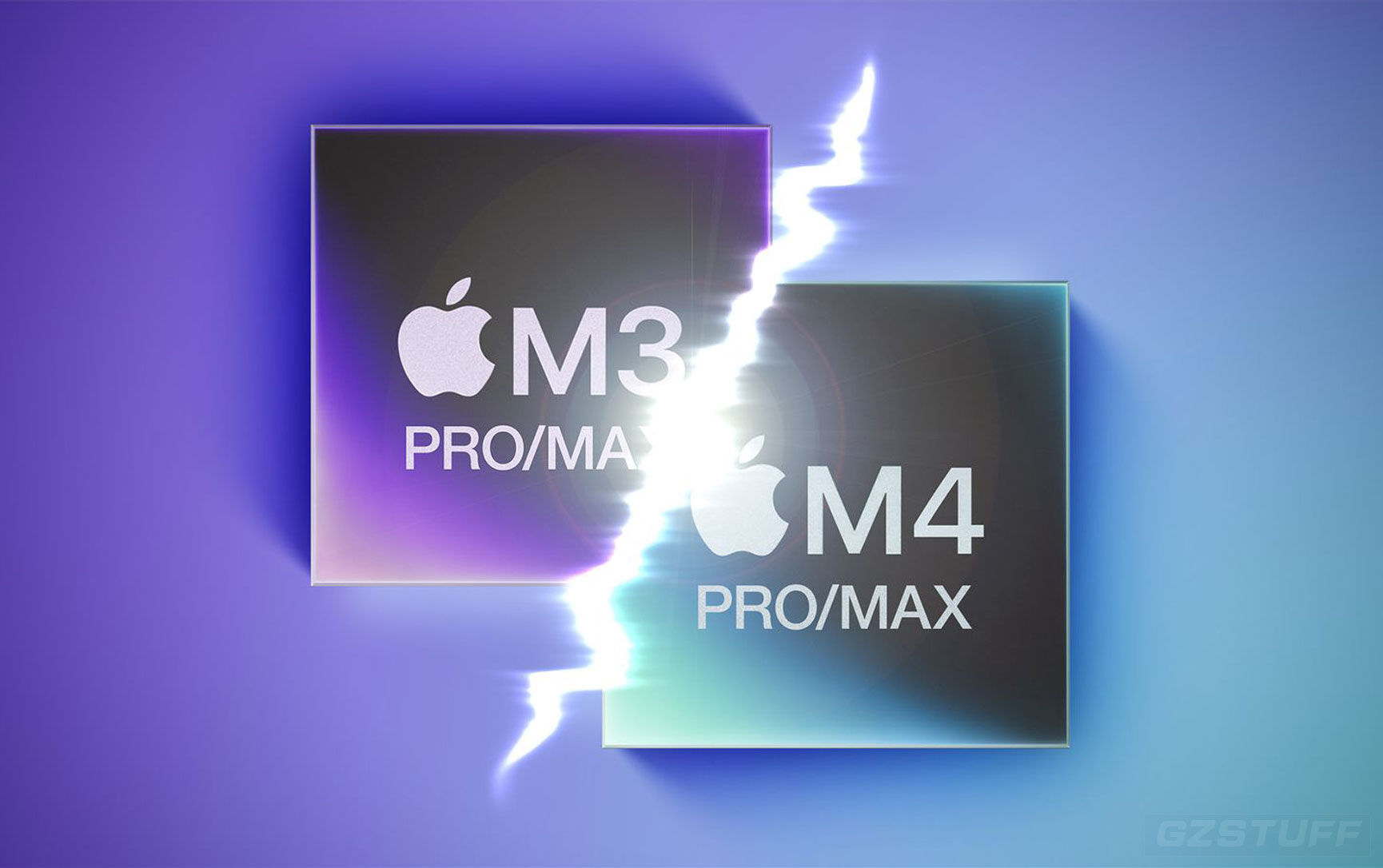
The M4 chip family (likely releasing in 2024 or later) is expected to offer significant improvements over the M3 chip family in terms of performance, power efficiency, and features, particularly for users who need more horsepower for demanding tasks. However, whether it’s worth upgrading from an M3 to an M4 depends on your specific needs and how you use your Mac.
Expected Performance of the M4 Chip Family:
1. CPU Performance:
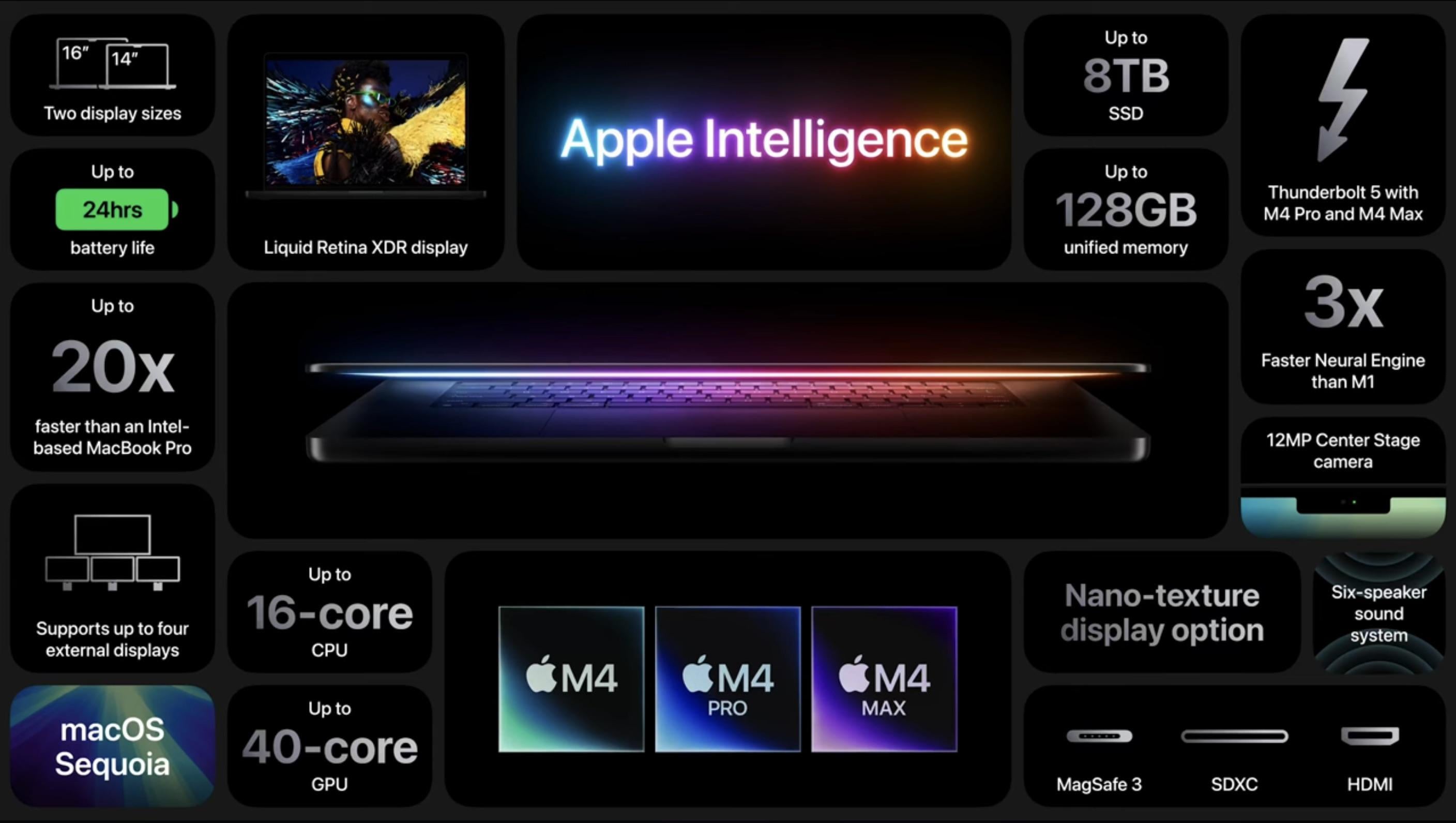
- The M4 chips (including M4, M4 Pro, and M4 Max variants) are expected to feature more CPU cores and higher clock speeds compared to the M3 family. This will translate into faster performance, particularly for tasks like video editing, 3D rendering, programming, and compiling code. The performance improvement will be noticeable in professional workflows that demand higher computing power.
- For general users, the M3 chip is already incredibly fast, so unless you’re regularly working with extremely resource-heavy applications, you may not see a huge benefit in everyday tasks.
2. Graphics & GPU:
- The M4 Pro and M4 Max chips will feature more GPU cores than the M3 Pro/Max, making them ideal for high-end gaming, video editing, motion graphics, and other graphics-intensive applications. The increased GPU power could lead to smoother performance in 4K/8K video editing, real-time rendering, and even AI/ML workloads.
- If you’re into tasks that require advanced graphics performance (e.g., 3D modeling or VR development), the M4 will be a big step up, but if you're just using your Mac for day-to-day tasks like web browsing, office work, and media consumption, the M3 is still excellent.
3. Power Efficiency:
- Like the previous generation, the M4 is likely to be built on a more refined process node, meaning it should be even more power-efficient than the M3. This would result in longer battery life, better thermal management, and quieter performance, especially in ultra-thin devices like the MacBook Air or MacBook Pro.
- If battery life is crucial for you, the M4 will likely offer even better longevity during heavy workloads compared to the M3.

Apple - MacBook Neo 13-inch Laptop - 512GB - A18 Pro chip with 6‑core CPU and 5‑core GPU - Magic Keyboard with Touch ID - Indigo
Special Price
$769.00
Regular Price
$782.00

Apple - MacBook Neo 13-inch Laptop - 512GB - A18 Pro chip with 6‑core CPU and 5‑core GPU - Magic Keyboard with Touch ID - Citrus
Special Price
$769.00
Regular Price
$782.00

Apple - MacBook Neo 13-inch Laptop - 512GB - A18 Pro chip with 6‑core CPU and 5‑core GPU - Magic Keyboard with Touch ID - Blush
Special Price
$769.00
Regular Price
$782.00

Apple - MacBook Neo 13-inch Laptop - 512GB - A18 Pro chip with 6‑core CPU and 5‑core GPU - Magic Keyboard with Touch ID - Silver
Special Price
$769.00
Regular Price
$782.00

Apple - MacBook Neo 13-inch Laptop - 256GB - A18 Pro chip with 6‑core CPU and 5‑core GPU - Budget-Friendly - Indigo
Special Price
$638.00
Regular Price
$678.00

Apple - MacBook Neo 13-inch Laptop - 256GB - A18 Pro chip with 6‑core CPU and 5‑core GPU - Budget-Friendly - Citrus
Special Price
$638.00
Regular Price
$678.00

Apple - MacBook Neo 13-inch Laptop - 256GB - A18 Pro chip with 6‑core CPU and 5‑core GPU - Budget-Friendly - Blush
Special Price
$638.00
Regular Price
$678.00

Apple - MacBook Neo 13-inch Laptop - 256GB - A18 Pro chip with 6‑core CPU and 5‑core GPU - Budget-Friendly - Silver
Special Price
$638.00
Regular Price
$678.00
4. Neural Engine & AI Performance:
- The M4 chips are expected to have an even more powerful Neural Engine, enhancing performance in AI and machine learning tasks. This could improve applications that rely on machine learning, such as photo/video editing (AI-based filters, upscaling, etc.), voice recognition, or automated tasks.
- If you're a developer working with machine learning, the M4's upgraded Neural Engine will be a clear upgrade, but again, if your work doesn’t require this, the M3’s Neural Engine should be more than enough.
5. RAM & Unified Memory:
- M4 Pro/Max chips will likely support more RAM and higher unified memory bandwidth, making them better suited for professional use cases like video production, music production, and other memory-hungry tasks.
- If you’re using heavy applications with lots of open files or multitasking, the M4 will have an edge, but for typical everyday tasks, M3 chips should perform just fine.
Is It Worth Upgrading from the M3 Family to the M4?
Here are some considerations:
For Everyday Users (students, casual users, etc.)
- M3 family (M3, M3 Pro, M3 Max) is already incredibly powerful, and for most users, it will be more than enough for everyday tasks like browsing, streaming, document editing, and even light photo/video editing. If you're already using an M3 MacBook Air or MacBook Pro, upgrading to an M4 may not provide a significant enough boost in everyday performance to justify the cost.
- Verdict: If you’re on an M3 system, there’s likely no rush to upgrade unless you specifically need features that the M4 will offer (e.g., more graphics power, better AI capabilities).
For Power Users (creatives, developers, professionals)
- M4 Pro/Max chips will offer substantial improvements in CPU and GPU performance, making them great for users working with heavy media editing, game development, programming, or data science. If you rely on intensive applications or multitask heavily, you may notice a tangible difference in speed and efficiency with the M4.
- If you're currently using an M2 Pro or M2 Max, the performance jump to an M4 might be more noticeable, especially in rendering, gaming, or video production. However, if you're on an M3 Pro/Max, the upgrade to M4 might be more incremental, unless you need that extra GPU or memory bandwidth.
- Verdict: If you work with high-demand software, and especially if you do a lot of graphic-intensive tasks, the M4 is likely worth the upgrade. If you’re on an M2 Pro/Max or M3 Pro/Max and your current setup is working fine, it may not be urgent, but the M4 will definitely improve long-term performance.
For Gamers:
- M4 chips will offer better GPU performance, meaning faster frame rates, better ray tracing, and higher resolutions in games. If you’re a serious gamer and you want the most out of your PlayStation 5-level titles on Mac, the M4 will be a solid upgrade.
- Verdict: If you're a gamer who values high-end graphics and performance, M4 will likely be worth it for that smoother, faster experience, especially for 4K gaming or games that leverage advanced graphics features.
Conclusion:
- Upgrade if: You need more power for intensive tasks like 3D rendering, 4K/8K video editing, AI/ML development, or high-end gaming. The M4 will offer noticeable improvements, especially in graphics performance, CPU power, and battery life.
- Don’t upgrade if: Your M3 system is already handling your tasks well and you're mostly using it for basic productivity (web browsing, office apps, media consumption), light creative work, or everyday tasks. The M3 family is already more than capable for most users, and the performance jump to the M4 may not be worth the cost unless you’re seeking specific performance enhancements.
If you're on an M3 Pro/Max and working with resource-heavy apps, the upgrade to M4 will definitely be a solid investment. But for the average user, waiting another year or so may make sense as the M4 family matures and more software takes full advantage of its capabilities.

Comment(s)
People Also Searched For
- M4 chip performance
- M4 MacBook Pro
- Apple M4 vs M3
- M4 chip features
- M4 Apple performance boost
- M4 MacBook Air
- M4 chip review
Recent Posts



Popular Posts

July 14, 2026

December 07, 2025