New Foreign Trade Law 2026: What Cross-Border Sellers Need to Know
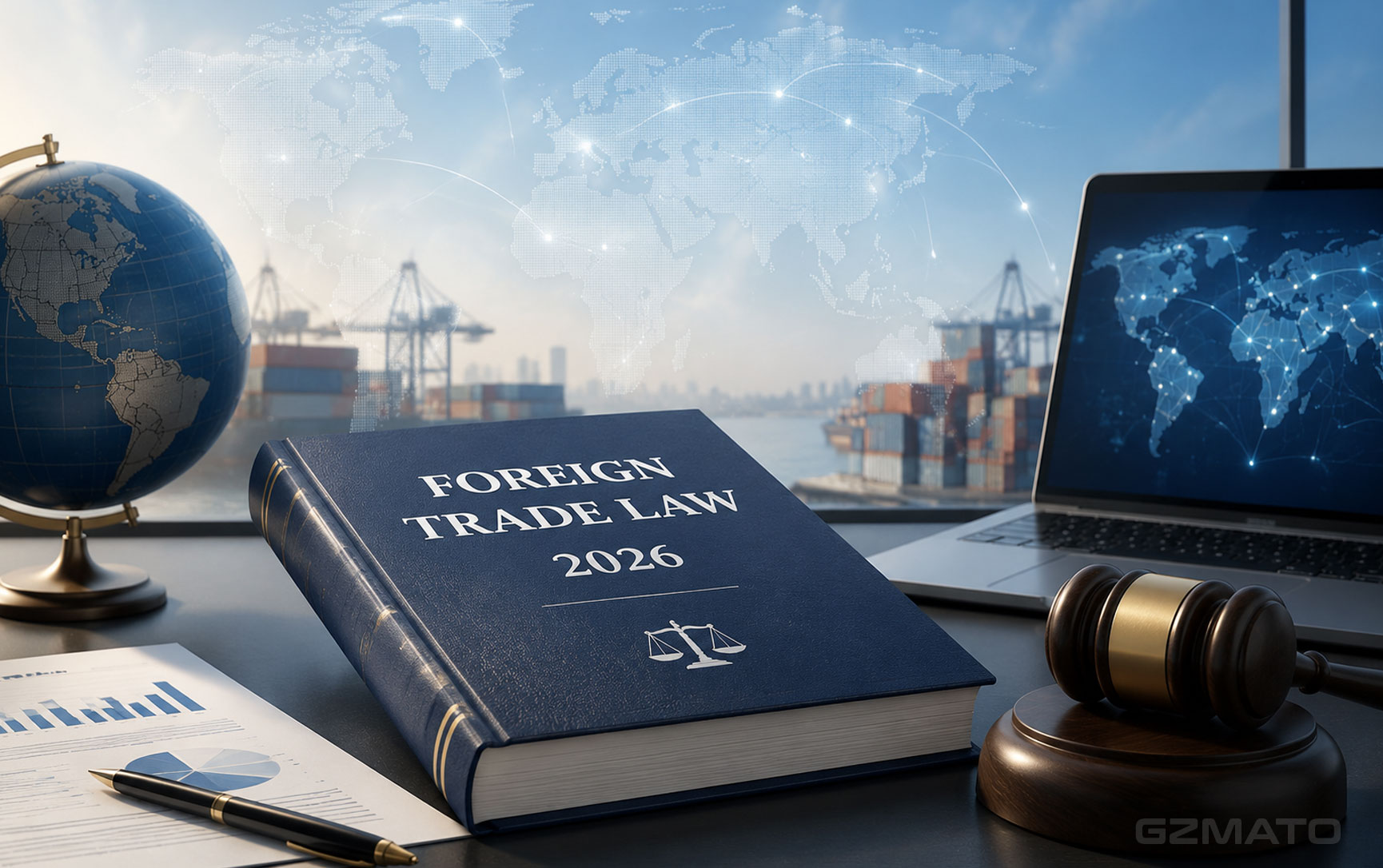
The revised Foreign Trade Law took effect on March 1, 2026, and has been in force for more than five months. This analysis reflects both the legal text and the emerging implementation patterns observed since it went into effect. Early enforcement data suggests regulators are focusing on intellectual property compliance and digital documentation standards, with customs authorities in several provinces issuing updated guidance on electronic invoicing procedures.
August 17, 2026 — A post circulating on Xiaohongshu has been grabbing attention among cross-border sellers with a provocative headline: "The government is coming for Amazon sellers." The piece goes on to argue that the newly revised Foreign Trade Law, which took effect on March 1, 2026, is fundamentally changing the rules of the game .
The headline is alarming. The analysis, however, is largely accurate — though the interpretation deserves a closer look.
Four Key Changes That Affect Cross-Border Sellers
1. Cross-Border E-Commerce Is Now Legally Recognized
The new law's Article 59 explicitly states: "The state supports and promotes the innovative development of new forms and models of foreign trade, including cross-border e-commerce and comprehensive foreign trade services" . The Ministry of Commerce is required to work with other relevant departments to establish policies and management systems adapted to these new models .
This is a pivotal change. Before 2026, cross-border e-commerce operated largely under pilot programs and temporary policies. The new law elevates it to a legally protected status, providing a stable foundation for long-term development . For sellers, this means the sector is no longer experimental — it is an established part of China's trade architecture.
The law also introduces new provisions in Articles 60 and 61 supporting digital and green trade . These include promoting international mutual recognition of digital certificates and electronic signatures, and establishing systems for green trade product standards and certification .
2. Digital Trade Is Being Formalized
Article 60 of the new law supports the digitalization of foreign trade, including the use of electronic bills of lading, electronic invoices, digital certificates, and electronic signatures . This is not just about convenience — it's about legal validity. Sellers who maintain inconsistent or incomplete digital records will increasingly find themselves at a disadvantage.
The law also introduces a negative list system for cross-border service trade under Article 31 . This means service providers must check whether their business activities fall within prohibited or restricted categories. For cross-border sellers using SaaS tools, cross-border payment services, or international logistics platforms, understanding these restrictions is now a compliance requirement .
3. Intellectual Property Protections Are Strengthened
Article 33 mandates the establishment of an early warning and rights protection information platform for overseas intellectual property . This is a direct response to the persistent issue of IP infringement claims against Chinese sellers on platforms like Amazon.
For sellers, the implications are clear: trademark, patent, and copyright compliance can no longer be treated as an afterthought. The law effectively shifts IP protection from reactive defense to proactive strategy. Sellers who invest in proper brand registration and IP protection will be better positioned to navigate the increasingly regulated cross-border environment.
4. Trade Adjustment Assistance Is Now Law
Under Article 55, the new law establishes a trade adjustment assistance system to help industries affected by trade risks stabilize and upgrade their supply chains . While primarily aimed at broader industrial sectors, this signals a policy shift toward active management of trade disruption — a trend that will eventually affect how cross-border sellers manage supply chain volatility.
The Real Challenge: From "Get It Done" to "Get It Right"
The Xiaohongshu post is correct on one crucial point: the era of relying on information asymmetry, incomplete documentation, and loose management is ending .
This shift is not about punishing sellers. It is about bringing cross-border trade in line with international standards. China's goods trade has ranked first globally for years, and its service trade ranks second . The legal framework needs to match the scale of the activity.
For sellers, the practical implications are straightforward:
- Documentation matters: Orders, payments, customs declarations, invoices, and cost records should be consistent and traceable. The days of "run the business first, fix the paperwork later" are numbered.
- Data compliance is non-negotiable: Sellers handling cross-border data flows must classify their data properly and comply with security assessment requirements .
- IP protection is an investment, not an expense: Early registration and proactive monitoring will save significant costs compared to defending against infringement claims later.
- Platform accountability is increasing: The new law requires platforms to exercise "reasonable care" over their merchants, which may extend to reviewing product information, IP status, and data security practices .
Our Perspective: A New Phase for Cross-Border Trade
The Xiaohongshu post's alarmist framing — "the government is coming for Amazon sellers" — is misleading. The new law does not target sellers. It establishes a legal framework for an industry that has outgrown its pilot-program origins.
Cross-border e-commerce has been one of China's most dynamic trade sectors. In 2025, it contributed significantly to the country's foreign trade growth. The new law recognizes this reality and provides the legal foundation for continued development. As one legal analysis noted, the law moves cross-border e-commerce from "policy-driven" to "legally protected" .
For sellers, the message is not "stop selling." It is "sell smarter." The sellers who will thrive in this new environment are those who treat compliance not as a burden but as a competitive advantage. Proper documentation, IP protection, and data governance will increasingly distinguish professional operators from those who rely on shortcuts.
Gzmato has long emphasized the importance of legitimate, transparent cross-border trade. This legal framework aligns with that approach. Sellers who have built their businesses on solid compliance foundations will find the new law more supportive than threatening.
The law is not a weapon against sellers — it is a tool for those who play by the rules. It strengthens the legal standing of compliant businesses, provides clearer pathways for IP protection, and raises the bar for those who have relied on regulatory gray areas. For sellers who have built their operations on solid ground, the new law offers clearer protection, not greater risk.
Key Takeaways
Shop Business Tech at Gzmato
Whether you are running a cross-border e-commerce operation, managing a remote team, or setting up a new office, Gzmato carries the tools you need to work efficiently.
Laptops | Workstations | Network Accessories | Office Gear | Fast Shipping | Competitive Pricing
Special Offer: Use code TECH2026 for a discount on your first order!
Shop Business Tech at Gzmato- 中华人民共和国对外贸易法 (2025年修订) — Official legal text, passed December 27, 2025, effective March 1, 2026
- 人民政协网 — Analysis of new law's impact on cross-border e-commerce and digital trade
- 金杜律师事务所 — New Foreign Trade Law series: digital trade and cross-border e-commerce provisions
- 中伦律师事务所 — High-level opening and legal foundation analysis
- 德勤 — Revised Foreign Trade Law key points and compliance implications
- 法制日报 — New law's impact on electronic documentation and data compliance
- 商务部 — Official policy announcement and implementation guidance



- Foreign Trade Law 2026
- cross-border e-commerce
- Amazon sellers China
- China trade law
- digital trade compliance
- cross-border seller compliance
- Gzmato