Google Sends TPUs to Orbit: Project Suncatcher Tests AI Data Centers in Space
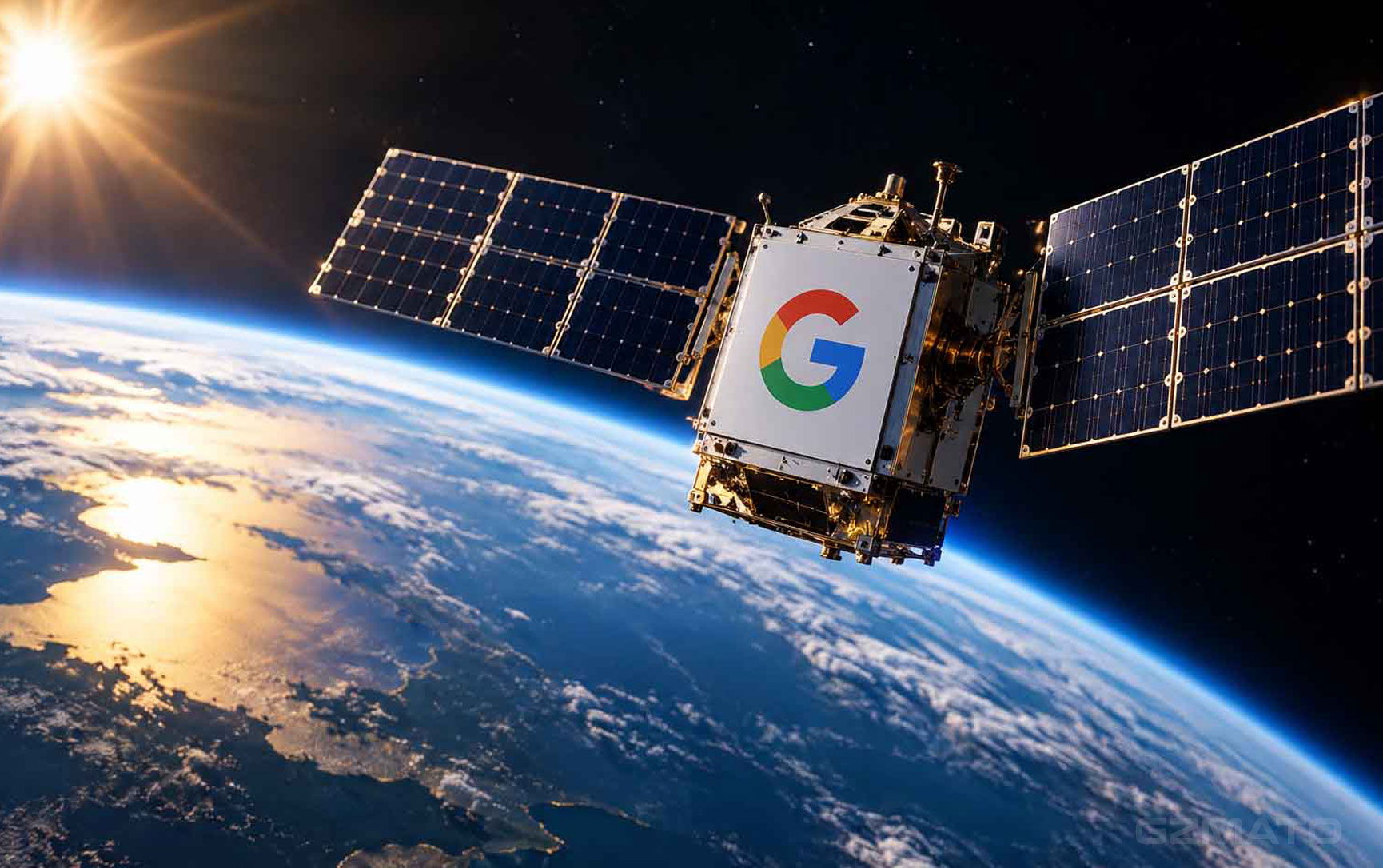
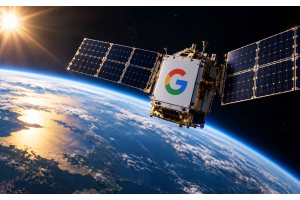
October 2, 2026 — Google has sent its AI chips into space for the first time. On October 1, a SpaceX Falcon 9 rocket carried a prototype satellite into low Earth orbit, carrying four of Google's custom Tensor Processing Units (TPUs). The launch is the first orbital test for Project Suncatcher, Google's long-term research initiative exploring whether space could someday host scalable AI computing infrastructure.
The satellite, built by Planet Labs, is roughly the size of a refrigerator. It is not a data center. It is a test platform — designed to answer a single question: can AI accelerator chips survive and operate in the harsh environment of orbit?
The Mission: MVP Satellite with 4 TPUs
The satellite is named "MVP," and it is deliberately modest. Inside, four Google TPUs are mounted on a standard Planet Labs satellite platform. On the ground, a data center would run thousands of the same chips simultaneously. The MVP carries four — roughly equivalent to a single server rack's worth of compute.
The satellite's solar panels generate about 1 kilowatt of power, enough to run a microwave or a hair dryer. That power budget is the limiting factor. According to Google's Project Suncatcher lead Travis Beals, the TPUs will operate in short bursts of about 15 minutes, then shut down to cool.[citation:1][citation:6]
| Specification | Detail |
|---|---|
| Payload | 4 Google Tensor Processing Units (TPUs) |
| Power Supply | ~1 kilowatt (solar) |
| Operating Mode | 15-minute bursts, then cooling shutdown |
| Designed Lifetime | ~1 year (up to 6 years in orbit before reentry) |
| Satellite Builder | Planet Labs |
| Launch Vehicle | SpaceX Falcon 9 (Transporter-18 rideshare) |
| Launch Site | Vandenberg Space Force Base, California |
Before launch, Google put the satellite through a rigorous testing regimen. The spacecraft was shaken along three axes to simulate launch vibrations, and every screw was marked with tracers to detect any loosening. The hardware passed. "These kinds of tests rarely go exactly as planned," Beals said. "So we were both surprised and delighted that the hardware could withstand these forces."[citation:18]
The satellite will run Google's Gemini AI models for simple queries. It is expected to operate for a few months to a year, though the satellite itself could remain in orbit for up to six years before atmospheric reentry.[citation:6]
Three Engineering Challenges: Power, Radiation, Cooling
The MVP mission is designed to test three specific failure modes that could make orbital computing impractical.
1. Radiation: Bit Flips and Chip Longevity
Space is filled with energetic particles that can disrupt semiconductor circuits. The most common failure is a "bit flip" — a single bit in memory or a processor register changing from 0 to 1 or vice versa. In small doses, these are correctable. In large doses, they can corrupt computations or damage hardware permanently.
Google's ground testing at the Crocker Nuclear Laboratory at UC Davis exposed TPUs to proton beams simulating five years of space radiation. The results were promising: the Trillium-generation TPUs withstood the radiation dose, and Google estimated a bit-flip error rate of "one in a million" for typical inference work.[citation:1]
But Google acknowledged that ground tests cannot fully replicate the space environment. "We tested on the ground, but there is no test as good as the real environment," Beals said.[citation:1] The MVP satellite will provide the first real-world data on how TPUs perform under actual orbital radiation over time.
2. Cooling: The Vacuum Problem
On Earth, data centers cool their chips with fans, liquid cooling, or evaporative towers. In the vacuum of space, none of these work. There is no air to carry heat away, and no water to evaporate. The only way to dissipate heat is through thermal radiation — emitting infrared energy into the cold void.
Google's solution involves a multi-layer thermal conduction system: heat pipes transfer heat from the TPUs to aluminum and copper layers, which spread it to an external radiator. The system works, but it is slow. That's why the TPUs must shut down every 15 minutes to cool.[citation:8][citation:18]
A terrestrial AI data center runs continuously, 24 hours a day, 365 days a year. The MVP satellite's 15-minute operating windows are a proof of concept, not a production workload. Google acknowledges that scaling to a functional orbital data center would require radiators orders of magnitude larger than what the MVP carries — and potentially new cooling architectures that don't exist yet.
3. Power: 1 Kilowatt vs. 1 Gigawatt
The 1 kilowatt of solar power on the MVP is enough to run four TPUs in short bursts. But a modern AI data center draws 50 to 100 kilowatts per rack, and the largest facilities draw up to a gigawatt — roughly the output of a nuclear reactor.
Google's research paper, published in the journal Joule, estimates that an orbital data center satellite would need to generate 50 to 100 kilowatts of power to be useful. That means solar arrays several times larger than what the MVP carries, and radiators to match.[citation:11]
The Launch Cost Reality: 1,800 Starship Flights
Even if all the engineering challenges are solved, Project Suncatcher faces a brutal economic constraint. Google's own research paper includes a calculation that lays out the scale of the problem.
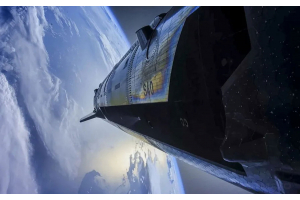
For orbital data centers to compete with terrestrial facilities on cost, launch prices need to fall to approximately $200 per kilogram. That is roughly one-tenth of current commercial launch costs. To achieve that price point through economies of scale, Google estimates that the space industry would need to launch approximately 370,000 tonnes of cargo into orbit — equivalent to about 1,800 Starship launches over a decade, or 180 launches per year.[citation:19]
Google is not alone in acknowledging this. Caleb Henry, director of research at Quilty Space, noted that the 1 kilowatt available on the MVP is "significantly lower than the needs of a fully operational AI data center." Telecommunications satellites typically consume 10 to 20 kilowatts, while AI computing satellites could need 100 kilowatts or more.[citation:11]
The Orbital Computing Race
Google is not the only company pursuing orbital AI infrastructure. The concept has attracted interest from some of the most prominent figures in technology.
Elon Musk has said he believes orbital data centers will become "the cheapest way to train AI" within two to three years. SpaceX has filed with the U.S. Federal Communications Commission for a plan to deploy up to 1 million satellites for AI computing. Jeff Bezos's Blue Origin has applied for "Project Sunrise," a plan for about 52,000 AI-capable satellites.[citation:6]
Alphabet itself is a major SpaceX shareholder, with a stake valued at over $82 billion. The two companies compete in AI but collaborate closely on launch services.[citation:13]
| Player | Orbital Computing Plan | Status |
|---|---|---|
| Project Suncatcher: constellations of solar-powered TPU satellites | First test satellite launched Oct 1, 2026 | |
| SpaceX | Up to 1 million AI computing satellites | FCC filing submitted |
| Blue Origin | Project Sunrise: ~52,000 AI-capable satellites | FCC filing submitted March 2026 |
| Starcloud | Space data center startup | Private development |
Google's approach is deliberately cautious. James Manyika, Google's senior vice president of research, compared the project timeline to Google's self-driving car effort: "Remember, Google researched for about 15 years before seeing practical results? I think this project will be a similar pace."[citation:5]
What Comes Next
Google plans to launch two additional satellites in 2027 to test laser-based inter-satellite communication — a critical technology for linking multiple satellites into a computing cluster. The goal is to eventually have constellations of more than 80 satellites flying in formation, sharing AI workloads.[citation:1][citation:6]
The MVP mission will provide the first real-world data on TPU performance in orbit. If the chips work as expected, Google will have a foundation for its next phase of testing. If they don't, the company will learn what needs to change.
But the timeline is long. Google's research paper suggests that the mid-2030s is the earliest realistic window for orbital data centers to become economically competitive with terrestrial facilities.[citation:8] In the meantime, the company is betting that launch costs will fall, radiation tolerance will improve, and the world's appetite for AI computing will continue to grow.
Key Takeaways
| # | What You Need to Know About Google's Orbital Data Center Test |
|---|---|
| 1 | Google launched its first orbital TPU test satellite on October 1 — four TPUs, built by Planet Labs, carried by SpaceX Falcon 9 |
| 2 | The satellite is a test platform, not a data center — it runs for 15-minute bursts on 1 kilowatt of solar power |
| 3 | Three challenges being tested: power, radiation, and cooling — in the vacuum of space, heat dissipation requires radiators, not fans |
| 4 | Google's own research shows the economic bar is high — launch costs must fall to ~$200/kg, requiring roughly 1,800 Starship flights over a decade |
| 5 | Google is not alone — SpaceX has filed for up to 1 million AI satellites; Blue Origin for ~52,000 |
| 6 | Google plans two more satellites in 2027 — to test laser inter-satellite communication for distributed computing |
| 7 | The timeline is measured in years, not months — Google compares it to the 15-year arc of self-driving car development |
- Digital Today — TPU satellite launch, 15-minute operating bursts, radiation testing, launch cost calculations [citation:1]
- Open Data Science — Project Suncatcher overview, SpaceX Transporter-18 mission, orbital computing challenges [citation:2]
- Mashable — Launch date, Project Suncatcher background [citation:3]
- Yonhap News — TPU satellite launch success, 4 TPUs aboard, 1-year mission, 8x solar power advantage [citation:4]
- EET China — MVP satellite details, TPU radiation testing, James Manyika cautious timeline [citation:5]
- Digital Today — 4 TPUs, 1 kW power, 15-minute cooling cycles, SpaceX and Blue Origin competition [citation:6]
- Scientific American — Data center electricity projections, cooling challenges, launch mass scale, "best data compression is answers" [citation:15]
- Vietnam.vn — Heat dissipation system details, Google's cautious timeline [citation:8]
- cnBeta / 163.com — Google's research paper calculation: 1,800 Starship launches needed for $200/kg target [citation:19]
- DCmag — Technical challenges: cooling, radiation, 50-100 kW power requirement for useful orbital data center [citation:11]
- Yahoo Tech — Alphabet's SpaceX stake valued at $82 billion [citation:13]
- Google Project Suncatcher
- TPU satellite
- space data center
- Google AI chips space
- orbital computing
- SpaceX Transporter-18
- Google space data center
- launch cost
- Gzmato