Unitree Robotics Debuts on STAR Market: 629% Gain and the First Humanoid Robot IPO
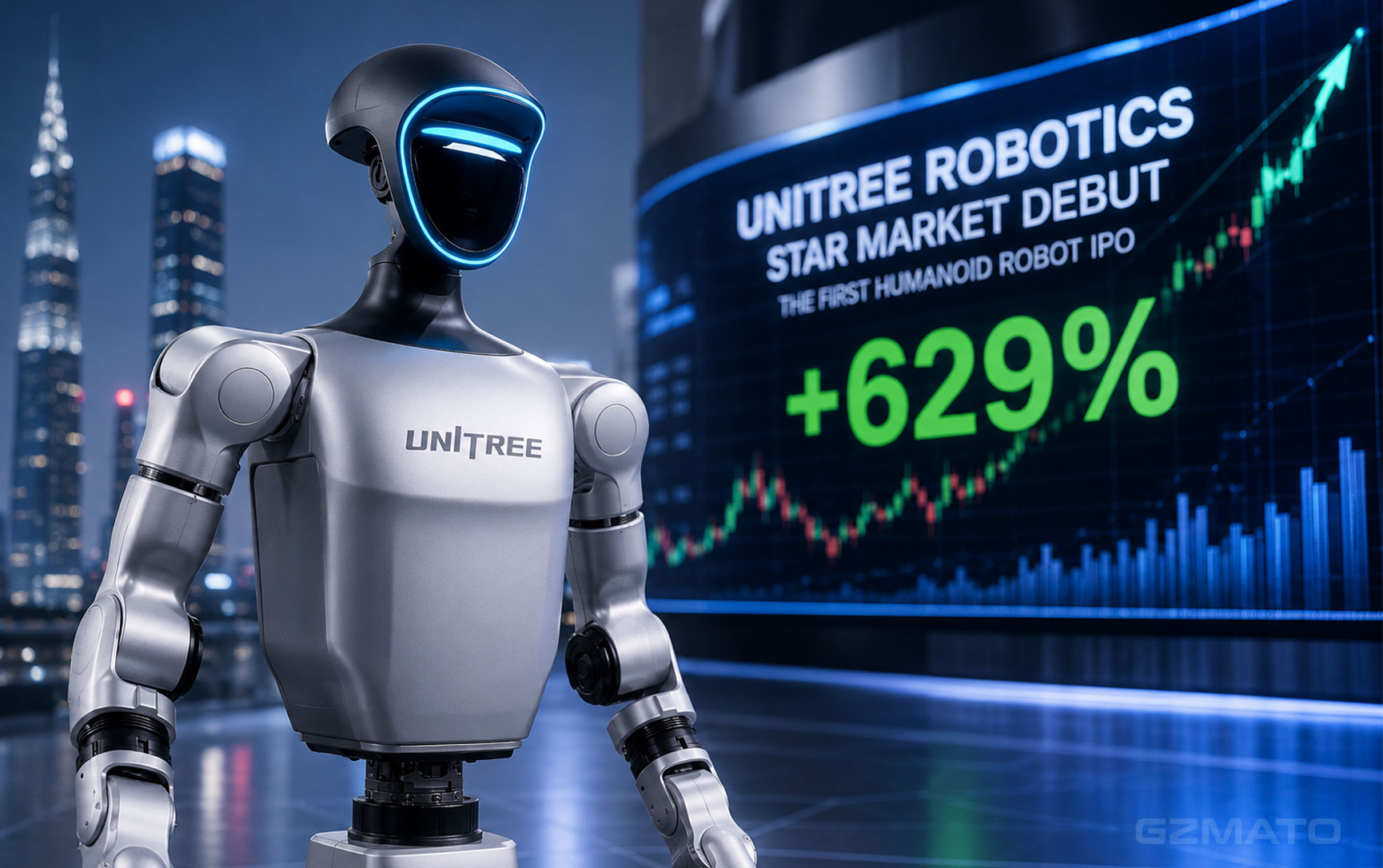
August 19, 2026 — At 9:30 AM Beijing time, Unitree Robotics began trading on Shanghai's STAR Market under the ticker 688836. Within seconds, the stock opened at 1,100 yuan ($162) — up 629% from its IPO price of 150.80 yuan . The company's market capitalization surged past 444 billion yuan ($61 billion) in the opening minutes, making it one of the most valuable robotics companies in the world.
Unitree is now the first humanoid robot company to go public on China's A-share market. It is not just a company listing. It is the first real pricing benchmark for an industry that has been driven by promises, prototypes, and competing technology roadmaps for years .
And the stock market responded accordingly.
A Record-Breaking IPO
Unitree's IPO was one of the most oversubscribed in Chinese market history. Retail investors applied for more than 8,000 times the available shares — a record for the STAR Market . The final online issue had a subscription rate of just 0.018%, meaning one in every 5,525 applicants secured shares .
The IPO sold 40.45 million shares at 150.80 yuan each, raising approximately 61 billion yuan . The offering valued Unitree at about 61 billion yuan ($9 billion) at the IPO price, representing 219 times its 2025 earnings and 35.9 times its 2025 sales .
Opening-day buyers pushed that valuation much higher. At the peak of the first-hour trading, an investor who secured a standard 500-share allocation could have been sitting on gains of about 475,000 yuan ($70,000) .
The shareholder list was equally impressive. Strategic investors included the National Social Security Fund, DeepSeek (with a 36-month lockup), Tencent affiliates (also 36-month lockup), China National Petroleum's Kunlun Capital, China Southern Power Grid, and China Telecom . The National Social Security Fund was the largest strategic investor.
Unitree's founder and controlling shareholder, Wang Xingxing (born 1991), directly owns 23.8% of the company and controls 68.8% of voting rights through a special voting arrangement .
What Unitree Is Worth: From 5 Robots to 5,500 in Two Years
Unitree started as a quadruped robot company in 2016 . By 2025, it had become the world's largest humanoid robot manufacturer by volume .
According to its prospectus and public statements, Unitree sold over 5,500 humanoid robots in 2025 — more than any other company globally . That number was up from just 5 units in 2023. Two years, a 1,100-fold increase .
The company's total humanoid robot shipments represented approximately 32.4% of the global market in 2025, according to a joint report from Beijing CCID and the China Electronics News .
Unitree's product portfolio has evolved rapidly:
- H1 (2023): Unitree's first full-size humanoid robot. Sold 5 units in its launch year at an average price of 593,400 yuan ($87,000) per unit .
- G1 (2024): A mid-size humanoid robot, initially priced at 99,000 yuan. By 2025, the price had dropped to 85,000 yuan .
- R1 (2025): An entry-level robot priced at 39,900 yuan, later reduced to 29,900 yuan .
- H2 (2025): A full-size humanoid robot with improved capabilities .
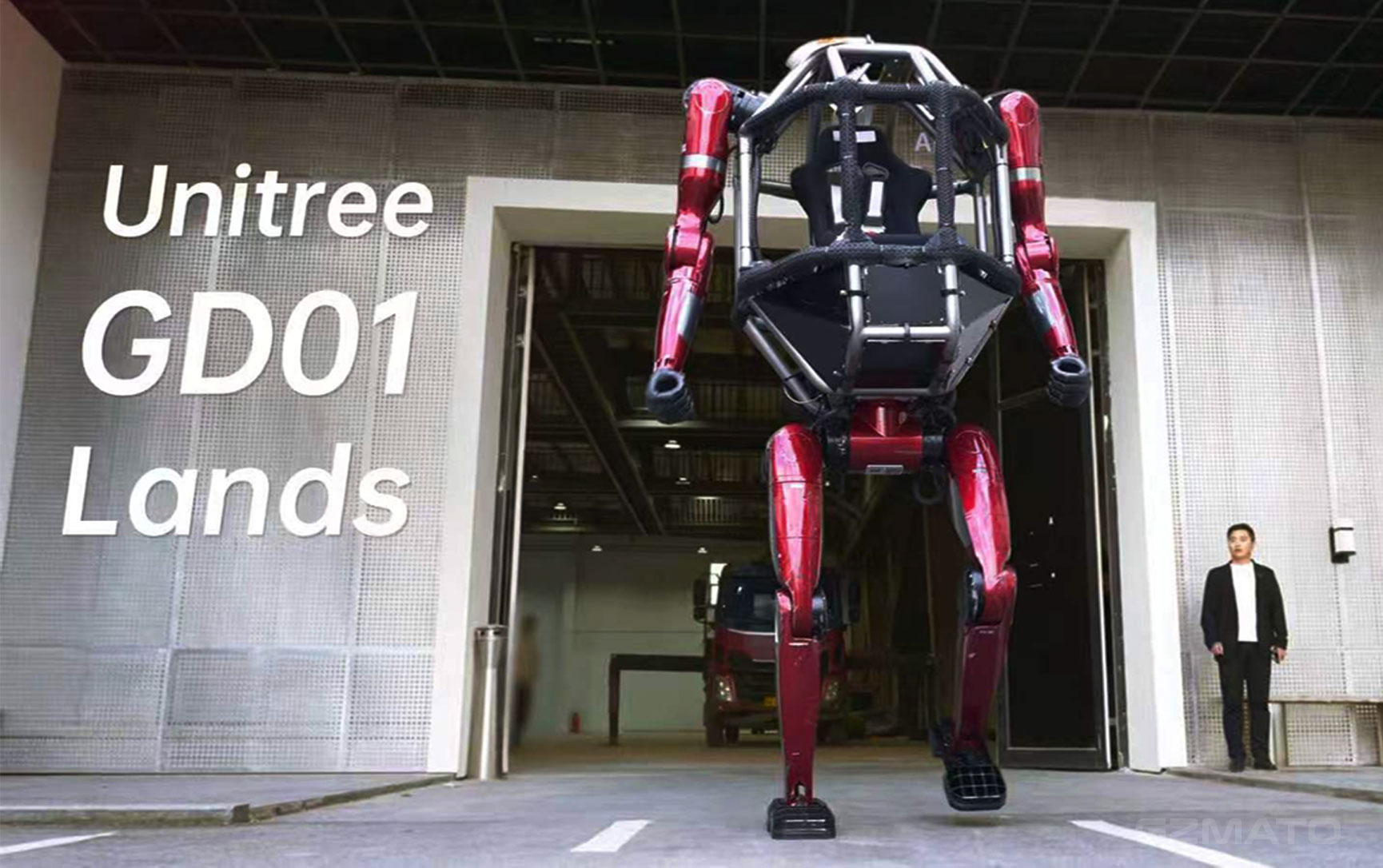
- "Superman" (August 2026): A high-performance humanoid robot capable of jumping 2 meters and running at 12.66 m/s, unveiled just before the IPO .
By the end of July 2026, Unitree had produced and delivered approximately 18,000 bipedal humanoid robots across all models .
In addition to humanoid robots, Unitree's quadruped robot sales reached 23,037 units in 2025, up 222.8% year-over-year . The company's cumulative quadruped robot sales exceeded 33,000 units, making it the global leader in that category as well .
The Evolution of Unitree
Unitree's transformation from a niche robotics startup to a public company with a multi-billion-dollar valuation didn't happen overnight. The company's history reveals the strategy behind its success.
2016: Wang Xingxing founded Unitree (then known as Yuanshu) at age 25. At the time, he had already built a quadruped robot with just 20,000 yuan of his own money .
2022: Unitree's revenue was still small — quadruped robots accounted for 76.6% of total sales, and humanoid robots were not yet a meaningful product category .
2023: The H1 humanoid robot made its debut. The company sold only 5 units that year, but the product established Unitree as a credible player in the humanoid space. Revenue for the year was 159 million yuan ($23 million) .
2024: Revenue rose to 393 million yuan ($58 million). The G1 robot launched at 99,000 yuan, significantly lower than the H1's 593,400 yuan price point, opening the market to smaller customers .
2025: This was the breakout year. Unitree sold over 5,500 humanoid robots and generated 1.7 billion yuan ($250 million) in revenue, up 332% from the previous year . For the first time, humanoid robot revenue (868 million yuan, or 51% of total) exceeded quadruped robot revenue (698 million yuan) .
By the end of 2025, Unitree had become the dominant player in a rapidly growing market. Its revenue placed it second among Chinese humanoid robot companies, behind only UBTech, but its growth rate was significantly higher — 332% year-over-year compared to the industry average .
2026: In the first half of 2026, revenue reached 1.15 billion yuan, up 48.5% year-over-year . The company also made its IPO debut on the STAR Market on August 19, valued at over 60 billion yuan ($9 billion) at the offering price.
| Year | Revenue (RMB) | Humanoid Robot Units Sold | Key Milestone |
|---|---|---|---|
| 2023 | 159 million | 5 | H1 launch |
| 2024 | 393 million | 412 | G1 launch at 99,000 yuan |
| 2025 | 1.7 billion | 5,500+ | H2, R1 launch; 332% revenue growth |
| 2026 (H1) | 1.15 billion | ~10,000+ (est.) | IPO on STAR Market; "Superman" unveiled |
The Numbers That Made It Happen
The financials behind Unitree's valuation tell a story of a company that scaled faster than almost any hardware startup in Chinese history.
Revenue Growth
Unitree's revenue trajectory is steep:
- 2023: 159 million yuan ($23 million)
- 2024: 393 million yuan ($58 million) — up 147%
- 2025: 1.70 billion yuan ($250 million) — up 332%
- 2026 H1: 1.15 billion yuan ($169 million) — up 49% year-over-year
The compound annual growth rate over three years was 226.8%, making Unitree one of the fastest-growing public hardware companies in China .
Profitability
Unitree reported a net profit of 278 million yuan ($41 million) in 2025, up 66% from the previous year . The company's gross margin was 60.4% in 2025, significantly above the industry average of approximately 40% .
Humanoid robots had a gross margin of 63.2% in 2025, down from 87.7% in 2023 . The decline was intentional — Unitree used its cost advantages to lower prices, expand the market, and capture share.
The company also achieved positive operating cash flow of 670 million yuan ($98 million) in 2025, with a debt-to-asset ratio of just 18.8% .
Cost Structure
Unitree keeps costs low by manufacturing most components in-house. Its core components — motors, reducers, drivers, encoders, and LiDAR — are all self-developed. Outsourcing accounts for only 10-20% of total costs, and primarily for non-core parts like machined and cast components .
This vertical integration allows Unitree to lower costs while maintaining quality. Humanoid robot unit costs fell from 80,000 yuan in 2024 to 61,300 yuan in 2025, a 23.5% decline .
The "Superman" Moment
Two days before the IPO, Unitree released a video of its newest robot, "Superman," performing a standing jump of 2 meters and running at 12.66 meters per second . The jump height exceeded the human world record of 1.63 meters, and the running speed surpassed Usain Bolt's average speed of 10.44 meters per second .
The robot's legs are 0.85 meters long, and the entire system was developed in just over three months .
The timing was deliberate. By demonstrating physical capabilities beyond human limits, Unitree signaled that its technology is not just catching up to human performance — it's exceeding it. It reinforced the argument that humanoid robots are not just a future promise, but a present reality with tangible advantages.
Valuation and Risks
At the IPO price, Unitree's market value was 61 billion yuan ($9 billion), representing 219 times its 2025 earnings . At the opening-day peak, that valuation rose to approximately 444 billion yuan ($65 billion) — an extraordinary multiple by any standard.
Several risks warrant attention:
- Growth is slowing: Revenue growth in H1 2026 was 49% year-over-year, down from 332% in 2025 . The company's high-growth phase may be behind it.
- Profitability pressure: R&D and sales expenses are rising. R&D spending increased by approximately 82 million yuan in H1 2026, and selling expenses grew significantly .
- US market exposure: About 13% of Unitree's revenue came from the US market in 2025, exposing the company to potential export restrictions .
- Industrial adoption uncertainty: Unitree's revenue is still primarily from research and education customers. Whether industrial customers will place repeat orders in meaningful volume remains unclear .
- Customer concentration: The top five customers accounted for more than 60% of revenue in 2025.
Industry observers have noted that Unitree's valuation is high not just for the company, but for the entire sector. As one analyst put it, "Whether Unitree can grow into that valuation will depend heavily on whether orders from factories and other industrial customers begin to scale" .
Key Takeaways
| # | What You Need to Know About Unitree's IPO |
|---|---|
| 1 | First humanoid robot IPO on China's A-share market — Unitree Robotics listed on the STAR Market on August 19, 2026, under ticker 688836 |
| 2 | 629% opening-day gain — stock opened at 1,100 yuan vs. IPO price of 150.80 yuan |
| 3 | 8,000x oversubscribed — retail demand exceeded available shares by more than 8,000 times, a record for the STAR Market |
| 4 | 5,500+ humanoid robots shipped in 2025 — up from 5 in 2023, making Unitree the global leader with 32.4% market share |
| 5 | 2025 revenue of 1.7 billion yuan — up 332% year-over-year, with humanoid robots surpassing quadrupeds as the main revenue source |
| 6 | Gross margin of 60.4% — significantly above industry average, with vertical integration keeping costs low |
| 7 | "Superman" robot unveiled two days before IPO — demonstrating a 2-meter standing jump and 12.66 m/s running speed, exceeding human limits |
| 8 | Valuation is high — 219 times 2025 earnings at IPO; opening-day trading pushed market cap to ~444 billion yuan |
- 证券时报 — Unitree IPO pricing and subscription details, August 2026
- China Daily — Unitree IPO oversubscription and market impact, August 2026
- 21世纪经济报道 — Unitree financial analysis and revenue breakdown, August 2026
- 腾讯新闻 / 钛媒体 — "Superman" robot unveiling, August 2026
- 新浪财经 — IPO day trading and earnings data, August 2026
- 新华社西班牙语 — Unitree opening day performance, August 2026
- 野马财经 — Unitree shareholder composition and financial analysis, August 2026
- Unitree Robotics
- Unitree IPO
- humanoid robot
- STAR Market
- robot IPO
- Wang Xingxing
- humanoid robot market
- Gzmato