AMD Acquires World Labs for $8.2 Billion: Fei-Fei Li Joins as Chief Scientist
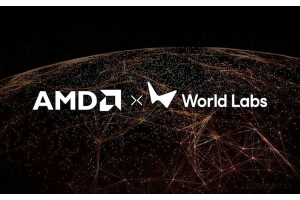
September 29, 2026 — AMD announced on Monday that it will acquire World Labs, the two-year-old AI research lab co-founded by Fei-Fei Li, in an all-stock deal valued at approximately $8.2 billion [citation:1][citation:8]. The transaction is AMD's second-largest acquisition ever, behind only its roughly $50 billion purchase of Xilinx in 2022 [citation:3][citation:5].
Li, widely known as the "godmother of AI" for her work creating the ImageNet dataset that helped ignite the deep learning revolution, will join AMD as Executive Vice President and Chief Scientist, reporting directly to CEO Lisa Su [citation:1][citation:10].
The deal is not about revenue. World Labs has no meaningful commercial product. It is about talent, model insight, and a strategic bet on physical AI — the branch of artificial intelligence that could power robots, autonomous vehicles, and machines that understand the physical world.
Who Is Fei-Fei Li?
Fei-Fei Li's career traces the arc of modern AI itself. She is a Stanford professor, former head of AI at Google Cloud, and the creator of ImageNet — a massive visual database of over 14 million labeled images that, when paired with GPU computing, made the deep learning explosion possible [citation:1][citation:3].
Before World Labs, Li was already one of the most influential figures in computer vision. Her academic work established the foundation for how machines recognize objects and scenes. In 2024, she co-founded World Labs to pursue what she calls "spatial intelligence" — AI that understands the three-dimensional, physical world rather than just text [citation:3].
Li's move to AMD is a notable shift. She has spent most of her career in academia and research, with brief industry stints at Google and as a board member at X. Now she takes a permanent executive role at a semiconductor giant, with direct influence over AMD's long-term AI hardware roadmap [citation:10][citation:13].
What World Labs Actually Builds
World Labs is not building a chatbot. It is building world models — AI systems that learn from video, images, and 3D data to understand how objects move, interact, and occupy space [citation:1][citation:3].
The company's flagship product, Atlas, released in September 2026, is described as the world's first multimodal world model [citation:2]. Its capabilities include:
| Capability | What It Does |
|---|---|
| Camera-controlled generation | From a single image, generate video with pixel-level camera control, up to 1 minute at 1440p [citation:2] |
| 3D reconstruction | Rebuild real-world scenes from a few photos, outputting explicit 3D representations like Gaussian Splats [citation:2][citation:9] |
| Spatiotemporal simulation | Model both space and time from video input, enabling viewpoint changes and robot simulation [citation:2] |
| Real-to-Sim for robots | Convert a few photos of a real space into a simulated environment where robots can train [citation:2][citation:9] |
The practical significance is in robotics. Training a robot in the real world is slow, expensive, and risky. World Labs' technology lets researchers capture a space with a phone camera, then generate a rich 3D simulation where the robot can practice — changing routes, encountering new camera angles, and generating synthetic sensor data [citation:9].
World models are computationally expensive. Training them requires massive GPU clusters. Running them requires optimized inference hardware. By owning the model layer, AMD gains first-hand insight into what the next generation of AI chips needs to do — before competitors do [citation:8][citation:15].
Why AMD Bought a Model Lab
On the surface, this looks like an odd acquisition. AMD makes chips. World Labs makes models. Why would a chipmaker spend $8.2 billion on a 70-person research lab?
The answer lies in how AI competition has shifted. For years, the battle was about raw compute — who could build the fastest GPU. That phase is not over, but it is no longer sufficient. The next phase is about co-design: building hardware that is optimized for the specific demands of emerging AI models [citation:13][citation:17].
AMD has made progress with its MI-series accelerators, but it still trails NVIDIA in software ecosystem depth. NVIDIA's CUDA platform, its investment in model frameworks, and its Cosmos world model give it an integrated hardware-software story that AMD has struggled to match [citation:13].
Analyst Patrick Moorhead described the deal succinctly: "NVIDIA built its models, then paid ~$13B for Hugging Face. AMD is buying its way into the model layer." [citation:6]
Wccftech's headline was even more direct: the acquisition is "essentially a talent grab for building a competitor to NVIDIA's Cosmos AI model" [citation:6].
AMD had already been building a relationship with World Labs. Lisa Su invited Li on stage at CES in January. In February, AMD invested in World Labs' $1 billion funding round [citation:6][citation:3]. That round valued World Labs at approximately $5 billion — meaning AMD is now paying a 62% premium over its own investment valuation just seven months later [citation:6].
The NVIDIA Cosmos Problem
The acquisition only makes sense in the context of NVIDIA's Cosmos platform.
NVIDIA has positioned Cosmos as an open world foundation model for physical AI — a system that can simulate environments, generate synthetic training data, and serve as the backbone for robot learning [citation:4][citation:7]. It is already being adopted by companies like Figure AI, Agility Robotics, and Toyota Research Institute [citation:14].
Cosmos is strategically important because it does two things at once. First, it gives NVIDIA a model layer that makes its hardware more valuable to robotics and autonomous vehicle developers. Second, it establishes NVIDIA as the default platform for physical AI in the same way CUDA became the default for AI training [citation:4][citation:17].
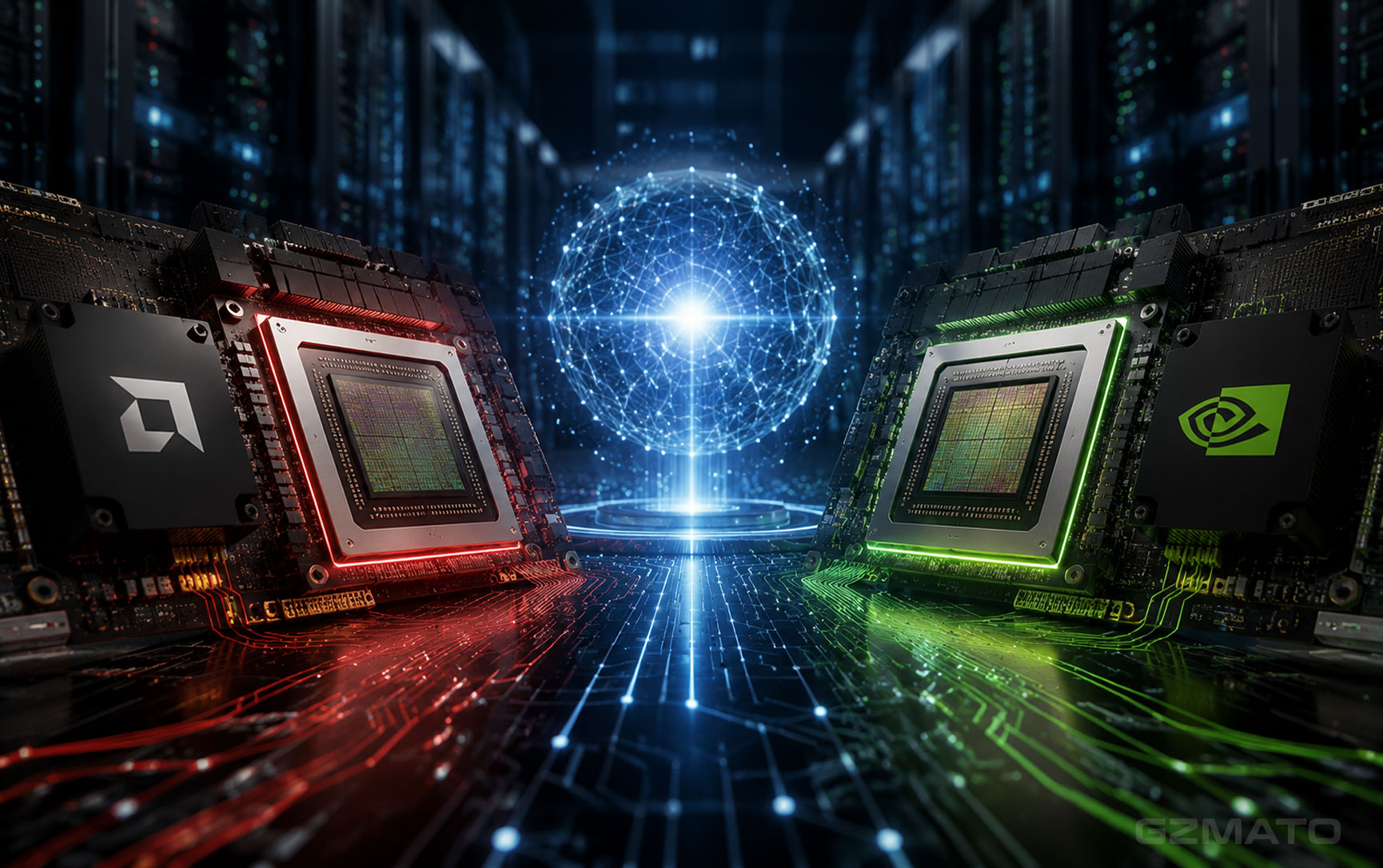
AMD's acquisition of World Labs is a direct answer. Instead of building a Cosmos competitor from scratch, AMD is buying a team that has already demonstrated world-model capabilities — and putting its leader in a position to shape AMD's chip roadmap [citation:6][citation:17].
Buying a research lab is not the same as integrating it. World Labs' 70-person team must now operate inside a semiconductor company with different priorities, processes, and timelines. Li's academic and research background will be tested in a corporate environment where hardware roadmaps are planned years in advance [citation:13].
There is also the question of whether AMD can retain the talent. The $8.2 billion price tag is a strong signal, but researchers who joined World Labs for its independence may find the transition challenging [citation:1].
Deal Details: 62% Premium, All Stock
| Deal Term | Detail |
|---|---|
| Acquisition Price | $8.2 billion (approximately RMB 55 billion) [citation:3] |
| Payment Method | All-stock transaction [citation:1][citation:8] |
| Premium | 62% over February 2026 valuation of $5 billion [citation:6] |
| Li's Role | Executive VP and Chief Scientist, reporting to Lisa Su [citation:10] |
| World Labs' Role | Team joins AMD; continues frontier research [citation:10] |
| Expected Close | End of 2026, subject to regulatory approvals [citation:1][citation:10] |
| AMD's Prior Investment | Participated in World Labs' $1 billion February round [citation:3][citation:6] |
AMD's largest acquisition remains Xilinx at roughly $50 billion in 2022 [citation:5]. The World Labs deal is the company's first major AI-focused acquisition under Lisa Su's leadership, and it signals a willingness to compete with NVIDIA on multiple fronts simultaneously.
Key Takeaways
| # | What You Need to Know About AMD's Acquisition of World Labs |
|---|---|
| 1 | $8.2 billion all-stock deal — AMD's second-largest acquisition ever, behind Xilinx [citation:3][citation:5] |
| 2 | Fei-Fei Li becomes AMD's Chief Scientist — the "godmother of AI" moves from academia and startups into a semiconductor executive role [citation:1][citation:10] |
| 3 | World Labs builds world models, not chatbots — Atlas can reconstruct 3D scenes, simulate physics, and generate robot training environments [citation:2][citation:9] |
| 4 | The acquisition is a direct answer to NVIDIA Cosmos — NVIDIA's world foundation model is already adopted by major robotics companies [citation:4][citation:6] |
| 5 | 62% premium over February valuation — AMD invested in World Labs at a $5 billion valuation, now pays $8.2 billion [citation:6] |
| 6 | This is a talent and insight play, not revenue — AMD gains first-hand understanding of what next-generation AI models need from chips [citation:8][citation:15] |
| 7 | Deal expected to close by end of 2026 — subject to regulatory approval [citation:1][citation:10] |
- Yahoo Finance / Fortune — Acquisition details, Fei-Fei Li's role, World Labs funding, world model context [citation:1]
- 量子位 — Atlas technical details, multi-modal world model architecture, robot simulation use cases [citation:2]
- 证券时报 — Deal value in RMB, AMD's acquisition history, World Labs founding and funding timeline [citation:3]
- NVIDIA Official — Cosmos world foundation model capabilities, physical AI use cases, adoption [citation:4][citation:7]
- AMD Official — Xilinx acquisition completion, market context [citation:5]
- Wccftech — 62% premium analysis, Patrick Moorhead commentary, talent grab framing [citation:6]
- CNBC — Lisa Su and Fei-Fei Li quotes, strategic rationale, deal structure [citation:8]
- 澎湃新闻 — Atlas real-to-sim capabilities, robot training workflow [citation:9]
- 新京报 — Li's executive title, reporting structure, deal timeline [citation:10]
- BT财经 — Analysis of premium rationale, spatial computing competition, integration risk [citation:13][citation:17]
- 디지털투데이 — Deal confirmation, strategic context [citation:15]
- AMD World Labs
- AMD acquires World Labs
- Fei-Fei Li AMD
- Lisa Su
- NVIDIA Cosmos
- world model
- physical AI
- AMD acquisition
- AI chip competition
- Gzmato