Tech Giants to Spend $725 Billion on AI Infrastructure in 2026 – A 77% Jump
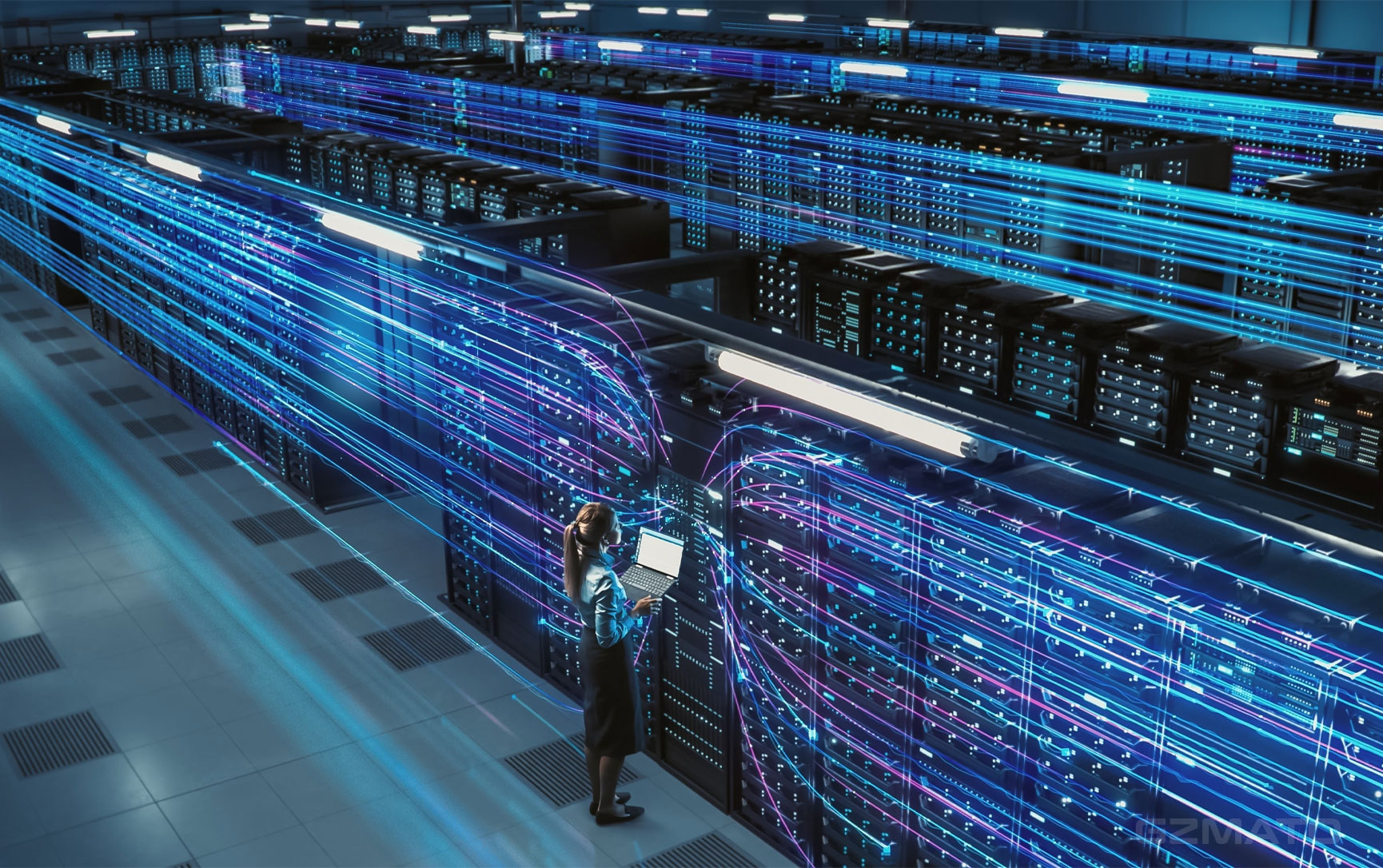
- The $725 Billion AI Arms Race
- By the Numbers: Record Capex
- The Four Giants: Who's Spending What
- Why It Matters: The Drivers
- The Bottlenecks: Costs Are Rising Across the Board
- The H100 Rental Surge: 40% in 5 Months
- The Cooling Revolution: Liquid Cooling Goes Mainstream
- The $3 Trillion Investment Supercycle
- Final Verdict: Winners and Losers
- Shop AI-Ready Hardware at Gzmato
May 3, 2026 – The AI arms race is accelerating faster than anyone predicted. Alphabet, Amazon, Microsoft, and Meta have committed a staggering $725 billion in capital expenditures for 2026, up 77% from $410 billion in 2025 [citation:1]. For context, that's more than the GDP of Switzerland [citation:2].
The $725 Billion AI Arms Race
The numbers are staggering. The combined AI capital expenditures of Alphabet (Google), Amazon, Microsoft, and Meta now exceed the GDP of many developed nations [citation:5]. What makes it even more remarkable? The $725 billion figure is actually an upward revision from earlier market expectations of $670 billion [citation:1].
This spending spree is not optional. According to Forrester Research analyst Lee Sustar, "With the potential returns from AI leadership being so compelling, these companies continue to double down – forcing investors and customers alike to assess how their interests will be affected" [citation:1].
By the Numbers: Record Capex
| Company | 2026 Capex Guidance |
|---|---|
| Amazon | ~$200B (56% increase from 2025) |
| Microsoft | ~$190B (inc. $25B for component price increases) |
| Alphabet (Google) | $180-190B (up from $175-185B previous guidance, 2027 to be "significantly higher") |
| Meta | $125-145B (up from $115-135B previous guidance) |
The Four Giants: Who's Spending What
Alphabet (Google): $180-190 Billion
Google raised its full-year capital expenditure guidance by $50 billion, now expected to range between $180-190 billion. The company spent $35.7 billion in Q1 alone, covering real estate, servers, data centers, and other infrastructure [citation:1]. More significantly, Google signaled that 2027 capex will be "significantly higher" than 2026 levels [citation:1][citation:5].
CEO Sundar Pichai admitted that compute constraints are already limiting cloud revenue growth: "In the short term we face constraints in terms of computing resources. If we could meet demand, cloud revenue would be even higher" [citation:5].
Microsoft: ~$190 Billion
Microsoft's 2026 capex is expected to reach approximately $190 billion, representing a massive increase over 2025 levels. Of that, about $25 billion is attributed directly to component price inflation [citation:1]. The company remains confident in its investment thesis, citing stronger demand signals, increased product usage, and continued platform efficiency gains [citation:1].
Amazon: ~$200 Billion
Amazon's 2026 capital expenditure is projected to reach approximately $200 billion, representing a 56% increase over 2025 levels [citation:1]. The majority is directed toward AWS AI infrastructure, including custom-designed data centers for AI services [citation:10]. Unlike its peers, Amazon did not provide a detailed breakdown of its capex during the April earnings call [citation:1].
Meta: $125-145 Billion
Meta raised its 2026 capex guidance by $100 billion at both the low and high ends, now expecting $125-145 billion [citation:1]. The company attributed the increase to higher-than-expected component prices and additional data center costs to support future capacity needs [citation:5].
Why It Matters: The Drivers
This spending surge is not driven by a single factor but by multiple converging forces:
- AI inference demand is exploding: The shift from training to inference – the actual use of AI models – is creating sustained, ongoing demand. Every AI model deployment generates inference demand that grows with user adoption [citation:9].
- Open-source model usage is surging: GLM, Kimi K2.5, and other open-source models have seen explosive adoption, driving additional compute needs [citation:3].
- Funding rounds demand capacity: Anthropic's annual recurring revenue tripled from $9 billion to $30 billion in a single quarter, requiring massive GPU commitments [citation:10].
- Sovereign AI is emerging: Governments worldwide are investing in domestic AI capabilities, representing a $8 billion capex opportunity by 2030 [citation:6].
The Bottlenecks: Costs Are Rising Across the Board
According to Jefferies technology analyst Brent Thill, the supply chain is facing "bottlenecks everywhere" [citation:5]. The constraints extend far beyond chips:
- Component prices: Microsoft allocated $25 billion specifically for component price inflation [citation:5]
- Storage chips: Prices have been rising sharply [citation:5]
- Fiber optics: Cable costs are increasing due to demand [citation:5]
- Power and water: Data centers require massive amounts of both [citation:5]
- Land: Undeveloped land for data centers is becoming scarce [citation:5]
"Those hyperscalers either have to wait or pay higher costs to get in. That's good for the shovel sellers, but not for the companies that have to put it all together." — Brent Thill, Jefferies [citation:5]
The H100 Rental Surge: 40% in 5 Months
NVIDIA's H100 GPU, first released in 2022, has seen its rental price surge nearly 40% over just five months – from $1.70 per hour in October 2025 to $2.35 per hour in March 2026 [citation:3][citation:10].
This demand is driven by:
- Exploding inference demand: AI models like Kimi K2.5 and GLM are driving widespread usage [citation:3]
- New funding rounds: AI labs and startups need guaranteed compute capacity [citation:3]
- System-level bottlenecks: Simply having chips isn't enough – networking, power, and data center space must all align [citation:10]
Finding GPU compute in 2026 has become "like trying to book a last-minute flight" according to SemiAnalysis [citation:3]. Some AI labs are now signing 4-year contracts with 20%+ prepayments – an arrangement that was rare just a few years ago [citation:3].
The Cooling Revolution: Liquid Cooling Goes Mainstream
The skyrocketing power of AI chips is forcing a revolution in cooling technology. NVIDIA's H100 and H200 run at 700W TDP (thermal design power), but upcoming B200 and B300 chips will exceed 1,000W .
According to TrendForce, liquid cooling penetration for AI chips will reach 47% in 2026, up from minimal levels just two years ago . Donghai Securities projects the global data center liquid cooling market will reach approximately $96 billion (688 billion yuan) in 2026 [citation:4].
While current solutions focus on cold plate liquid cooling, the industry is gradually shifting from liquid-to-air (L2A) to liquid-to-liquid (L2L) cooling architectures, with chip-level cooling on the longer-term roadmap .
The $3 Trillion Investment Supercycle
According to JLL's 2026 Global Data Center Outlook, the data center sector is poised to nearly double from 103 GW to 200 GW by 2030, requiring up to $3 trillion in total investment [citation:6][citation:9].
- $1.2 trillion in real estate asset value creation
- $870 billion in new debt financing
- $1-2 trillion in tenant spending on GPUs and networking equipment [citation:9]
AI workloads, which represented just 25% of data center capacity in 2025, are projected to reach 50% by 2030 [citation:6][citation:9]. A significant shift is anticipated in 2027, when inference workloads could overtake training as the dominant AI requirement [citation:6][citation:9].
Final Verdict: Winners and Losers
The winners are clear: NVIDIA is the primary beneficiary, with its chips commanding premium prices even years after release. The entire liquid cooling supply chain – pump manufacturers, cold plate suppliers, and system integrators – is seeing unprecedented demand . Cloud providers that locked in capacity early are now earning higher margins as rental prices rise.
The risks are real: For smaller AI labs and startups, this compute crunch is existential. Renting H100 capacity now costs nearly 40% more than just five months ago [citation:3]. "Having a chip isn't the same as having usable compute," analysts note, with system-level bottlenecks limiting availability [citation:10].
The big picture: This $725 billion spending surge confirms that AI is not a speculative bubble but a fundamental infrastructure investment comparable to the buildout of the internet or the electrical grid. The shift from training to inference means demand will be sustained, not a one-time spike. But the bottlenecks – from chips to power to cooling – will take years to resolve. For those who bet on the "shovel sellers" of this AI gold rush, the returns are likely to be extraordinary.
Build for the AI Era with Gzmato
High-Performance Computing | Liquid Cooling Systems | Data Center Solutions | AI Development Kits
AICAPEX15
Data Sources & Methodology (as of May 3, 2026):
- 金融界 / 智通财经 – April 2026 earnings and capex guidance details (April 30, 2026) [citation:1]
- 财联社 – Four tech giants capex analysis and bottleneck report (April 30, 2026) [citation:5]
- 证券时报 – H100 rental price analysis (April 3, 2026) [citation:3]
- JLL – 2026 Global Data Center Outlook (January 2026) [citation:6][citation:9]
- 东方证券 – Liquid cooling market forecast (August 2025) [citation:4]
- TrendForce – AI server and liquid cooling penetration forecast (November 2025)
- Edgen.tech – China AI compute rental surge analysis (April 22, 2026) [citation:7]
- 九方智投 – H100 rental driver analysis (April 17, 2026) [citation:10]

- AI capital expenditure 2026
- Google capex 2026
- Microsoft capex 2026
- Amazon capex 2026
- Meta capex 2026
- H100 rental price
- data center growth
- AI infrastructure investment