Dephy Sidekick Review: $4,500 Bionic Shoes That Give Your Walking a Powered Boost?
- Dephy Sidekick Review: $4,500 Bionic Shoes That Give Your Walking a Powered Boost
- What Is Dephy Sidekick?
- Key Specifications
- How It Works: The Science Behind the Boost
- How It Actually Feels: First-Hand Impressions
- Product Introduction Video
- Real-World Wearing Demo
- Who Is It For?
- The Bigger Picture: Nike Partnership and the Future
- Final Verdict
- Key Takeaways
Dephy Sidekick Review: $4,500 Bionic Shoes That Give Your Walking a Powered Boost
What if walking could feel like riding an e-bike? That is the premise behind the Dephy Sidekick, a new category of "bionic footwear" that gives your walk a powered boost with every step. PCMag named it one of the top assistive tech products at CES 2026, calling it "sort of like an e-bike, but for walking" .
Described by its CEO as "an extra calf muscle," the Sidekick uses AI, sensors, and a battery-powered motor to lift your heel with each step . It reduces fatigue, extends your comfortable walking range, and makes long walks feel noticeably easier .
What Is Dephy Sidekick?
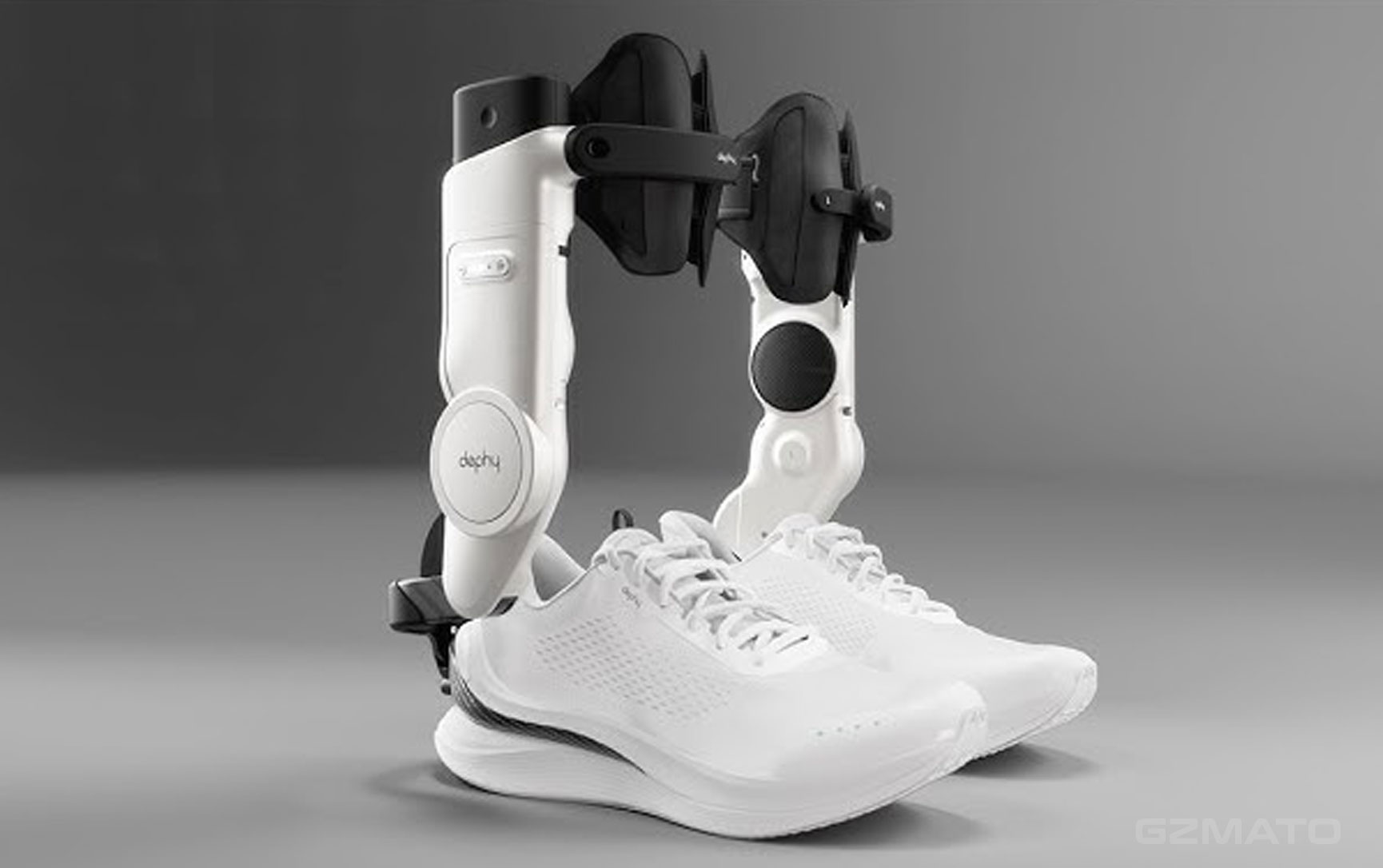
Sidekick is a powered ankle exoskeleton developed by Dephy (pronounced "defy"), a company born from MIT Media Lab research . It is the world's first wearable powered at the ankle designed for everyday mobility, not medical use .
The system consists of two parts :
- Specialized sneakers with a carbon fiber plate, similar in feel to Hoka shoes with good arch support
- Ankle-worn exoskeleton with a brushless electric motor, IMU sensors, and a removable battery that straps to your calf
It takes about 15 seconds per leg to put on . The device analyzes your gait for the first few steps and then kicks in with a slight jolt — a sensation testers described as "I literally gasped when I felt it" .
Dephy is very clear: Sidekick is not a medical device . It does not treat any condition or disease. It is a wellness device — like an e-bike for walking — designed to help people who want to walk farther, faster, and with less effort in their daily lives.
Key Specifications
| Feature | Details |
|---|---|
| Price | $4,500 |
| Boost per Step | 100+ lbs of joint offload |
| Range per Charge | Up to 5 miles (8 km) |
| Adaptation Time | AI learns your stride in ~20 steps |
| Assistance Levels | Multiple power levels, adjustable |
| Technology | Brushless motor, IMU sensors, AI real-time gait adaptation |
| Availability | Shipping since January 2026 |
| Payment Options | HSA/FSA eligible in US |
| Target Use | Flat ground and gentle slopes |
How It Works: The Science Behind the Boost
The Sidekick's magic lies in its focused approach. Most exoskeletons cover the hips or entire leg; Sidekick only acts at the ankle .
When you walk, most of the forward thrust comes from your calf muscles and Achilles tendon pushing off the ground. Sidekick provides a precisely timed upward push at the exact moment you push off, reducing the effort your calf muscles need to exert .
The science checks out. Studies from Stanford University show that ankle exoskeleton assistance can reduce walking metabolic cost by about 17% and increase preferred walking speed by about 9% .
The AI adapts to your specific gait in about 20 steps, creating a personalized walking model for each user . This is why Sidekick feels natural — it conforms to you, not the other way around.
How It Actually Feels: First-Hand Impressions
Multiple journalists have tested Sidekick, and the feedback is remarkably consistent.
PCMag's Experience
"I literally gasped when I felt it. The device didn't feel heavy on my legs at all. After walking around for about 20 minutes wearing the Sidekick, I found myself wishing I had the device at the airport yesterday en route to Vegas."
Engadget's Take
"With every step forward there's a noticeable upward push from under your heel. At the lower levels it was still noticeable but felt less disruptive. I just felt... bouncy. Later, when Mooney turned off the power entirely, I noticed that my feet felt weirdly heavy."
Real User Feedback (Mayo Clinic Forum)
One user with peripheral neuropathy shared: "When I wore it, the leg heaviness and instability disappeared. When the power was turned off during testing, I immediately felt the difference — my legs felt like they usually do with my condition."
Key User Insights
- It is not for everyone: "A lot of times people who are fit, or like athletes, actually struggle to adopt to the technology because their body's so in tune with how they move."
- There is a learning curve: "There's a low-level learning curve where you're still adapting, and it's adapting to you."
- It's designed for everyday life: "Walking the dog, going to the store. We're really just trying to help people move in the ways that they used to be able to."
Product Introduction Video
Real-World Wearing Demo
Who Is It For?
Dephy targets people with what it calls "personal range anxiety" — the quiet concern about how far you can comfortably walk before fatigue or discomfort sets in .
Sidekick is designed for :
- Active seniors who want to stay mobile longer
- Campus professionals who walk large distances daily
- Commuting urbanites covering several miles per day
- Theme park visitors spending full days on their feet
- Travelers and explorers wanting to walk more without fatigue
- Those with minor mobility limitations who want to extend their comfortable range
Dephy CEO Luke Mooney explains: "A lot of times people who are fit, or like athletes, actually struggle to adopt to the technology because their body's so in tune with how they move. Whereas folks who are not as physically active and fit, their body's ready to accept help."
Sidekick is not a medical device . It will not replace a cane, walker, or wheelchair. It is for people who can walk, but want to walk farther and with less effort.
The Bigger Picture: Nike Partnership and the Future
Sidekick is Dephy's first consumer product, but it is not the company's only play in the powered footwear space. Dephy has partnered with Nike on "Project Amplify", a robotic sneaker project that aims to help "everyday athletes" move faster and farther .
Nike describes the project as adding "a second set of calf muscles." Early testers have reportedly improved their mile times by up to two minutes . The system is built on motion algorithms from the Nike Sport Research Lab and includes a lightweight motor, drive belt, rechargeable cuff battery, and carbon fiber-plated running shoe that works with or without the robotics .
"At its core, Project Amplify is about seamlessly adding a little more power to your stride. The fun comes from realizing you can do more than you thought you could," said Michael Donaghu, VP of Nike's Innovation Kitchen .
This partnership gives Dephy significant credibility. If Nike — one of the world's most influential footwear brands — is building its powered sneaker on Dephy's technology, the underlying IP has real weight.
Final Verdict
At $4,500, the Sidekick is an expensive piece of technology. But for its target audience — people who want to walk farther, longer, and with less fatigue — it offers genuine, scientifically-backed assistance.
The device works. Multiple independent journalists have tested it, and the feedback is consistent: it provides a real, noticeable boost with every step. The AI adapts quickly, the hardware is light enough to forget you are wearing it, and the sensation of walking with it on is noticeably different from walking without it .
Sidekick is well-positioned in a new category: everyday exoskeletons. With competitors like Dnsys and Ascentiz focusing on other body areas, Dephy has captured an early lead in ankle-focused, consumer-ready powered footwear .
Should you buy it? If you are a theme park enthusiast, a daily commuter, a frequent traveler, or an active senior who wants to extend your walking range — and you can afford the price tag — Sidekick is worth considering. The 5-mile range means you can navigate a full day of walking without recharging, and the 100+ lbs of joint offload can make a significant difference to your fatigue levels .
The biggest question marks are long-term reliability, battery health over time, and whether the price will come down as the technology matures. But as a first-generation product, Sidekick is an impressive debut.
Key Takeaways
| # | What You Need to Know About Dephy Sidekick |
|---|---|
| 1 | Dephy Sidekick is $4,500 bionic footwear — It gives your walking a powered boost with every step, like an e-bike for walking . |
| 2 | AI adapts to your gait in ~20 steps — No app or calibration required. It learns how you walk and provides personalized assistance . |
| 3 | Up to 5 miles per charge — Enough for a full day of walking, with 100+ lbs of joint offload per step . |
| 4 | Not a medical device — It is a wellness device designed for everyday walking, not clinical use . |
| 5 | Nike partnership confirmed — Dephy is Nike's robotics partner for Project Amplify, a powered sneaker for everyday athletes . |
| 6 | Worn at the ankle, not the hip — Lightweight and discreet. Takes ~15 seconds per leg to put on . |
| 7 | Best for flat ground and gentle slopes — Does not assist with standing up or stairs . |
| 8 | Available now — Ships in January 2026. HSA/FSA eligible in the US . |
Sources & Methodology (as of July 1, 2026):
- PCMag / PCMag UK — First journalist demo of Sidekick at CES 2026
- Engadget — Hands-on experience and Nike partnership confirmation
- MDroid Tech — CES 2026 demo coverage
- Scripps News — CES 2026 health tech coverage, product demo
- 什么值得买 / 机器人大讲堂 — Detailed technical breakdown and market positioning
- Mayo Clinic Connect — User experience forum discussion
- Dephy Official Press Release — CES 2026 launch announcement
- The O&P EDGE — Nike Project Amplify partnership coverage
- T3 — Pricing and availability details
- AgeTech Collaborative — Luke Mooney speaker profile
Smartwatches | Fitness Trackers | Fast Chargers | USB-C Cables | Power Banks | Tech Accessories
Special Offer: Use code TECH2026 for a discount on your first order!
Shop Now at Gzmato →


- Dephy Sidekick
- bionic shoes
- powered exoskeleton
- walking assist device
- wearable tech 2026